Do Chinese geese have blue eyes?

The question of eye coloration in Chinese Geese often sparks discussion among poultry enthusiasts, largely because the expected answer isn't always a single, uniform hue across the breed. These birds, renowned for their distinct features and productive nature, present a fascinating case study in avian variation. While many waterfowl display dark, almost black eyes, the genetics influencing the Chinese Goose—descendants of the wild Swan Goose—allow for interesting deviations that sometimes surprise new owners or confuse those looking at breed standards.[1][3]
The appearance of a goose is often defined by its structure, particularly the prominent basal knob on the bill, but the eyes provide a focal point that can reveal lineage and variety. Understanding the typical eye color requires first appreciating the two main recognized color patterns of the Chinese Goose: the Brown (or Grey) and the White varieties. [2][4]
# Color Varieties
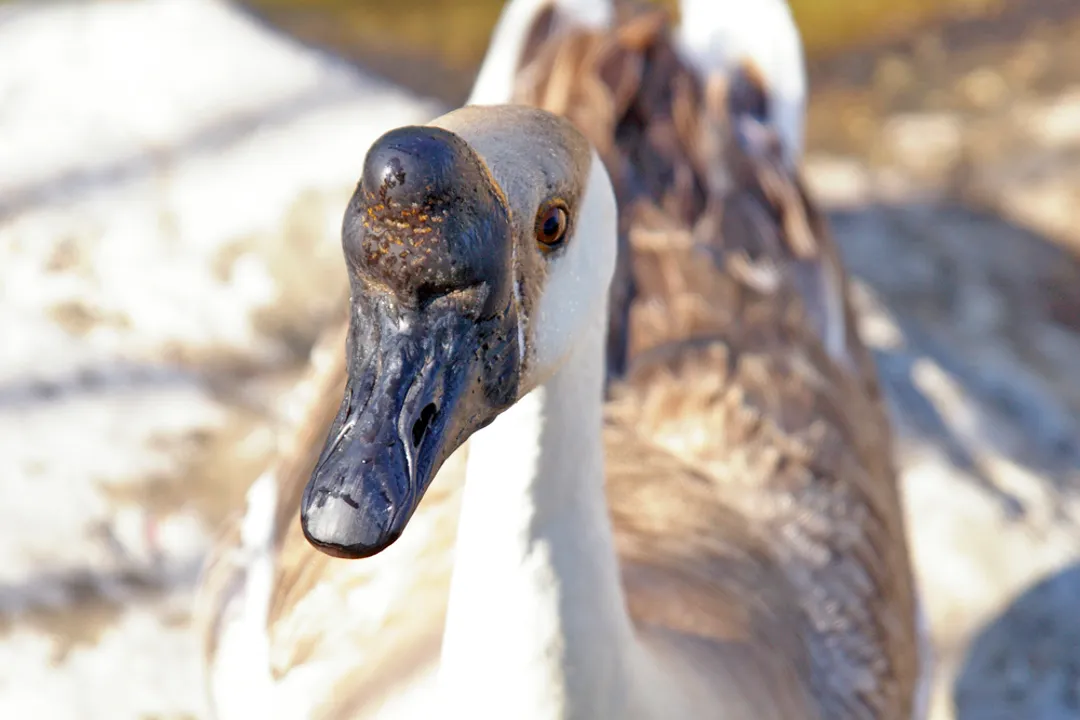
Chinese Geese have been valued for centuries, not just as guardians but also for their excellent egg-laying capabilities, which sometimes overshadow the standard farm goose. [1] They carry the physical hallmark of their ancestor, the Swan Goose, most visibly in that characteristic knob located at the base of the upper mandible. [3][4]
The breed is predominantly seen in two color phases that directly influence owner expectations regarding their appearance:
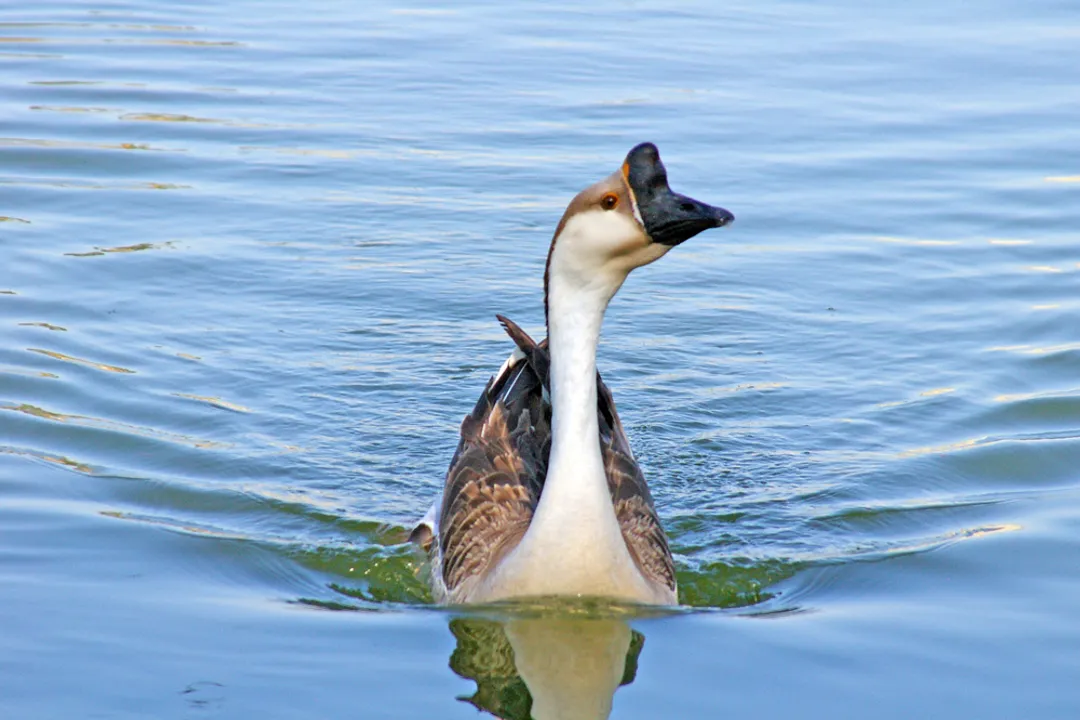
- Brown/Grey: These geese exhibit darker plumage, often with lighter markings around the face and neck.
- White: This variety is entirely white, which naturally draws attention to the features that contrast with the feathering, like the bill, knob, and eyes. [2][4]
When observing these birds, the eye color is one of the subtle details that breeders and show enthusiasts pay close attention to, especially when comparing them against established breed standards, which can sometimes vary slightly depending on the association recognizing them. [1]
# Pigmentation And Eyes
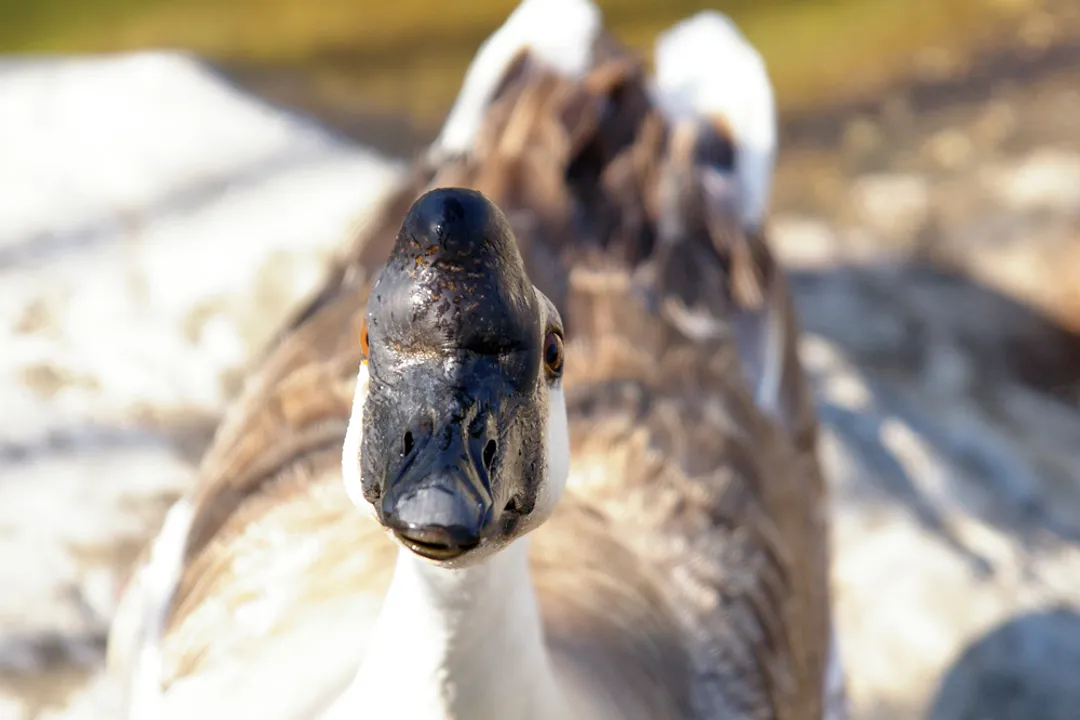
For the Brown Chinese Goose, the eyes typically present as a dark shade, aligning with what many expect from common domestic waterfowl. [8] This dark pigmentation seems standard across the non-white spectrum of the breed.
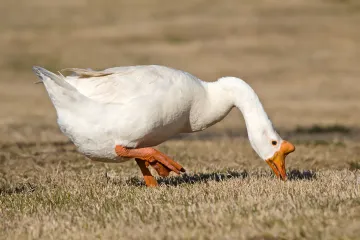
However, the situation becomes more nuanced when looking at the White Chinese Goose. [9] While dark eyes are certainly present in white individuals, the genetic expression allowing for a lighter eye color becomes more visible against the stark white feathers. [6] Sources indicate that White Chinese Geese can exhibit eyes that are blue or blue-green. [6][8] This ability for blue eyes in white-feathered birds is a known phenomenon in various poultry genetics, where the absence of dark pigment in the feathers correlates with a lack of pigment in the iris. Yet, the fact that blue eyes are noted specifically for the white variety suggests a pattern of expression linked to the genes controlling white plumage in this particular lineage. [9] It is important to recognize that "blue" in poultry often refers to a pale, icy shade rather than a vibrant, true blue, sometimes appearing as a washed-out greyish-blue. [6]
It is this potential for blue eyes in a white bird that frequently leads to public inquiry. When a keeper observes a white goose with striking blue irises, the immediate thought can turn toward identification challenges, as seen in online discussions where owners seek to confirm the breed of their goose based on this specific trait. [5][7] This highlights a common pitfall in breed identification: relying too heavily on one secondary feature when several defining characteristics, like the knob and overall body structure, should be prioritized. [2]
# Distinguishing Traits Beyond Color
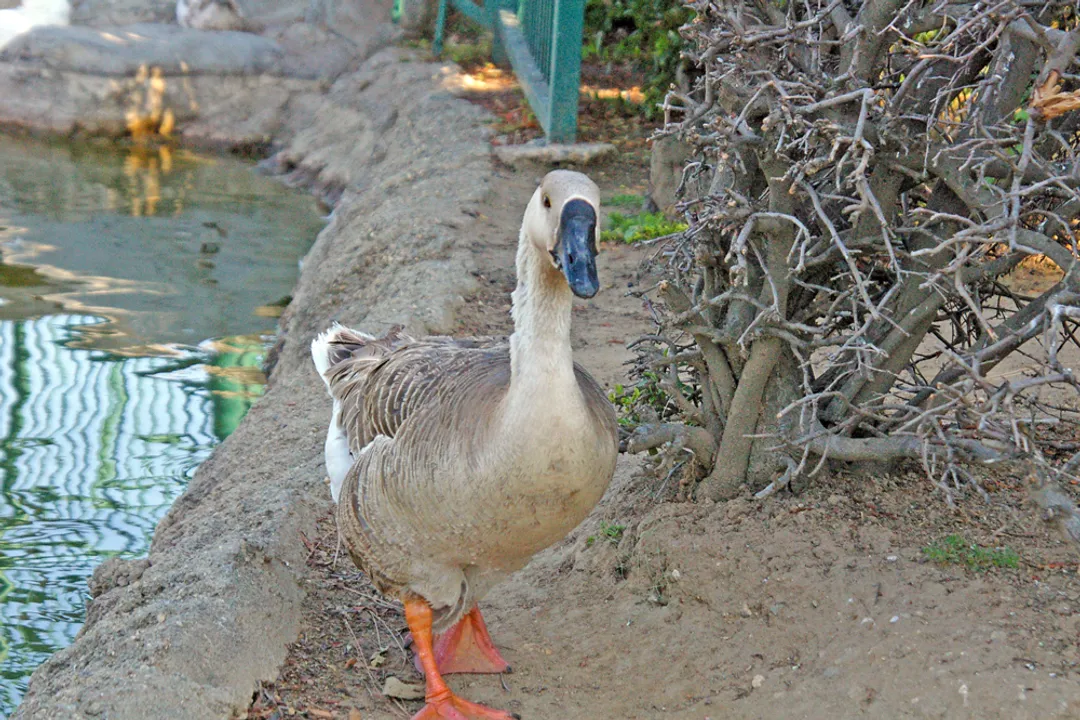
While eye color can be a point of interest, the core identity of the Chinese Goose rests firmly on its lineage and physical structure, especially the knob. [3] The knob—the fleshy, prominent lump at the base of the bill—is the most recognizable trait connecting them to the Swan Goose. [2] The size and shape of this knob can differ between males (ganders) and females (geese), and its development is a key indicator of breed purity, often being more pronounced in ganders. [4]
Furthermore, their reputation as excellent layers is a defining feature that keeps them relevant in heritage breeding programs. [1] Some sources note that the White variety, in particular, is prized for its utility, sometimes carrying distinct lineage or management characteristics compared to its brown counterpart. [6]
A simple comparison of expected eye color based on plumage helps set realistic expectations for potential owners or those assessing stock:
| Plumage Color | Common Eye Color(s) | Primary Identifier | Citation |
|---|---|---|---|
| Brown/Grey | Dark | Knob Size/Shape | [8] |
| White | Dark, Blue, or Blue-Green | Knob Size/Shape | [6][8][9] |
If you are looking to acquire a Chinese Goose specifically for breeding or exhibition, understanding the accepted range for eye color prevents unnecessary concern. If you find a beautiful white goose with striking blue eyes, you are likely looking at a bird well within the accepted variation for the White Chinese Goose, provided it exhibits the correct knob structure. [6][9] Conversely, if a Brown goose exhibits bright blue eyes, it might warrant closer inspection to ensure it hasn't been crossed with another breed, as dark eyes are the norm for that color pattern. [8]
# Breeding and Identification Nuances
For those involved in breeding poultry, recognizing the range of acceptable traits is crucial for maintaining the breed's integrity. [1] The inquiries seen online regarding blue-eyed white geese suggest that for the average backyard keeper, this specific eye color trait is surprising enough to prompt questions about breed confirmation. [5][7]
When assessing a potential breeding bird, the advice for any serious poultry keeper should center on structural confirmation over the more variable soft-part coloration like eye color. The knob, leg structure, and overall body carriage speak more directly to the breed standard than the iris pigment, which can sometimes fluctuate or show less desirable traits. [3][4] For example, while blue eyes are permissible in Whites, the dominance of dark eyes in the Brown birds means any deviation there is more unusual.
If one were to chart the frequency of eye color reports, the commonality of the dark eye across all varieties likely outweighs the blue-eyed white birds, making the latter noteworthy but not necessarily indicative of an error. [8] The fact that documented sources mention blue eyes specifically for the white strain implies a recognition, even if it is an outlier trait for some individuals within that group. [6][9] This situation provides a good moment to reflect on how many characteristics in livestock are governed by simple Mendelian inheritance versus complex polygenic traits, where multiple genes influence a single outcome like feather color and eye pigment simultaneously.
The endurance of the Chinese Goose as a heritage breed speaks to its reliability and productivity. [1] Whether its eyes are dark obsidian or icy blue, its value remains tied to its distinct look, high egg count, and vigilant nature, making it a compelling addition to any serious waterfowl collection. [2][4]
Related Questions
#Citations
Chinese Goose - The Livestock Conservancy
Chinese Geese - Poultry Keeper
Chinese Geese - Anser cygnoides domesticus - A-Z Animals
Chinese Geese | Chinese For Sale | Goose Breeds - Omlet
Chinese geese are known for their elegant appearance - Facebook
White Chinese Goose
White Goose with Blue eyes...what breed | BackYard Chickens
Chinese Goose (Swan Geese) - Swartzentrover.com
Chinese Geese: Description, Habitat, & Fun Facts - ResearchTweet