Are dachshunds very smart?
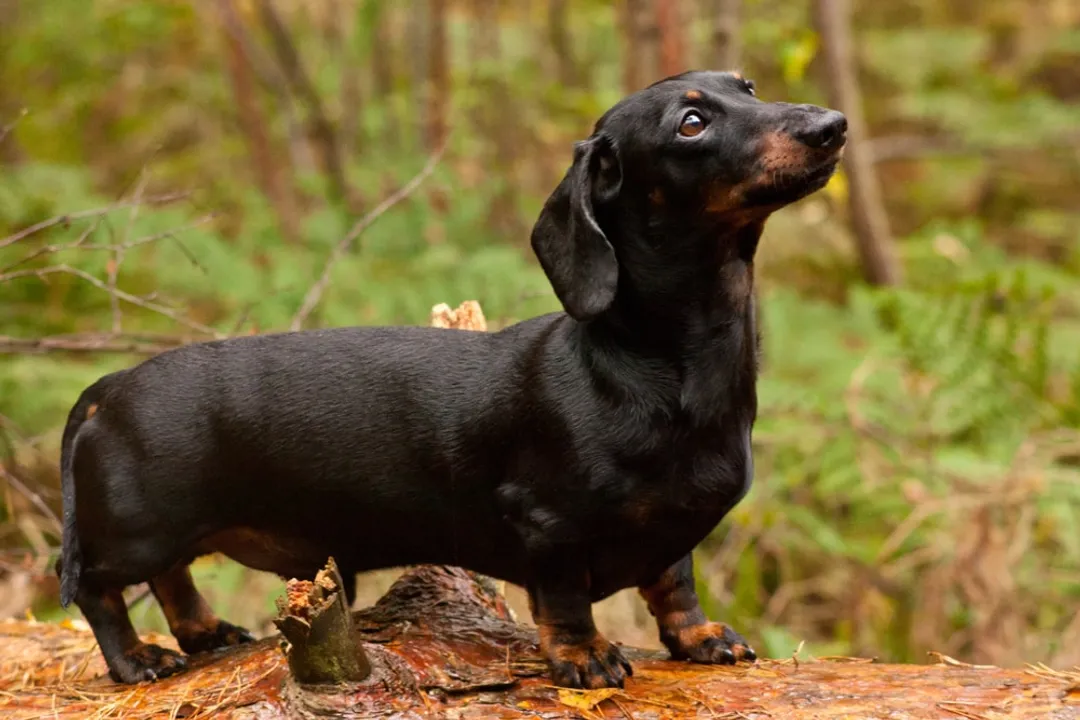
The very nature of the Dachshund—that unique, low-to-the-ground silhouette combined with a big, bold personality—often leads owners to question the true depth of their dog’s intellect. Are these spunky hounds geniuses or just cleverly obstinate? The reality is complex, hinging entirely on how one chooses to measure a dog’s brainpower. [4] While they might not always meet the expectations set by breeds bred purely for unwavering obedience, Dachshunds possess a form of intelligence honed by centuries of independent work. [3]
# Cognitive Ranking

To many prospective and current owners, the discussion around Dachshund intelligence is often framed by established scientific rankings, such as the work of canine psychologist Stanley Coren. [4] In his famous study ranking the intelligence of 138 breeds, Dachshunds landed at position #92. [4] This places them within the group classified as having “average intelligence”. [4]
What does an "average" ranking actually mean in practical terms? According to the parameters used in that specific study, a dog in this group typically requires between 25 to 40 repetitions of a command before learning something new, and they obey a known command on the first attempt only about 50% of the time. [4] To put this into perspective, the breeds considered the "brightest dogs"—like the Border Collie or Poodle—can learn commands in fewer than five repetitions and obey 95% of the time or better. [4] Furthermore, breeds rated as "excellent working dogs" require only 5 to 15 repetitions with an 85% success rate. [4]
However, this obedience and working intelligence metric only accounts for one piece of the canine cognitive puzzle. [4] It completely omits instinctive intelligence—what a dog was bred to do—and adaptive intelligence—the ability to solve problems independently. [4]
# Instinctive Smarts

The low ranking in formal obedience testing often surprises owners who experience their Dachshund’s sharp, independent thinking firsthand. [4] This seeming contradiction reveals a great deal about their history. Dachshunds, whose name translates from German as "badger dog," were purpose-bred to hunt burrowing prey like badgers, foxes, and rabbits. [3]
This job required a mind capable of making critical decisions alone, deep underground, far from human direction. They needed to track a scent, navigate tight spaces, and pursue dangerous quarry with intense focus. [4] This history confirms that Dachshunds excel in instinctive intelligence. [4] Their smarts are geared toward tracking, sensing, and utilizing their unique body structure to achieve a goal—in this case, flushing out prey. While most modern Dachshunds aren't tunneling after badgers, this foundational instinct remains a major driver of their behavior, making them adept at tracking things around the house, like the location of a hidden squeaky toy.

# Adaptive Problem Solving

Beyond instinct, many owners see impressive evidence of adaptive intelligence in their low-riders. [4] Adaptive intelligence refers to the dog’s capacity to learn things on its own, without direct human teaching. [4] Dachshunds are celebrated as clever problem-solvers. Anecdotal evidence from owners suggests they readily associate spoken words with positive outcomes, such as understanding the words for "food," "treat," or "walk" without formal instruction. [4]
Their independence, which hinders traditional obedience work, fuels this self-directed learning. A Dachshund doesn't just wait for instructions; they are thinking critically about the environment and how to manipulate it to their advantage. This same sharp thinking that allows them to figure out how to open a tricky cabinet might manifest as figuring out the exact sequence of nudges or cries needed to secure an extra treat from a soft-hearted family member. They are certainly not lacking in cognitive capacity; their brains are simply wired differently than breeds whose primary function was to rigidly adhere to human commands, such as herding dogs. [4] If you view intelligence as independent judgment rather than immediate compliance, the Dachshund shines brightly.
A fun way to test this adaptive side at home is to set up a simple puzzle: hide a favored, high-value treat under one of three inverted cups. If your Dachshund goes directly to the correct cup without much distraction, it showcases strong information absorption skills, a hallmark of adaptive learning. [4]
# The Independent Streak

The very traits that make them exceptional hunters and independent thinkers are often the source of frustration for those seeking a highly biddable companion. The AKC notes that Dachshunds are independent and often stubborn, which makes training a challenge. [3] This stubborn streak is not a flaw, but rather a reflection of their breeding; they were selected to be decisive when they encountered prey, even if it meant ignoring a handler’s shout. [4]
This inherent self-reliance translates into a dog that prefers to do what it wants, when it wants. [3] If a Dachshund doesn't feel like complying with a command, the owner may find that the dog simply refuses, regardless of repetition. [4] This stubbornness is a core feature of their personality, which is also described as lively, clever, and spirited. [3]
Adding another layer to this personality is their strong prey drive. [3] When a Dachshund catches a scent or spots a small animal, their focus instantly shifts to the task at hand, overriding any attention they might have been paying to their owner. [3] This is another example of their specialized intelligence taking precedence over obedience training in that moment. [3] Furthermore, their tendency to bark and howl, combined with their instinct to burrow, means that when their mental energy isn't channeled constructively, they might invent their own—often destructive—projects.
It is worth noting that different coat types are sometimes anecdotally associated with minor temperament variations; for instance, Wirehaired Dachshunds are sometimes considered slightly more mischievous than their smooth or longhaired counterparts.

# Tailoring Training to the Doxie Mind
Understanding that you are training a highly independent, scent-driven problem-solver dictates the training approach. Harsh commands or punishment are generally ineffective, as Dachshunds are sensitive and will not respond well to those methods. [3] Instead, success hinges on patience, firmness, consistency, and motivation. [3]
The most effective training strategy involves positive reinforcement. [3] This means rewarding desired behavior with high-value incentives, such as exceptional treats or a favorite toy. [3] Because they are motivated by the result—the reward—you must ensure the reward is worth interrupting their independent thought process. [4]
When working with a Dachshund, think less about issuing commands and more about creating interactive challenges where the dog chooses to engage because the payoff is excellent. Consider this: for a breed designed to solve the problem of excavating a badger, training should feel like solving a rewarding puzzle rather than executing an order. A great tip for owners is to incorporate their natural instincts into training exercises. Activities like puzzle toys, scent work where they find hidden treats, or even structured agility courses that don't require excessive jumping can satisfy their need for mental stimulation and reward their problem-solving prowess. The key is to keep training sessions brief to prevent frustration, both for you and your clever, short-legged companion.
Ultimately, while a Dachshund may never be as reflexively obedient as a highly driven working breed, they are undoubtedly smart dogs. [3] Their intelligence manifests as cunning, independence, and a remarkable ability to assess situations and act autonomously—qualities that make them challenging trainers but fiercely loyal and engaging companions. [4] The perceived intelligence gap is often just a mismatch between their inherent, ancient purpose and the modern expectation of instant obedience. [4]
Related Questions
#Citations
Dachshund Dog Breed Information
Are Dachshunds Smart? A Long But Short Investigation
Are Dachshunds Smart? Understanding Dog Intelligence
Meet the Dachshund: Personality, Health, and Care