What is the classification of a viper?
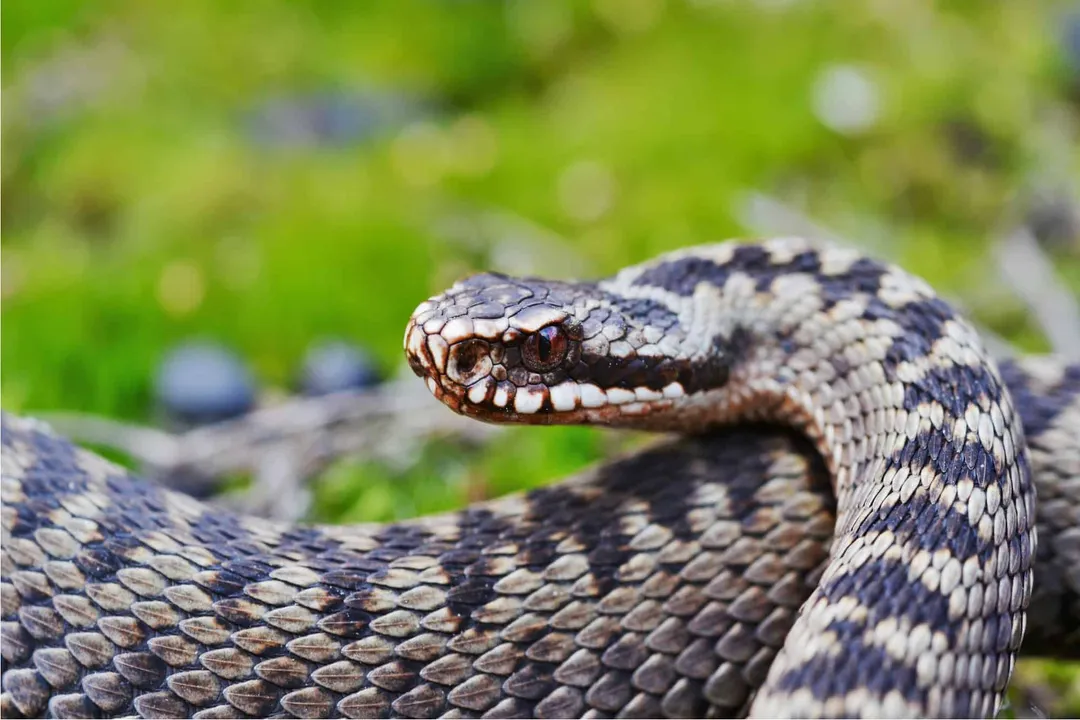
The classification of a viper places it firmly within the diverse family Viperidae, a group distinguished globally by a specialized weapon system: a pair of long, hinged, hollow fangs attached to a movable maxillary bone. [2][3] These vipers, or viperids, are distributed across nearly every continent, absent only from Australia, Antarctica, and certain isolated islands like Madagascar and Ireland. [3][4] The very name "viper" likely traces back to the Latin vipera, possibly linking to vivus ("living") and parere ("to beget"), referencing the trait of giving live birth common to many species within the family. [3][4]
Scientific consensus, supported by recent evolutionary studies, generally recognizes three distinct subfamilies within Viperidae, although some classification systems recognize four, including Causinae. [3][4] The three primary groups are Azemiopinae (Fea's Vipers), Crotalinae (Pit Vipers), and Viperinae (True Vipers or Pitless Vipers). [3][4] Understanding the classification hinges on examining the unique characteristics that separate these lineages, primarily involving sensory organs, reproductive mode, and geographic isolation. [3]
# Subfamily Splits
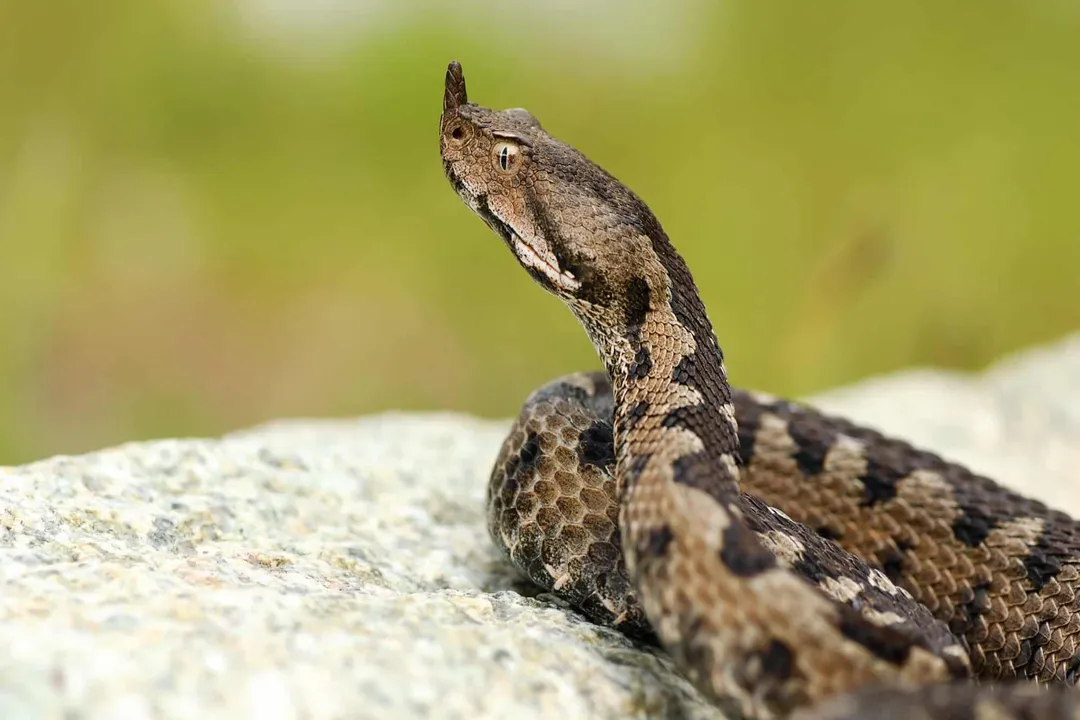
The division of the Viperidae family into these subfamilies reflects significant evolutionary divergence, even within the shared characteristics of venom injection and general body plan (stocky build, short tail, keeled scales). [3][4]
# Fea's Vipers Azemiopinae
The subfamily Azemiopinae represents a small, distinct lineage, often considered the sister group to the pit vipers. [3] This group is highly specialized and comprises only two recognized species, both native to southeastern Asia. [3] Unlike the bulk of the Viperidae family, members of Azemiopinae are oviparous, meaning they lay eggs rather than giving birth to live young, a key difference from the other main lineages. [4] Another notable physical distinction mentioned is that their fangs, while capable of rotation, are relatively small. [4] Furthermore, they possess a head scale pattern reminiscent of colubrids, featuring large shield-shaped scales, which sets them apart from the generally small, keeled scales found on the heads of most other vipers. [4]
# Pit Vipers Crotalinae
The Crotalinae subfamily constitutes the most speciose group of vipers, boasting approximately 250 species distributed across Southern Asia and both North and South America. [3][4] Their defining feature, which gives them their common name, is the presence of a specialized heat-sensing pit located between the nostril and the eye on each side of the head. [3][4] This loreal pit is a sophisticated sensory organ that detects infrared radiation, allowing these snakes to "see" the thermal silhouette of warm-blooded prey against a cooler background. [3]
The Crotalinae also exhibit a strong tendency toward viviparity, generally retaining eggs inside the mother's body until the young emerge live. [3][4] However, the presence of this heat-sensing pit is the most immediate characteristic used to classify a snake into this group. [1][3] Genera within this group include Agkistrodon, Bothrops, Crotalus (rattlesnakes), and Lachesis (bushmasters). [2]
# True Vipers Viperinae
The Viperinae subfamily, often called True Vipers or Pitless Vipers, contains about a hundred species and is distributed across Africa, Asia, and Europe. [3][4] As their designation as "pitless" suggests, they lack the specialized heat-sensing loreal pits found in the Crotalinae. [4] Most species in this group are ovoviviparous (giving live birth). [3][4]
This subfamily is quite large and includes familiar genera like Bitis (Puff Adders), Cerastes (Horned Vipers), and Vipera (True Vipers/Adders). [2][4] It is within this group that we find Vipera berus, the common European adder, which is noted as the only venomous snake in Great Britain. [3][4] While most Viperinae give live birth, some members of the Causus genus (which some sources place as a separate subfamily, Causinae) are unique within the broader Viperidae by laying eggs. [4] This variation in reproductive strategy within a single recognized family highlights how physical features, rather than just one characteristic like oviparity, determine the final taxonomic placement.
# Distinguishing Taxonomic Features
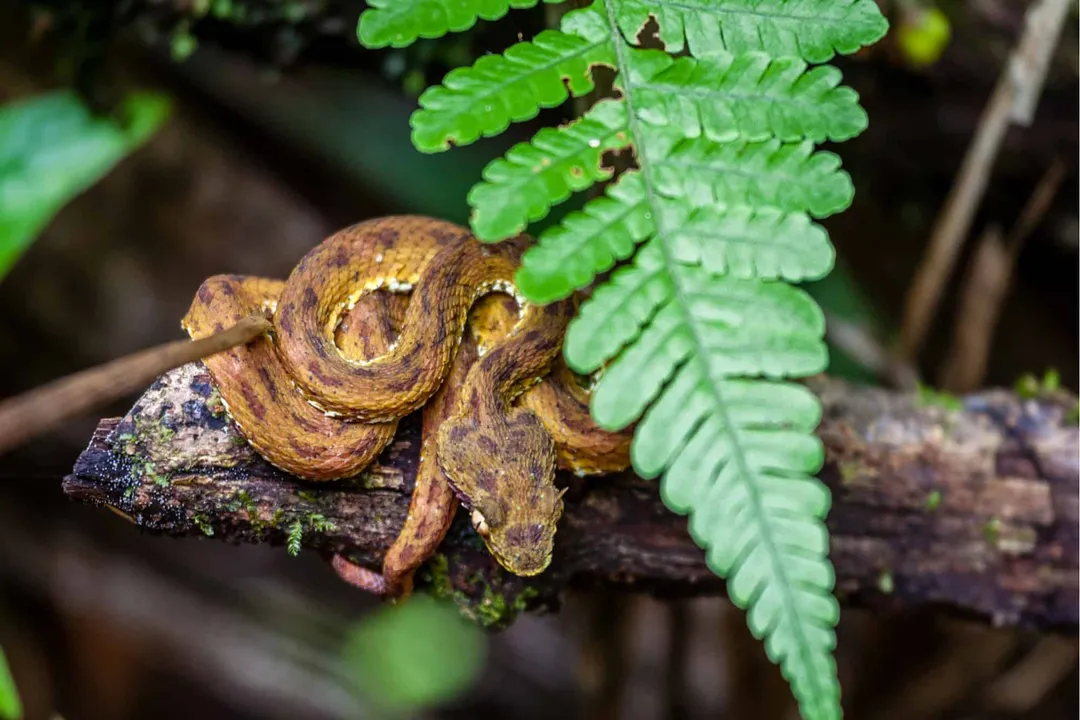
While the subfamily delineation relies on major characteristics like the loreal pit and reproductive mode, other physical traits are crucial for identifying species within these subfamilies, yet still speak to the overall classification.
# Dentition and Venom Delivery
All viperids share the defining characteristic of solenoglyphous dentition—hinged fangs that fold back against the roof of the mouth when not in use. [3][4] This mechanism allows for the accommodation of much longer fangs relative to the head size, enabling deep envenomation. [3][4] When striking, the snake opens its mouth widely (sometimes nearly 180°), rotating the maxilla forward to erect the fangs just before impact. [3] This entire action is extremely rapid. [3]
Vipers are masters of venom regulation; they can deliver a "dry bite" (no venom) in defensive situations to conserve their limited and costly venom reserves, or they can modulate the quantity injected based on the size and species of the prey. [3] This adaptive venom delivery, combined with a venom profile that typically favors proteolytic enzymes causing severe localized tissue damage, contrasts with the primarily neurotoxic venom profiles common to elapids (like cobras), which typically cause paralysis. [3] In fact, research shows that some viperid venoms do contain neurotoxic components, illustrating that the hemotoxic/neurotoxic distinction is a generalization, not an absolute rule for classification. [3]
# Scales and Body Shape
A nearly universal feature across the Viperidae family is the presence of keeled scales—scales that have a raised ridge running down the center. [3][4] Combined with a generally stocky build, a short tail, and a distinct, often triangular-shaped head that is clearly demarcated from a narrower neck (due to the position of the large venom glands), these features form the typical viper gestalt. [3][4]
For instance, in the Viperinae genus Echis (Saw-scaled vipers), the strongly keeled scales and coloration contribute to their namesake resemblance to a "shaggy carpet". [4] In contrast, arboreal species like the Atheris genus (Bush Vipers) within Viperinae are often slender, displaying highly varied scale morphology adapted for an arboreal existence, sometimes looking like tiny, legless dragons. [4] This variation within a subfamily shows that while scale texture is a broad classifier, further classification relies on fine-tuning body proportions and habitat adaptations.
# Geographic Range and Classification
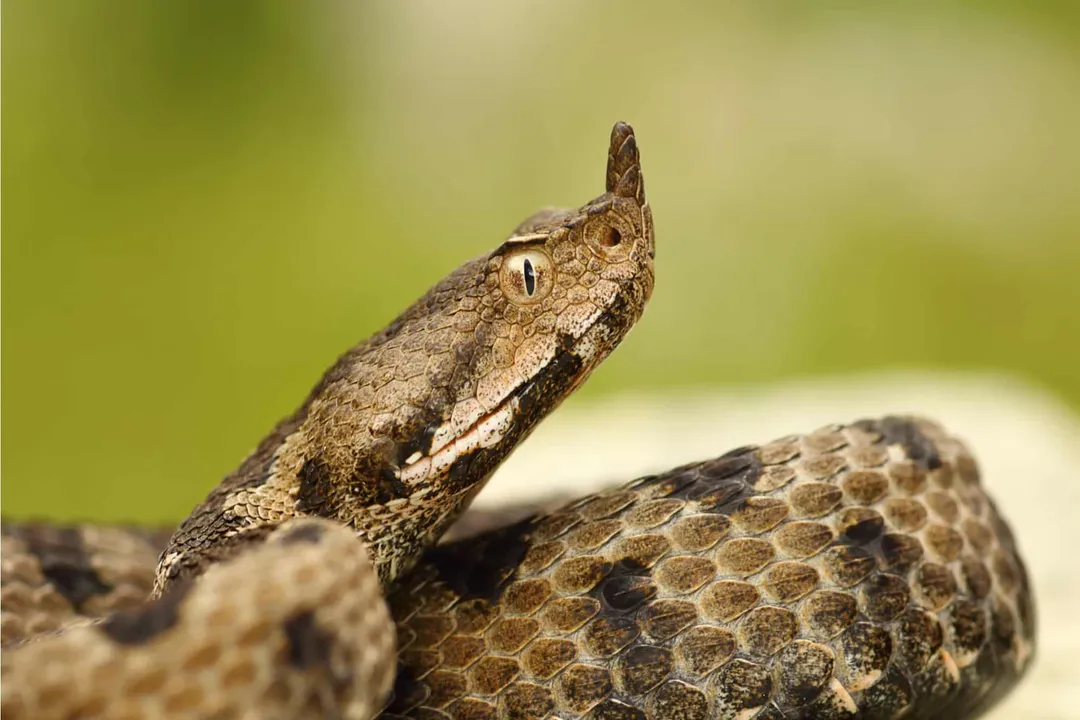
The geographic distribution of the subfamilies is a critical component of their classification, reflecting ancient dispersal events. The Viperidae family originated in the Old World before spreading to the Americas. [3][4]
A fascinating point arises when comparing the ranges of the pit vipers (Crotalinae) and the true vipers (Viperinae). Pit vipers are found in both the Old World (from Eastern Europe eastward through Asia) and the New World (the Americas), south from southern Canada. [3] Conversely, the True Vipers (Viperinae) are restricted to the Old World—Africa, Asia, and Europe—and are explicitly not native to the Americas. [3][4] This clear separation strongly underpins the distinction between the Crotalinae and Viperinae subfamilies from a biogeographical perspective. The Azemiopinae, being restricted to southeastern Asia, reinforces their status as a distinct, more localized lineage. [3]
Considering the global diversity, it is helpful to look at the sheer number of recognized genera within each major group. While the Crotalinae are described as the most diverse with around 250 species, the Viperinae contain about a hundred species, encompassing roughly 13 genera alone in the Viperinae subfamily, including Vipera with 21 species. [3][4]
# Nuances in Taxonomic Grouping
The precise classification of vipers can sometimes be fluid, illustrating the evolving nature of taxonomy. For example, while three subfamilies are currently the consensus, the inclusion of Causus (Night Adders) can complicate matters. [3][4] Some authorities place Causus in its own subfamily, Causinae, noting their unique trait of egg-laying and slightly different fang structure where the maxillary bone moves but the fangs do not fully hinge like typical vipers. [4] Other models may incorporate Causus into the Viperinae. [4]
Furthermore, even within accepted genera, names shift. For instance, some species formerly classified under Bothrops are now placed in Rhinocerophis or Cerrophidion, indicating that even fine-scale species identification relies on ongoing phylogenetic research. [2] When observing lists of genera, such as those detailing genera like Trimeresurus which is split into Protobothrops and Craspedocephalus in more modern views, it’s clear that classification is a dynamic process based on shared ancestry, not just superficial appearances. [2]
If one encounters a viper in Europe, it is highly likely to be a member of the Vipera genus, which includes the common adder (Vipera berus), a species so well-adapted to cooler northern climates that it can be found as far north as the Arctic Circle in countries like Norway and Sweden, surviving cold winters by communal denning. [3][4] This northern hardiness, shared by few other venomous snakes globally, is an ecological trait that accompanies its specific taxonomic slot in the Viperinae subfamily.
It is worth noting that while the overall family Viperidae is defined by the hinged-fang structure, not all snakes that are called vipers or are venomous possess this trait. The term is often used loosely in common naming, but scientifically, true vipers belong to this family characterized by this specific dental morphology. [3] The commitment to the Viperidae family classification rests on these shared, derived characters—fangs, scale structure, and genetic lineage—rather than simply venom potency or habitat alone.
Related Questions
#Citations
Viper - Wikipedia
Viper - A-Z Animals
Viper Diversity - IUCN Viper Specialist Group (VSG)
Viperidae - Mindat
Viperidae - VenomZone
Viper,the snake viper major poison and several types vipers are ...