What is the classification of a nilgai?
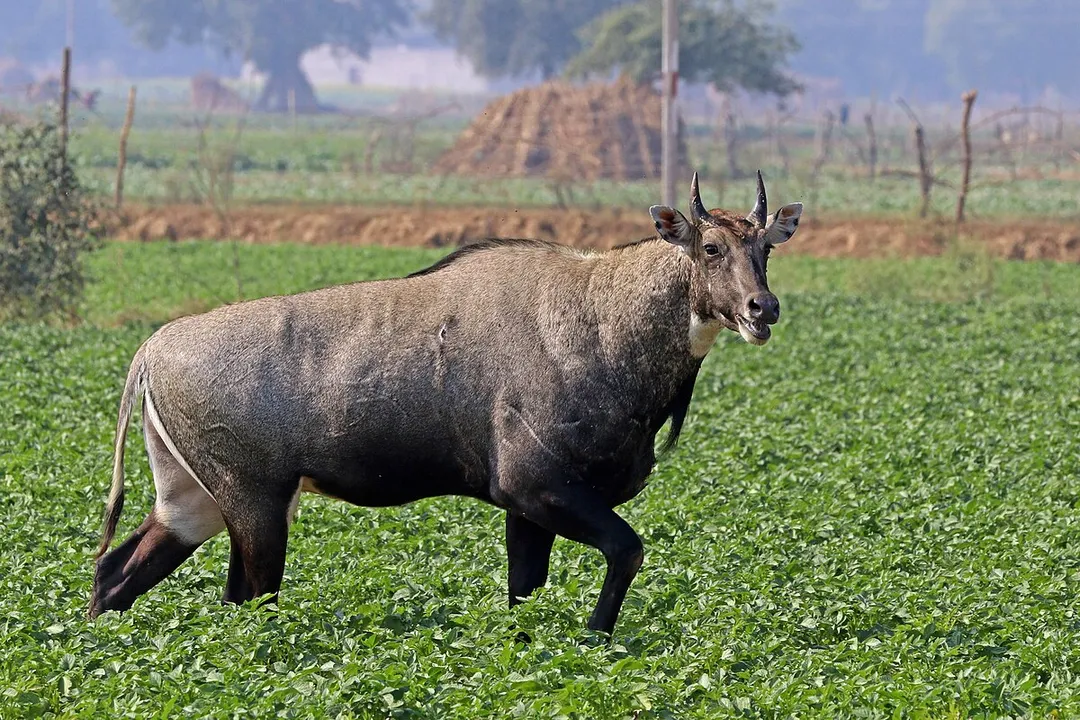
The nilgai, often recognized by its imposing size and the deep slate-blue coat of the mature male, holds a fascinating place in the world of ungulates. Its common names, such as "blue bull," belie its true identity, which is not that of a true bull or even strictly an antelope in the way one might picture the swift gazelles of Africa. Understanding what the nilgai is requires delving deep into its formal scientific classification, a structured hierarchy that reveals its evolutionary relationships to other hoofed mammals across the globe. [1][4][6]
# Linnaean Order
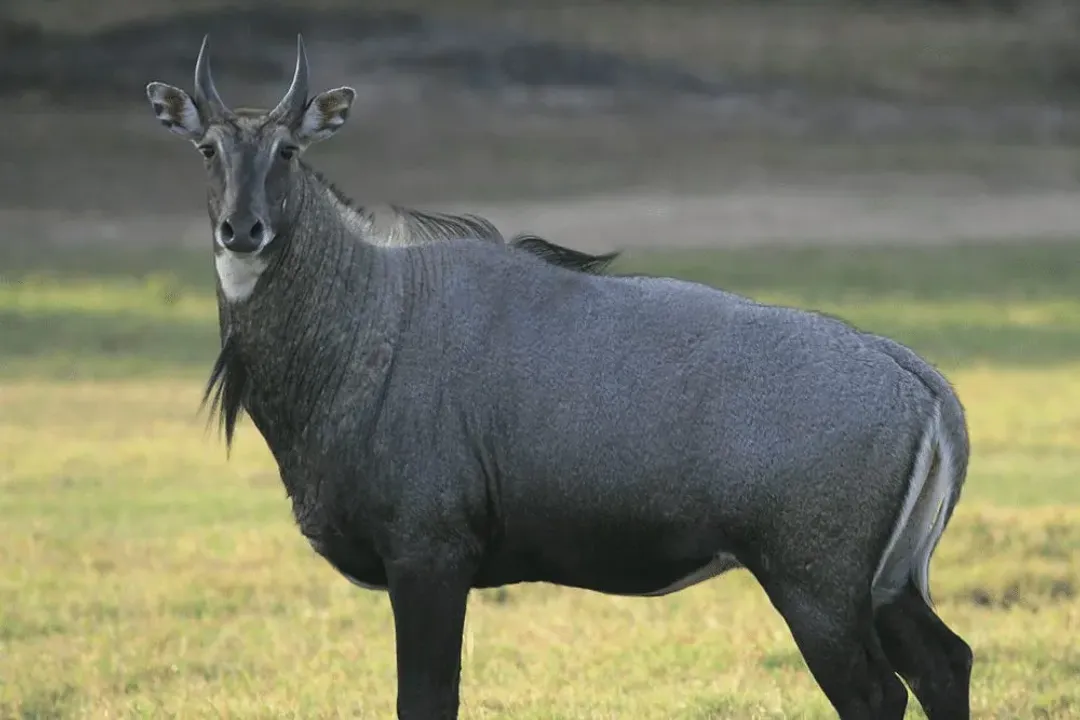
The classification system, established by Carl Linnaeus, places every living organism into a nested set of categories, starting from the broadest and becoming progressively more specific. [1] The nilgai, scientifically named Boselaphus tragocamelus, begins its life in the Kingdom Animalia, signifying it is a multicellular, heterotrophic organism. [1][2][4] It belongs to the Phylum Chordata, meaning it possesses a notochord at some stage of development, characteristic of all vertebrates. [1][2][6]
Moving up the hierarchy, the nilgai falls into the Class Mammalia. [1][2][4][6] This classification is evident in its physical traits, such as bearing live young—as seen when parks welcome pairs of nilgai calves—and nursing them with milk. [7] The Order is Artiodactyla, the even-toed ungulates, a group that includes familiar animals like cows, deer, pigs, and hippopotamuses. [1][2][4][6]
The most defining taxonomic placement for understanding its physical form and relationships is its placement within the Family Bovidae. [1][2][4][6][9] This massive family encompasses all cattle, goats, sheep, bison, and antelopes. [1][4] However, the nilgai distinguishes itself within this large group, inhabiting its own distinct lineage. [1][6]
# Distinct Subfamily
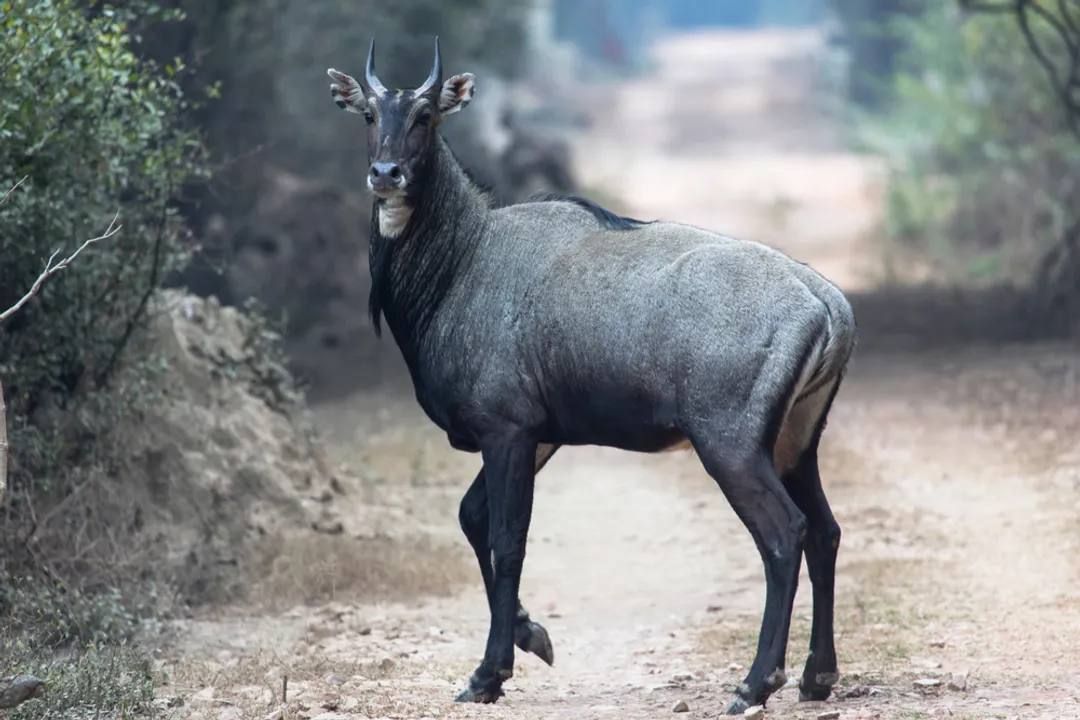
Within the Bovidae family, the nilgai occupies the Subfamily Boselaphinae. [1][2][6] This grouping places it alongside the lesser kudu and the greater kudu, though it is significantly different in appearance and build from those African species. [1] This classification highlights a key point: while it is commonly referred to as an antelope, the nilgai is part of a distinct evolutionary branch separate from the vast majority of African and Asian antelopes that fall into subfamilies like Antilopinae or Hippotraginae. [1][6]
The designation Boselaphus is the genus, which is unique to the nilgai. [1][2][6][8] The species epithet, tragocamelus, is derived from Greek words meaning "goat-camel," likely referencing the male's general ungulate form and the shape of its face or gait. [1] This structure, Genus Boselaphus and Species tragocamelus, confirms that it is a monotypic genus, meaning the nilgai is the sole living representative of its genus. [1] This biological isolation suggests a long evolutionary history distinct from its nearest relatives. [6]
# Common Names Context

While the scientific name provides precise lineage, the common names give clues to historical perception. [1] The term Nilgai literally means "blue bull" in Hindi, referencing the male's color after reaching maturity. [1][4][9] The name "Blue Bull" is used widely, especially in areas where the animal is present in places like Texas, where it has been introduced. [3][9] It's crucial to remember that despite the name, the nilgai is not a bovine; it is an antelope, though an unusual one. [4]
If you look at the physical characteristics that might have confused early observers, the male’s size—reaching shoulder heights near 5 feet—is quite substantial for an antelope, approaching the stature of smaller cattle breeds. [1][4] Furthermore, the heavy build and deep blue-gray coat of the adult male contrast sharply with the fawn coloration of the females and young males, making the species visually diverse. [1][9]
| Taxonomic Rank | Classification | Implication |
|---|---|---|
| Kingdom | Animalia | Multicellular organism |
| Order | Artiodactyla | Even-toed ungulate |
| Family | Bovidae | Related to cattle, sheep, and true antelopes |
| Subfamily | Boselaphinae | Distinct lineage within Bovidae [1][6] |
| Genus | Boselaphus | Monotypic genus, unique to the nilgai |
| Species | B. tragocamelus | The specific classification of the nilgai [8] |
One interesting way to view its classification is through a comparative lens against the true bovines (like Bos taurus). While both are in the Family Bovidae, the nilgai lacks the distinct musculature and horn structure that sets cattle apart, and its gestation period is substantially shorter than that of domestic cattle, closer to 8 to 10 months. [1][4] This evolutionary separation within the same family unit shows that adaptations for grassland life, like those in the Indian subcontinent, drove the nilgai down a path distinct from its Old World cattle cousins. [6]
# Implications of Classification
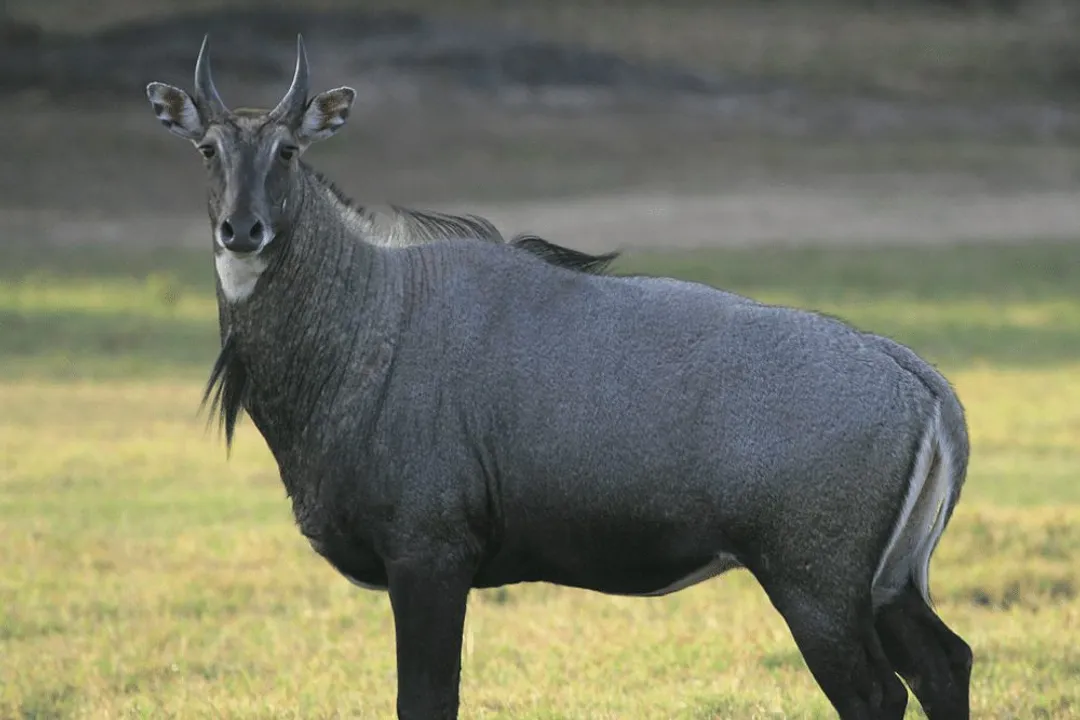
The classification of Boselaphus tragocamelus as a member of the Boselaphini tribe, a group that includes the kudu, tells us something important about its native environment: the nilgai is adapted to drier, scrubland environments, which explains its historical success across large parts of the Indian subcontinent. [4][9] Its ability to thrive in harsh, arid, or semi-arid zones, often consuming thorny browse that other ungulates avoid, is a trait shared by its more specialized kudu relatives, suggesting a common ancestry suited for less lush habitats than those favoring grazers like buffalo or pure grazers like many African wildebeest.
Considering its classification also informs management, particularly in non-native ranges like Texas, where it is classified as exotic or feral wildlife. [9] While it is firmly placed in the ungulate order, its status as a non-native large mammal means it is often managed differently than native white-tailed deer or pronghorn antelope, despite being biologically related at the family level. [9] For trophy hunters, for example, its unique horns—which are not branched like deer antlers but are true, permanent horns like those of cattle or goats—place it in a separate scoring category from cervids. [3][8] The horns are present only on males and curve slightly backward, further distinguishing it from many spiraled or lyre-shaped antelope horns. [1]
Finally, looking at the species name tragocamelus again, it is worth noting how the nilgai manages its water intake, a feature relevant to its historical environment. Like many desert-adapted bovids, it is highly efficient at extracting moisture from the often-sparse vegetation it consumes, minimizing its reliance on open water sources. [4] This is a clear functional outcome reflected in its classification within a group known for surviving in challenging, water-scarce habitats across Asia and Africa. Its biological blueprint, reflected in its taxonomic placement, is one of drought resistance and dietary flexibility. [4][9]
Related Questions
#Citations
Nilgai - Wikipedia
Boselaphus tragocamelus (nilgai) - Animal Diversity Web
Nilgai | TheHunter: Call of the Wild Wiki | Fandom
Nilgai | Habitat, Diet & Conservation - Britannica
Nilgai - Safari Niagara | Get Closer at one of Ontario's Favourite Zoos
Nilgai - The Ultimate Ungulate
Code Green: Nilgai Antelope This morning, our team welcomed a ...
Nilgai | Big Game Hunting Records - Safari Club International Online ...
Nilgai Fact Sheet - Texas A&M AgriLife Extension Service
Nilgai Facts - CRITTERFACTS