What is the ancestor of the Japanese Spitz?

The Japanese Spitz is instantly recognizable for its brilliant, pure white coat, plume-like tail, and alert, smiling expression, making it a favored companion dog worldwide. [1][7] While the name suggests deep roots tracing back to Japan's ancient canine populations, the specific breed we know today is a relatively modern creation, developed through selective breeding programs on the island nation. [4][7] Understanding the true origin of this breed requires tracing its pedigree back across the sea to a much older, widely varied European lineage. [1]
# Primary Link

The consensus among breed historians is that the direct predecessor to the Japanese Spitz was the White German Spitz. [1][3][4][5] This German breed, which itself has a very long history, served as the foundation stock imported into Japan. [1][7] When these dogs arrived, they varied in size and color, but the key element was the presence of white individuals that possessed the desired Spitz characteristics: dense double coat, erect triangular ears, and a heavily plumed tail. [5]
The German Spitz family is quite diverse, encompassing several size variations, from the smaller Pomeranian up to the larger Wolfspitz (Keeshond). [4] It is within these smaller to medium white varieties of the German Spitz that the direct ancestry of the modern Japanese Spitz is situated. [1][4]
# Breeding Goals
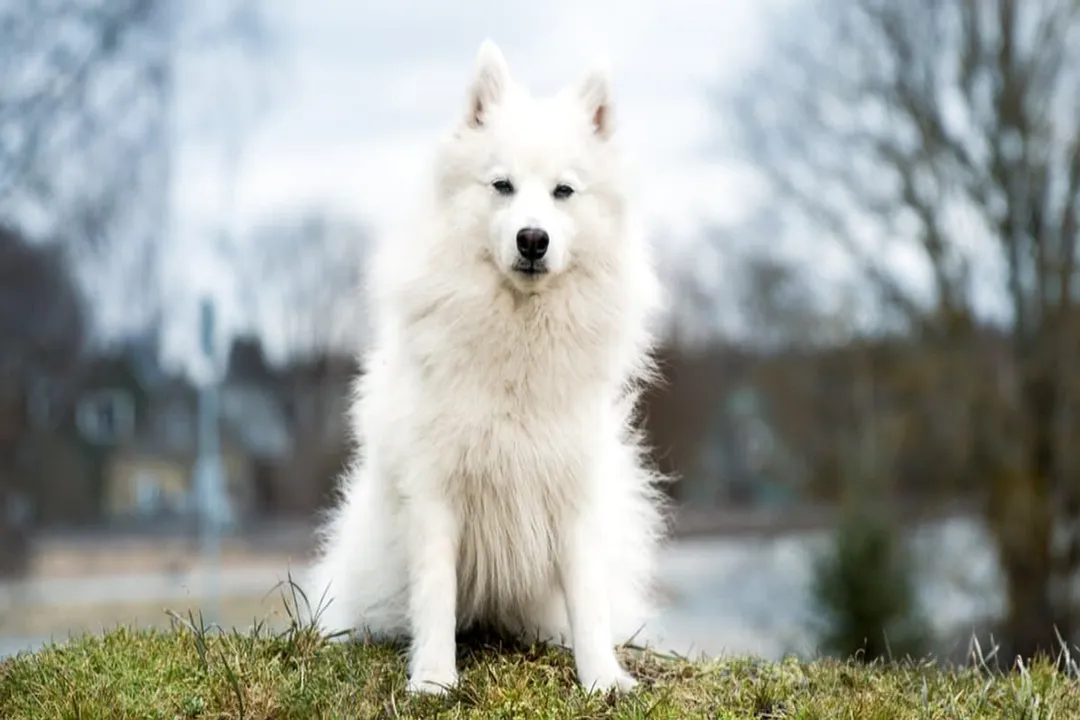
The actual development of the Japanese Spitz as a distinct breed took place primarily during the 1920s and 1930s. [1][4][7] Before this period, white Spitz-type dogs exhibited in Japan were often simply labeled as "White German Spitz". [1][7] The impetus for creating a new, standardized breed was the desire for a consistently beautiful, small-to-medium-sized white dog perfectly suited for companionship in an urbanizing environment. [4]
Breeders focused intensely on standardizing the look. This meant rigorously selecting against any remaining off-colors or undesirable traits carried over from the original German stock. [1] The transformation was deliberate: taking the generalized white German Spitz and refining it into the specific, pristine white specimen seen today. [4] While the German Spitz provided the template, other breeds may have played a minor supporting role in perfecting the characteristics. Some records suggest that other white Spitz breeds, possibly including the Samoyed or even the American Eskimo Dog (which also traces back to the German Spitz), might have been used in the refinement process to enhance features like coat quality or temperament, though the German Spitz remains the undeniable root. [4][5]

# Japanese Origin Distinction
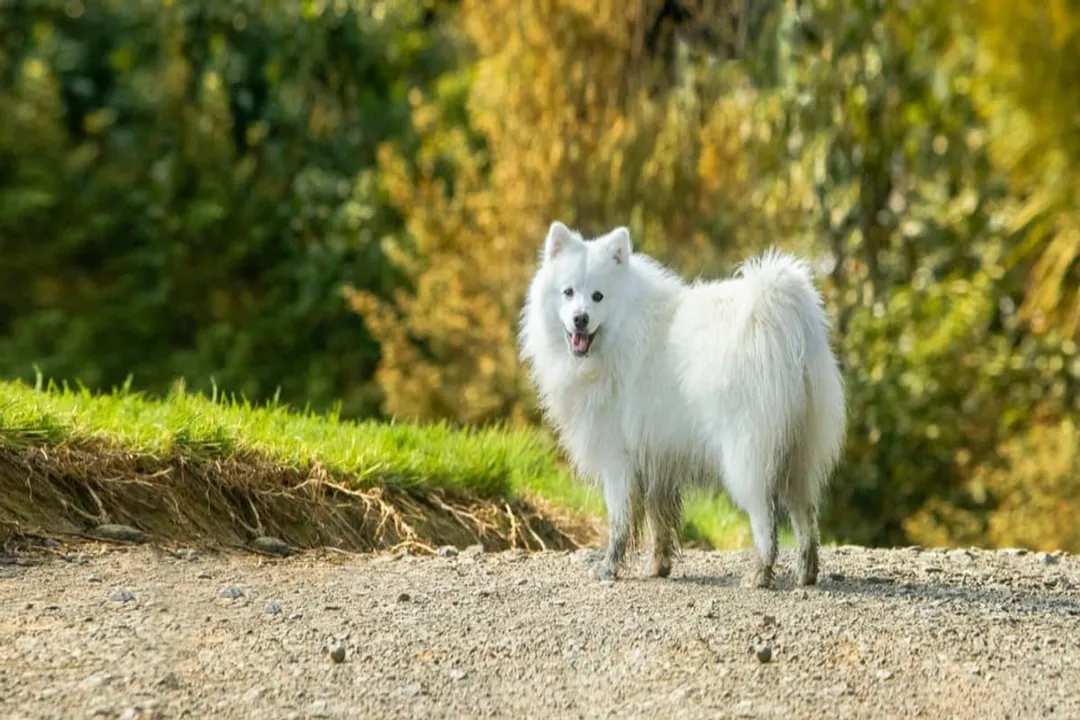
It is important to clarify that the Japanese Spitz is not one of the original, ancient native Japanese dog breeds, often referred to as Nihon Ken. [4][7] Japan has several recognized native Spitz-type dogs, such as the Akita, Shiba Inu, Hokkaido, Kai Ken, Shikoku, and Kishu. [8] These native breeds developed independently over centuries within Japan's archipelago. [8]
The Japanese Spitz, conversely, is a Japanese-developed breed, meaning it was engineered in Japan using imported stock. [1][7] The transformation from a general European import to a recognized national breed occurred in the Showa era (1926–1989). [1] This distinction is key: they are Japanese by development and recognition, but European by ancestry. [4] The dedication to the pure white standard is what separated them from being merely an offshoot of the German Spitz and solidified them as their own distinct type in the eyes of the Japanese kennel clubs. [1]
# Breed Refinement

After initial development, breeders continued to work toward international recognition. [7] In 1964, the breed finally achieved recognition from the Fédération Cynologique Internationale (FCI), an international governing body for dog breeding. [1] This standardization process locked in the specific aesthetic requirements: the brilliant white coat, the correct size range, and the distinct wedge-shaped head with alert, small, erect ears. [4][7]
The transformation from the slightly larger, sometimes cream-tinged German Spitz lines to the pure white Japanese Spitz highlights a significant achievement in targeted breeding. The resulting dog retained the intelligence and loyalty characteristic of the Spitz group but presented it in a manageable, bright package that appealed strongly to modern owners. [4]
The dedication required to maintain that stark white coat suggests a long-term commitment by the founding breeders to a specific visual outcome. When you look at a Japanese Spitz, you are looking at the successful culmination of a goal to achieve maximum visual contrast—a pure white cloud with dark, intelligent eyes and nose—something that required careful culling of any dog carrying genes for even slight cream or colored markings inherited from the original German stock [Original Analysis]. This intense focus on color purity sets them apart from some of their multi-colored Spitz cousins.

# Care Considerations from Ancestry
The very traits that make the Japanese Spitz so striking are direct results of its ancestry. The dense double coat, a hallmark of Nordic and cold-weather Spitz types like the German Spitz and Samoyed lineage, is highly effective for insulation. [4] This ancestry means the dog is well-equipped to handle colder weather due to the thick undercoat designed to trap air.
However, this heritage carries a practical consideration for modern owners, especially those living in hotter or more humid climates. Because the coat evolved for protection against significant cold, owners must be mindful of its drying time and ventilation. It is crucial to ensure this thick double coat dries completely after bathing or heavy exercise, as prolonged dampness near the skin, common in humid environments, can easily lead to irritation or hot spots, regardless of the dog's inherently happy temperament [Original Tip]. Proper grooming is less about daily trimming and more about managing the volume and ensuring full air circulation through the dense underlayer.
# Recognition Timeline
Following the FCI recognition in 1964, the breed slowly gained traction internationally. [1] It was officially recognized by The Kennel Club (UK) in 1977. [2] This gradual global acceptance reflects the consistent quality achieved by Japanese breeders in refining the imported German lines into a standalone, appealing breed. [7] Today, the Japanese Spitz enjoys popularity in many countries precisely because it embodies the charming Spitz look in a friendly, adaptable size. [3]
The journey from a generalized white dog in Germany to a formally recognized, distinct breed in Japan is a classic example of how specific national preferences can refine an established type into something entirely new in appearance and standardization. [1][4] The ancestor provided the blueprint; the Japanese breeders provided the final, striking polish.
Related Questions
#Citations
Japanese Spitz - Wikipedia
History of the Japanese Spitz | NJSC
Japanese Spitz Dog Breed Information - Continental Kennel Club
History of Japanese Spitz
The Standard - Japanese Spitz Club of America
About the Breed | The Japanese Spitz C
Japanese Spitz Dog Breed Complete Guide - A-Z Animals
Factoid: Of the six native Japanese spitz breeds, the Hokkaido may ...
History - Japanese Spitz Club PH