What group is the German Spitz in?

The classification of the German Spitz is perhaps one of the most fluid and geographically dependent topics in the dog world, reflecting a rich history where a single foundational breed has been split, merged, and categorized differently across international kennel clubs. The initial question of "What group is the German Spitz in?" rarely yields a single, straightforward answer; instead, it reveals a fascinating look into how pedigree organizations manage breed standards and evolution.
# Grouping Dilemma
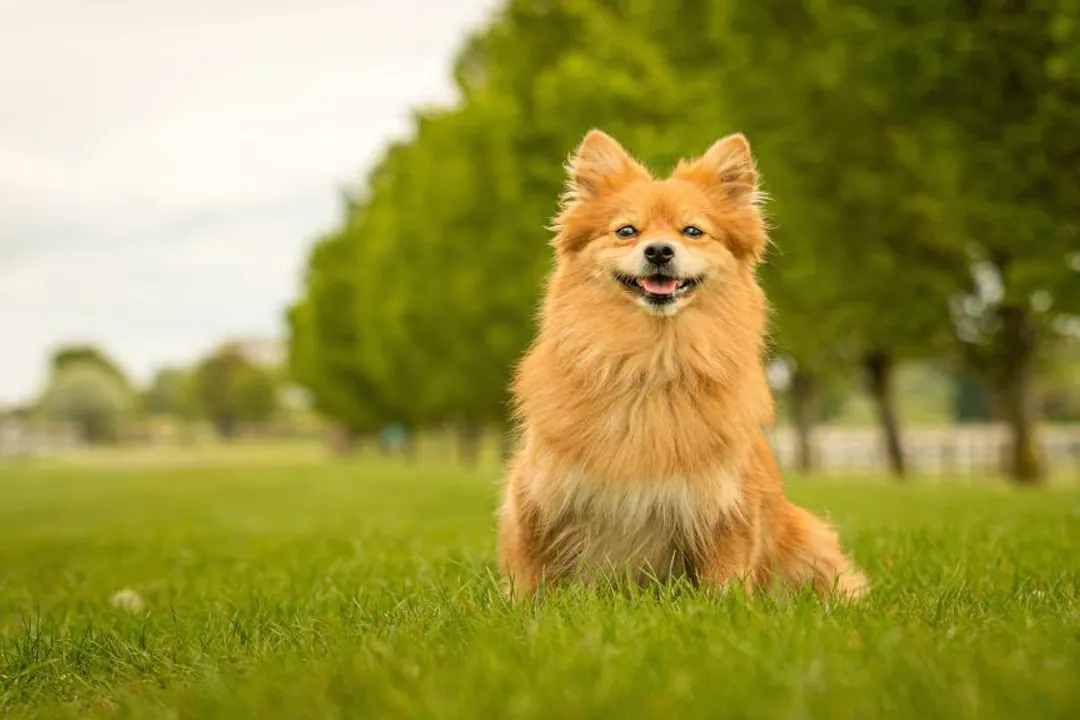
To understand where the German Spitz belongs, one must first recognize that it is considered a single breed—Deutscher Spitz—in its native Germany and under the Fédération Cynologique Internationale (FCI) standard, which encompasses five distinct varieties based on size: the Wolfsspitz/Keeshond, the Giant Spitz (Großspitz), the Medium Spitz (Mittelspitz), the Miniature Spitz (Kleinspitz), and the Pomeranian (Zwergspitz). However, once these varieties are exported or recognized by national bodies outside the FCI system, the lines often blur or split, leading to different group placements.
Historically, these Spitz-type dogs are among the oldest in Central Europe, originally serving roles on farms for herding and guarding. This working heritage often clashes with their modern role as companion animals, which heavily influences their current kennel club group assignments. The variation in group placement often hinges on whether a registry recognizes the breed as a unified concept or if they separate the size varieties, particularly the Pomeranian, which is often seen as a distinct toy breed outside of FCI-governed regions.
# American Kennel Club Status

In the United States, the American Kennel Club (AKC) provides one of the most common—and perhaps surprising—placements for the German Spitz: the Non-Sporting Group. This grouping is reserved for breeds that do not neatly fit into the established Working, Herding, Hound, Terrier, Toy, Non-Sporting, or Sporting categories, often comprising breeds with diverse functions or those that have evolved primarily into companions.
The AKC lists the German Spitz as having been recorded in its Foundation Stock Service since 1996 and approved for competition in AKC Companion Events since January 1, 2010. The description from the AKC highlights the breed’s character as active / devoted / smart, noting its reserved nature toward strangers and its vigilance, traits fitting a historical watchdog. The assignment to the Non-Sporting Group suggests that while the breed retains its historical alertness, it is primarily recognized by the AKC as a versatile companion dog rather than one fitting the mold of a specialized working or sporting role.
It is worth noting that the Pomeranian, which the FCI classifies as the smallest variety of the German Spitz, is recognized separately by the AKC within the Toy Group due to its significantly smaller size and historical development focusing on companionship. This divergence—keeping the larger varieties under one name in one group, while separating the smallest into another—is a key element in understanding American registry politics for this breed family.

# UKC Grouping Structure
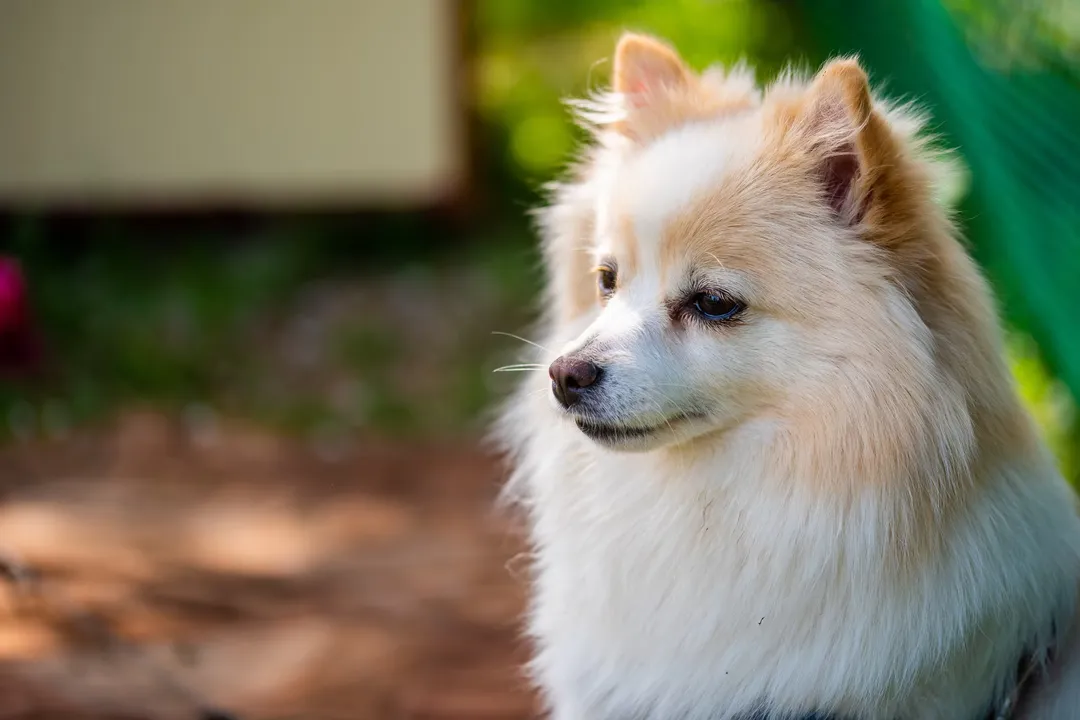
The United Kennel Club (UKC) offers a different perspective, placing the German Spitz into the Northern Breed Group. This designation groups dogs that generally share characteristics with Nordic breeds, often including those with thick double coats and Spitz-type features—qualities the German Spitz certainly possesses with its ruff, bushy tail carried over the back, and foxy head.
The UKC recognizes the German Spitz in two sizes: the Klein (Miniature) and the Mittel (Medium). The UKC’s decision to align the German Spitz with other northern or Spitz-type dogs suggests a greater emphasis on the breed’s physical appearance and ancestral type when making their classification, rather than its more recent role as a small companion animal. This alignment with other spitz-types, such as the Keeshond (which is sometimes classified separately from the Wolfsspitz/largest German Spitz variety in other countries), points toward prioritizing shared physical characteristics inherited from their ancient ancestry.
# International and Other National Placements
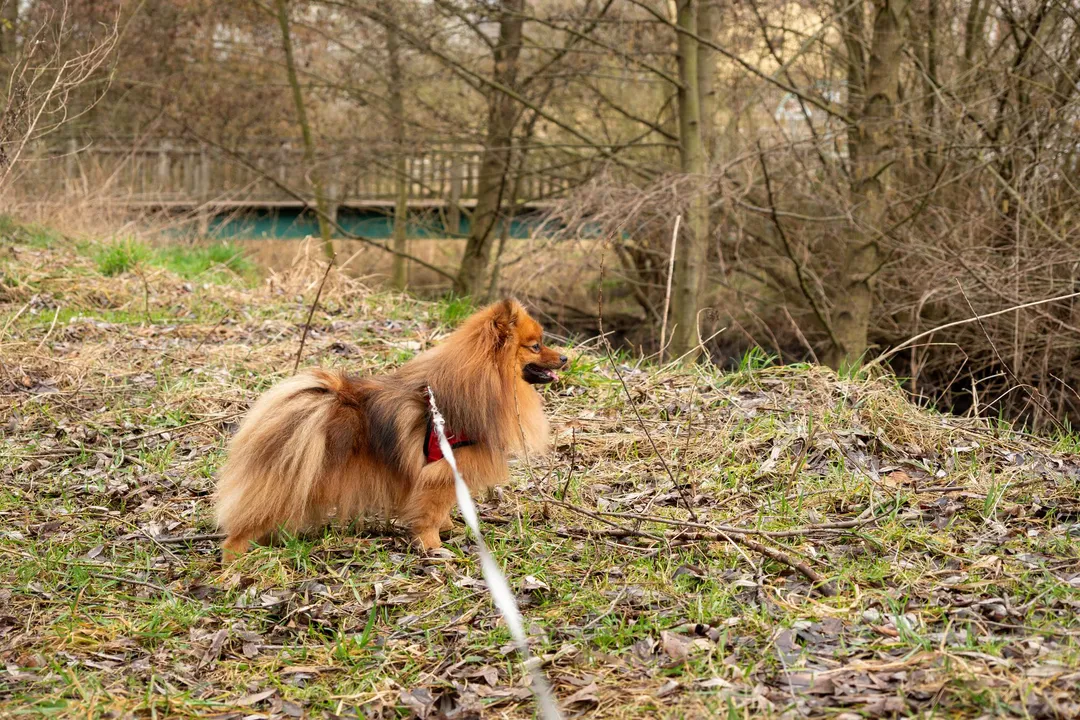
The picture becomes even more varied when looking beyond the main US registries. In the United Kingdom, the Kennel Club seems to align the German Spitz—especially the Klein and Mittel varieties—with the Utility Group, similar to the classification used by some observers in the USA. The Utility Group, much like the AKC’s Non-Sporting Group, tends to be a catch-all for breeds that don't fit neatly into the more functional categories, often reflecting their primary modern role as companions.
Meanwhile, in Australia, Dogs Victoria places the German Spitz (Klein and Mittel) into GROUP 7 - NON SPORTING. This mirrors the AKC's decision, again suggesting that in regions where the Pomeranian is already established separately, the remaining German Spitz sizes fall into the category for established companions whose original purpose is no longer their defining feature for registration purposes.
The defining feature across many international kennel clubs, governed by the FCI standard, is that the Deutscher Spitz is one overarching breed defined by size standards for each variety. This structural difference—one breed versus multiple separate breeds—is the root cause of the international variation in group assignment. A prospective owner looking to register a dog for conformation shows must pay close attention to the specific rules of the country and registry they plan to enter, as a dog considered a German Spitz in one country might be registered as a Pomeranian or not recognized at all under the same name elsewhere.

# Analysis of Grouping Discrepancies
The variation in group placement is a direct reflection of which breed characteristic a kennel club prioritizes: function, size, or overall type.
For registries like the UKC, prioritizing type leads to the Northern Breed Group, emphasizing their shared ancestry with dogs like the Siberian Husky or Samoyed, emphasizing the Nordic heritage. For registries like the AKC and Dogs Victoria, the emphasis leans toward the breed’s modern function and size relative to other established breeds, pushing the smaller, companion-focused varieties into the Non-Sporting Group.
Consider the historical context: The German Spitz was a farm guardian, quick to bark and alert, possessing high energy and intelligence. These traits suggest a need for a "Working" or "Herding" group if we prioritized pure function. However, because the smaller lines were selectively bred down in size, ultimately culminating in the Pomeranian, the remaining sizes occupy a less defined space in modern classification schemes. The AKC’s Non-Sporting placement essentially acknowledges the breed’s current status as a companion dog that doesn't fit other functional boxes, even though their temperament retains guardian instincts, making them "Very Vocal" watchdogs. If one were to chart the breed's historical roles against modern groups, it’s evident that their evolution has outpaced the neat categorization of modern clubs, forcing them into the closest available holding category.
Furthermore, the split with the Pomeranian creates a unique challenge. In FCI countries, the Pomeranian is the Toy German Spitz, meaning the entire breed concept stays together, likely keeping the whole collection within a broader group reflecting their spitz heritage (though the FCI group structure varies by country, they group the Pomeranian under Utility/Companion types in some areas, or as a distinct Toy group due to size dominance). In countries where the Pom is separate, the German Spitz must establish its own identity, often landing in the group dictated by its size relative to the remaining varieties.
# Practical Ownership Considerations
For anyone interested in owning or showing a German Spitz, knowing its group affiliation is not merely trivia; it is a practical matter that dictates competition paths and often influences breed recognition status within a country. If your primary interest is showing in breed-specific events, seeking out breeders who are actively involved with the national parent club, such as the German Spitz Club of America (GSCA), is essential. The GSCA standard acknowledges the various sizes and maintains the breed’s core identity.
When speaking with a potential breeder, it is useful to ask not just about the parent club registry, but also which national kennel club recognizes their dogs and what group they compete in. This immediately tells you about the local recognition status of the specific size variety you are interested in. For example, if you are in an area where the Mittelspitz competes in the Utility Group, you will be seeking classes tailored to that group, which might involve different judging criteria than a breed in the Toy Group.
Regardless of which official group the German Spitz lands in—be it Non-Sporting, Northern Breed, or Utility—their defining characteristics remain constant: they are highly intelligent, devoted to their owners, active, and inherently vocal watchdogs. Their coat demands dedicated care, requiring brushing at least every other day to manage the thick double coat, and shaving is strongly discouraged as it removes crucial insulation against both heat and cold. Prospective owners must be prepared to meet the needs of an active, intelligent dog that retains its ancient watchdog instincts, irrespective of whether the judge at a conformation show calls them a Northern or Non-Sporting entry. That independent streak, combined with high intelligence, means consistent positive reinforcement training is the key to channeling their energy away from excessive barking and toward performance sports like agility or obedience.

# Breed Varieties Summary
To illustrate the variation that contributes to the grouping confusion, here is a look at how different organizations define the size spectrum within the German Spitz family. Note that the Pomeranian is included here as it is often considered the smallest Zwergspitz variety under the FCI umbrella.
| Variety Name (English) | Common German Name | Typical Height Range (Inches) | Typical Weight Range (Lbs) | Primary Kennel Club Grouping Example |
|---|---|---|---|---|
| Toy Spitz (Pomeranian) | Zwergspitz | 7 – 9.4 in | 3 – 7 lbs | AKC Toy Group |
| Miniature Spitz | Kleinspitz | 9.4 – 11.8 in | 7 – 11 lbs | AKC Non-Sporting / UKC Northern |
| Medium Spitz | Mittelspitz | 12 – 16 in | 15 – 25 lbs | AKC Non-Sporting / UKC Northern |
| Giant Spitz | Großspitz | 17 – 20 in | 30 – 50 lbs | Varies, often separate or with larger utility dogs |
| Wolfsspitz/Keeshond | N/A | 17 – 22 in | 33 – 44 lbs | Often recognized as a separate breed |
The commitment required for a German Spitz is not dictated by their group placement in a show catalog but by their innate personality—attentive, lively, and exceptionally devoted. Whether they are guarding the hearth or competing in the ring, they need an owner prepared to dedicate time to grooming and mental engagement, ensuring that the dog's heritage as a smart, active worker is satisfied within a modern companion setting.
Related Questions
#Citations
German Spitz - Wikipedia
German Spitz - Dog Breed Information - American Kennel Club
Standard German Spitz Dog Breed Information
German Spitz vs Pomeranian Differences Explained in Detail
Breed Standards : German Spitz | United Kennel Club (UKC)
German Spitz Dog Breed Guide - Time for Paws
German Spitz Dog Breed Health and Care - PetMD
German Spitz - (Klein) (Mittel) Breeds - Dogs Victoria
German Spitz Club of America