What is special about the Bullfinch bird?
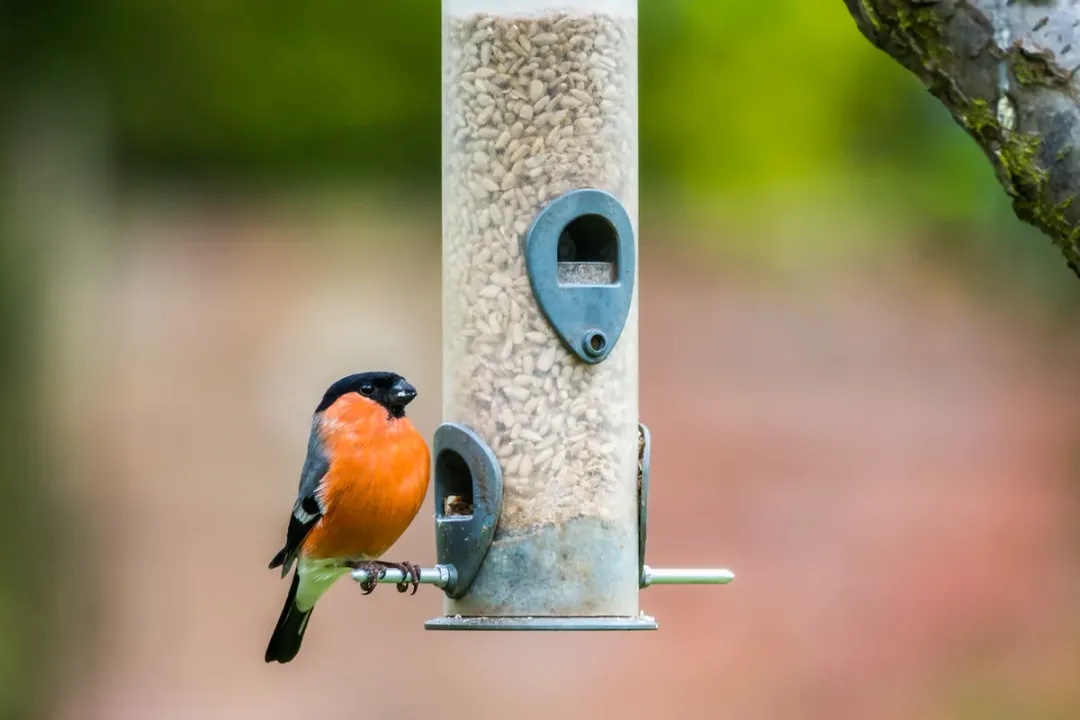
The sight of a male Bullfinch is often described as an absolute treat for birdwatchers, a splash of vibrant colour against the winter grey or the fresh green of spring foliage. While many finches grace our gardens, the Eurasian Bullfinch (Pyrrhula pyrrhula) possesses a combination of striking looks, remarkably subtle behaviour, and unique feeding adaptations that set it apart from its relatives. Despite its beauty, this bird tends to remain aloof, making the moments you do spot one feel particularly special. It is this duality—vivid appearance paired with extreme shyness—that is perhaps the most compelling characteristic of the Bullfinch.
# Colour and Form
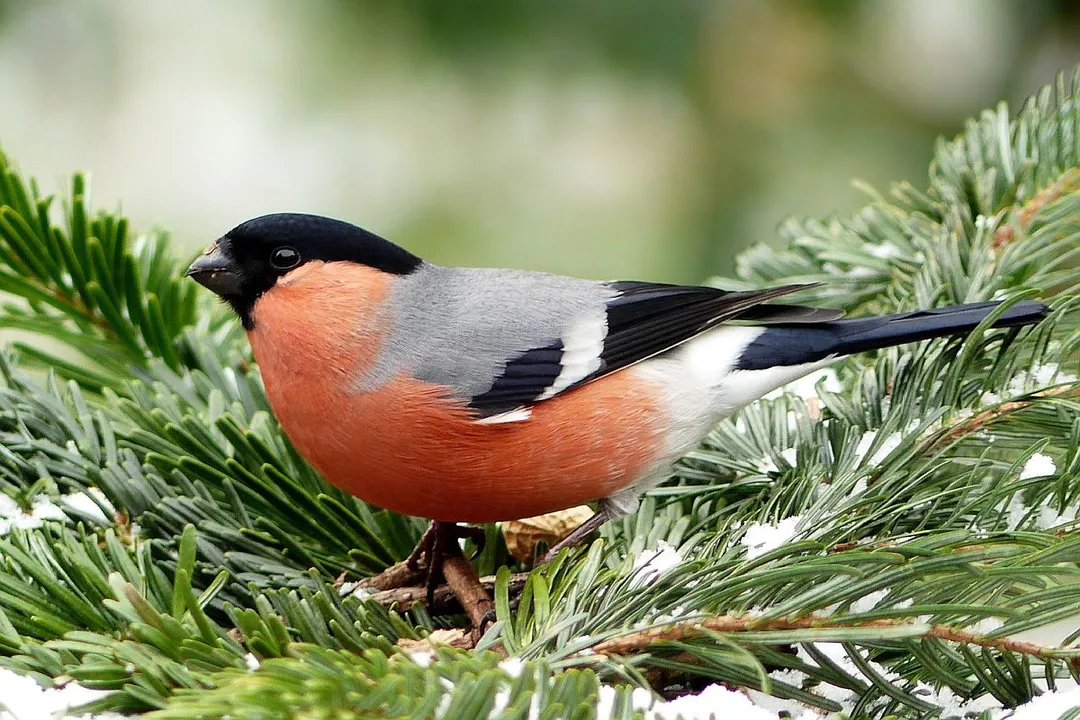
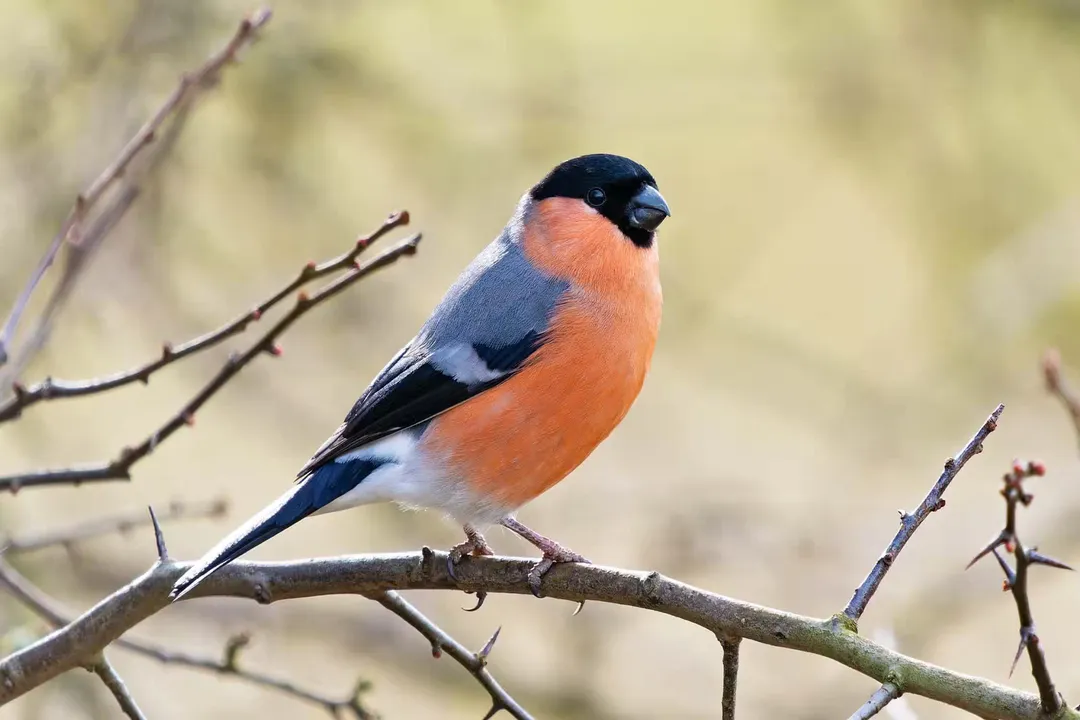
What immediately distinguishes the Bullfinch, even before one hears its call, is its unmistakable appearance, particularly the stark difference between the sexes. The male is instantly recognizable by his bright rose-red or pinkish-red breast and cheeks, which contrast sharply with a distinct black cap and a pale grey back. Both sexes share this black cap, a black tail, and a bright white rump, the latter being a noticeable flash when the bird takes flight. Females, while still beautiful, are much duller; their underparts are a muted pinkish-grey or buff, offering better camouflage than the male’s fiery display. The very name "Bullfinch" is thought to stem from the bird’s stocky, front-heavy silhouette and short, deep bill, giving it a somewhat bull-headed look. The species is medium-sized for a finch, generally measuring between 14.5 to 16.5 cm in length.
If you compare this physique to a more common garden visitor like the Chaffinch or Greenfinch, the Bullfinch’s build is noticeably more compact and robust. This heavy construction, coupled with its stout, conical bill, is a direct adaptation to its specialized diet. Where other finches might crack seeds efficiently, the Bullfinch’s apparatus is perfectly engineered for a tougher task: systematically stripping and crushing woody flower buds off branches. This robust framework allows it to exert considerable force for its size, making it an extremely efficient forager when buds are the primary food source, particularly in late winter and early spring when seeds become scarce.
# The Quiet Language
In sharp contrast to the noisy, almost aggressive territorial calls often associated with common finches, the Bullfinch is renowned for its quiet, understated vocalizations. You are often far more likely to see a Bullfinch than to hear one, as they typically avoid making loud announcements. The most common sound heard is a very soft, low, short whistle, often transcribed as “peu” or “pui”. This single note frequently has a slight downward inflection, which humans often interpret as plaintive or melancholy. Though gentle, this piping note can carry surprisingly far through dense woodland or quiet air.
Vocalizations become more complex when birds are separated, sometimes resulting in a double-note call that suggests mild anxiety, or even short series of notes that approach a soft, musical sequence. However, what passes for the Bullfinch’s true "song" is even more subdued. Both males and females produce a series of very gentle squeaks, soft trills, and almost mechanical creaking or sucking noises. This intimate communication is almost always delivered at very close range to a mate and can be so faint that it is nearly inaudible beyond a few metres, sometimes likened to the sound of a dry hinge creaking on an old door. This reserved auditory profile suggests that their soundscape is primarily for close-contact maintenance of pair bonds rather than wide-ranging territorial defense, which is unusual among highly visible passerines. It is also interesting to note that historical accounts mention Bullfinches were once popular cage birds precisely because they could be taught to imitate human tunes or specific bird flutes, implying a capacity for learned vocalization beyond their natural soft repertoire.
# A Budding Specialist
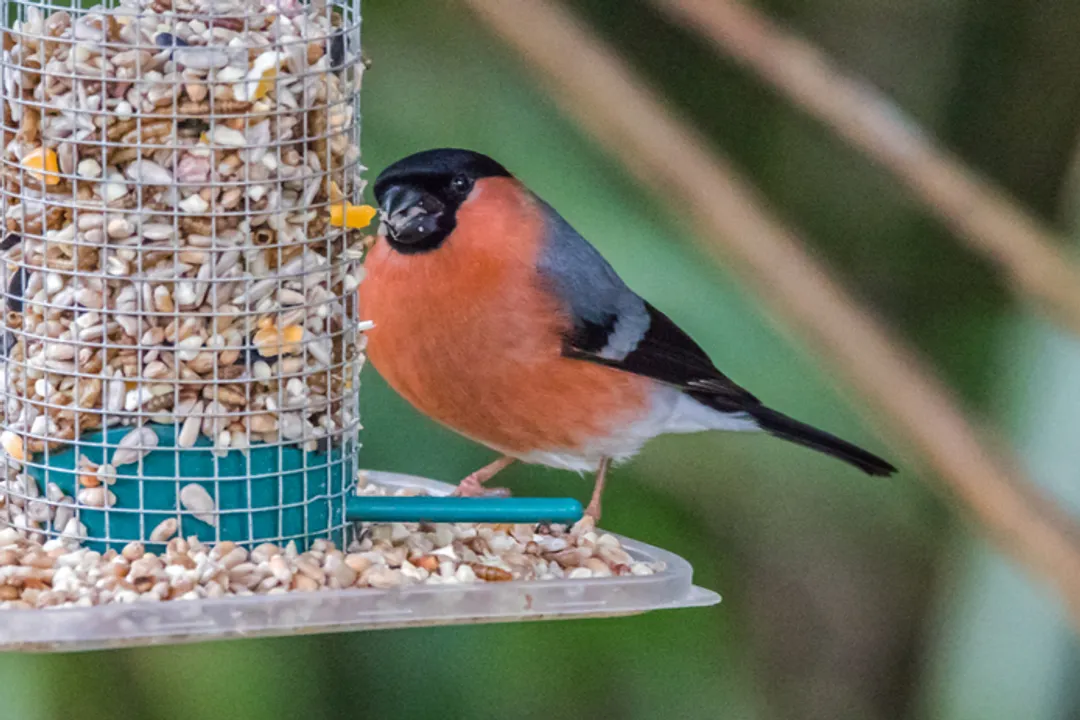
The Bullfinch’s diet is highly seasonal and specialized, which significantly influences its behaviour and relationship with human environments. While they consume seeds and will take small insects when feeding their young in the summer—a necessity for protein in the chicks’ diet—their defining dietary habit is the consumption of tree buds. They show a strong preference for the more nutritious flower buds over leaf buds, and they can strip the buds from a branch at an astonishing rate, sometimes consuming up to 30 buds per minute when food is plentiful.
This preference has historically caused friction with people, particularly fruit farmers. For centuries, Bullfinches were viewed as pests due to their enthusiastic sampling of the buds on apple, cherry, and plum trees. In the 16th century, King Henry VIII even legislated against them, offering a bounty for every trapped bird. Ironically, modern research suggests that commercial fruit trees can often sustain the loss of up to half their buds without any measurable impact on the final harvest, meaning the systematic culling that occurred for years may have been largely unnecessary. Furthermore, the decline in native arable weeds has reduced natural seed sources, pushing Bullfinches even more towards cultivated fruit buds as a fallback in hard winters.
Beyond their standard diet, Bullfinches possess a truly unique physical trait within the finch family that assists their provisioning duties. They have developed specialized food sacs located in the floor of their mouths. This adaptation allows the parents to carry a much larger quantity of food back to the nest in a single foraging trip, a clear advantage when feeding demanding chicks.
# Pairing and Habitat Preferences
Bullfinches exhibit strong social characteristics that contribute to their distinct profile. They are known to form permanent pair-bonds that often last over several breeding seasons, sometimes for life, meaning you are frequently more likely to encounter them as a devoted couple rather than in large, noisy flocks. While small flocks may gather at abundant feeding sites during the winter, studies observing their movements between these sites suggest they travel either individually or in pairs, maintaining their bond even during winter dispersion. Interestingly, in some contexts, the female has been observed showing dominance over the male.
Their habitat preference leans towards areas with thick cover, such as woodlands, copses, and dense hedgerows, which they favor for nesting. They are generally considered one of the shyest of the garden birds, preferring the canopy or dense shrubbery, which makes seeing them a special event. While Continental European birds often favor coniferous forests, the British populations typically associate more closely with broadleaved trees. This preference for dense cover, combined with their quiet nature, explains why they are only regular visitors to a small percentage of gardens, even when food is available.
If you are hoping to observe these birds in your own green space, consider the context of their shyness and dietary needs. While they might visit a feeder for seeds, they are most likely to be found foraging for buds or seeds in the denser, less disturbed areas of your property. A useful observation tip is to watch the tips of twigs on fruit trees, particularly after a period of harsh weather, as this is when their specialized feeding behaviour is most pronounced and they must maintain their energy reserves. Furthermore, since they are relatively sedentary—British birds rarely move far from their breeding territories—a sighting often means you have found a resident pair in the area, even if they remain hidden for weeks at a time.
# Status and Survival
The Bullfinch’s conservation story is complex and varies geographically. In many areas, including the UK, the species has undergone a noticeable population decline over the last half-century. Their status in the UK is often listed as Amber, indicating they are of conservation concern, with population changes noted as a decrease over specific periods. The reasons for this decline are varied, but habitat degradation—specifically the loss of native woodland and thick hedgerows—is considered a major contributing factor. The intensification of agricultural practices, which reduces the availability of wild seeds that would naturally sustain them during colder months, also likely plays a part.
It is worth noting the existence of distinct subspecies, such as the critically endangered Azores Bullfinch, which is restricted to a single island and is one of the world's rarest birds, with fewer than 120 breeding pairs. Conversely, Northern European populations that migrate south in winter can sometimes reach Central Europe, and these visitors are often noted to be slightly larger and brighter than their native counterparts. The very fact that they were once considered a pest requiring legal culling, yet now face significant threats that contribute to population reduction, highlights a shift in human interaction with this species, moving from agricultural adversary to a bird needing protection.
The special quality of the Bullfinch lies in its quiet persistence and hidden beauty. It asks very little of the environment beyond dense cover and a reliable supply of buds, yet offers a spectacular visual reward to the patient observer. Its unique physical tools, like the specialized food sacs, alongside its subtle, almost secretive social communication, paint the picture of a perfectly adapted, reserved woodland resident. For any nature enthusiast, spotting that flash of rose-red chest emerging from a hawthorn hedge is a genuine measure of quiet success.
#Videos
Things you need to know about the BULLFINCH! - YouTube
Related Questions
#Citations
Things you need to know about the BULLFINCH! - YouTube
Bullfinch Bird Facts - RSPB
All you need to know about the bullfinch - Discover Wildlife
Top 10 Facts About Bullfinches - Happy Beaks Blog
BULLFINCH (Pyrrhula pyrrhula) - songbird factfile - SongBird Survival
BULLFINCH (Pyrrhula pyrrhula) - Bouvreuil pivoine - wildechoes
Living with Birds 21 Facts on Bullfinch Tweetapedia