What family of birds are swans in?

Swans hold a distinguished position among the waterfowl, being members of the biological family Anatidae. [1][2][5][10] This expansive family is quite familiar to most birdwatchers, as it encompasses not only swans but also the more numerous and varied groups of ducks and geese. [1][5][9] To understand where a swan fits in the grand scheme of avian life, one must first appreciate its extended family, the Anatidae, which represents a significant portion of the world's swimming and surface-feeding birds. [2][10] The defining characteristic linking a swan to a mallard or a Canada Goose is this shared ancestry within the order Anseriformes. [10]
# The Anatidae Family
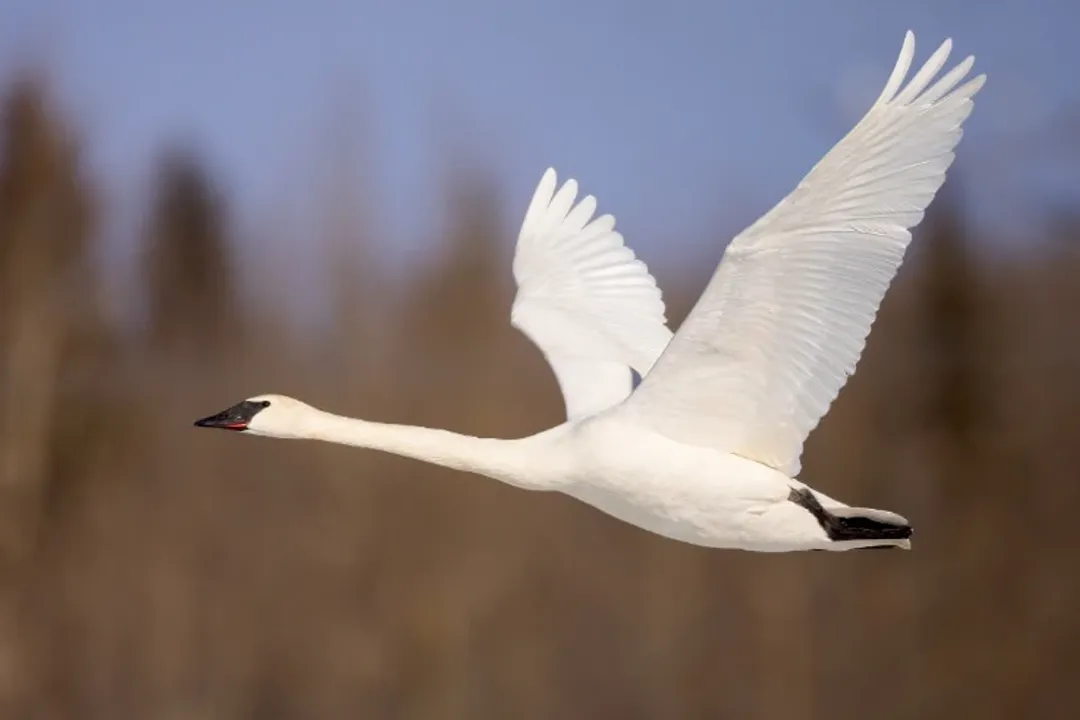
The family Anatidae groups together birds adapted for life on or near water, often referred to as waterfowl. [2][10] Within this group, swans are usually distinguished by their sheer size—they are the largest members. [1][2] If we were to compare the members of this family, swans, geese, and ducks, they share traits like webbed feet, which aid in their aquatic lifestyle, and a flattened bill suitable for filtering or grazing. [1] However, the morphological differences are clear, even to a casual observer. [2] Geese tend to have shorter necks than swans but longer necks than most ducks. [1] Swans, on the other hand, are characterized by their remarkably long, gracefully curved necks. [1][2][7]
While ducks often exhibit extreme sexual dimorphism, meaning males and females look quite different (think of the brightly colored male mallard versus the drab female), swans generally display less obvious sexual differences in plumage, though males (cobs) are often slightly larger than females (pens). [1] This shared family membership means that a swan’s skeletal structure and digestive adaptations for a water-based diet are fundamentally related to those found in ducks and geese. [5] Birds within Anatidae display a wide spectrum of behaviors, ranging from the gregarious, grazing habits of many geese to the specialized diving or dabbling techniques of various duck species. [1]
# Swan Classification
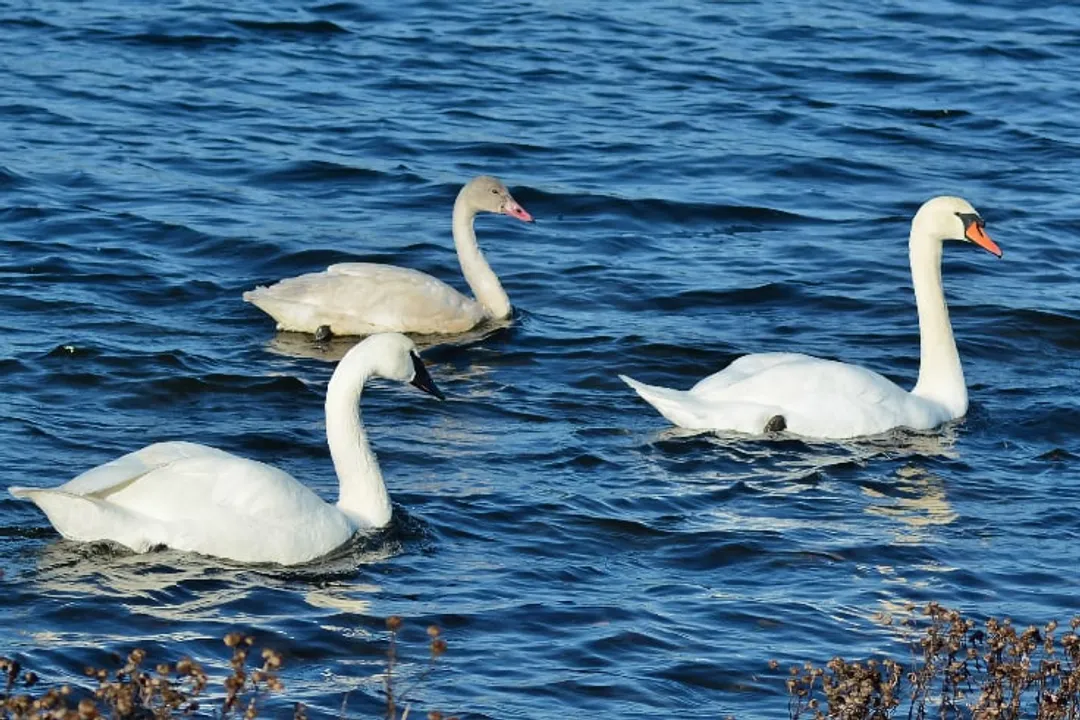
Within the vast Anatidae family, the true swans are classified under the genus Cygnus. [1][5] This genus groups the largest extant members of the family. [1] While there are variations in neck length relative to body size, swans possess disproportionately long necks compared to their close relatives, the geese. [1] The classification of swans can sometimes be nuanced, as a few species, particularly those found outside of Eurasia and North America, have sometimes been placed in different genera historically, although modern taxonomy generally groups them under Cygnus. [2][7]
There are several widely recognized species within the genus Cygnus. The Mute Swan (Cygnus olor) is perhaps the most iconic in many parts of the world, easily recognized by the prominent black knob at the base of its bill. [1][7] In contrast, the Black Swan (Cygnus atratus), native to Australia, is notable for its entirely black plumage, contrasting sharply with the white species found in the Northern Hemisphere. [1][6][7] Other significant species include the Trumpeter Swan, the Tundra Swan, and the Whooper Swan. [1][7] The species diversity highlights different evolutionary adaptations to regional climates and food availability across continents. [2] For instance, a species like the Mute Swan is considered partially migratory or resident in many areas, while others, like the Tundra Swan, undertake extensive seasonal movements. [8]
A comparison of their appearance can sometimes be simplified: Northern Hemisphere swans are typically entirely white, save for some black on the face or bill parts, while Southern Hemisphere swans, like the Black Swan, exhibit darker coloration. [7] This suggests that differing light environments or predator pressures may have influenced plumage evolution in geographically separated populations within the same genus. [1]
# Foraging Methods
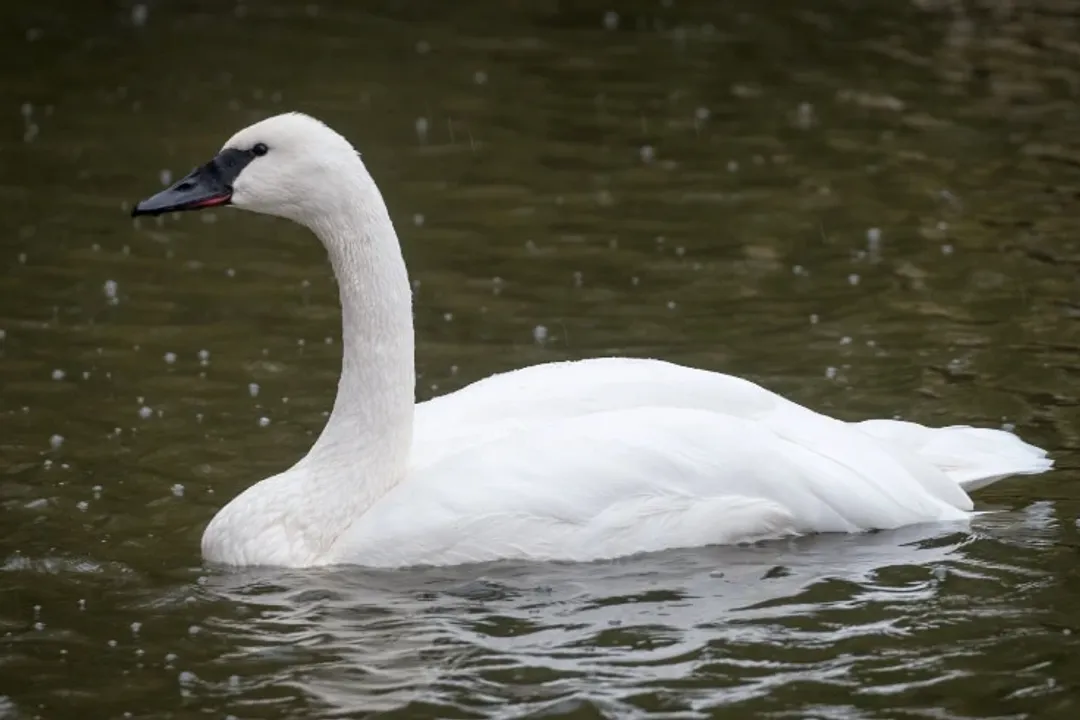
The feeding habits of swans strongly align them with their family’s aquatic specialization, although their size dictates a slightly different approach than that of smaller ducks. [5] Swans are predominantly herbivores, meaning their diet consists mainly of aquatic vegetation, roots, seeds, and some small invertebrates they might encounter while feeding. [1][5] They feed by dipping their heads and long necks beneath the water's surface to reach submerged plants. [5]
This action is often described as dabbling or upending, similar to many dabbling ducks. [1] However, due to their considerable weight and length, swans often require somewhat deeper or at least more open water access than smaller ducks that can easily feed from the very edge of a pond or marsh. [5] While they can graze on land, the bulk of their nutritional intake comes from aquatic sources. [1] Consider this: A smaller duck might be able to skim the surface or quickly dip for surface debris, but a swan must commit its entire head and neck to reach denser vegetation growing a foot or two below, making their feeding style inherently tied to water depth and clarity. [5] The efficiency of this method allows them to sustain their large body mass, which requires a significant, constant supply of plant matter. [1]
# Global Presence and Adaptability
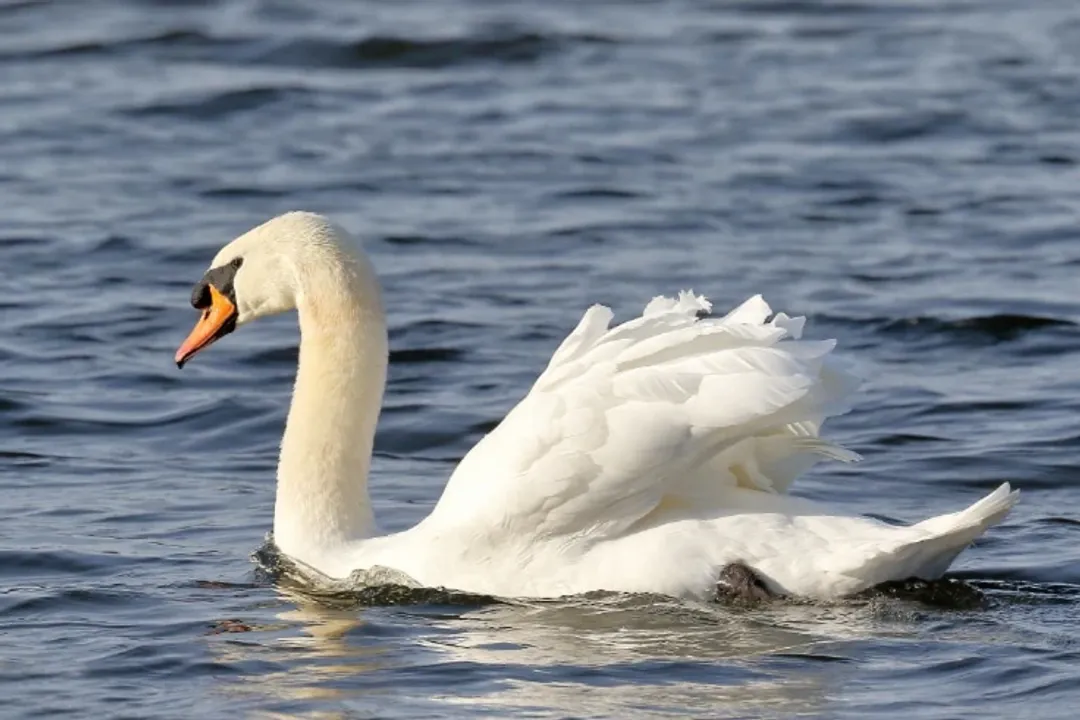
Swans are found across various parts of the world, indicating a high degree of environmental adaptability within the Cygnus genus, even though they remain confined to the Anatidae family. [1][2] Species like the Mute Swan are widely distributed across Europe, Asia, and have been introduced elsewhere, demonstrating success in diverse temperate habitats. [1] The Black Swan is strongly associated with Australia, though it can be found in various wetland environments there. [6] Other swans, such as the Trumpeter Swan, are strongly linked to North America. [7]
Unlike many smaller waterfowl that might exhibit strong migratory behaviors annually, the pattern varies significantly among swan species. [8] Some species undertake long-distance migrations between breeding and wintering grounds, often traveling great distances across continents and bodies of water. [8] Other populations, especially where winters are mild or where they have adapted to human-provisioned food sources, might remain relatively sedentary year-round. [4] This adaptability in movement patterns is fascinating when viewed against the backdrop of their entire family; while many ducks and geese are renowned migrants, the sedentary behavior seen in some swan populations suggests a successful strategy for capitalizing on stable, food-rich environments, whether natural or managed. [1] When observing waterfowl in an area like a local park or refuge, it's often the swans that remain year-round, contrasting with waterfowl that appear only during specific migratory windows. [8]
# Naming Conventions and Status
The formal naming systems applied to swans help ornithologists categorize them precisely within the biological hierarchy. [1] Knowing they belong to the Anatidae family, under the genus Cygnus, confirms their specific evolutionary path distinct from, say, the shelducks or mergansers, which are also Anatids but belong to different genera. [2][9] This taxonomic rigor is essential because while all swans share fundamental characteristics, their specific species identification dictates migratory routes, nesting preferences, and conservation needs. [7]
From a general status perspective, while many species are common, some face specific localized pressures. [8] The presence of species like the Black Swan in managed settings, such as decorative ponds or private collections, speaks to their appeal and relative hardiness outside their native range. [4][6] Observing a swan, whether a wild Tundra Swan flying overhead or a resident Mute Swan on a local lake, connects the viewer directly to one of the largest and most elegant branches of the duck and goose lineage. [1][10] Their structure—the heavy body poised atop the long, serpentine neck—is an evolutionary signature of the Cygnus genus, setting them apart even from their closest relatives in the Anser (goose) or Anas (dabbling duck) genera. [2]
Related Questions
#Citations
Swan - Wikipedia
Swan | Bird Species, Migration & Lifespan - Britannica
Swans, Ducks, and Geese | Oregon Department of Fish & Wildlife
Black Swans | Oklahoma State University - Breeds of Livestock
2022 Swans are birds of the family Anatidae within the genus ...
Swan - Exotic Birds Wikia - Fandom
6 Types of True Swans: Guide to Birds in Genus Cygnus
Ducks, Geese, Swans (North Africa) Species Guide - Birda
Anatidae – Swans, Geese & Ducks - Fat Birder