What does Pesquet's parrot feed on?
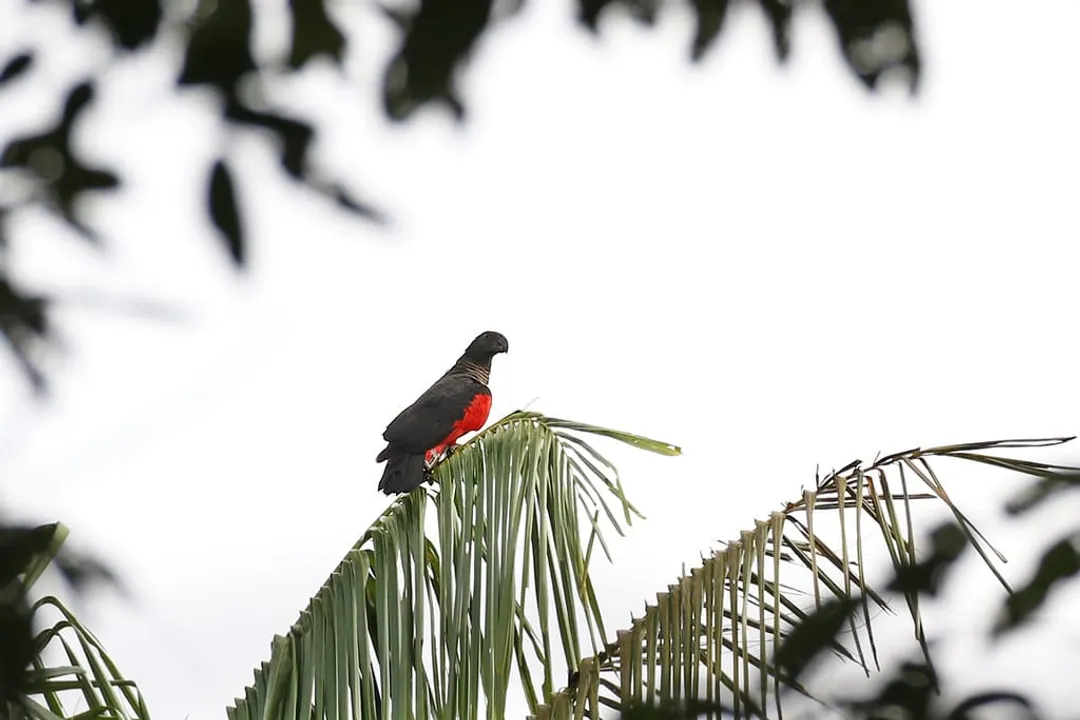
Pesquet's parrot (Psittrichas fulgidus), sometimes referred to as the Dracula parrot due to its striking appearance, holds a unique position within the avian world, particularly concerning its sustenance. Unlike many of its parrot relatives, which often incorporate seeds or insects into their diet, this species from the hill and montane rainforests of New Guinea is characterized by an almost absolute specialization toward fruit consumption. This bird is often classified as a highly specialized, obligate frugivore.
# Specialization

The dedication of the Pesquet's parrot to a fruit-only existence is striking. It is one of very few bird species that can subsist almost entirely on fruit pulp. This dietary habit presents a significant nutritional challenge, as fruit is notoriously low in protein compared to seeds or insects. The core of its diet in the wild centers around figs (Ficus species). The bird favors the soft pulp found within these fruits.
Specific types of wild figs have been noted as key dietary items, including Ficus sterrocarpa, F. hesperidiformis, and potentially F. baeuerlenii. Beyond figs, their foraging extends to other fruits when figs are seasonally unavailable. Mangoes, specifically Mangifera indica, are also cited as a component of their natural intake. The general category of "softer fruits" rounds out the solid food portion of their menu.
# Floral Nectar
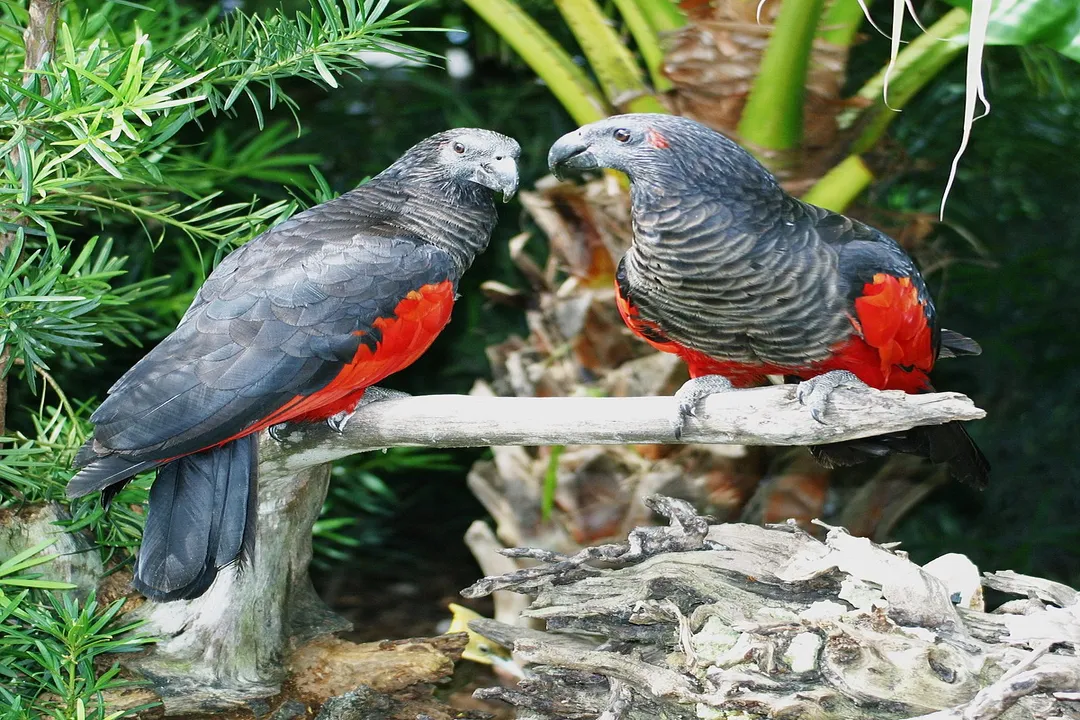
While its main caloric and bulk intake comes from fruit pulp, the Pesquet's parrot does supplement this with floral resources. This includes consuming blossoms and nectar. One specific source of nectar and flowers mentioned is Freycinetia mangopandans. This intake of nectar provides an accessible source of sugars, which are easily assimilated carbohydrates, helping to meet immediate energy demands that fruit pulp alone might provide efficiently.
# Facial Fur

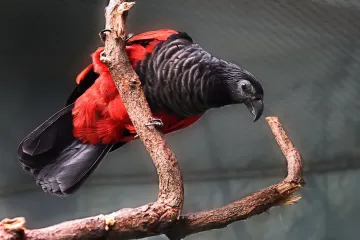
A defining characteristic of the Pesquet’s parrot is its bare, featherless face, which gives it a vulture-like profile. This unusual trait, shared with only two other parrot species, is strongly linked to its feeding behavior. Feathers on the face would quickly become matted with the sticky pulp of the ripe fruits they consume, especially figs. The evolution of this bare facial skin appears to be a direct structural adaptation to facilitate messy eating without compromising hygiene or insulation, enabling repeated access to their preferred food source.
# Protein Needs
Because its diet is overwhelmingly fruit-based, the Pesquet’s parrot has evolved to function efficiently on a nutrient profile that would be deficient for many other birds. Scientific investigation into captive individuals confirmed this physiological distinction: the species requires significantly less dietary protein than omnivorous or granivorous bird species.
Feeding trials established the minimum requirement for maintenance. Researchers fed birds isocaloric diets approximating the protein range found in wild figs, varying from 6.1% down to 2.6% Crude Protein (CP) on a dry mass (DM) basis. The study estimated that a minimum dietary protein requirement of 3.2% DM CP was sufficient to meet the birds’ maintenance needs, based on achieving nitrogen equilibrium. For context, this value is extremely low when contrasted with granivorous species, although it parallels requirements seen in other highly frugivorous birds like the Cedar Waxwing. This inherent adaptation—having low protein requirements—is a key physiological mechanism allowing this parrot lineage to successfully subsist on an almost exclusive fruit diet.
# Digestive Support
To cope with the bulk and low nutrient density of fruit, the Pesquet’s parrot exhibits specific anatomical adaptations in its digestive system that support high intake and rapid absorption. The species possesses wide intestines and, critically, extremely long microvilli throughout the intestinal tract, which allows for rapid nutrient absorption.
However, this specialization comes with trade-offs. Research suggests that the Pesquet's parrot has a poorly developed, weak, and narrow gizzard. This structural feature correlates with an apparent inability to process hard seeds found within fruits. Observations of small grape seeds passing through the digestive tract intact, and the avoidance or discarding of offered seeds, suggest that the bird processes the pulp and voids the seeds undigested. This leads to an interesting ecological consequence: since insects and seeds are likely poor protein supplements for this species, the very constraints of their diet—low protein fruit, coupled with an inability to digest seeds—may make them unintentional, specialized seed dispersers for the very figs upon which they depend for survival. Their reliance on easily assimilated carbohydrates means they do not compensate for low protein intake by increasing overall food consumption, as some other frugivores do.
# Captive Diet
In settings such as zoos, where these parrots are maintained, their diet is managed to ensure complete nutrition, which inevitably differs slightly from the minimal protein levels required in the wild. Captive feeding protocols often include a variety of fruits that may not be easily accessible in their native habitat, such as banana, papaya, apple, and pear. Additionally, vegetables like carrots are provided.
In one controlled feeding trial, the maintenance diet (Diet 1) was formulated at 6.1% DM CP, significantly higher than the minimum 3.2% CP required for maintenance derived from balance trials. Beyond whole produce, captive diets often incorporate supplemental items like fruit in nectar, a rearing food made from hard-boiled egg, wholegrain bread, and complete pellets. The inclusion of egg and bread introduces higher quality protein sources compared to the wild fruit/nectar diet. This discrepancy between the established minimum wild requirement (3.2% CP) and standard captive maintenance levels (e.g., 6.1% CP) underscores a fundamental challenge in aviculture: providing a diet that is both adequate and balanced for a highly specialized frugivore without risking nutrient excesses common in less specialized birds. Because the parrot’s nutritional requirements for maintenance are so low, excessive protein intake in captivity could potentially lead to health issues if not carefully managed.

# Seasonal Movement
While the Pesquet's parrot is generally considered sedentary within its mountain habitat, its movements are dictated by food availability. This species exhibits seasonal nomadism in parts of its range, moving in response to the temporal availability of its preferred fruit resources. This behavioral flexibility ensures access to ripe figs, which are the cornerstone of survival for this highly specialized frugivore.
Related Questions
#Citations
Pesquet's parrot - Wikipedia
Pesquet's Parrot
Pesquet's Parrot - Oiseaux-Birds
Pasquets Parrot - animalia
Pesquet's Parrot | Zoo 2: Animal Park Wiki - Fandom
Pesquet's Parrot (Dracula Parrot) Bird Facts - A-Z Animals
Pesquet's Parrot - Facts, Diet, Habitat & Pictures on Animalia.bio
Composition of the fruit-based diets used in Pesquet's Parrot feeding...
[PDF] Protein Requirements of a Specialized Frugivore, Pesquet's Parrot ...