What is the lifespan of a Pesquet's parrot?
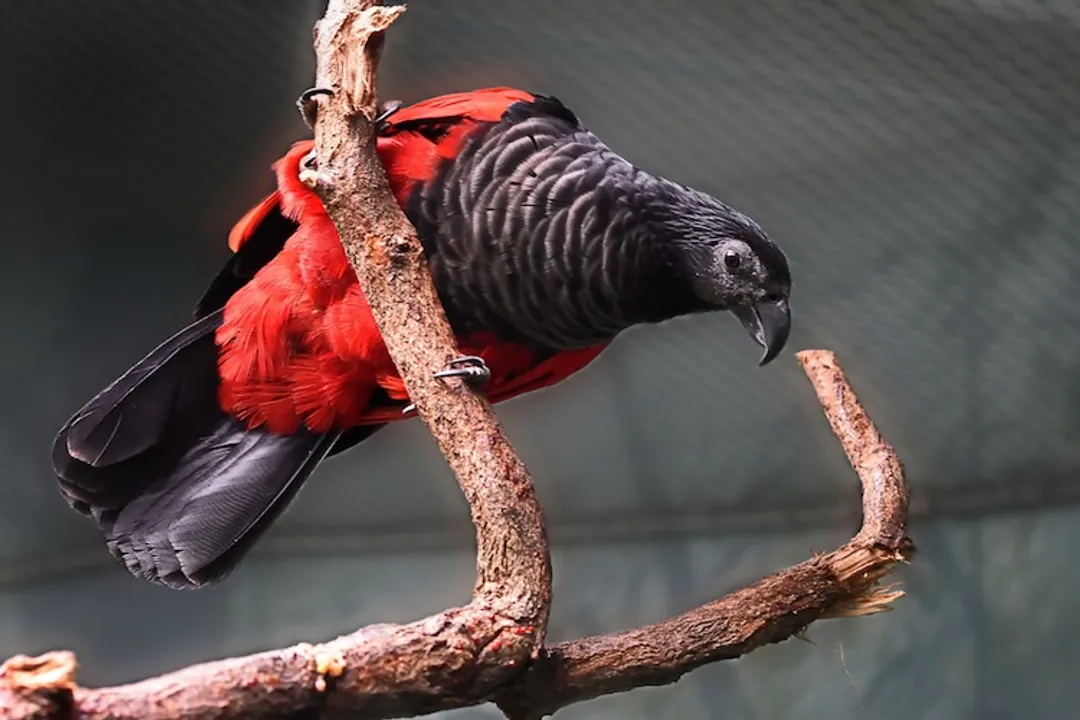
The sheer drama of the Pesquet’s parrot, often called the Dracula Parrot due to its striking black and crimson plumage and its bare, somewhat vulture-like face, captures the imagination immediately. Its appearance suggests something ancient and fiercely independent, leading many to wonder just how long these unique avian relics survive in the remote New Guinea rainforests they call home. When examining the lifespan of Psittrichas fulgidus, we find a fascinating mix of observed data, theoretical potential, and the sobering realities of conservation status that inevitably shape an individual bird's longevity. [3][4]
# Longevity Data Spread

Determining the precise lifespan for any wild animal is inherently difficult, and the Pesquet’s parrot is no exception, as little is known about its breeding habits or natural mortality rates in the wild. [4] However, the information that is available points toward a relatively long life for a parrot species of its size. Estimates gathered from various sources present a spectrum of possibilities. Some reports suggest that the Pesquet’s parrot can live for up to 30 years in its native environment. [2] More broadly, other data indicates a potential lifespan ranging between 20 and 40 years in the wild. [5][7] This variability is common when assessing wild populations where environmental pressures fluctuate significantly year by year.
When we turn to data compiled from captive settings, the figures become more concrete, yet offer a different perspective. The AnAge database, focusing on animal longevity, notes a documented maximum longevity in captivity of 25 years based on an observation where a specimen was still alive at that age. [6] While another source suggests up to 30 years in captivity, [2] the confirmed 25-year record suggests that reaching the upper theoretical limit of 40 years, even under managed care, may prove challenging for this particular species. [5][7] The parrot’s specialized nature, particularly its diet, likely plays a role in how closely its actual lifespan aligns with its biological potential, whether in a zoo aviary or high in the canopy.
# Captive Survival Records
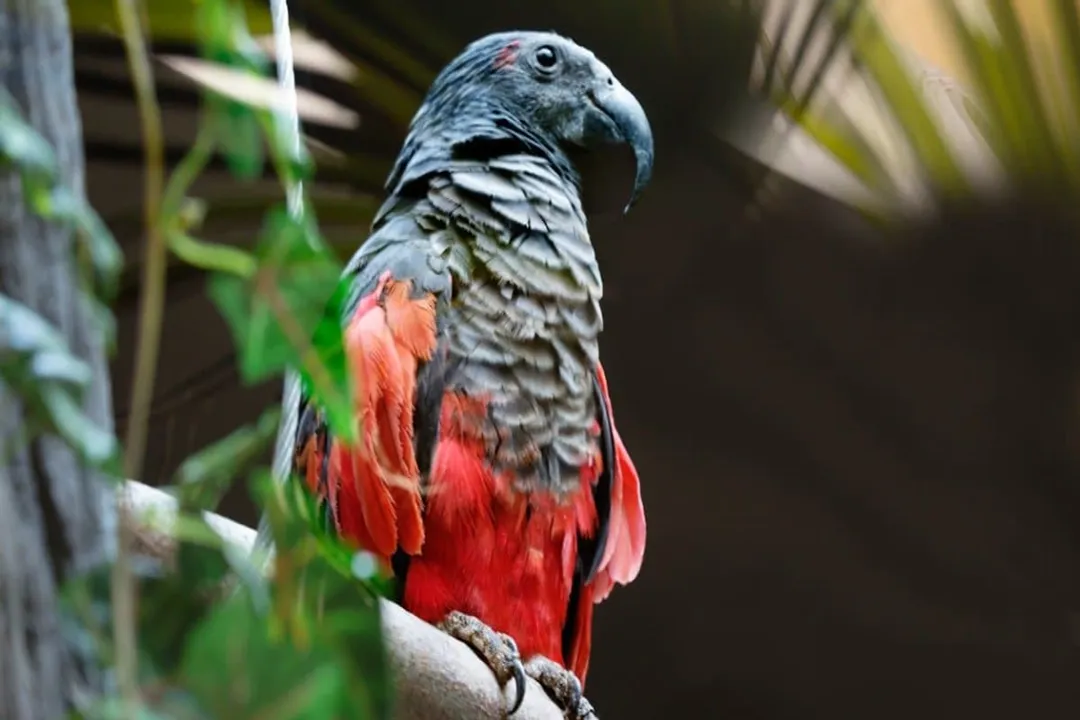
The documented lifespan in captivity is often a benchmark for potential, assuming optimal conditions. For the Pesquet’s parrot, the reported maximum longevity of 25 years in captivity provides a solid, verifiable baseline for their survival when protected from predators, consistent food shortages, and human persecution. [6] This figure, derived from specific records, is slightly lower than the generally stated maximums of 30 to 40 years attributed to the species overall. [2][5] It presents an interesting divergence: if a bird in a controlled environment, receiving consistent nutrition, only reached 25 years in the recorded instance, the upper bound of 40 years might represent an outlier or a theoretical maximum that requires an exceptionally long life cycle, perhaps only achieved under ideal, yet unrecorded, captive conditions. Furthermore, captive individuals in this setting have been noted to begin breeding from around 6 years of age. [6]
# Wild Mortality Factors

In the montane rainforests of New Guinea, the potential lifespan of 20 to 40 years is constantly under siege from natural and anthropogenic threats. [5] Natural predators likely target these birds, especially the young, which include birds of prey, snakes, and bats. [4] The bird's behavior—roosting high up and moving between trees by hopping—can sometimes make them vulnerable to ambush, particularly for less experienced juveniles. [4] Extreme weather events, such as intense storms or droughts, also pose an indirect threat by potentially disrupting the availability of their primary food source. [4]
The most significant challenge, however, stems from human interaction. The Pesquet’s parrot is highly prized for its distinctive, black and scarlet feathers, leading to substantial overhunting and illegal trapping for the exotic pet trade. [3][4][7] When hunting pressure is intense, the average lifespan observed in a local population will plummet, pulling the statistical mean far below the biological maximum potential.
# Ecological Niche Pressures
The very specialization that makes the Pesquet’s parrot so unique also acts as a constraint on its survival in the wild, directly impacting longevity. This species is an extreme frugivore, meaning it feeds almost exclusively on a select few species of figs. [3][4][7] This dependency requires them to be seasonally nomadic, moving to track fruit availability across their range in New Guinea. [3][4] Unlike many parrots, they possess a featherless face, an adaptation believed to keep the facial skin clean from the sticky pulp of their preferred fruits, which could otherwise mat the feathers. [4][7]
This reliance on localized, non-migratory food sources makes them extremely sensitive to local ecological disturbances. If a preferred fig tree species declines in one area due to logging or natural cycles, the parrot must find another reliable food patch quickly. [4] Their flight style, which alternates between rapid flapping and short glides, is efficient but perhaps less rapid than other large parrots, meaning that a necessary food source could be just outside their sustainable travel range during lean times. This tight co-evolution with specific fruits means that a habitat disturbance that seems minor—the loss of a particular fruiting species—translates directly into a major, sustained challenge to an individual bird's ability to sustain itself and reach its maximum lifespan potential.
# Conservation Efforts
The classification of the Pesquet’s parrot as Vulnerable by the IUCN underscores the human-driven risks that curtail their years. [3][4][7] Efforts to mitigate these threats—such as promoting environmentally friendly logging practices and encouraging community-based tree planting—are designed not just to maintain the species’ overall numbers but also to ensure a stable environment where individuals have the opportunity to live out their full biological tenure. [4] Protecting the canopy protects the figs, and protecting the figs protects the parrots’ ability to thrive past their juvenile years and into their mature life expectancy. [2] The survival of this captivating, "goth-like" bird is thus inextricably linked to habitat preservation. [5] The few thousand that are successfully poached or die from habitat encroachment are birds that will never contribute to the documented lifespan statistics, making conservation the most direct way to ensure a Pesquet's parrot reaches its full potential of perhaps four decades.
Related Questions
#Citations
Pesquet's parrot - Wikipedia
Pesquet's Parrot (Dracula Parrot) Facts & Photos | Wowzerful
Pesquet's Parrot - Facts, Diet, Habitat & Pictures on Animalia.bio
The Dracula Parrot Is a Rare Bird Found in New Guinea's Rainforest
Pesquet's Parrot | FictionRulezForever Wiki - Fandom
Pesquet's parrot (Psittrichas fulgidus) longevity, ageing, and life history
Pesquet's Parrot (Dracula Parrot) Bird Facts - A-Z Animals
The Pesquet's Parrot - Critter Science