What does an anole lizard look like?
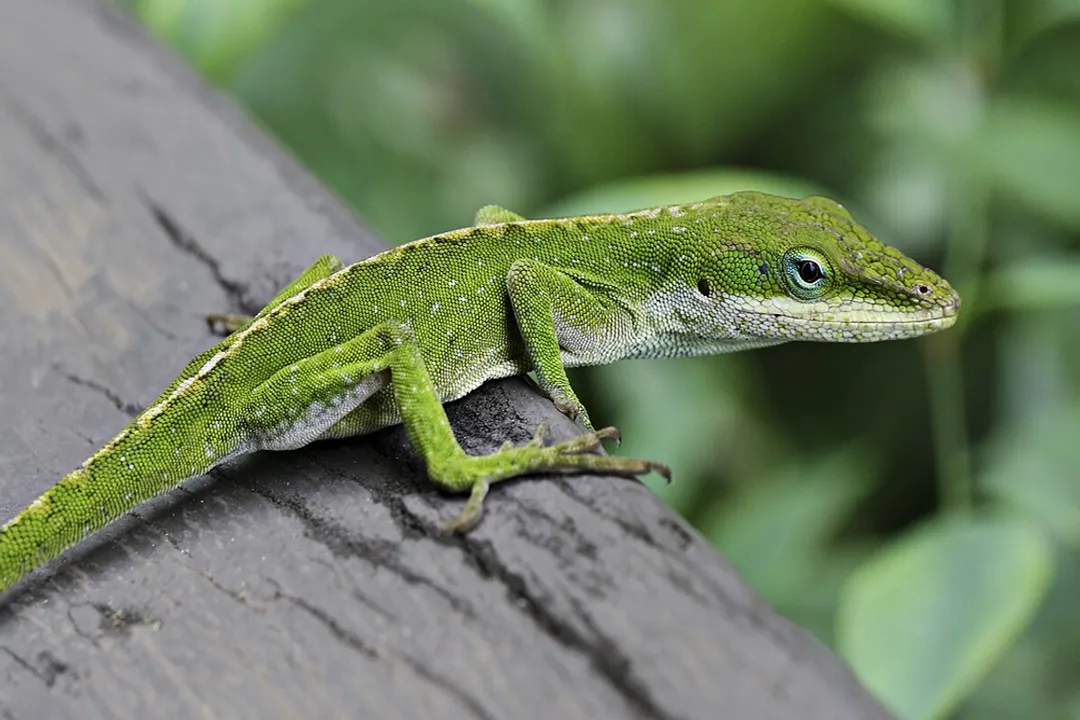
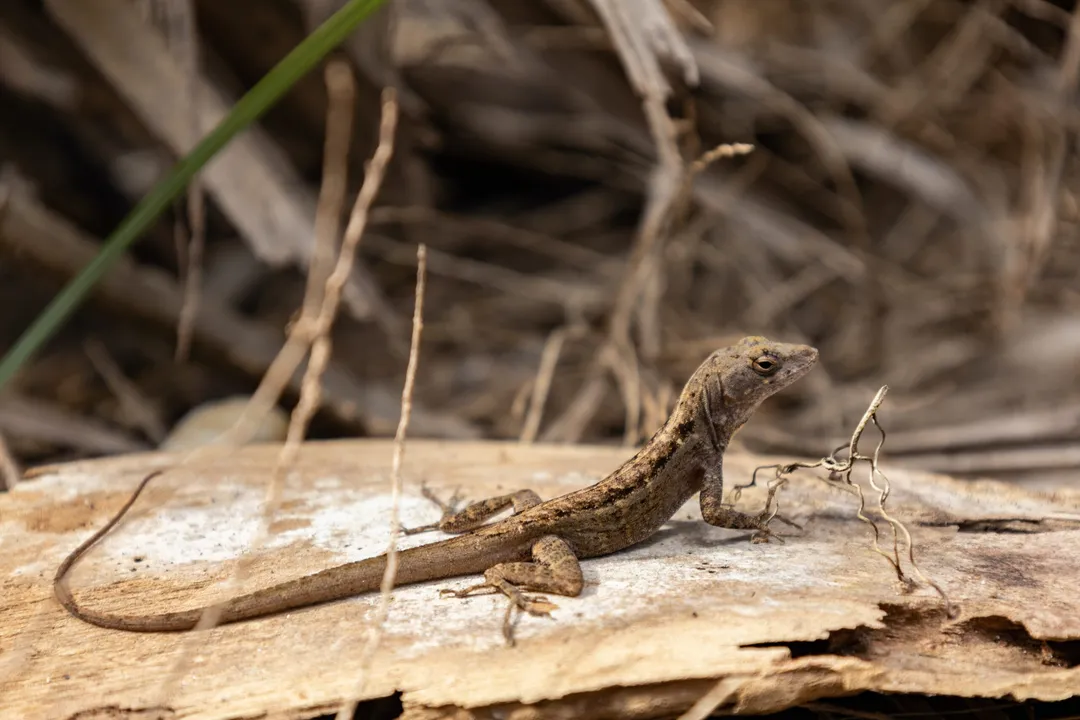
The initial visual impression of an anole lizard is often one of delicate elegance combined with surprising adaptability. These small reptiles are built for an arboreal life, possessing slender bodies and disproportionately long, thin tails that often make up more than half of their total length. [1] While descriptions often center on the well-known Anolis carolinensis, it's important to remember that species like the Brown Anole share a similar general structure, though they lack the intense green coloration of their famous cousin. [6]
# Body Structure
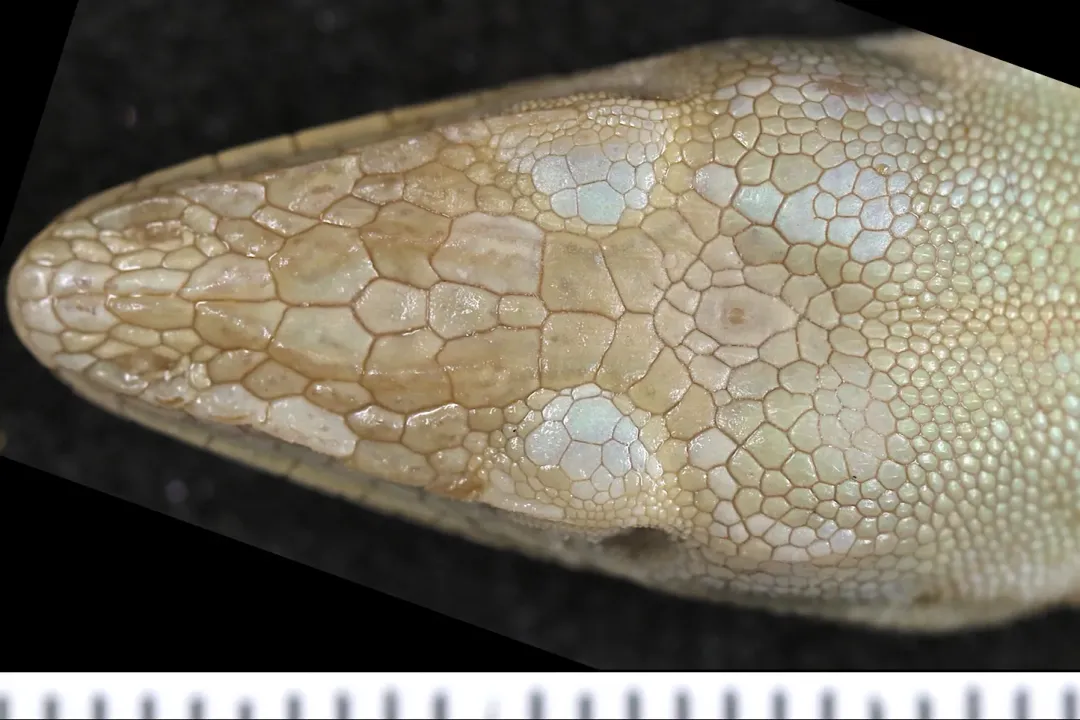
When observing an anole, note the overall slightness of its build. They are not stocky lizards; rather, they are designed for quick, darting movements among foliage and branches. [1] A fully grown Anolis carolinensis, sometimes called the Carolina anole or American chameleon, typically measures up to about six inches from the tip of its snout to the end of its tail. [1] To put that into perspective for someone seeing one in the wild, a mature specimen is usually small enough to comfortably fit in the palm of an adult's hand, with the tail adding significant length beyond the main body mass. [1] Their skin is covered in fine scales, contributing to their smooth appearance as they move through the light and shadow of trees and bushes. [1]
# Color Variation
Perhaps the most captivating physical trait of the anole is its remarkable ability to shift color, which often leads to them being misidentified as chameleons. [4][9] This color change is controlled by specialized pigment-containing cells called chromatophores within the skin. [1] The classic Green Anole can transition quite dramatically, most commonly moving between bright shades of green and duller, darker browns. [4][6]
This color change isn't always a direct response to camouflage needs, which is a common misconception. While blending in is certainly a function, observing a sudden shift to brown frequently indicates that the lizard is feeling chilled, stressed, or perhaps even excited or aggressive. [4][6] For example, a lizard basking in the sun trying to warm up after a cool night will likely appear dark brown, maximizing heat absorption. [6] Conversely, a relaxed, warm lizard actively hunting in bright sunlight will usually display its vibrant green hue. [6] This dual coloration provides a quick, non-verbal indicator of the lizard's immediate physiological state, moving beyond simple pattern matching to the environment. [4]
# Male Displays
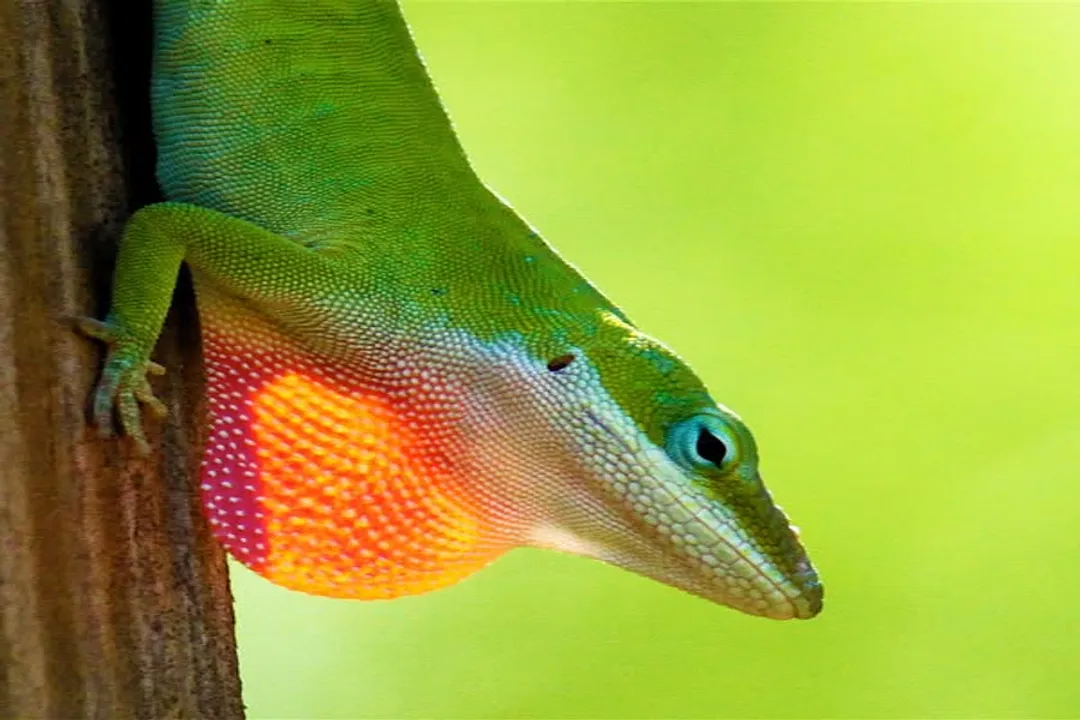
If you are fortunate enough to observe a male anole performing a territorial display or courtship ritual, you will notice a spectacular, inflatable structure under its chin: the dewlap. [1][9] This flap of skin is usually retracted and largely invisible when the lizard is resting or being passive. [1] However, when extended, the dewlap dramatically increases the apparent size of the lizard's head, often displaying brilliant coloration, typically shades of pink or red. [1][9]
The action is quite rapid: the male bobs his head while simultaneously flattening and flashing the dewlap open and closed. [1] This behavior serves as a crucial communication tool, signaling dominance to rival males and attracting potential mates. [1] The size, color intensity, and speed of the head-bobbing and dewlap extension can communicate fitness and aggression levels within the population. [1]
# Distinguishing Features
When trying to determine if the lizard you are looking at is, in fact, an anole and not another similar-looking reptile, such as a chameleon—a comparison frequently made due to the color-changing abilities—there are several key morphological differences to observe. [4]
One immediate difference lies in the eyes. Anoles possess fused lower eyelids, meaning they have a clear spectacle covering the eye, similar to snakes, although they still possess an upper lid. [4] Chameleons, by contrast, have eyelids that completely cover the eye, allowing them to move their eyes independently. [4]
Another key distinction is the tongue. Anoles use a sticky tongue to capture prey, but it is shot out in a relatively short, simple motion, often resembling a brief flick. [4] Chameleons utilize a highly specialized, projectile tongue mechanism that can shoot out a significant distance relative to their body size. [4] Furthermore, the presence of a single, prominent dewlap under the throat is a defining feature for the male anole, which chameleons lack in that configuration. [4]
Looking closely at the toes can also provide clues. While the Green Anole's specialized toe pads allow it to adhere to smooth surfaces like glass or painted walls—an adaptation that helps it navigate the vertical faces of trees and human structures—some of its relatives, like the Brown Anole, possess claws instead of the specialized lamellae pads found on the Green Anole’s toes, resulting in less impressive climbing ability on slick surfaces. [1][6] This subtle difference in foot morphology dictates where you are most likely to encounter the species outdoors or indoors.
# Habitat Appearance
While not a feature of the lizard itself, understanding how its appearance relates to its typical environment is essential for spotting one. Anoles are primarily diurnal (active during the day) and thrive in warm, humid climates, often found in suburban gardens, woodlands, and shrubbery. [1][6]
The Green Anole’s body shape and color variation are perfect for blending into vertical structures. They are commonly seen clinging vertically to tree trunks, fence posts, or the sides of houses. [1] Their typical resting posture often involves pressing their bodies flat against the substrate, which further minimizes their profile. [1] If you are looking for one, scanning the vertical surfaces in bright sunlight, rather than the ground, will significantly increase your chances of a sighting. The Brown Anole, while able to climb, is more frequently encountered foraging on the ground or low vegetation compared to its green counterpart. [6]
#Videos
Green Anole, The Best Pet Lizard? - YouTube
The Lizard's Tale 101: Meet the Anoles - YouTube
Related Questions
#Citations
Anolis carolinensis - Wikipedia
Green Anole, The Best Pet Lizard? - YouTube
Green Anole lizard sightings and habits in Alabama - Facebook
Is This Lizard a Chameleon or an Anole? - Cindy Heath
Anole Pictures Galore
Brown Anole / Green Anole | Cape Coral Friends of Wildlife
"Anole Lizard" Images: 7,501 Stock Photos, Vectors, Video