What do pond skaters eat?
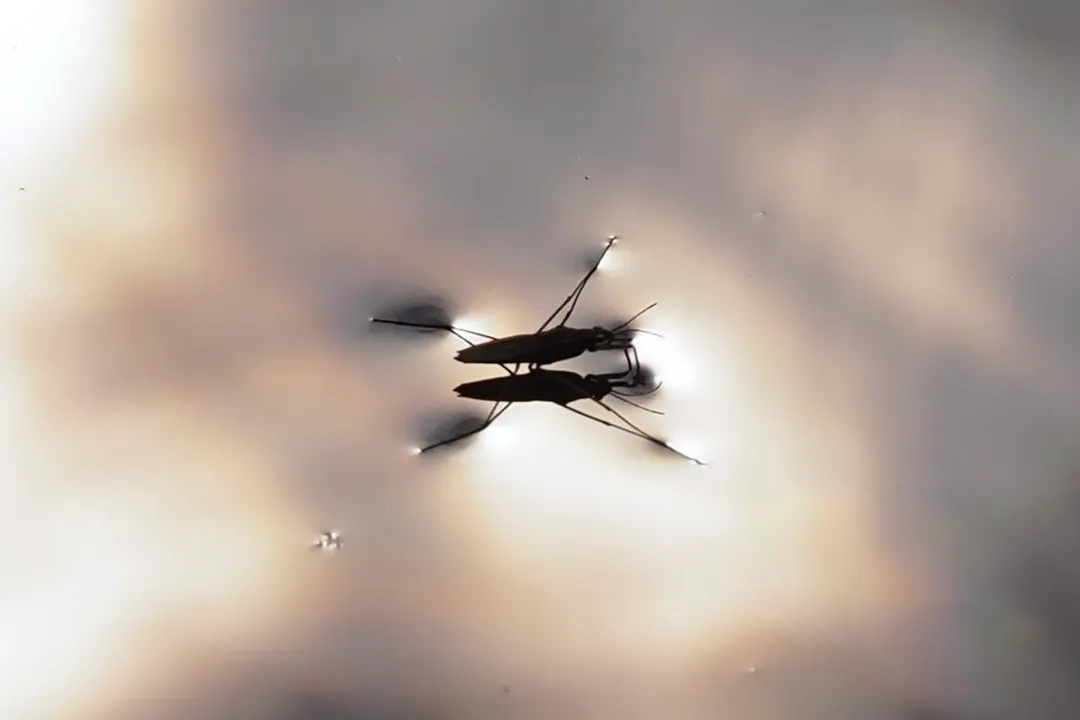
The surface of a pond or slow-moving stream often reveals a fascinating sight: small, dark insects skimming across the water with an effortless, jerky grace. These are the pond skaters, also known by the more formal term water striders, and while they appear delicate, they are highly effective predators within their watery domain. Understanding what sustains these creatures reveals a specialized feeding strategy perfectly adapted to life on the boundary between air and water.
# Carnivore Identity
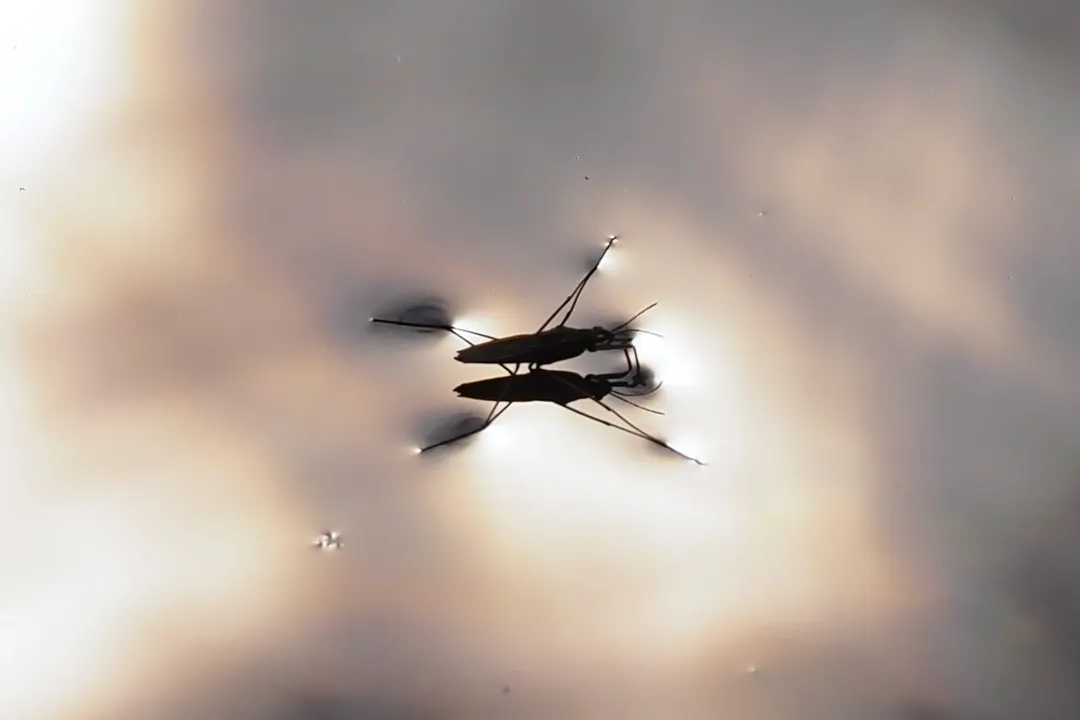
Pond skaters are strictly carnivores. They are not interested in consuming algae or plant matter; their sustenance comes entirely from other small organisms they manage to capture. This dietary specialization places them firmly in the role of aquatic micro-predators, keeping populations of smaller surface-dwelling invertebrates in check. In many ways, they function as a natural clean-up crew for the water's surface, dealing with anything that accidentally lands upon that shimmering film.
# Surface Catch
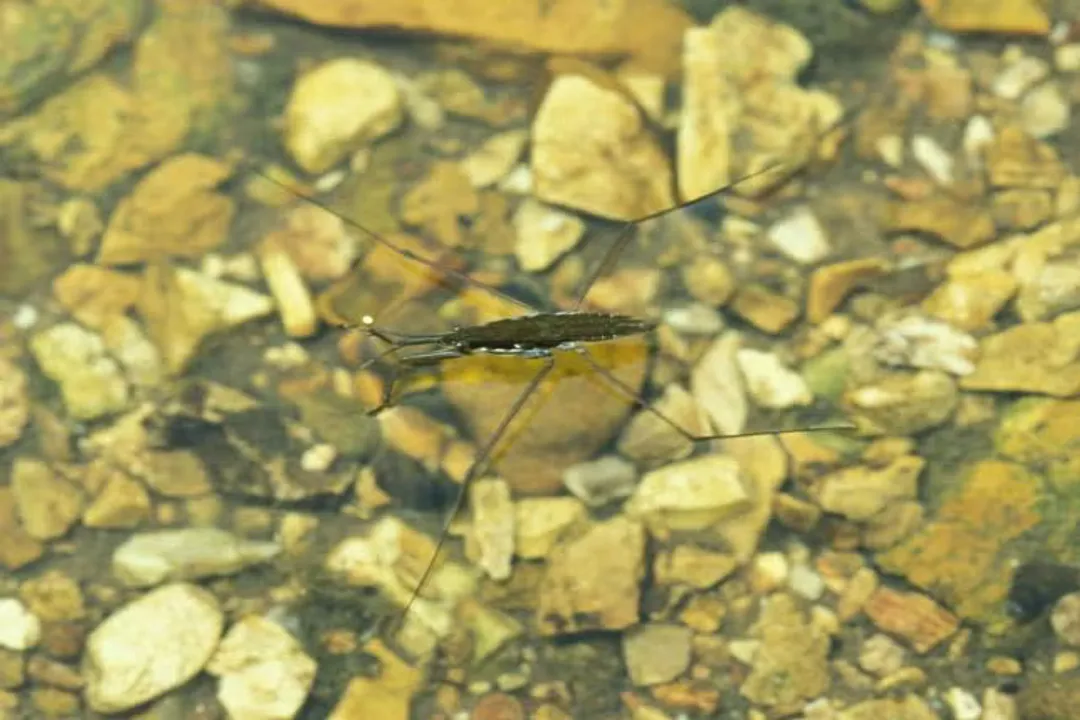
The vast majority of a pond skater’s diet consists of insects that happen to fall onto the water’s surface. This often includes terrestrial insects like flies, gnats, or small beetles that lose their footing or are blown off course. The key factor is not the species of insect, but its size and its unfortunate proximity to the water tension layer.
A vital piece of context here is how these insects interact with the water. Because of the water's high surface tension—that thin, elastic-like "skin"—many small insects, even relatively heavy ones, cannot immediately break through and sink. They become trapped, thrashing on the surface, which creates ripples that the pond skater detects instantly. If an insect is too large, the pond skater will generally avoid it, opting for prey it can subdue quickly. This dependence on surface entrapment means that during calm, windless days, their hunting grounds might be less productive than during a light drizzle or breezy afternoon when more debris—and potential meals—are deposited onto the water.
If you spend time quietly observing a healthy pond, you might notice the skaters congregating near areas where debris collects, such as around the base of reeds or near the downwind edge of the pond. This behavior is a direct result of their reliance on passively delivered meals. They aren't actively chasing prey submerged beneath the surface; they are waiting for the aquatic world to deliver lunch right to their doorstep.
# Feeding Mechanics
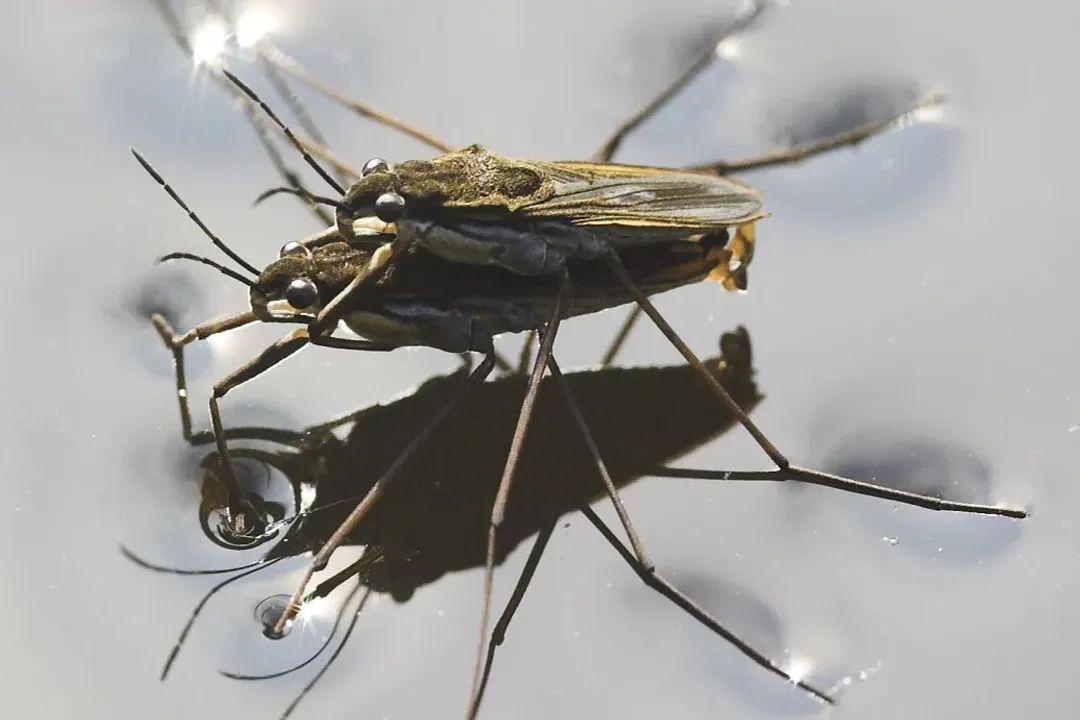
The process by which a pond skater consumes its catch is remarkably efficient and quite dramatic to observe up close. Once a skater detects prey, it rushes toward the site of disturbance using its four middle legs, which act like oars to push it across the water. The front pair of legs are specialized for grasping and handling food.
The actual consumption process involves several distinct steps:
- Capture: The skater uses its front legs to quickly secure the struggling victim.
- Immobilization: The insect is then immobilized by the skater piercing its body with its sharp mouthparts, which are essentially specialized tubes called stylets.
- Enzymatic Action: Crucially, the skater injects digestive enzymes or saliva into the prey. These enzymes begin to break down the soft tissues and internal organs of the insect into a digestible liquid.
- Ingestion: Finally, the skater sucks up the liquefied contents of the prey through its mouthparts, leaving behind a dry, empty husk.
This technique is common among many true bugs (Hemiptera), but it is perfectly adapted for the small, surface-dwelling meals that pond skaters target. It avoids the risk of submerging themselves, which would break the surface tension they rely on for locomotion and sensory perception.
# Subsurface Meals
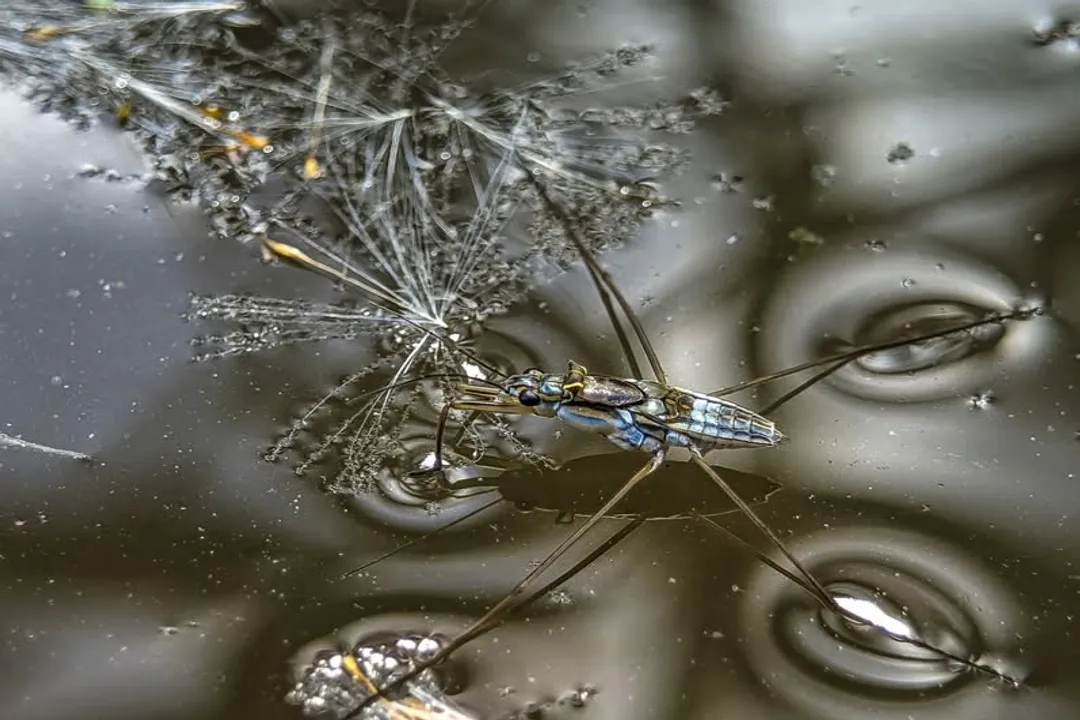
While surface-landing insects form the main part of their diet, pond skaters are not exclusively limited to those that fall from above. They are known to feed on other small aquatic insects and larvae that inhabit the water column or drift just below the surface. This shows a slight flexibility in their hunting, though it requires them to position themselves carefully near the surface to intercept these moving targets.
The ability to capture small prey that is actually in the water column, rather than just on it, suggests that a skater’s sensory system—which detects disturbances across the water surface—is sensitive enough to register the minute vibrations caused by larvae swimming near the boundary layer. For instance, if a very small mosquito larva is near the surface, a hungry skater might snatch it, although capturing submerged or fully aquatic prey remains less common than snatching surface victims.
# Observational Tips
If you are interested in seeing this feeding behavior in action, look for the characteristic reaction to a drop of water or a small speck of dust landing on the water near them. Instead of a continuous, uniform glide, the skater will often stop, pivot, and then rapidly dart toward the disturbance. This immediate, directed movement is the signature of a successful prey detection signal.
It is also interesting to consider how the quality of the water affects their feeding success. In ponds with very little surface debris or low insect activity, skaters may go hungry, highlighting their role as indicators of surface ecological health. A pond teeming with struggling, small prey on the surface suggests either high insect activity or perhaps a problem causing those insects to die prematurely, making them easy targets. A healthy pond will have a mix: some windblown debris, some struggling live prey, and a steady population of skaters efficiently managing the supply.
Related Questions
#Citations
Pond Skater Insect Facts
Water Striders | Missouri Department of Conservation
Pond-skaters: the water clean-up squad!
Common pond skater
Common pond skater insect information
Gerris lacustris
7 Cool Facts About Water Striders
Pond skater | Research Starters
Pond Skater Facts & Photos