What did Norwegian Forest Cats evolve from?
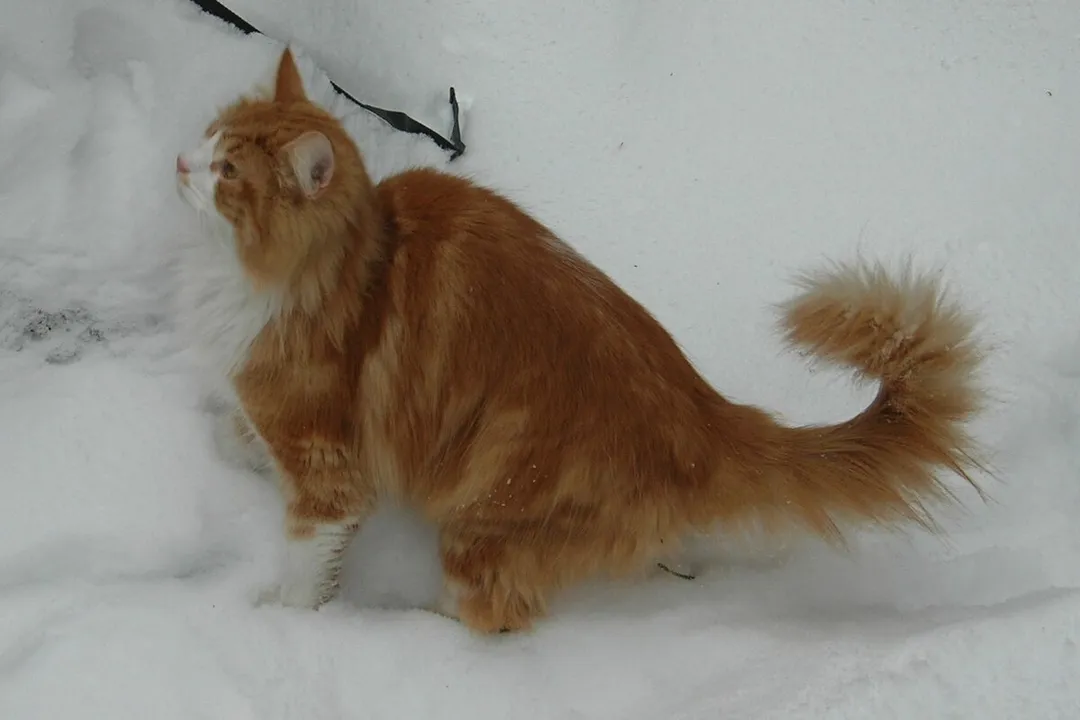
The Norwegian Forest Cat, often affectionately called the Skogkatt by those familiar with its homeland, is a breed whose lineage stretches back through time, shaped not by the careful planning of early breeders but by the unforgiving realities of the Scandinavian environment. Its story is one rooted deeply in history, legend, and the slow, inexorable process of natural selection that forged a truly magnificent, sturdy feline survivor. [1][3] Unlike many modern pedigrees that chart their ancestry through meticulously recorded stud books established within the last century, the origins of the Wegie are far more nebulous, tracing back to the natural population of domestic cats that inhabited Norway for centuries. [3][8]
# Nordic Beginnings
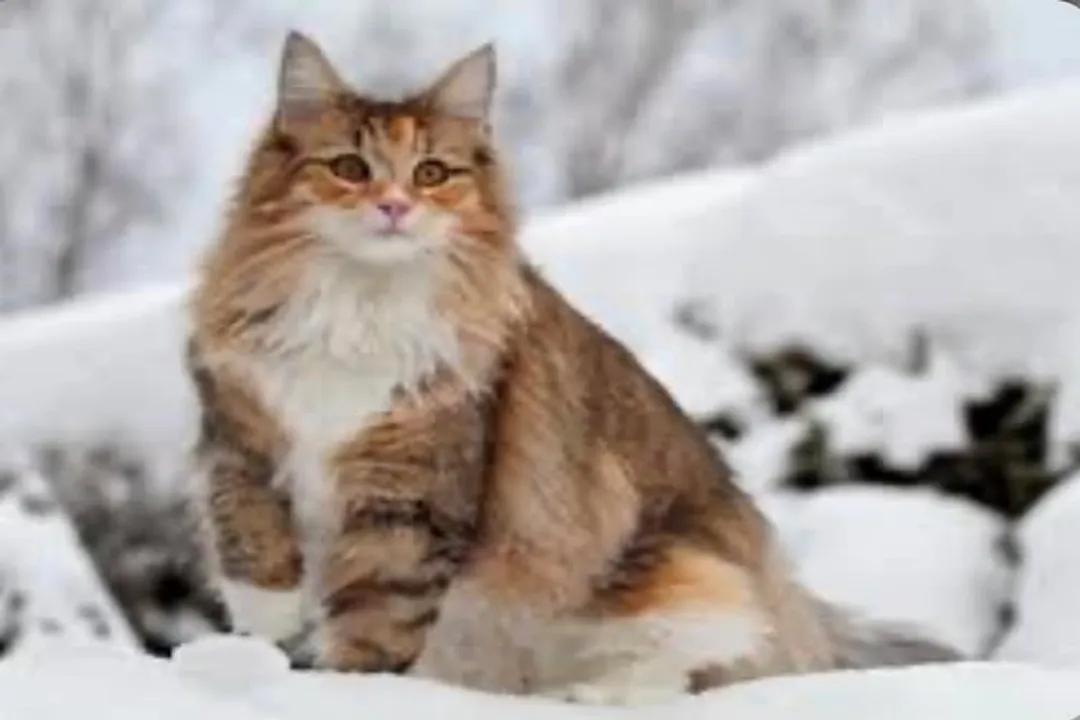
The exact moment these cats arrived on the Norwegian coast remains somewhat speculative, but historical context points toward some of the earliest known seafaring visitors to the region. [3] One of the most romantic theories suggests that these long-haired beauties may have traveled alongside the Norse Vikings, potentially serving as working mousers aboard their longships as they sailed across the seas. [1][3][5] Whether they arrived with the first longships or were descendants of local wildcats that slowly integrated with imported domestic stock, what is clear is their established presence in Norway long before any formal records were kept. [8]
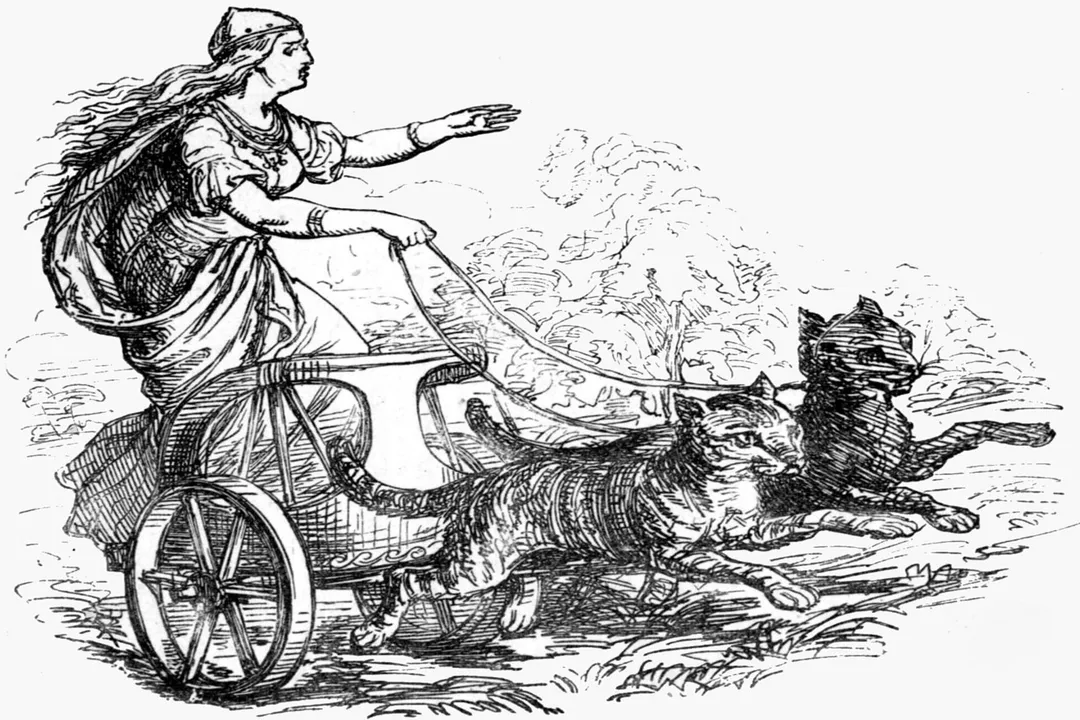
Their deep integration into Norwegian culture is evident in the folklore surrounding them. These cats are woven into the very fabric of local mythology, sometimes linked even to the chariot of the Norse goddess Freya. [1][3] This cultural embedding suggests a long, shared history, where these cats were not novel imports but familiar residents of the Norwegian farms, barns, and homes for generations. [8] They were viewed as essential members of the household, valued primarily for their prowess as hunters needed to protect food stores from rodents. [9]
# Natural Selection
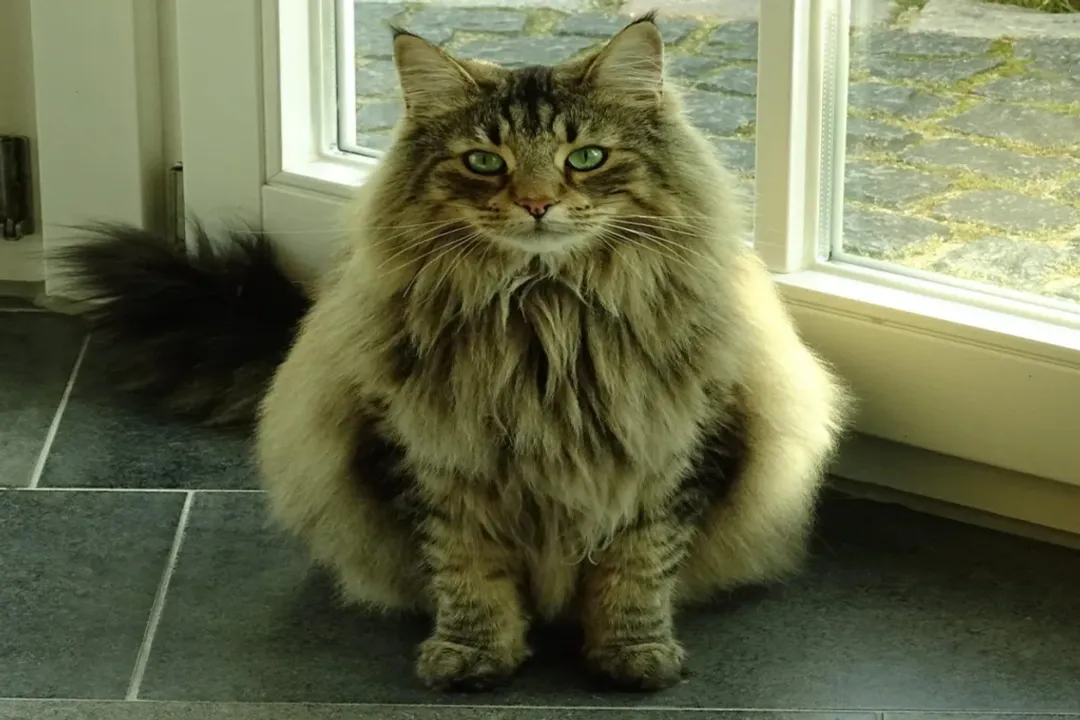
The defining characteristic of the Norwegian Forest Cat—the very traits that make it recognizable today—are direct adaptations to the harsh, cold climate of its native region. [1][5] The evolution here was driven by necessity; only the cats best equipped to handle freezing temperatures, snow, and the need to hunt effectively would survive long enough to pass on their genes. [1][8]
Consider the structure of their coat, which serves as a masterclass in insulation. They possess a double coat. [1][9] The undercoat is dense and woolly, providing the critical thermal barrier against the cold, while the longer, water-repellent guard hairs form an outer layer designed to shed rain and snow. [1][2][9] This contrasts sharply with breeds that developed their long coats primarily in warmer regions where length might provide protection from the sun or simply be selected for novelty; the Skogkatt’s coat is a functional suit of armor forged by the elements. [5] Furthermore, their large size and sturdy bone structure provided necessary ballast against the wind and the physical strength required to secure prey. [2] Their gait and agility, honed by navigating icy branches and steep forest terrain, speak to their history as adept climbers. [1][2]
It is fascinating to contrast this slow, environmental sculpting with breeds where human selection has dominated for a mere century or two. With the Wegie, we are observing the result of perhaps a thousand years of environmental filtering. If a cat’s coat was too thin, or its frame too slight, it likely perished before reproducing, ensuring that only the hardiest individuals formed the genetic base of the population. [3][8] This contrasts with breeds where a unique look, perhaps lacking in practical survival benefits, might be emphasized purely for show standards, leading to traits that require ongoing human intervention to maintain. The Norwegian Forest Cat’s morphology is a testament to survival fitness, not arbitrary aesthetic preference.
# Population Decline
By the beginning of the 20th century, the population of these native Norwegian cats began to dwindle significantly. [3][8] Several pressures converged to push the breed toward what many feared would be extinction. Increased crossbreeding with other cats that entered the region reduced the purity of the gene pool. [3] More critically, as farming practices modernized and urbanization increased, the traditional need for large, independent barn mousers decreased, and the cats faced increased competition and a shift in their habitat suitability. [8]
By the 1930s, the situation was dire enough that local Norwegian cat fanciers recognized the impending loss of a national treasure. [3][8] This realization marked a turning point; the era of purely natural selection was ending, and the era of active conservation was beginning. [3]
# Breed Formalization
The recognition of the Norwegian Forest Cat as a specific, cataloged breed began in earnest in Norway during the 1930s, driven by a desire to preserve the traditional landrace. [3][8] Enthusiasts worked to identify the purest examples of the surviving cats and establish breeding programs focused on maintaining the established traits—size, coat quality, and temperament—that defined the native animal. [8]
However, the journey to international recognition was long. Due to their natural development and late formalization, they remained primarily a local breed for decades. [3] It took time for the breed standard to be codified and accepted by major international cat registries. [5] For instance, while they gained status in European registries earlier, the Cat Fanciers' Association (CFA) in the United States did not grant them championship status until the year 2000, a relatively recent milestone for such an ancient type of cat. [1][5] This late formal recognition speaks volumes about their recent transition from being a functional farm cat to an internationally recognized pedigree. [8]
Their unique background as a natural breed means that even today, dedicated breeders must continue to work to uphold the natural characteristics that defined them for centuries, avoiding the tendency to over-refine or selectively breed for extremes that might compromise their hardiness. [8]
If you look at the primary functions these cats historically served—a reliable, independent mouser that could coexist with a farming family but didn't require constant coddling—you can see how that history informs their modern temperament. [2][9] They retained the intelligence and confidence needed to manage a barn unsupervised, translating into a cat that is often described as aloof but deeply loyal to its primary human companions. This resilience in their character is perhaps as evolved a trait as their dense winter coat. They are not inherently fragile pets; they are working cats wearing a fancy coat, capable of adapting to many different home environments as long as they receive appropriate mental stimulation and the opportunity to climb to high vantage points. [2]
# Physical Legacy
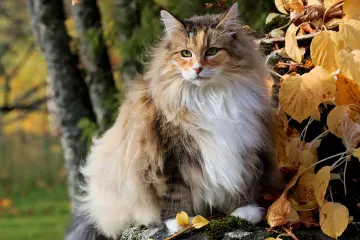
The physical attributes that helped the Norwegian Forest Cat survive the harsh Norwegian winters are precisely what define the breed standard today. [1][9] Their triangular head shape, the slight "M" marking often seen on their forehead, and the tufts of fur inside their large, expressive ears—all believed to help trap heat and keep out snow—are key identifiers. [1][2]
The most striking feature remains the coat. While the modern show cat often sports an impressive ruff around the neck, this feature is most pronounced in the winter months when the cat needs maximum insulation. [1][9] The tail is also a signature element: long, bushy, and carried proudly, historically used as an extra wrap for warmth when curled up sleeping on cold surfaces. [2]
In summary, the Norwegian Forest Cat did not evolve from a specific, documented progenitor breed in a controlled setting. Instead, it is a landrace—a naturally occurring population shaped by geography, climate, and function over centuries, with Viking history and Scandinavian mythology serving as the cultural backdrop to its biological adaptation. [1][3][8] Its continued existence today is a success story of natural hardiness preserved through the focused efforts of dedicated enthusiasts. [3]
Related Questions
#Citations
Norwegian Forest Cat - Wikipedia
Everything You Need to Know About the Norwegian Forest Cat
Norsk Skogkatt History - RebelSkog Norwegian Forest Cats
Origin of the Norwegian Forest Cat
Norwegian Forest Cat - The Cat Fanciers' Association
The Norwegian Forest Cat is an ancient breed, originally ... - Facebook
Norwegian Forest Cats | Breed Appearance, Personality & History
History - Norwegian Forest Cat Breed Council
All about Norwegian Forest cats | Blog - Burgess Pet Care