How were Norwegian Forest Cats made?
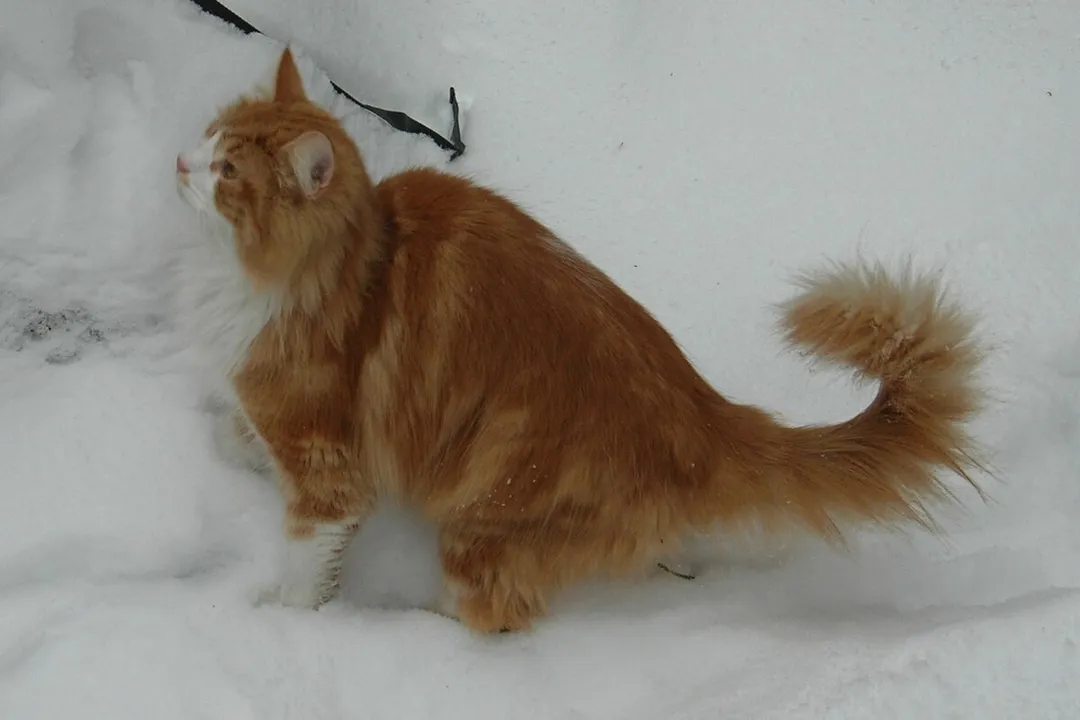
The history of the Norwegian Forest Cat is less a story of intentional creation in a breeder’s cattery and more an account of natural evolution and subsequent preservation. Unlike many popular breeds that trace their beginnings to specific planned crosses in the 19th or 20th centuries, the Skogkatt, as they are known in their native Norway, developed organically over centuries to thrive in one of the harshest climates in Europe. [1][3] They are considered a true landrace, meaning their defining characteristics arose through survival in their environment rather than through human selection for specific aesthetics. [2]
These magnificent, long-haired felines are woven deeply into Norwegian folklore, often featuring in myths and fairy tales long before modern cat fancy existed. [1][3] This deep cultural rooting suggests their presence in Norway is ancient, perhaps dating back to the time of the Vikings, though definitive historical documentation connecting them directly to that era is sparse. [1] Their long, dense coats and sturdy frames speak volumes about their long tenure outdoors, where they served vital roles on farms and homesteads, primarily as highly effective mousers. [3][9]
# Wild Ancestry
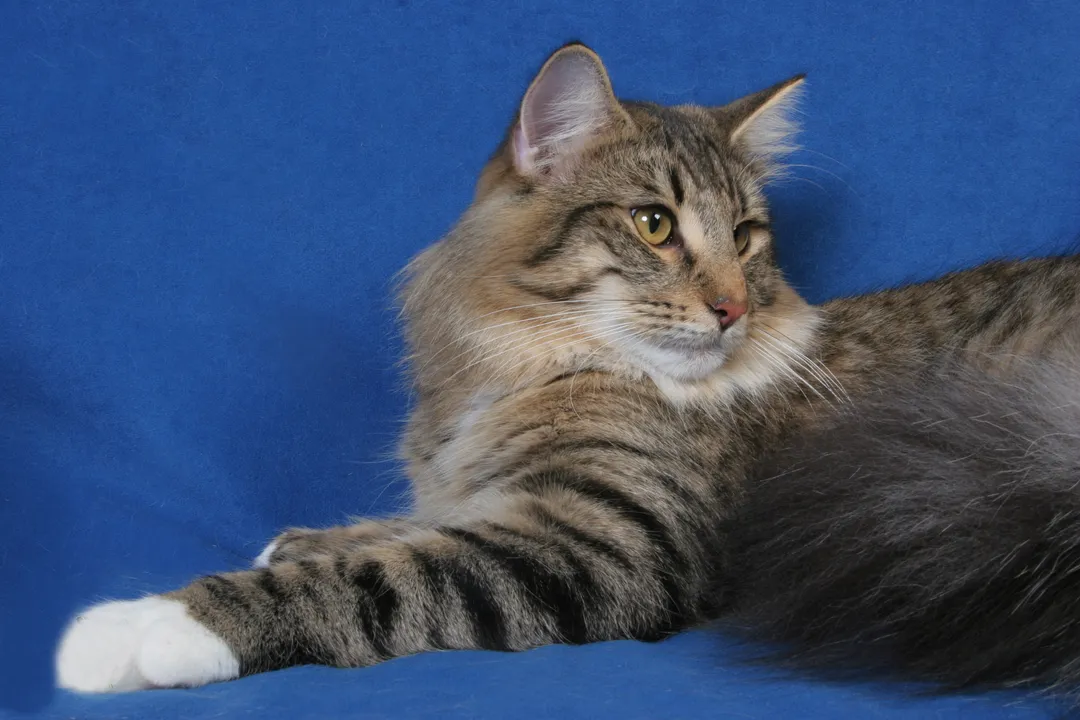
The foundational "making" of the Norwegian Forest Cat occurred naturally within the forests and rural areas of Norway. [1][3] Natural selection was the primary sculptor of the breed as we know it today. [2] Cats that possessed superior insulation against the extreme cold, camouflage within the wooded landscape, and the physical agility to hunt successfully were the ones that survived to reproduce. [1] This rugged, natural process resulted in a cat built for function, not solely for form. [9]
The physical traits that distinguish them—the large, muscular body, the deep chest, and the thick, dual-layered coat—are direct adaptations to the Nordic environment. [1][8] The outer coat is long, coarse, and water-repellent, while the undercoat is dense and woolly, providing essential insulation. [1][9] It is fascinating to consider that this specific combination of weatherproofing likely took many generations of environmental pressure to perfect, far preceding any formal breed standard. [1]
While many established breeds are the result of intentional hybridization to introduce specific traits—like the sleekness of the Siamese or the curl of the Rex—the Norwegian Forest Cat’s defining features were selected by nature itself across Norwegian farms. [2] Even their distinctive, high-set triangle-shaped head and large, tufted ears are functional, perhaps helping to minimize heat loss or improve hearing in dense woodland. [1]
# Mid-Century Crisis
Despite their hardy, naturally evolved resilience, the Norwegian Forest Cat population faced a near-catastrophic decline during the 20th century. [6] This dip in numbers highlights a vulnerability even in naturally established breeds when the environmental and human support systems they rely on are disrupted. [1] The two main pressures leading to this crisis appear to have been the general modernization of Norwegian society, leading to fewer outdoor farm cats, and, perhaps more significantly, the impact of World War II. [1][6]
During and after the war, uncontrolled cross-breeding with common house cats further diluted the distinct traits of the established landrace. [1] It is a common observation in breed history that populations which are not actively managed or appreciated can quickly revert to generalized types when selective pressure is removed or when external factors like conflict interrupt established breeding lines. [2] By the 1950s, the breed was considered by some to be on the brink of extinction, surviving primarily in isolated, remote areas of Norway. [6] This period serves as a critical turning point, shifting the cat's status from a common farm animal to a protected national treasure requiring deliberate conservation. [1]
# Breed Rebirth
The organized effort to save and establish the Norwegian Forest Cat as a recognized breed began in the late 1970s. [1] This was not about creating a new breed but about identifying the existing, pure examples of the Skogkatt and formalizing their characteristics through selective breeding based on those original types. [2]
Key figures, such as Else Green, played an essential part in founding the breed club structure and establishing the initial breed standards with the Fédération Internationale Féline (FIFe). [1] The initial goal was focused on safeguarding the genetic purity and the characteristic look of the surviving natural cats. [1] This commitment to the natural template is crucial; it means that while breeders today manage pedigrees and select for health and standard conformance, the template itself is rooted in the functional morphology shaped by the Norwegian climate, not an artificial creation. [2]
The path to international recognition required careful documentation and adherence to established rules:
- Identification: Locating remaining pure specimens representative of the landrace. [1]
- Registration: Establishing preliminary registries in Norway. [1]
- Standardization: Creating a written standard detailing required features (coat type, body structure, head shape) based on the natural cat. [1]
- International Acceptance: Gaining recognition from major associations, which happened in stages over the following decades. [1][5][7] FIFe accepted them in 1977, and they eventually achieved full championship status with organizations like the CFA and TICA. [1][5][7]
# Climate Adaptation
Understanding how the breed was "made" naturally sheds light on why specific physical characteristics are so pronounced. Their appearance is a testament to thousands of years of environmental adaptation. [1]
Consider the structure of their coat compared to other long-haired breeds. Where breeds like the Persian might have dense, heavy coats that require extensive grooming, the Norwegian Forest Cat's coat is designed to shed snow and water effectively. [9] The oily, longer guard hairs naturally repel moisture, while the insulating undercoat keeps them warm when they are active outdoors. [1][9]
| Feature | Adaptation Role | Natural Origin Evidence |
|---|---|---|
| Double Coat | Water shedding and insulation | Essential for surviving cold, wet Nordic winters [1][8] |
| Muscular Build | Climbing and hunting ability | Necessary for moving through forests and taking prey [1] |
| Large Paws | Snowshoe effect | Helps distribute weight on snow and ice [1] |
| Arched Back | Agility | Aids in climbing tall trees [1] |
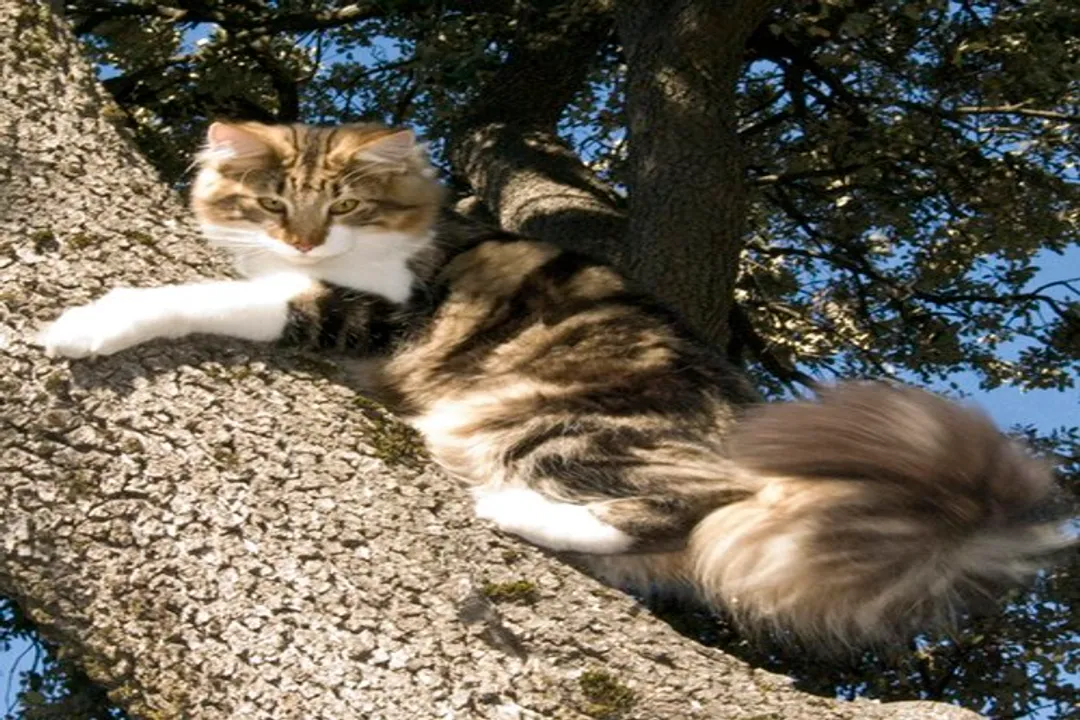
When evaluating a cat, noticing these functional traits immediately tells you something about the breed's history. For instance, if you observe a cat's gait, the high, strong rear legs and slightly arched back are features that allowed them to ascend tree trunks effectively, a behavior that helped them evade predators or perhaps spot prey from above. [1] This contrasts with a breed developed primarily for low-to-the-ground hunting or indoor life, which would likely possess a more compact structure.
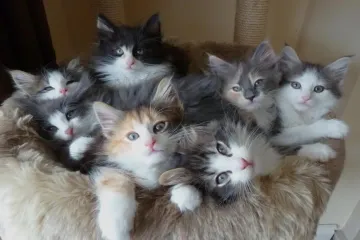
# Landrace Definition
The designation of the Norwegian Forest Cat as a natural breed, or landrace, remains central to its identity. [2][7] This means that, unlike breeds established through intensive, planned crosses (like the Scottish Fold or the Sphynx), the Skogkatt phenotype was already established in the general population before breeders stepped in to standardize the written description. [1][2]
The period of formalization, while necessary for exhibition and protection, introduced a degree of human selection into a process that had previously been purely natural selection. [2] Breeders began selecting for specific traits outlined in the developing standard, such as ear tufting or a certain muzzle shape, which might have been less dominant in the general farm cat population. [1]
It is important for potential owners and enthusiasts to recognize this duality: the cat's type comes from nature, but its current pedigree status comes from human management. A dedication to maintaining the balanced, functional physique common in the original farm cats, rather than optimizing solely for exaggerated show ring features, often signals a breeder’s respect for the breed’s deep heritage. This focus ensures that the unique hardiness that defined the breed for centuries remains intact alongside its beauty. [1][8]
Related Questions
#Citations
Norwegian Forest Cat - Wikipedia
How was the Norwegian Forest Cat breed 'created'? - Quora
Origin of the Norwegian Forest Cat
A brief history of the Norwegian forest cats, the pets of the Vikings ...
Norwegian Forest Cat - The Cat Fanciers' Association
TIL that the Norwegian Forest Cat went nearly extinct during WWII ...
Norwegian Forest - TICA - The International Cat Association
Norwegian Forest Cat - Brit
Norwegian Forest Cat Guide: Size, History & Personality