Are spoonbills born pink?
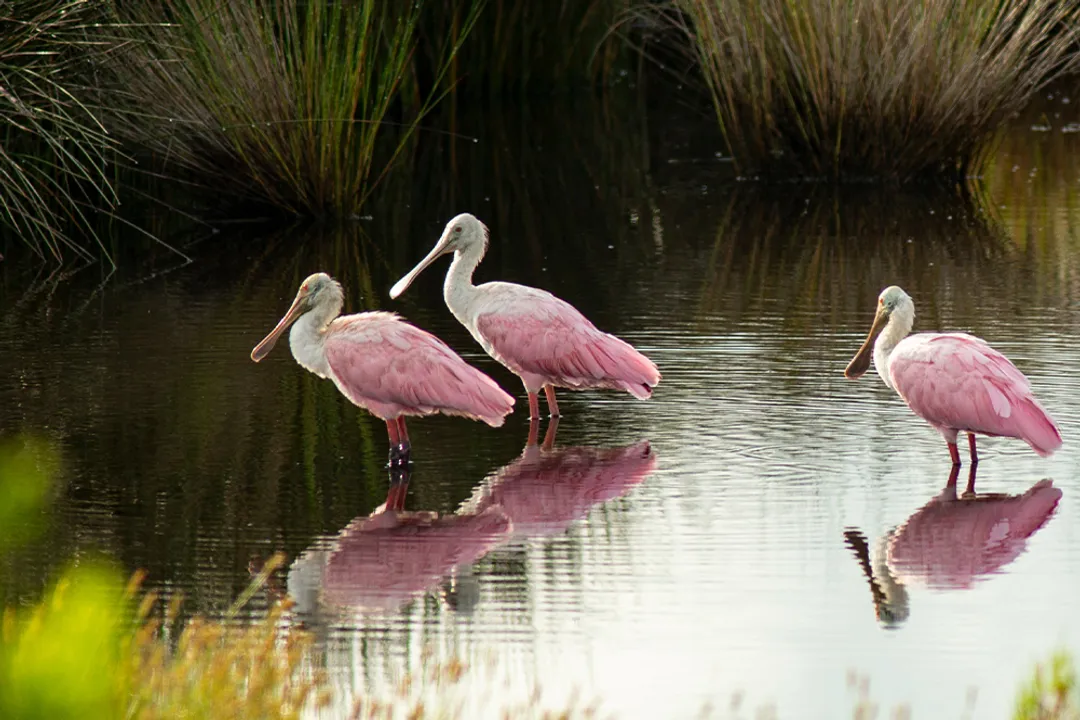
The striking visual of a vibrant pink wading bird against a wetland backdrop often leads to immediate fascination, especially when that bird possesses such a uniquely shaped bill. When people encounter the Roseate Spoonbill, the question naturally arises about the origin of that spectacular coloration: are they born this way, mirroring the vivid hues of a fully matured adult? The short answer, for anyone observing a nest, is a definitive no. A newly hatched Roseate Spoonbill does not possess the intense rosy plumage that characterizes its parents. [1][3][4][5] Instead, the initial appearance of these magnificent birds is far more subdued, a stark contrast to the spectacle they become later in life. [1][3]
# Hatchling Coloration
When spoonbills first break free from their eggs, their downy coverings are typically white or perhaps a pale, grayish-white. [1][3][5] This initial state is common among many bird species, providing less contrast against the nesting material or surroundings, a passive form of early camouflage before the more energy-intensive process of developing bright coloration begins. [4] The journey from a white or pale chick to a pink-hued adult is a story written entirely in the bird's diet and metabolic processes over several weeks or months. [5] This transformation is not genetic expression in the immediate sense but rather an external pigment acquisition. [3]
# Pigment Source
The source of the pink, red, and orange tones seen in many iconic birds—from flamingos to spoonbills—is consistently rooted in their diet, specifically the consumption of certain aquatic life forms rich in pigments called carotenoids. [3][4] For the Roseate Spoonbill, these crucial carotenoids are derived primarily from the crustaceans it consumes, such as shrimp and crabs, which form an important part of its feeding routine. [1][3][4][5] Think of it like an internal dye bath that the bird must continually replenish through consistent eating habits. [3] If the local ecosystem's primary food source lacks these specific invertebrates, the bird will never achieve its namesake pink. [4]
It is fascinating to observe this shared biological strategy across different avian families. While their body shapes and bill structures are wildly different, the Roseate Spoonbill employs the same carotenoid-loading mechanism as the flamingo to achieve its signature color. [3] This suggests that, evolutionarily, ingesting pigments from high-protein, carotenoid-rich aquatic prey is a reliable way to signal fitness and health to potential mates. [4] A bird that can secure a diet rich enough to maintain bright color is advertising its foraging prowess.
# Gradual Pinkening
The transition from white to roseate is a step-by-step process reflecting increasing maturity and dietary success. [1] As the young spoonbill starts to consume more of the adult diet—which also includes small fish and aquatic insects alongside the vital crustaceans—the carotenoid pigments begin to accumulate in the growing feathers. [1][5] The feather development process essentially incorporates these acquired pigments as the barbs are formed and unfurled. This means that even after fledging, an immature spoonbill might display only pale washes of pink, perhaps concentrated on the back, wings, or breast, while other areas might remain whitish or develop duller feathering. [1] Over time, with sustained access to a high-carotenoid diet, the entire plumage deepens into the brilliant roseate shade characteristic of a healthy adult. [5]
For bird watchers observing mixed-age flocks, this provides a simple way to differentiate juveniles from established adults, even when the birds are large enough to be easily seen. [1] A bird showing only faint blush tones is likely a first-year individual still finalizing its adult appearance, whereas the deepest pinks belong to the fully mature individuals. [5]
# Roseate Features
The bird itself is a member of the family Threskiornithidae, which also includes the ibises. [1] The genus name, Ajaia, sets it apart from other spoonbill types, such as the Eurasian or African species, reinforcing its unique place in the New World avifauna. [1] The Roseate Spoonbill is not merely pink; it possesses several other distinct features that make it instantly recognizable. [1][5]
Adults exhibit a noticeable contrast where the body plumage is rosy-pink, but the head is generally described as being a dull, greenish color. [1] Their legs and feet often carry a deeper, reddish-pink hue. [1] The most defining characteristic, however, is the bill itself. This appendage is long, spatulate, or spoon-shaped at the tip, a specialized tool evolved for unique feeding mechanics. [1][8]
# Feeding Style
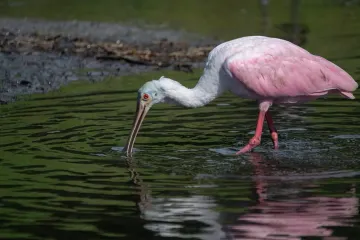
The method by which the spoonbill obtains its colorful diet is as unusual as its bill shape. [5] They wade in relatively shallow waters, often in coastal marshes, estuaries, or flooded fields. [1][5] Rather than spearing prey like a heron, the spoonbill submerges part of its bill just beneath the water surface and swings its head from side to side. [1][8] This sweeping motion uses the sensitive, flattened end of the bill to detect small prey, such as tiny shrimp, aquatic insects, or small fish, through touch. [1][5] Once prey is detected, the bill snaps shut quickly. [8] This process requires the bird to keep its bill slightly open while moving, allowing water to pass through while trapping the food inside. [2] A common observation, especially in locations like the Gulf Coast, is watching them feed in groups, their synchronized movements creating a visually engaging spectacle. [9]
If you are tracking local bird populations, especially in coastal areas of the southeastern US, the vibrancy of the flock can offer an interesting, if informal, ecological assessment. When the local shrimp and crustacean populations are booming, you will observe a much deeper, more saturated pink across the entire breeding contingent. [9] Conversely, a year following a poor shellfish harvest or significant environmental disruption might show a paler, more washed-out population, indicating dietary stress or a recent shift to less pigmented food sources. [4] This intensity serves as a bio-indicator of local prey availability, a concept that goes beyond simple identification for the keen observer. [4]
# Geographic Distribution
While their striking appearance makes them a target for photographers and birders, the Roseate Spoonbill's range is specific, though it can shift. [5] They are commonly associated with the warmer regions of the Americas, frequently found along the coasts of the Gulf of Mexico, extending into Florida and occasionally spotted as visitors further north, such as in coastal Georgia or even the Carolinas during certain seasons. [5][9] Their presence is often tied directly to the presence of suitable saline or brackish, shallow-water habitats that support their primary diet. [1] Because they are wading birds that require specific water depths and prey concentrations, habitat change can quickly force them to relocate their feeding grounds. This makes the protection of these specific estuarine environments extremely important for maintaining healthy, brightly colored populations. [5]
# Distinguishing the Species
It is important to distinguish the Roseate Spoonbill from other wading birds that share its habitat, particularly since many other species in these wetlands are white or gray. [1] While the pink coloration is key, its structure sets it apart from herons or egrets. [1] The long, flattened, spoon-like bill is the definitive field mark, eliminating confusion with other pink birds like flamingos, which have downward-curving bills, or ibises, which have long, thin, downward-curving bills. [1][2][8] Even within the group of spoonbills, the Roseate is distinct due to its deep rosy body color, unlike the Puna or Royal Spoonbills which feature more white and black in their plumage. [1] The sheer size—they can stand about 30 inches tall—also helps in identification, though they are smaller than some herons. [1]
When considering the entire spectrum of spoonbill species globally, the Roseate holds a special place for many North American bird enthusiasts because it is the only species commonly found in parts of the United States. [1] Its return to a more consistent presence in certain areas over the past few decades showcases successful conservation efforts in wetland restoration, providing the necessary shallow water and invertebrate food chains that allow these magnificent birds to thrive and maintain their color. [9]
# Nests and Breeding
Spoonbills typically nest in colonies, often associating with other species like cormorants and herons in dense, protective vegetation, frequently in trees or shrubs near water. [1] The nest itself is usually a rather loose platform built from sticks and twigs. [1] Once eggs are laid, both parents share incubation duties. [1] The vulnerability of the nest is why the initial pale coloration of the chicks offers a mild advantage; they are not advertising their presence with brilliant color until they are large enough to withstand greater environmental pressures and begin intensive foraging on their own. [4] The success of the breeding season is directly linked to the availability of safe nesting sites and the richness of the adjacent feeding grounds, proving that the color they ultimately display is a symptom of overall environmental health. [5] Observing a colony where the adults are intensely colored suggests that the juvenile birds within that same colony have had excellent prospects for developing their own rosy feathers throughout the season.
#Videos
Why Do Spoonbills Grow PINK While Other White Birds Don't
Related Questions
#Citations
Roseate spoonbill - Wikipedia
Why are Roseate Spoonbills...roseate? : r/Ornithology - Reddit
Ask an Expert: Why Are Roseate Spoonbills Pink? | South Carolina ...
Roseate Spoonbill Sighting in Neighborhood on Anna Maria Island
September Bird of the Month - Northern Virginia Bird Alliance
Why Do Spoonbills Grow PINK While Other White Birds Don't
Discover 10 Fascinating Facts About the Birdorable Roseate Spoonbill
Our Favorite Pink Bird: The Roseate Spoonbill
Spotlight on the Roseate Spoonbills - Low Country Drifters