What are the physical characteristics of the California condor?
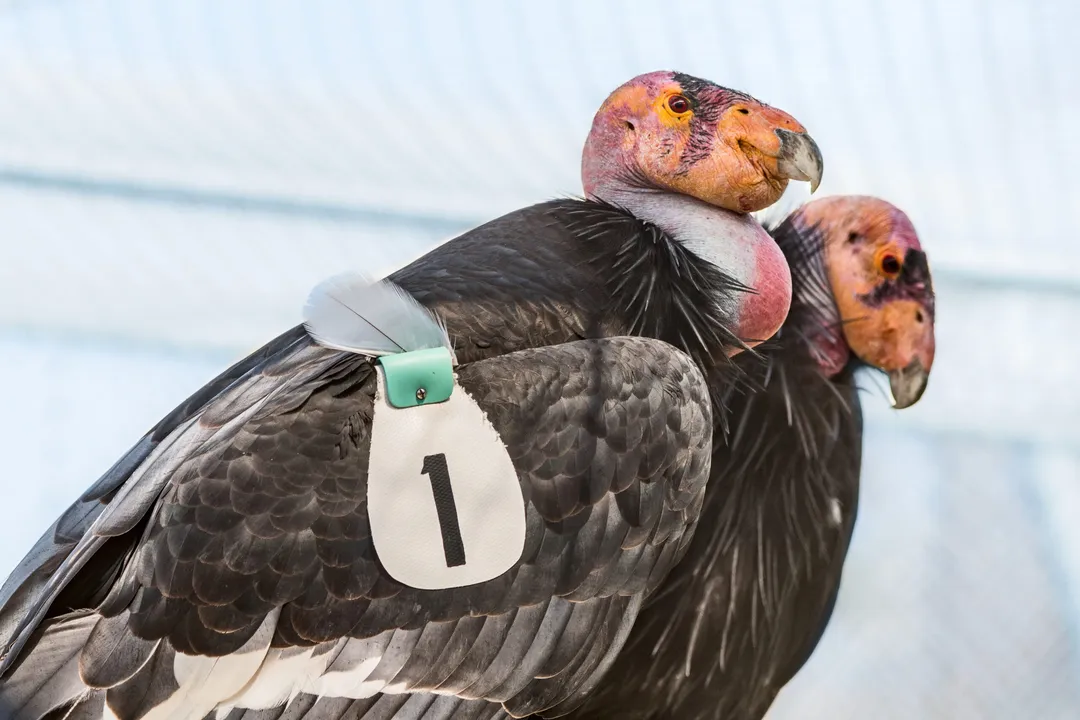
The California condor, Gymnogyps californianus, immediately commands attention simply by its scale; it holds the distinction of being the largest flying bird native to North America. [2][7] Observing one in the wild is an exercise in appreciating sheer avian mass. These majestic scavengers are truly giants among raptors, possessing a wingspan that can stretch an incredible nine and a half to ten feet wide. [1][4][5][6] This span is comparable to that of the extinct California Condor's relative, Teratornis merriami, reinforcing its status as a modern heavyweight flyer. [5]
For context on their bulk, an adult condor typically measures about 45 inches in length from head to tail. [2] Their physical weight is substantial, generally ranging between 17 and 26 pounds. [1][2][4][5][6] Generally speaking, the males are slightly heavier and possess a larger wingspan than the females. [5] This immense size necessitates a highly specialized lifestyle, as their structure is optimized not for active pursuit, but for efficient soaring across vast territories, allowing them to cover hundreds of miles in a single day while expending minimal energy. [4][6]
# Plumage Detail
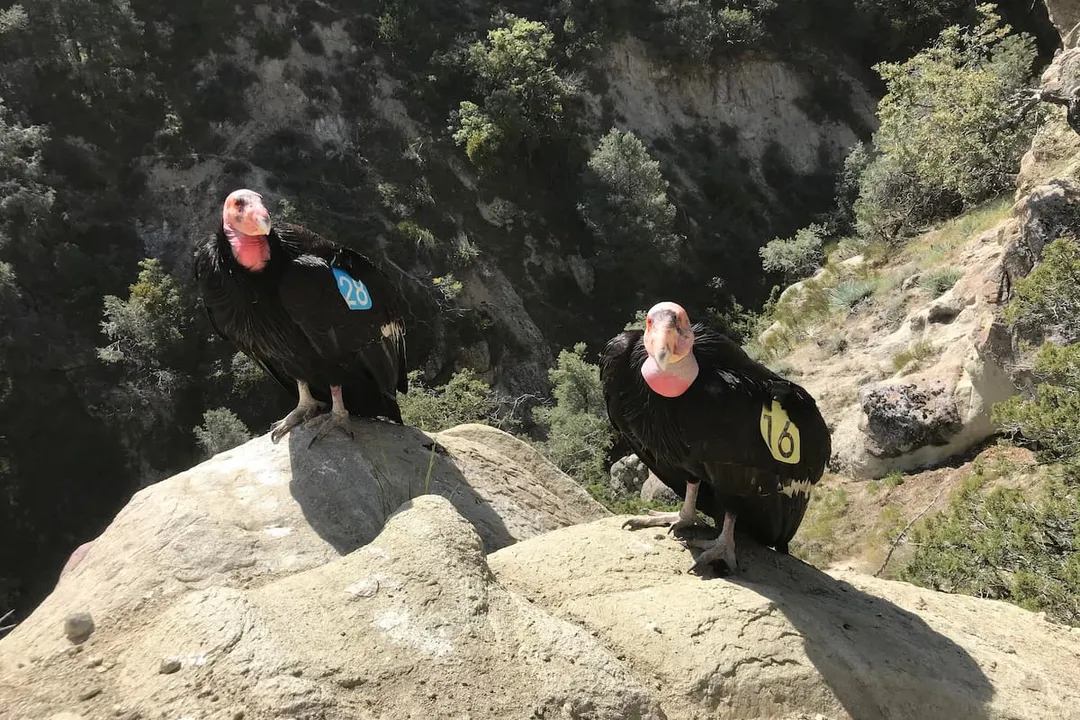
The overall impression of the California condor in flight is one of imposing darkness set against striking accents. The majority of their body feathers are a deep, rich black. [1][5][6][7] This dark plumage covers the back, tail, and the majority of the wing structure.
However, the underwings reveal the bird’s signature marker. Beneath both wings, there are prominent, triangular patches of white feathers. [1][3][4][5][6][7] These white patches are particularly noticeable when the bird is soaring overhead, creating a stark, unmistakable silhouette against the sky that helps distinguish them from other large dark birds. [7]
# Head Appearance
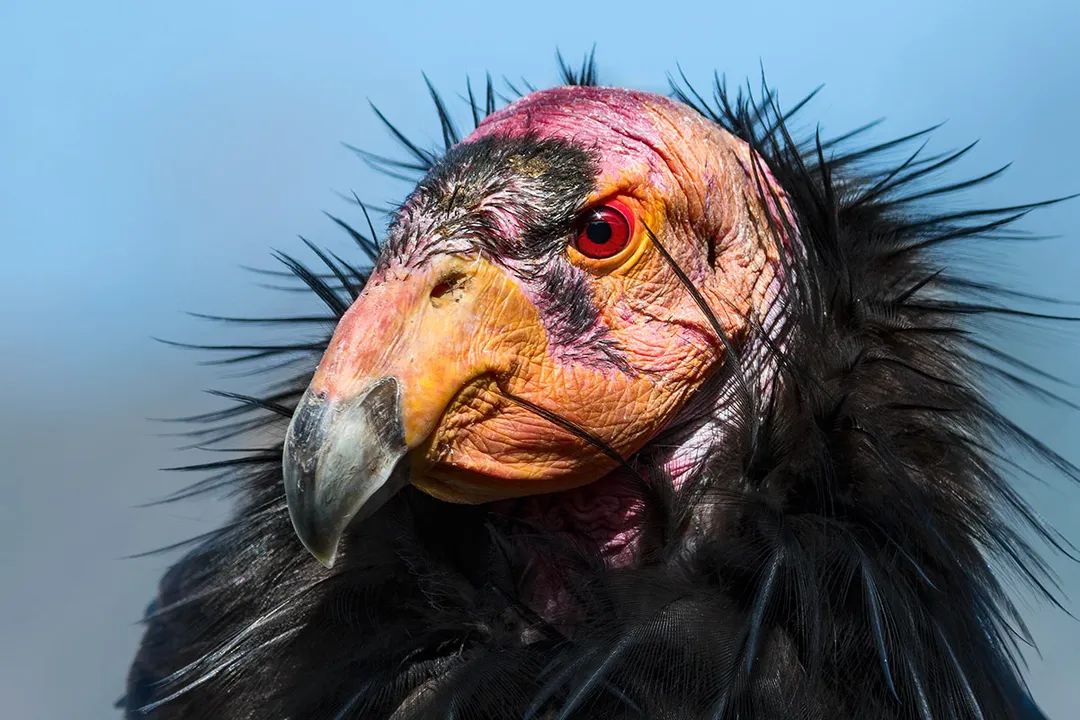
Perhaps the most defining and variable physical characteristic of the California condor is the appearance of its head and neck, which are largely bare of feathers. [1][5][7] This lack of dense plumage is a highly functional adaptation; when feeding on large carcasses, having bare skin allows the bird to keep clean while reaching deep inside to consume carrion, reducing the risk of feathers becoming matted with blood or tissue that could impede flight or harbor bacteria. [4]
The skin coloration of this bare area is surprisingly dynamic and often shifts based on the bird's physiological state, especially around the breeding season. [1][7] Adult coloration can range significantly across the spectrum, including shades of orange, yellow, pinkish-red, and sometimes appearing darker or blackish. [1][3][4][5][7]
There are discernible differences between the sexes, though these are sometimes subtle. Adult males often display a more intensely colored head and neck compared to females, and they frequently possess a pronounced, fleshy, often blackish comb or wattle on the top of their head. [4][5] Females, in contrast, might exhibit a more yellowish tint to the skin around the eye and generally lack the prominent cranial comb seen in the males. [4][5]
This stands in sharp contrast to their appearance as hatchlings and juveniles. Young condors are born covered in down, and as they mature, their head and neck remain dark, often appearing black or dark gray before they reach full maturity. [4][7] The gradual shift from this dark, juvenile head to the brightly colored, bare skin of the adult reflects their passage into sexual maturity, a process that takes several years.
# Limbs Features
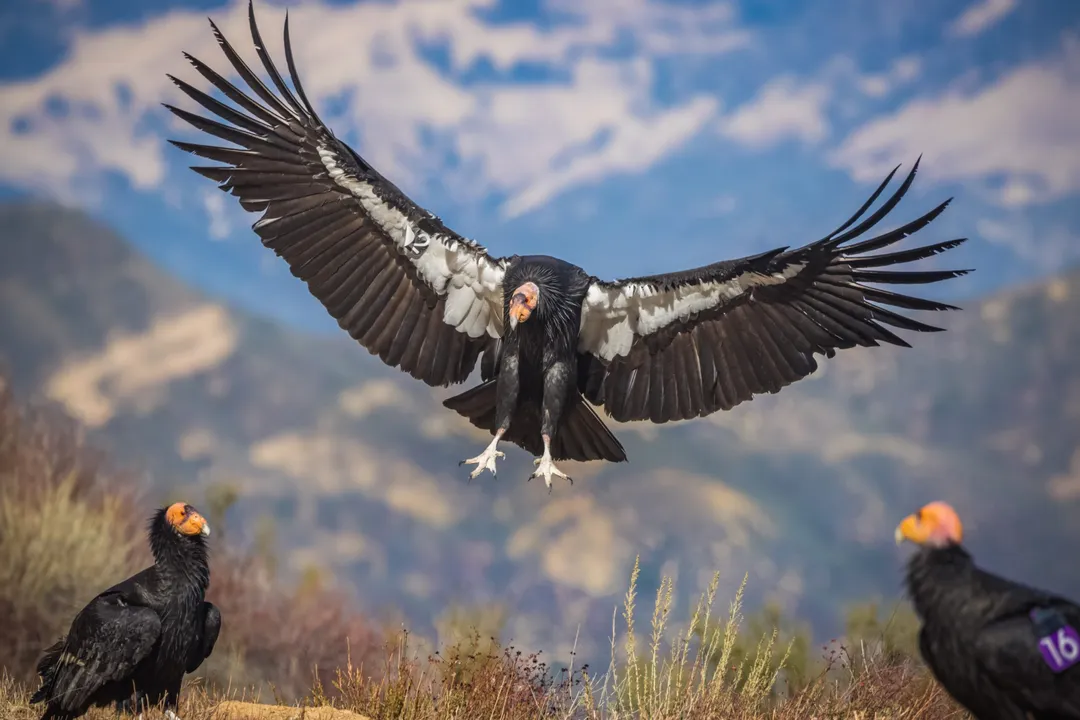
The feet and beak of the condor reflect its obligate scavenging nature. While they are classified within the order Accipitriformes alongside eagles and hawks, their feet are structurally different from those of active, grasping predators. [3] A condor's feet are relatively large, but they are flatter and less curved than the sharp talons of a typical hawk. [3][5] This structure is better suited for walking on the ground while consuming carrion or balancing on a perch, rather than seizing and holding struggling prey. [3]
Their bill is heavy, long, and slightly hooked at the tip, providing the necessary strength to tear through tough hides and ligaments of deceased animals. [2][5]
# Flight Profile
When the condor takes to the air, its physical structure dictates its method of travel. To become airborne from a standstill, a large bird needs a running start or a high ledge; once aloft, however, the California condor is a master of aerodynamic efficiency. [4] Their massive wingspan allows them to capture thermal updrafts and ridge lift with incredible effectiveness. [6] This proficiency means that during a typical foraging day, they may only need to flap their wings a handful of times, sometimes even less than once an hour, using invisible currents of air to remain aloft for hours on end while scanning the landscape below. [4][6] This soaring behavior is not just an interesting feature; it is the key to their survival in a scavenger’s niche, allowing them to locate widely dispersed food sources without expending precious calories.
| Characteristic | Adult Male Estimate | Adult Female Estimate | Juvenile Appearance |
|---|---|---|---|
| Wingspan | Up to 10 feet | Up to 9.5 feet | Similar to adult span |
| Body Weight | 20–26 pounds | 17–20 pounds | Lighter |
| Head Skin Color | Highly variable (Yellow/Orange/Red) | Highly variable (Yellow/Orange/Red) | Dark Gray or Black [4][7] |
| Head Feature | Often has a prominent blackish comb [4] | Generally lacks the large comb | Bare skin developing |
This physical dedication to soaring flight means that the condor is rarely seen in active, flapping pursuit. An observer spotting a large, dark shape suddenly beating its wings rapidly is likely observing a bird that has just taken off, is landing, or is engaging in territorial display, rather than one actively hunting. The sheer inertia and size mean getting up is the hardest part of the flight; staying up is largely effortless under good atmospheric conditions. [6]
# Distinguishing Features in Flight
Beyond the size and the white wing patches, the flight style itself is a physical characteristic. The wingtips of the California condor are noticeably long and spread out, often appearing like "fingers" trailing behind the main wing structure when they soar. [3] This feather arrangement helps manage airflow during long glides. Furthermore, the wingbeats, when they occur, appear slow and deep compared to smaller birds, reflecting the muscle power required to move such great mass. [7] This combination of size, shape, and wing pattern makes the California condor unmistakable once seen flying high above the mountains and canyons where they typically range. [4]
Related Questions
#Citations
California Condor (Gymnogyps californianus) | U.S. Fish & Wildlife ...
California Condor (Gymnogyps californianus) Fact Sheet - LibGuides
California Condor Identification - All About Birds
California Condor Facts - National Park Service
California condor - Wikipedia
California Condor | Oakland Zoo
California condor | The Raptor Center
California Condor - Facts, Diet, Habitat & Pictures on Animalia.bio
California condor - Oregon Wild
California Condor - Los Angeles Zoo and Botanical Gardens