What are the physical characteristics of a Pomsky?
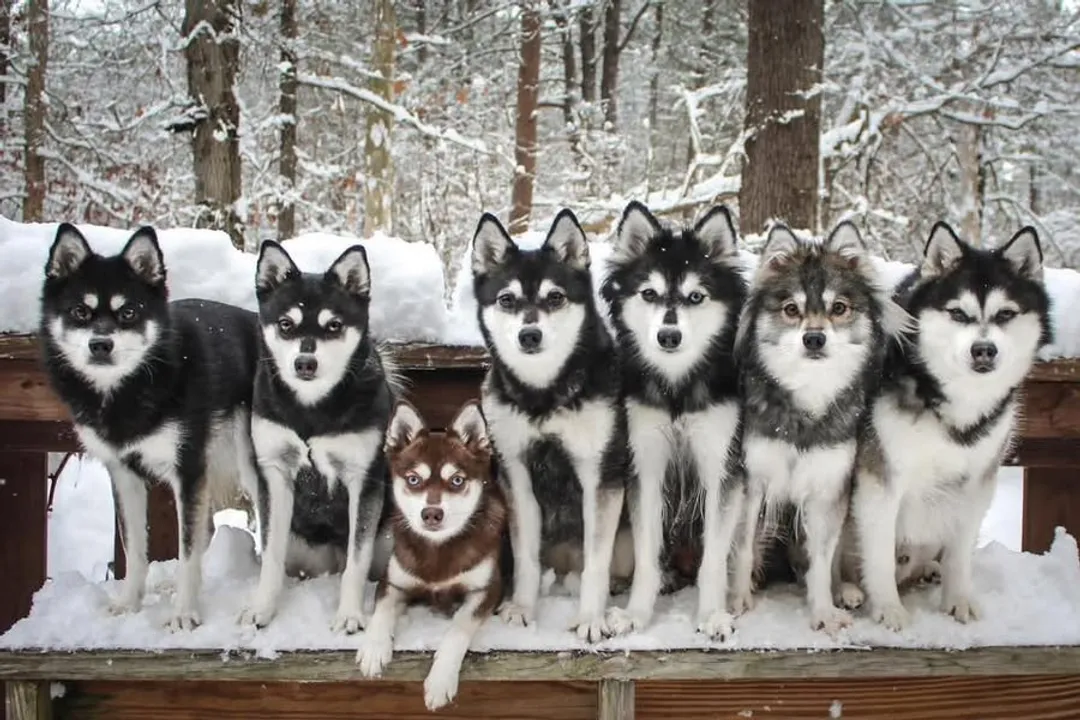
The Pomsky, a captivating crossbreed between the spirited Siberian Husky and the clever, compact Pomeranian, presents a fascinating study in canine aesthetics. What you see in one Pomsky can look drastically different from the next, making their physical description less of a fixed blueprint and more of a wonderful spectrum of possibilities. [2][5] They are designer dogs that often manage to inherit the striking features of both parent breeds, resulting in an appearance that blends the Husky’s wild appeal with the Pomeranian’s fluffy charm. [3][5]
# Parent Mix
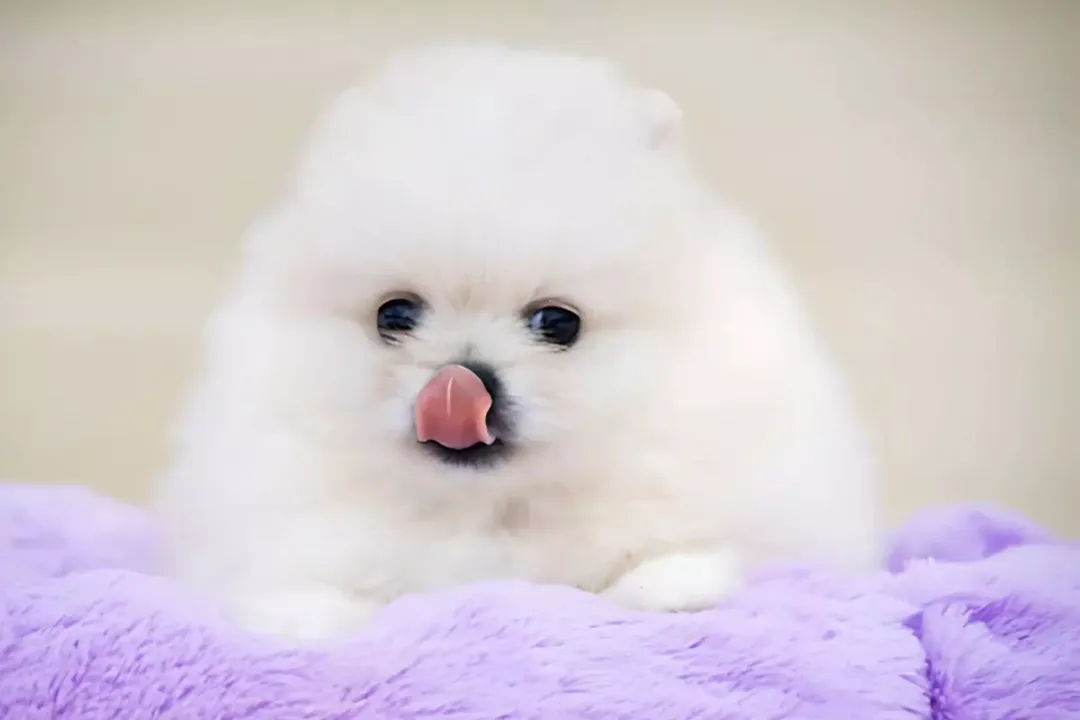
Understanding the physical makeup of the Pomsky begins with acknowledging its parentage. It is a hybrid dog bred from a Siberian Husky and a Pomeranian. [1][3][5] Because these two parent breeds differ significantly in size—the Husky being a medium-to-large working dog and the Pomeranian being a toy breed—the resulting offspring exhibits considerable variance in nearly every physical trait. [2][7] The specific look a dog displays often depends on which parent’s genes were more strongly expressed. [2]
# Size Spread
Perhaps the most challenging characteristic to pin down for a prospective owner is the final size of the Pomsky. This unpredictability stems directly from the genetic toss-up between the two parents. [2] While a desired outcome often leans toward a smaller, more manageable size than a full Husky, the reality is a broad range. [5]
# Height Range
Generally, you can expect a Pomsky’s height to fall somewhere between 10 inches and 15 inches tall when measured at the shoulder. [1][7] However, some individuals may be slightly shorter or, conversely, push closer to 18 inches, especially if the Husky influence is dominant in terms of skeletal structure. [1]
# Weight Estimation
Weight variation mirrors height variability. Owners often report their Pomskies landing anywhere between 10 pounds up to 30 or 40 pounds. [1][5] A good rule of thumb for expectation management, particularly when dealing with first-generation (F1) crosses, is to consider the potential weight of both parents. If you are anticipating a dog closer to the Pomeranian size spectrum, look for breeders who specifically aim for smaller Husky pairings or are breeding later generations (F2, F3) where trait expression might be slightly more predictable than in the initial mix.
| Generation | Typical Weight Range (Approximate) | Expected Husky Influence |
|---|---|---|
| F1 | 15–35 pounds | High Genetic Mix |
| F2/F3 | 10–30 pounds | More stable, potentially smaller |
| Toy/Mini | Under 15 pounds | Bred from smaller parent stock |
| [1][5] |
# Coat Appearance
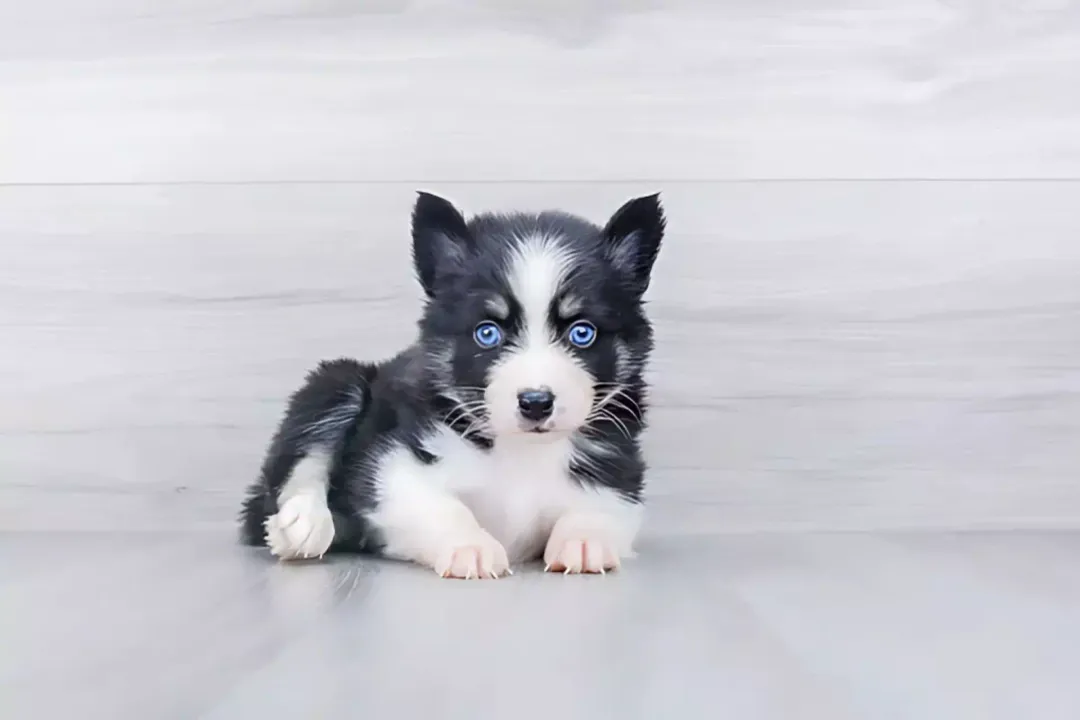
The Pomsky’s coat is one of its most recognizable features, almost always inheriting the thick, dense double coat characteristic of the Husky. [1][7] This luxurious outer layer is designed for insulation, but it comes with a significant grooming commitment. [1]
# Texture and Density
The outer coat is usually medium to long in length and tends to be straight or slightly wavy. Beneath this lies the dense undercoat, which is soft and fluffy. This double layering means they require frequent brushing to prevent matting, especially during seasonal changes. [1]
# Seasonal Shedding
Be prepared for shedding; it is a notable characteristic of the breed. [4] Like their Husky ancestors, Pomskies typically "blow their coat" twice a year—a period of extremely heavy shedding where the old undercoat is aggressively pushed out to make way for the new seasonal coat. [1] During these times, daily brushing is necessary to manage the volume of hair, though regular maintenance brushing a few times a week is required year-round. [1]
# Color Patterns
The color palette available to the Pomsky is broad, mirroring the diversity seen in both parent breeds. [7] Common colors include:
- Black and white
- Grey and white (often resembling a miniature wolf)
- Red, sable, or brown combinations
- Solid white or cream
Often, the markings will feature the classic Husky facial mask or piebald patterns across the body. [1][7]
# Facial Features
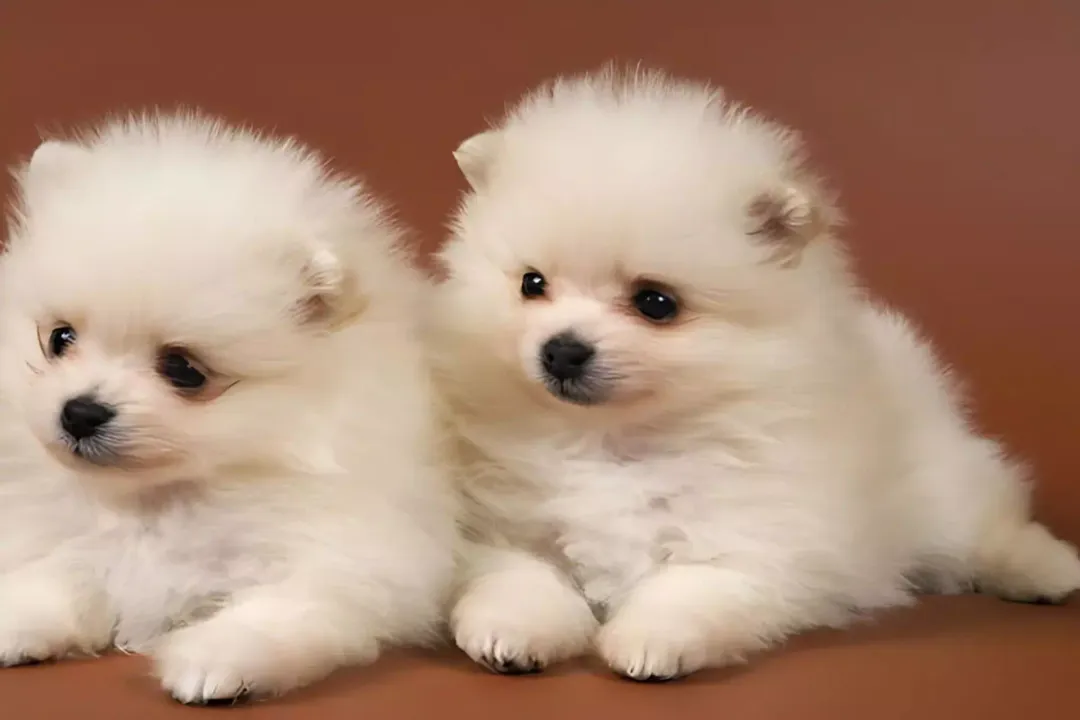
The head and facial structure are where the Pomsky often achieves its most endearing and distinctive look, typically leaning toward the wolfish profile of the Husky but softened by Pomeranian traits. [2]
# Eye Color
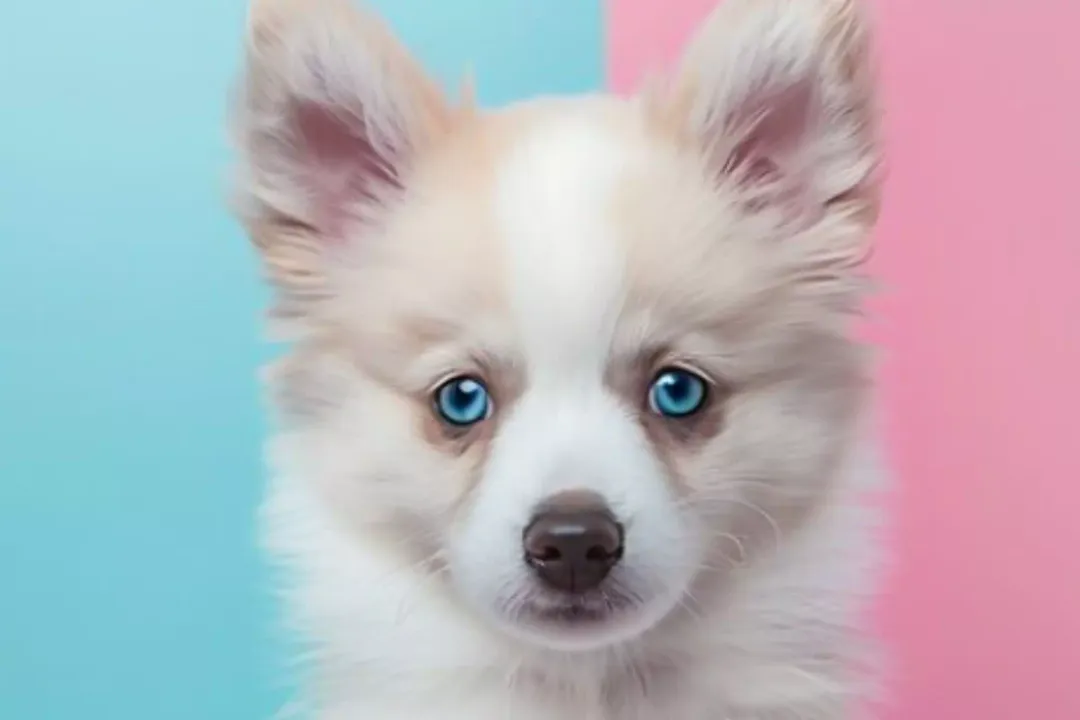
The eyes are a major attraction for many enthusiasts. Inherited primarily from the Siberian Husky, Pomskies frequently display striking eye colors. [1][7] It is not uncommon to see brilliant blue eyes, warm brown eyes, or even heterochromia—where one eye is a different color than the other, or where one eye contains flecks of two colors (bi-colored). [1][7] While some may end up with solid brown eyes, the possibility of vivid blue or marbled eyes is a strong selling point.
# Ear Shape
The ears usually stand erect and pointed, a strong Husky trait. [1][7] They sit high on the head and give the dog an alert, intelligent expression. The size of the ears, however, can vary; very small Poms may result in slightly smaller, proportionally sized ears, though they generally remain upright. [2]
# Muzzle and Head Structure
The muzzle length is one of the physical traits that can vary significantly. In some dogs, the muzzle will be moderately long, similar to a Husky, while in others, it may be shorter and more refined, reflecting the shorter muzzle of the Pomeranian. [2] The head itself is often described as wedge-shaped, balanced between the two parents.
# Proportions Body
When observing the overall structure, the Pomsky is typically a small to medium-sized dog with a sturdy, well-proportioned build. [7] They are not overly delicate like a purebred Pomeranian, possessing a somewhat more muscular frame inherited from the Husky that supports their energy levels. [5] Their tail is usually carried up and curled over the back in a plume, reminiscent of the Husky or Spitz-type dogs they descend from. [9]
One important consideration for potential owners revolves around coat density versus actual body mass. Because the double coat adds considerable visual volume, it is easy to overestimate a Pomsky's actual bone structure and weight. [1] A dog that looks like a tiny wolf might only weigh 20 pounds, but that visual bulk requires adequate exercise to maintain a healthy muscle-to-fat ratio, preventing the coat from hiding underlying weight gain.
# Trait Stability
For those interested in predicting physical traits accurately, understanding the generational stability is key. An F1 Pomsky (direct cross of a purebred Pomeranian and a purebred Husky) is the most genetically variable, potentially looking very much like either parent or an equal mix of both. [2] As you move to F2 or F3 generations, where two Pomskies are bred together, the traits tend to become more consistent within the litter, though unpredictability never completely vanishes in a hybrid breed. [2] Breeders focusing on later generations are often attempting to stabilize the desired look—usually a 50/50 mix with moderate size and strong Husky markings—which is a testament to the effort put into defining this designer breed’s characteristics. [5]
Related Questions
#Citations
The Pomsky Dog Breed - Hill's Pet Nutrition
About Pomskies | Traits, Personality, Behavior, Appearance, and Care
Pomsky Dog Breed Information and Characteristics - Potty Buddy
What is your Pomsky like? - Reddit
Designer Dog Breed Profile: Pomsky - Woof
Pomsky | Dog Breed Facts and Information - Wag! Dog Walking
Pomsky - Dog breed genetic test
Pomsky: Dog Breed Characteristics & Care - The Spruce Pets
Pomsky Dogs and Spitz Dogs
Size of Pomsky mixes and temperament of Pomskies - Facebook