What are the characteristics of the golden lancehead?
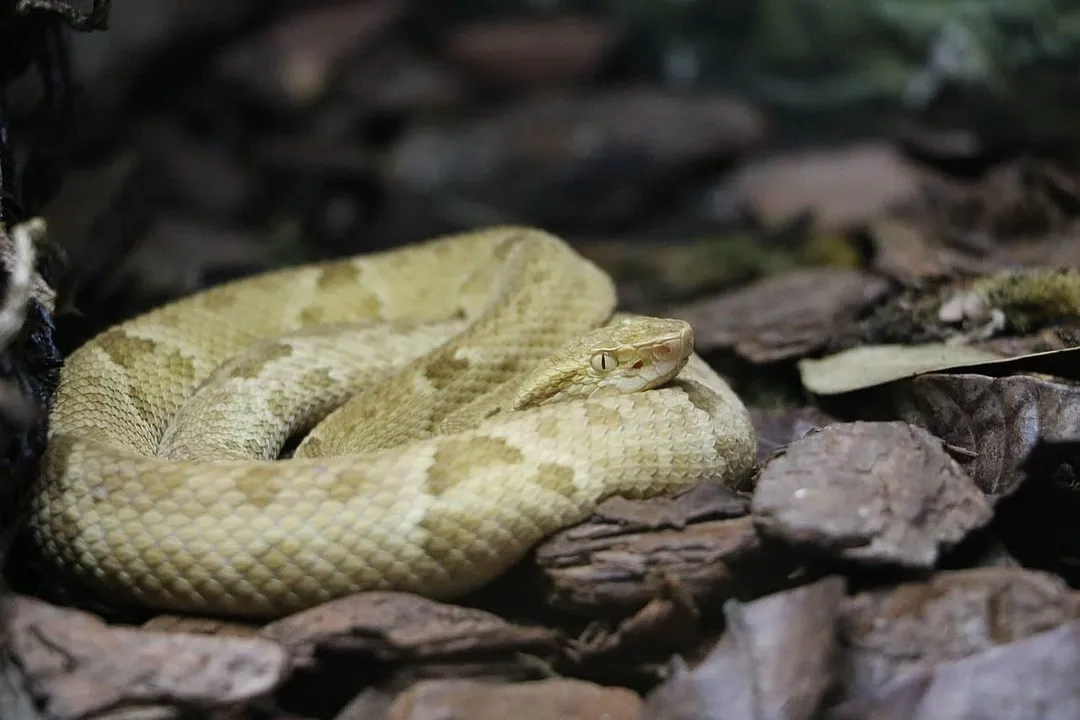
The serpentine inhabitant of a single, isolated piece of land, the golden lancehead, or Bothrops insularis, presents one of the most striking examples of isolated evolution in the reptile world. [1][2] It is a pit viper whose very existence is tied to the unique ecological pressures of its home, leading to a collection of characteristics unlike most of its mainland relatives. [4][7] Understanding this snake requires looking beyond mere identification, delving into how its environment shaped its appearance, venom profile, and sheer numbers. [1][6]
# Scientific Identity
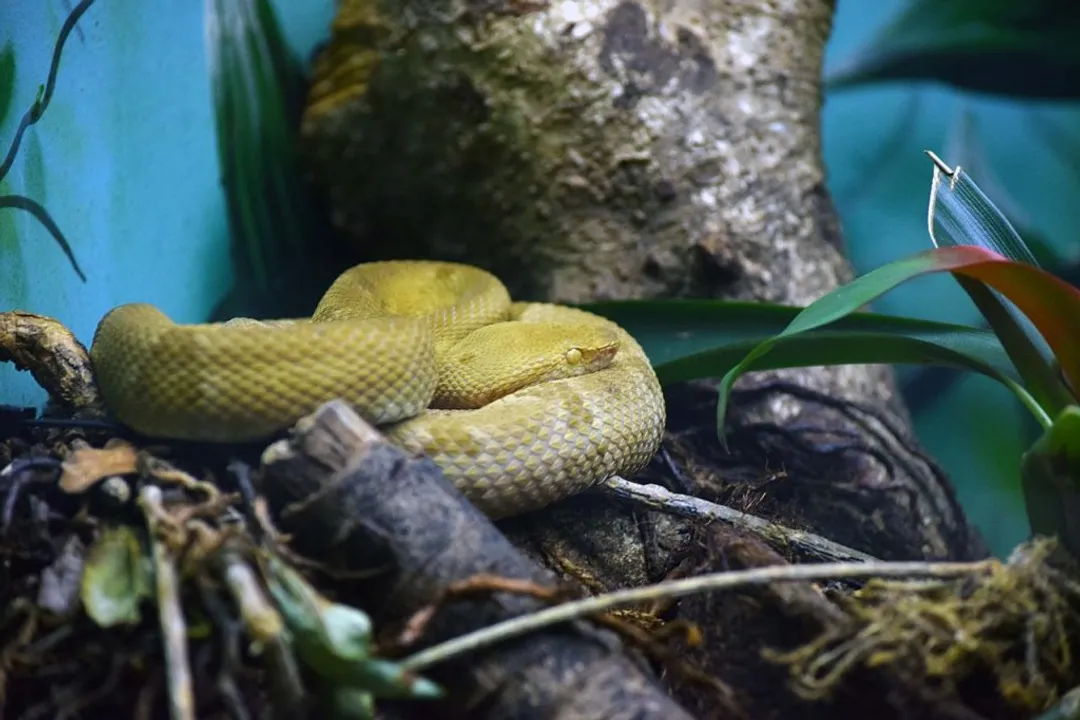
This species belongs to the genus Bothrops, which encompasses the lancehead vipers commonly found across Central and South America. [2] However, the golden lancehead holds a unique position as Bothrops insularis. [2] It is specifically classified as endemic, meaning it naturally occurs nowhere else on Earth except for its very restricted geographic range. [1][4][8] This geographical isolation is perhaps the single most defining factor influencing all other traits observed in the snake. [7]
# Appearance Defined
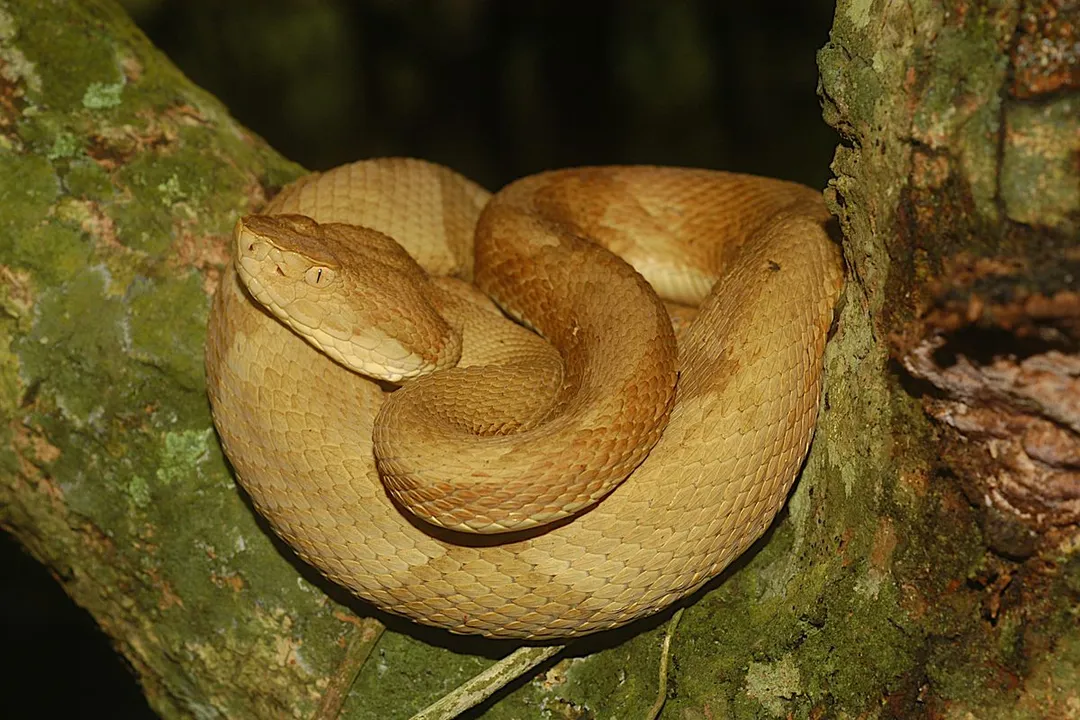
The common name, golden lancehead, points directly to one of its most recognizable traits: its coloration. [5][6] Adult specimens typically display hues of yellow, golden, or brownish scales, often featuring darker crossbands or markings. [2][5] This cryptic coloration aids in camouflage among the island's dry vegetation. [6] While the name suggests a uniform gold, observers note a spectrum; some individuals can appear almost blackish, especially in older or distinct populations. [2][5] Physically, they possess the classic triangular head shape characteristic of vipers, housing the heat-sensing pits used to locate prey. [6] In terms of size, adults commonly reach lengths of about one meter, or approximately three feet. [5][6] This size places them as medium-sized vipers, substantial enough to command respect but not reaching the colossal dimensions of some other tropical snakes. [6]

# Venom Potency
The venom produced by the golden lancehead is a critical aspect of its survival and its infamous reputation. [4] It is described as highly potent. [4] Like many pit vipers, its venom is primarily hemotoxic, meaning it attacks the circulatory system, causing tissue destruction and internal hemorrhaging. [2][4][6] Historically, before conservation measures were significantly enforced, bites from these snakes were a major cause of fatalities on the island due to the venom's aggressive effects on mammalian tissue. [4][6]
An interesting consideration arises when comparing this venom to that of mainland Bothrops species. Evolutionarily, because the island's primary food sources are birds, the venom composition has likely been fine-tuned to break down bird physiology effectively. [7] While still devastating to mammals like humans, the specific evolutionary trajectory suggests a specialization for avian prey, which is a fascinating example of adapting a potent defense mechanism to an almost exclusive diet. [7] This dietary specialization, therefore, directly informs the chemical characteristics of the venom we study today. [4]
# Island Endemism
The distribution map for the golden lancehead is incredibly small: it lives exclusively on Queimada Grande Island, located off the coast of Brazil. [1][7][8] This island is often starkly divided into two zones: a heavily forested interior where the snakes thrive, and the coastal areas where they are absent or far less numerous. [1][7] This restriction is fundamental to their entire biological profile. Because they are confined to this single landmass, they have evolved without the genetic mixing or competitive pressures introduced by mainland species. [4][7] The sheer isolation has allowed their population to reach densities that would be unsustainable elsewhere. [1]

# Population Density
The sheer numbers of B. insularis concentrated on Queimada Grande are astonishing, contributing significantly to its notoriety. [1][7] Estimates suggest that the snake population density on this small island is among the highest recorded for any snake species globally. [1] In favorable areas, particularly within the interior forests, there can be as many as five snakes per square meter. [1][7]
To put this into perspective, consider a standard paved parking space, roughly nine square meters. In the prime habitat areas, one might expect to find nearly fifty of these venomous vipers occupying that space. [7] This density is directly supported by the availability of their main food source, which offers a consistent, high-calorie intake without requiring extensive territorial battles usually seen in sparser populations. [7]
# Dietary Niche
The feeding habits of the golden lancehead are intrinsically linked to its habitat and high density. [7] Unlike many terrestrial vipers that rely heavily on small ground mammals, the golden lancehead feeds almost entirely on birds. [4][6][7]
The key to this avian diet is the phenomenon of migratory stopovers. [7] Queimada Grande Island serves as a vital resting spot for numerous species of migratory birds crossing the Atlantic coast of Brazil. [7] The snakes wait in the trees, ready to ambush these exhausted travelers as they alight. [6][7] When the birds are not migrating, the snakes must rely on the island's resident bird populations, but the influx of migratory birds provides the necessary caloric boosts that sustain the massive population size throughout the year. [7] If these migratory routes were disrupted, the island's ecosystem could not support the current snake density, suggesting a fragility in their current survival strategy even if human disturbance were removed. [7]
# Conservation Status
The official classification for the golden lancehead is Critically Endangered. [1][4][8] Paradoxically, the very features that make it unique—its extreme rarity in location and high venom value—are also the primary threats to its existence. [7]
The primary danger historically came from illegal collection for the venom trade. [7] The unique composition of its venom makes it extremely valuable for pharmaceutical research, driving poachers to risk landing on the heavily protected island. [7] Furthermore, the Brazilian Navy maintains a strict policy preventing almost all civilian access to the island, a necessity largely driven by the extreme danger posed by the snakes. [7] This protection, while critical for preventing human-snake conflict and illegal collection, also creates a buffer that shields the species from general human encroachment and habitat destruction that devastates species elsewhere. [7][8] The fate of the golden lancehead remains precariously balanced between governmental protection and the high demand for its valuable biological product. [7]
Related Questions
#Citations
Golden Lancehead - Facts, Diet, Habitat & Pictures on Animalia.bio
Golden Lancehead (Bothrops insularis) - iNaturalist
Golden Lancehead Animal Facts - B. insularis
Golden Lancehead | Endangered World Wiki - Fandom
A Terrifying Island of Snakes that could Hold a Medical Treasure
Golden Lancehead Facts & Photos | Wowzerful
Snake Island's Venomous Vipers Find a New Home in São Paulo
Golden lancehead - Grokipedia
Golden lancehead Facts for Kids