What are the characteristics of golden silk spiders?
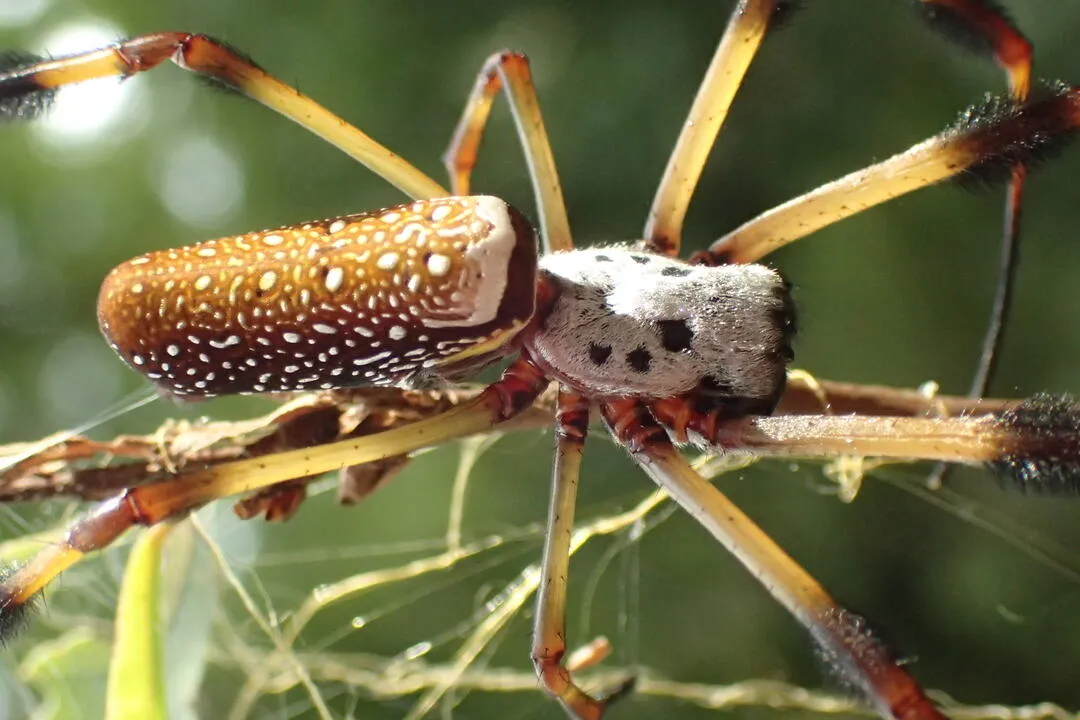
The golden silk spider, often known scientifically as Nephila clavipes, presents one of nature's most visually arresting sights for those lucky enough to encounter one in its natural environment. Sometimes locally referred to as the banana spider, this arachnid is instantly recognizable due to the striking, lustrous yellow hue of the silk it spins, setting it apart from the more common silvery webs we usually see. [5][9] These spiders thrive primarily in warmer latitudes, making appearances in locations like the southeastern United States and the Caribbean. [5]
# Appearance Body
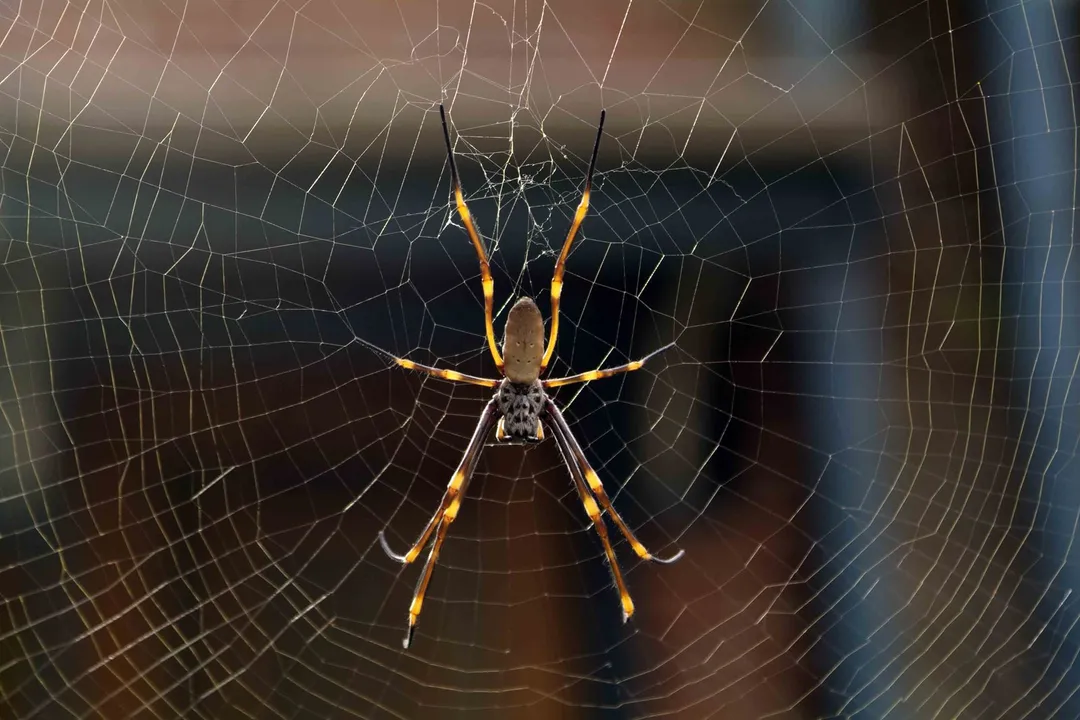
Perhaps the most immediate characteristic noted by observers is the dramatic physical disparity between the sexes, a phenomenon known as sexual dimorphism. [1] The female golden silk orb-weaver is the imposing figure in the relationship, often growing quite large. [7] Her body length can reach up to an inch, and her leg span frequently extends to three or four inches. [7][1] Her coloring is variable, typically featuring a dark brown or reddish-brown abdomen, often accented with bright yellow or orange markings. [7] The long legs are also frequently banded with color. [1]
In sharp contrast, the male is diminutive, often looking like little more than a small, brownish speck next to his massive partner. [1] This size difference is extreme; the male is merely a fraction of the female's size. [7] While the female is busy building and maintaining the massive web, the small males often wait nearby, sometimes even waiting until the female has molted before attempting to mate. [1]
# Golden Fiber
The defining feature of this spider group is, without question, its silk. [4] The thread produced by Nephila species possesses a distinct, often brilliant, golden coloration. [4] This color arises from pigments incorporated into the silk structure itself, distinguishing it from the clearer or silvery threads spun by many other orb-weavers. [4] This vibrant pigmentation is an interesting evolutionary trait; while it might seem like a potential disadvantage by making the web more visible to prey, in the bright, sun-drenched habitats where these spiders prefer to reside, this golden color may actually help camouflage insects against the bright, sunlit background, making the web less conspicuous to certain prey items. [5]
Beyond its color, the silk is renowned for its physical properties. [4] It is incredibly strong and durable, known for its tenacity. [4] While many spiders use silk for various functions, the sheer tensile strength of the golden silk, which researchers have studied for years, suggests material properties that rival some synthetic fibers, particularly when considering its lightweight nature relative to its breaking strength. [4] This material excellence is what allows the female to construct the enormous, load-bearing webs necessary to subdue large flying insects. [5]
# Orb Structure
The web spun by the female Nephila clavipes is a true engineering marvel—a massive orb. [1] These structures are not small, delicate creations; they can span several feet in diameter. [7] The female is the principal architect, constructing these intricate geometric traps, often suspended high up between trees or between structures in open areas. [5]
Given the size of the web and the energy required to produce the golden silk, the spider is meticulous about maintenance. [5] It is common for the spider to fully rebuild or significantly repair its web on a daily basis. [5] If you are observing an area where these spiders are known to exist, you might notice that a web that was perfect in the morning has been entirely disassembled by evening, only to be replaced by a fresh structure the next day. [5] This constant upkeep is necessary to ensure the stickiness and structural integrity required to capture their diet. [4]
# Habitat Activity
Golden silk orb-weavers favor environments that allow them sufficient room to deploy their massive nets and plenty of sunlight to illuminate their traps. [5][7] You are most likely to find them near the edges of forests, clearings, or in large open garden areas. [5] They are primarily diurnal hunters, meaning they are active during the daylight hours. [5]
When the web is complete, the female typically rests near the hub or slightly off to the side in the tangle of supportive silk, patiently awaiting vibrations that signal a capture. [7] Their activity schedule aligns with the flight patterns of many diurnal insects, making them exceptionally effective at controlling local populations of flying pests. [5][9] This efficiency in pest management makes them beneficial neighbors in environments where they are native. [9] If you are hoping to observe one, look not just for the spider itself, which can sometimes blend in, but for the sunlight catching the vast, golden sheet of silk stretched between two points—a sure sign that a Nephila is nearby maintaining her catch zone. [5] It is wise, when approaching such a large web, to pause and observe from a distance; while bites are rare and generally not medically significant unless allergic, disturbing a large, established web is certainly impolite to the resident architect. [7]
Related Questions
#Citations
Nephila clavipes | INFORMATION - Animal Diversity Web
Species Spotlight: Golden-silk Orb Weaver - Francis Beidler Forest
Golden Silk Orb-weaver Spider's Unique Characteristics and Mating ...
Golden Orb Weaving Spiders - The Australian Museum
Golden Silk Spider, Trichonephila clavipes (Linnaeus) (Arachnida ...
golden orb weaver | San Diego Zoo Wildlife Explorers
Golden Silk Spider | Saint Louis Zoo
Golden Silk Orbweaver - Insect Identification
Banana Spider / Golden Silk Spider - Galveston County Master ...