What are some interesting facts about pugs?

The pug is a breed instantly recognizable, known for its smushed face, expressive eyes, and often comical snorts. These little dogs carry a history as rich and wrinkly as their foreheads, tracing their lineage back to ancient courts where they were treasured companions. They are small, sturdy dogs, typically weighing in around 14 to 18 pounds, making them perfect lap warmers. [4][9]
# Ancient Roots

The story of the pug begins in China, where they were bred specifically to be companions for royalty. [1][4] These ancient dogs were highly prized within the Imperial Court, valued for their unique appearance and affectionate nature. [4] They existed centuries before the breed was even known in the West. [1]
It was later that these dogs made their way to Europe. Dutch traders are often credited with bringing the pug back from the East sometime in the 16th century. [2] In Europe, they quickly became popular among nobility. For example, the pug became the official dog of the House of Orange in the Netherlands after a pug saved William of Orange’s life by barking to alert him to an assassination attempt. [1][2] This connection cemented their place in European high society, and they later became favorites of royalty across the continent, including in England during the reign of Queen Victoria. [1]
# Defining Features
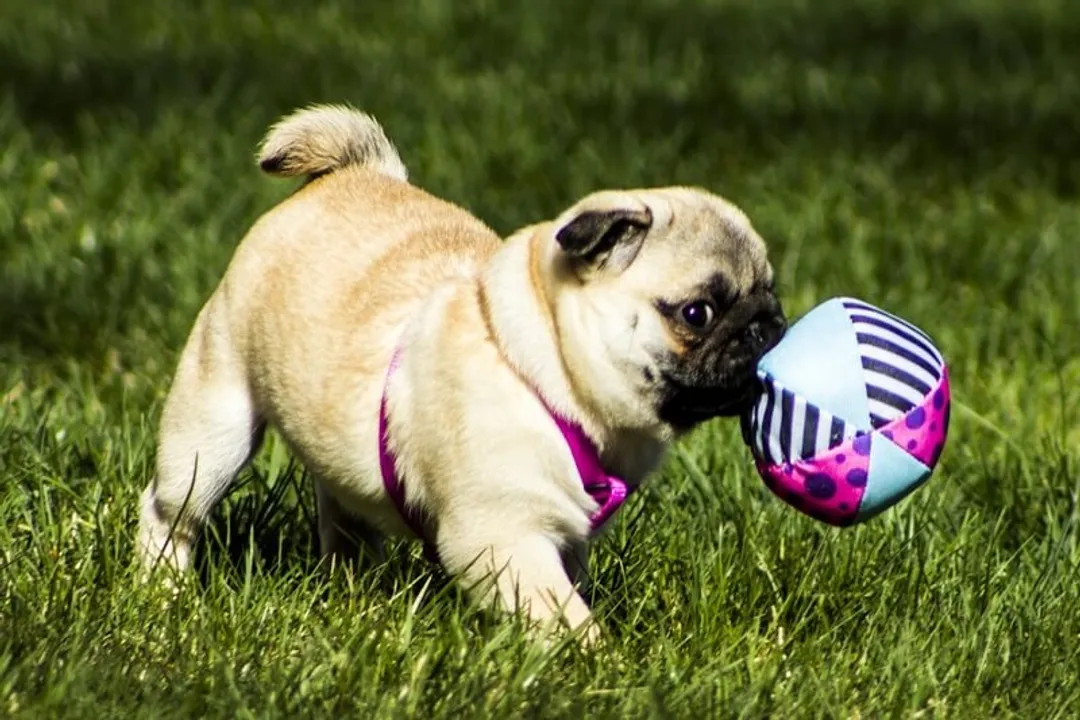
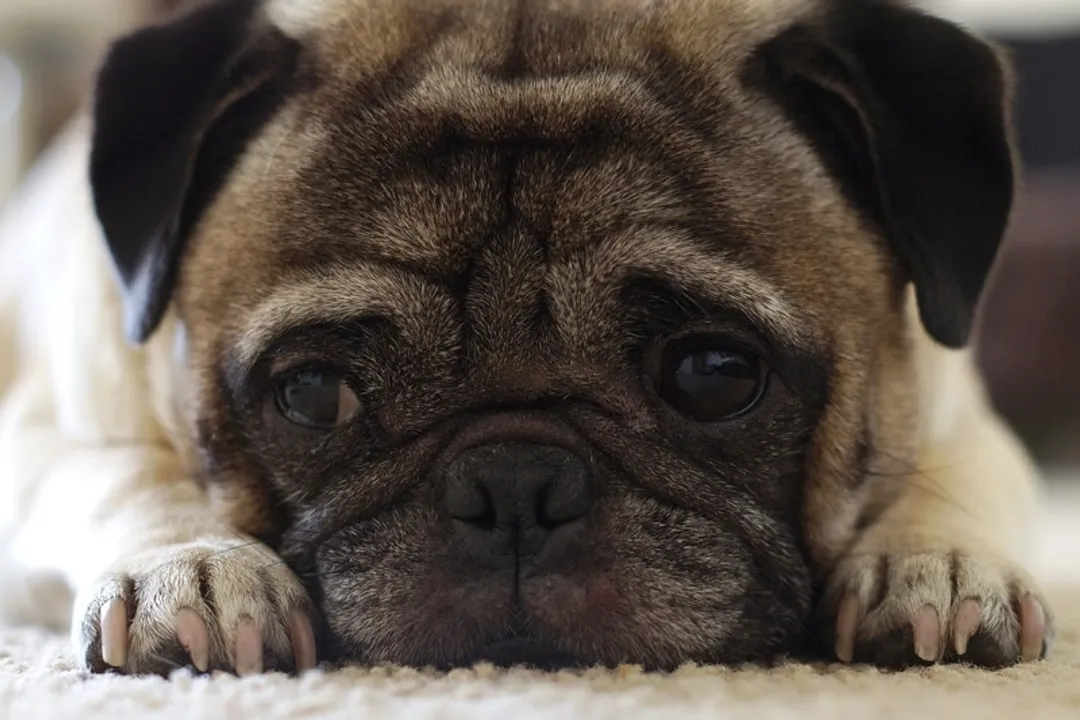
The pug’s appearance is dominated by its distinctive head shape. They are a brachycephalic breed, meaning they have short, broad muzzles and flattened faces. [1][5] This structure results in the characteristic wrinkles, or rugae, on their forehead, which some sources suggest were intentionally bred to resemble the Chinese character for "prince". [1]
Their eyes are another defining feature: large, dark, and round, they give the breed an alert and often worried expression. [1] Their coats are short, smooth, and come in two main colors recognized by the American Kennel Club: black or fawn. [1][4] Fawn pugs often feature a distinctive black mask covering their face, while black pugs have a solid coat. [4] Beneath that soft, double coat, the pug carries a compact and muscular body built for companionship rather than rigorous work. [9]
The tail is also a notable characteristic. A perfectly curled, tight double-curl over the hip is considered ideal for the breed standard, though some pugs can be born with a straighter tail. [1][5][9]
It is worth observing how this unique facial structure subtly influences their perceived personality. Where a dog with a longer muzzle might convey intent through ear movement or a simple head tilt, the pug’s very structure—the deep-set eyes and furrowed brow—creates an almost perpetual look of concern or contemplation, which owners often interpret as deep emotion or even human-like thought, adding to their appeal. [10]

# Personality Traits

Pugs are famously known for their affectionate and charming personalities. They thrive on human companionship and often become incredibly devoted to their families. [1][9] They are often described as "shadows" because they prefer to be wherever their person is, whether that means following them from room to room or insisting on being on the couch right next to them. [1][10]
While they are gentle and excellent with children, they are not without their quirks. Pugs possess a mischievous, clownish side that often comes out in short bursts of energy. [5] They are intelligent, but that intelligence often comes packaged with a stubborn streak. [9] Training requires patience and positive reinforcement, as a pug who decides an activity is beneath them will likely stage a silent, unmoving protest. They are generally not big barkers, preferring to communicate vocally through snorts, grunts, and the famous pug snore. [8]
If you are considering a pug, be aware that their need for close contact is intense. They are truly bred to be companion animals and do not handle being left alone for long periods well, often leading to separation anxiety if not managed properly. [10]
# Health Notes
Because of their unique physical structure, pugs require specific care, particularly regarding their respiratory system and eyes. [5] Their short snouts mean they are prone to Brachycephalic Obstructive Airway Syndrome (BOAS). [1] This condition restricts airflow and causes the noisy breathing, wheezing, and snorting that pugs are famous for, particularly when they overheat or over-exert themselves. [3][8] Because they cannot pant efficiently, pugs are very susceptible to heatstroke and should be kept cool in warm weather. [1][5]
Eye health is another significant concern. Their large, prominent eyes sit relatively unprotected in their sockets, making them vulnerable to injury or issues like proptosis, where the eye literally pops out. [1][5] Regular checks are important to ensure the eyelids are rolling correctly and the eyes remain moist.
Furthermore, their skin folds require diligent cleaning. The deep creases on the face can trap moisture and debris, creating an environment ripe for bacterial or yeast infections if not cleaned daily. [1][4]
When thinking about activity levels, it's easy to look at their small size and assume they need minimal exercise, but this is a false economy when paired with their breed tendency toward obesity. [1][9] A pug gaining too much weight exacerbates any breathing difficulty they already face. Therefore, owners should focus less on high-impact running and more on short, consistent daily walks, perhaps broken into two or three sessions, ensuring these happen during the cooler parts of the day to prevent overheating. [5] Monitoring food intake strictly is perhaps the single most important preventative health step an owner can take to ensure a higher quality of life for their companion.

# Miscellaneous Facts
Beyond their daily lives, pugs have a few unusual historical connections. One theory suggests their name might derive from the Latin word pugnus, meaning "fist," perhaps due to the shape of their face resembling a closed fist. [8] In Dutch, they were known as Mopshond. [2]
Pugs were also recognized by the American Kennel Club (AKC) relatively early, achieving recognition in the late 19th century, in 1885. [1]
It's also interesting to note their genetic relationship with other breeds. The pug’s DNA has been linked to the evolution of several other short-muzzled companion dogs, showing a long history of selective breeding for those distinct features. [4] While often content to be indoor dogs, they can sometimes display surprising agility when motivated, perhaps by a favorite treat or a game of chase. [5] Despite their regal and often pampered history, their core drive remains simple: to be near their people and enjoy a comfortable life. [10]
Related Questions
#Citations
Pug Facts You May Not Know - American Kennel Club
Fun Facts About Pugs - ASPCA Pet Insurance
10 Interesting Facts About Pugs - PetAirUK
Class Clowns: 15 Facts About Pugs You Should Know
10 interesting facts about pugs and why we love them. - Vibrant Hound
Interesting fun facts about pugs with distinctive wrinkles - Facebook
10 True Facts about Pugs
12 Fun Facts About Pugs - Mental Floss
What is it really like to own a pug? - Reddit
Pug Dog Breed Guide: Fun Facts, History & Health - Trupanion