What are some interesting facts about perch?
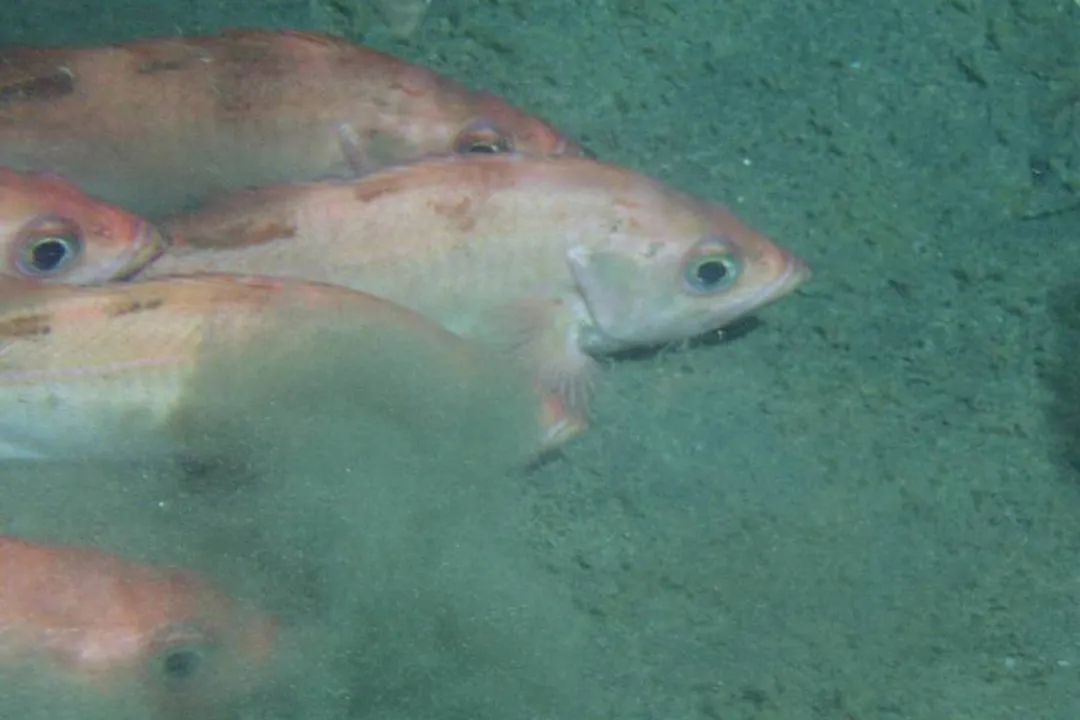
The word "perch" conjures images of striped freshwater fighters, yet the name spans diverse aquatic life, from shallow, cool lakes to the crushing depths of the ocean floor. Across the globe, hundreds of species carry this moniker, but a few truly define the group, particularly those within the Perca genus, which many anglers consider among the finest freshwater gamefish available. [3] These ray-finned inhabitants of the order Perciformes share a common, perch-like shape, derived from the Greek word perke. [3] However, to understand the interesting facts, we must first separate the freshwater champions from their deep-sea namesake.
# True Perch Lineage
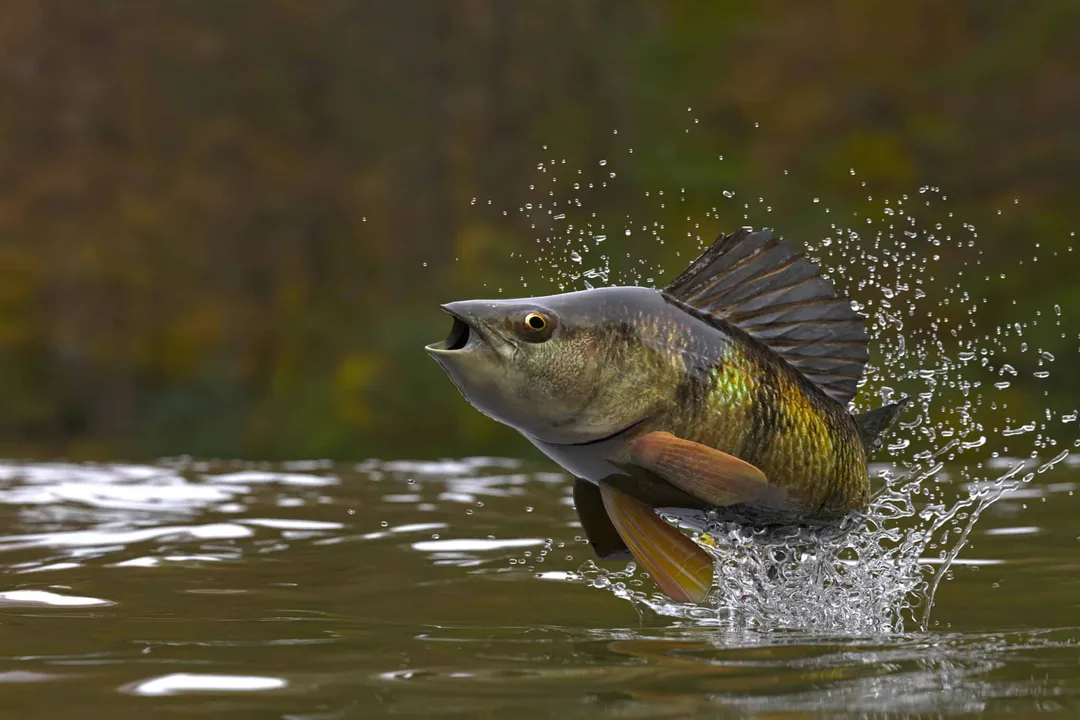
When researchers discuss "true perch," they narrow the focus to the three species residing in the genus Perca: the European perch (Perca fluviatilis), the Yellow perch (Perca flavescens), and the Balkhash perch (Perca schrenkii). [3] The European variety, for instance, is so significant in its native range that it holds the honor of being the national fish of Finland. [3] The very names of these species reflect their appearance—the yellow perch gets its title from the Latin flavescens, meaning "yellow-colored" or "becoming gold". [3]
Physically, true perch share several defining traits. They are known for their strong bodies, rough scales, and an appearance that often draws comparisons to the closely related Walleye. [3][6] If you examine a perch scale under magnification, you would see it resembles a tiny plate, complete with growth rings and small spikes along the top edges, serving as protective armor. Their fin structure is also consistent: they possess two dorsal fins—the first being spiny and the second soft—along with a spiny anal fin. [3] Movement and awareness are aided by a lateral line system, a set of sensory organs along their sides that allows them to detect water vibrations, essentially acting as a built-in sonar for navigating, hunting, and avoiding danger.
# Yellow Perch Life
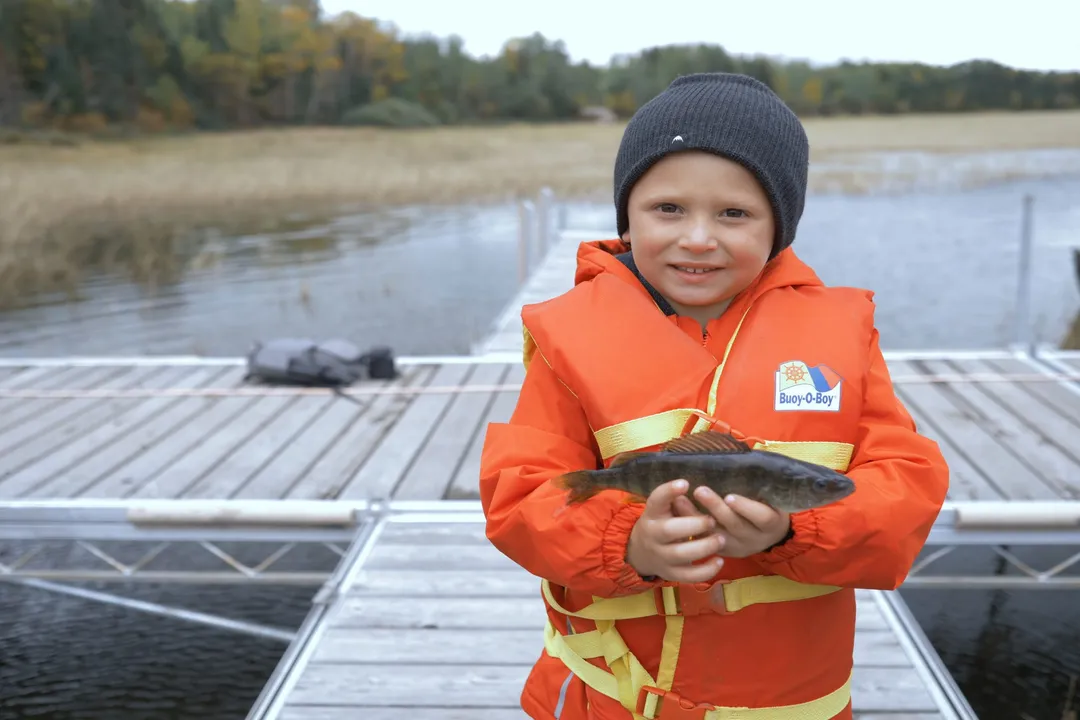
The Yellow Perch is perhaps the most widely recognized member of the family in North America, native to regions stretching from the Great Lakes down toward North Carolina and up to the Hudson Bay. [3][6] This species is often labeled a "gateway fish" for those just starting out in angling due to its accessibility and abundance. [6]
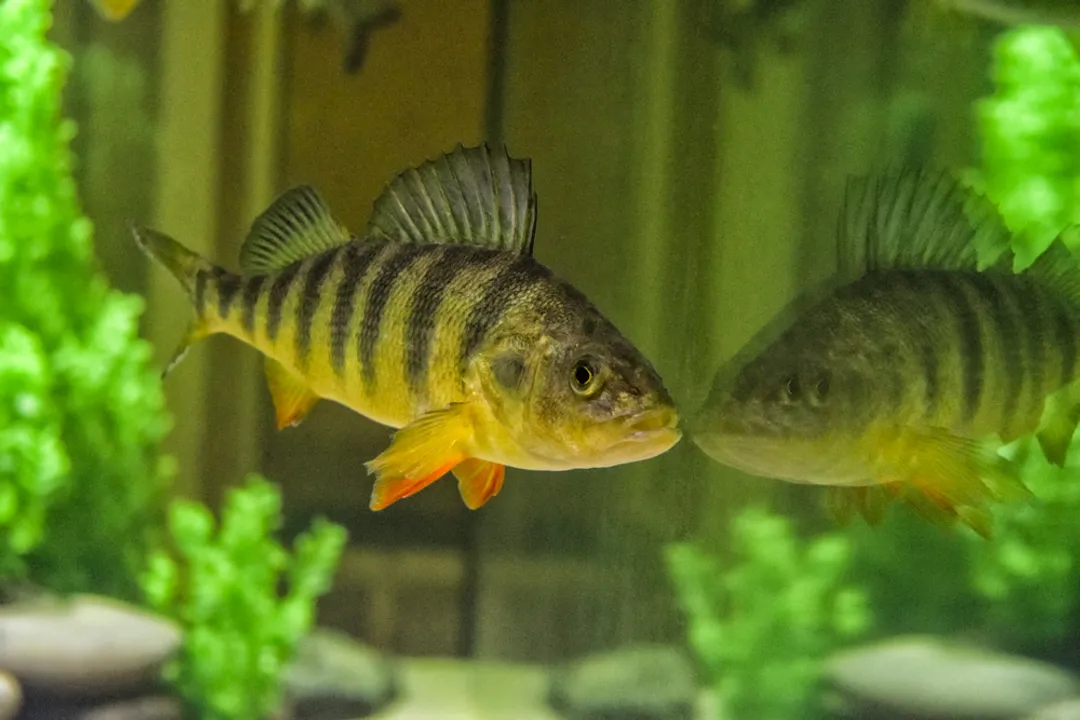
Their coloring is unmistakable: a body that ranges from golden-yellow to greenish, overlaid with distinctive dark, nearly black, vertical stripes that run down the sides. [3][6] While they share the large mouth and double dorsal fin feature with Walleye, those dark stripes set the Perca flavescens apart. [4] They are typically small, rarely exceeding ten inches or a pound, though some impressive specimens can reach up to 20 inches. [3][5] In the wild, they usually live for about nine to ten years, earning the reputation of being "easy keepers" because they tolerate a wide range of water temperatures and conditions compared to other species. [2][4]
# Schooling Strategy
One of the most fascinating aspects of the Yellow Perch is its social structure, which changes dramatically with age. [4] Young juveniles are highly social, forming tight schools of 50 to 200 individuals, swimming in a distinctive spindle shape. [2][4] What is truly remarkable is the internal arrangement of these schools. Studies suggest smaller, presumably more vulnerable, fish occupy the interior of the school, while the larger, more mature fish take positions on the outside. [2] This structure is a brilliant survival mechanism: the larger fish gain better feeding opportunities on the perimeter while simultaneously shielding the smaller members from direct predator contact. [2] Once they mature, typically between two and four years old, they become less gregarious, with large adults often traveling alone or only with other large adults. [2][4]
# Feeding and Spawning Rhythms
Yellow Perch are generally diurnal, meaning they are most active during the day, though this can shift to daytime and nighttime activity during the spawning season. [2] Their diet evolves with size; juveniles consume zooplankton, shifting to macroinvertebrates like snails and worms around their first year, and adults feeding on insects, small crustaceans, and even smaller fish species. [2][3] Interestingly, they consume the largest portion of their daily food intake around dusk, presenting a great opportunity for anglers looking for a "night-bite". [4]
Spawning occurs when the water warms, usually in April or May, in shallow areas under five meters, often near aquatic vegetation. [4] The female can produce an average clutch size of around 23,000 eggs, though larger females yield significantly more. [2][4] These eggs are deposited in ribbons that stick to the vegetation, and while the male stays nearby for a short time, he provides no protective care after the female departs. [4]
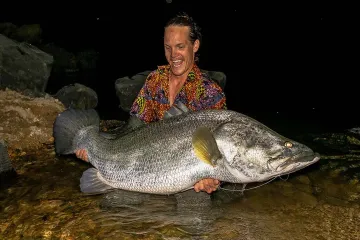
# Deep-Sea Dweller Pacific Ocean Perch
Moving from the temperate freshwater lakes to the cold, deep waters off North America’s coast reveals a completely different creature that shares the name: the Pacific Ocean Perch (Sebastes alutus). Despite the name, this is not a member of the Perca genus; it is a species of rockfish, belonging to the family Scorpaenidae. [1]
The environmental difference between the two is staggering, which is immediately reflected in their lifespans. While the Yellow Perch lives about a decade, [2] the Pacific Ocean Perch is an ancient deep-sea resident, capable of living up to 98 years. [1] This extreme longevity is paired with a very slow start to reproduction, with females not reaching maturity until around ten years of age. [1] These fish grow to about 20 inches and four pounds, a respectable size compared to their freshwater cousins. [1]
Appearance-wise, the Pacific Ocean Perch is light red, often featuring diffuse, olive-green patches on its upper back, and possesses a unique cone-shaped knob on its lower jaw. [1] They inhabit the deeper waters along the continental shelf and slope, though the larvae start near the surface before settling near the ocean floor as adults, favoring rocky or sandy bottoms with structure. [1] Their diet shifts from small zooplankton as larvae to copepods, krill, and small fish as adults. [1]
The fisheries management for this species offers a study in successful conservation. For instance, the Pacific coast stock was once declared overfished in 1999, prompting a rebuilding plan that included prohibiting a directed fishery. [1] That effort paid off, as the stock was declared rebuilt in 2017. [1] This careful management ensures that U.S. wild-caught Pacific ocean perch remains a "smart seafood choice". [1]
# A Tale of Two Finishes
When we compare the Yellow Perch to the Pacific Ocean Perch, the difference in adaptation is striking. The freshwater Yellow Perch relies on schooling and quick maturation—a fast life cycle suited to environments where food is plentiful but predators (like eagles and loons) are always present. [2][6] Their goal is to reproduce quickly and survive the relatively short lifespan.
Contrast this with the deep-sea Pacific Ocean Perch, where survival is about longevity and slow, calculated reproduction. Living in deeper water with fewer predators capable of reaching them, they can afford to wait nearly a decade to begin reproducing, securing decades of potential offspring over their near-century-long lives. [1] This vast difference in maximum lifespan—ten years versus nearly one hundred—is an excellent illustration of how habitat directly dictates life history strategy in the animal kingdom. [1][2]
# Cultural Notes and Culinary Appeal
Perch, across its various forms, holds significant cultural and culinary standing. [6] In Europe, the Perca fluviatilis is celebrated in festivals. [6] As for eating quality, most perch species are prized by anglers and chefs alike. [3] The flesh is often described as having a delicate, nutty, or mildly sweet taste, lacking an overly "fishy" odor. [3][6] The texture is generally lean and fine-flaking, holding up well when prepared by steaming, roasting, or frying. [3] In some North American regions where Yellow Perch are abundant, they can be relatively inexpensive, sometimes dropping to 3 per pound, though they can fetch up to $20 per pound elsewhere depending on market conditions. [3]
# Practical Application for Anglers
For those looking to connect with perch firsthand, understanding their social dynamics can translate directly into better success. Since young Yellow Perch use their size difference to organize their schools for feeding advantage, if you locate a promising school or see baitfish being attacked, your best immediate effort should be targeting the outer edges of the action. [2] The larger, more dominant fish are usually positioned where they have unobstructed access to food before the entire group moves on. [2] Furthermore, knowing that many species, including the Yellow Perch, exhibit peak feeding activity around dawn and dusk suggests that planning your time on the water during these twilight hours maximizes your chances, regardless of whether you are using small spinners, jigs, or natural bait like worms or minnows. [4][6]
While the three true perch species are generally listed as Least Concern globally, local conservation remains important, especially for Yellow Perch, where maintaining shoreline vegetation and riparian buffers is stressed to keep their habitats healthy. [2]
The world of perch is far richer than a single striped fish. It encompasses ancient rockfish enduring for nearly a century in the ocean depths and prolific freshwater cousins organizing their youth into defensive living fortresses, all united by a general body shape that has been known and admired for centuries. [1][3]
#Videos
Fisholover Fact #007 - Five Interesting Facts About Perch - YouTube
Related Questions
#Citations
10 Yellow Perch Facts - Superior Country
Yellow Perch | Squam Lakes Natural Science Center
Perch Fish Facts - Perca fluviatilis - A-Z Animals
Perch Facts For Kids | AstroSafe Search - DIY.org
Fisholover Fact #007 - Five Interesting Facts About Perch - YouTube
Pacific Ocean Perch | NOAA Fisheries
Perch Facts for Kids