What are some interesting facts about Komondor dogs?
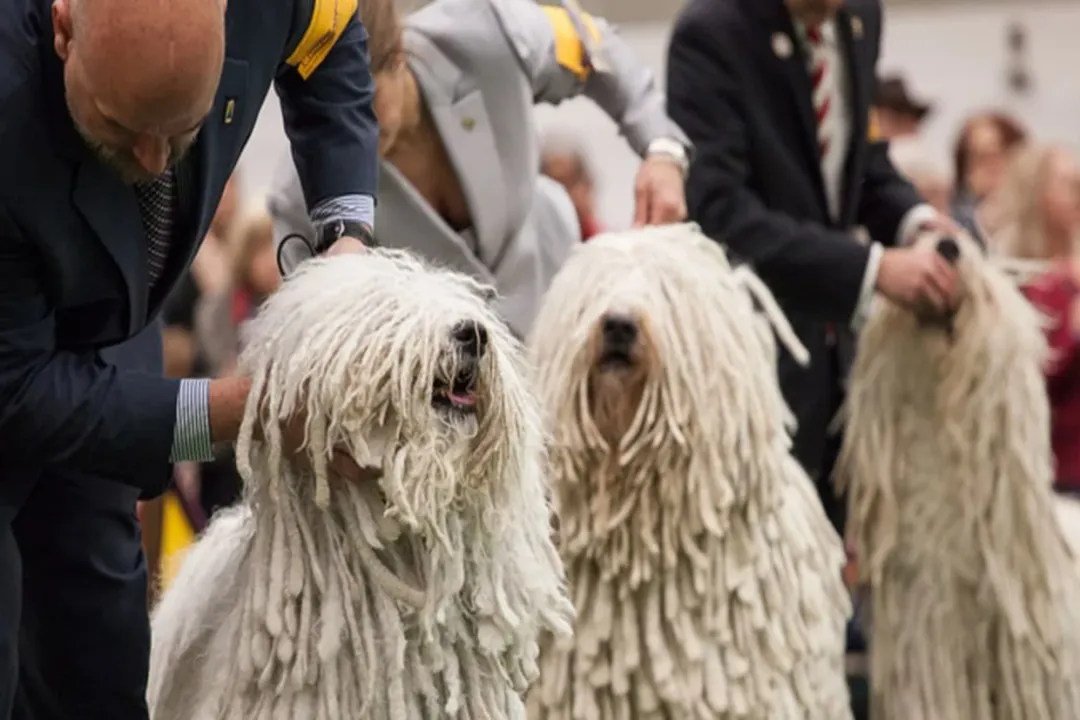
The Komondor, often called the Hungarian Sheepdog, immediately captures attention with its remarkable coat, resembling a thick, living mop or a shaggy, white rug. This impressive appearance is far more than just a fashion statement; it is the product of centuries of dedicated service as a serious livestock guardian dog. These are not mere pets but ancient protectors, carrying a history deep in the heart of Europe, deserving of a closer look than their unusual exterior might suggest. [1][2][3]
# Hungarian Roots
The story of the Komondor begins in Hungary, tracing its lineage back to the arrival of the Magyar tribes many centuries ago. [1][2] These formidable dogs accompanied the Magyars as they migrated into the Carpathian Basin. [1] Their primary, unwavering duty was to safeguard the massive flocks of sheep and cattle from predators common in the region, such as wolves and bears. [2][3][4][8] The breed's ancestors were likely large flock guardians from the Middle East or Asia, subsequently refined in Hungary to excel at their vital job. [2] Given this historical role, the Komondor developed traits favoring independence and serious dedication to their charge, differentiating them from many herding breeds focused on managing livestock movement. [1]
# Corded Protection
The most distinctive feature of the Komondor is its dense, white, corded coat, which is the result of long hair naturally felting together over time. [1][3] For new owners or the uninitiated, this coat looks more like a collection of thick ropes than hair. [1] This unique covering provided essential camouflage among the white sheep of the flock, allowing the dog to blend in seamlessly until a threat emerged. [3]
More critically, the coat serves as formidable natural armor. The thick, tough cords offer significant protection against the claws and teeth of predators like wolves or bears attempting to attack the dog or the flock it defends. [1][4] Furthermore, the coat acts as excellent insulation, shielding the dog from both the harsh Hungarian winters and the intense summer heat. [4] It is important to understand that these cords do not appear overnight; they start as soft fluff when the dog is young, and the distinct, heavy cords typically begin to form when the dog reaches about a year of age, though it can take several years for the coat to reach its full, mature density. [4] The breed standard calls for a white coat, which helps the dog remain visible to the shepherd while camouflaged amongst the sheep. [1][3][8]
If we view the coat purely through the lens of engineering, it functions less like a simple blanket and more like woven chainmail designed for bio-protection. While many shepherd dogs rely on speed or sheer mass for defense, the Komondor relies on this layered, natural defense system that allows it to withstand direct confrontation without immediately sustaining critical injury. This specialization speaks volumes about the severity of the threats they faced historically. [1][4]

# Temperament Profile
A Komondor’s intelligence is deep-seated, geared toward problem-solving in isolation—what is the best way to keep the sheep safe when the shepherd is miles away? This results in an inherently independent nature. [1][2] They are not typically motivated by a simple desire to please their owners in the way a retriever might be; their motivation is duty and loyalty to their family or flock. [1]
This independence is a key element of their temperament that requires diligent management. They possess a reserved, often aloof manner toward strangers, a trait that served them well as guardians spotting intruders. [1][2] Early and consistent socialization is paramount for this breed. [1][4] Introducing a Komondor puppy to a wide variety of people, sounds, and environments during its formative months helps ensure that its natural wariness does not develop into undue suspicion or aggression later in life. [4] When raised correctly, the Komondor is devoted and gentle with its family members, forming incredibly strong bonds with the people it considers its own to protect. [2]
# Grooming Reality
Owning a dog with a coat like that of the Komondor presents unique maintenance challenges, far removed from the typical brushing routine of a Labrador or Poodle. [1] The goal is not to brush the coat, as that would break up the cords, but rather to separate the new growth near the skin from the existing cords to prevent matting close to the body. [4]
Bathing a Komondor is a significant undertaking. Due to the coat's density and the time it takes for the thick cords to fully penetrate and dry, bathing must be done infrequently. [1][3] A full bath might only be necessary once or twice a year, depending on environmental conditions. [4] When a bath is necessary, it is crucial that the dog is completely dry afterwards, which can take days, as residual moisture trapped against the skin can lead to skin infections or "hot spots". [1][4]
As an actionable consideration for prospective owners, while the frequency of a full wash cycle is low, the effort surrounding management is high. Instead of a bi-weekly bath, focus on checking the cords near the skin during dry weather, perhaps every few weeks, to ensure the new hair is manually separated and corded correctly, rather than waiting for a soak-and-dry event. This proactive skin check is far more important than chasing a pristine white appearance. [1][4] Furthermore, owners must be acutely aware that a Komondor puppy’s coat, while developing, is extremely vulnerable to tangling and requires careful hand-separation to avoid accidental matting that could lead to painful clipping. [4]

# Guard Instincts
The Komondor is fundamentally a guardian dog, not strictly a herding dog. [2][8] This distinction is vital for understanding their behavior. While they are registered as livestock guardians, they perform their duty by staying with the flock and using their imposing presence, camouflage, and, if necessary, direct confrontation to deter threats. [3] Unlike some herding breeds that use intimidation through movement, the Komondor tends to use a more silent, watchful strategy. [2] They are known to patrol their territory and often remain motionless until they perceive a legitimate danger to their charges. [2]
This ingrained protective nature means they require a territory, whether it be a farm or a home and yard, to feel fulfilled. [8] They take their responsibilities seriously, making them naturally wary of anything or anyone new approaching their "flock"—which, in a suburban setting, means their immediate human family. [1] This serious disposition, combined with their large size, means they are not suited for environments where they are constantly shifted or where their guarding instincts are frequently suppressed without outlets. [1][2]
# Physical Presence
The Komondor is a large and powerful animal, built for endurance and strength rather than speed alone. [2][4] Males typically weigh over 100 pounds, often settling between 100 and 130 pounds, with females slightly smaller. [2] Their sheer size, combined with their distinctive white coat, makes them an undeniably striking figure in any setting. [3] Despite their bulky appearance created by the cords, they are muscular and surprisingly agile when necessary, qualities essential for successfully defending livestock over long periods. [2] Their heavy bone structure supports their working heritage, making them sturdy companions for outdoor life. [4]
#Videos
Komondor - Top 10 Facts - YouTube
Related Questions
#Citations
Komondor Facts You May Not Know - American Kennel Club
About The Komondor
Komondor - Top 10 Facts - YouTube
Komondor Dog Breed - Hill's Pet Nutrition
Information about the Komondor Hungarian sheepdog breed
9 Fuzzy Facts About the Komondor - Mental Floss
Komondor Facts For Kids | AstroSafe Search - DIY.ORG
Komondor - TOP 10 Interesting Facts - rocadog
Komondors: Personality Trait, History, Size, and More - WebMD