What are some interesting facts about agouti?
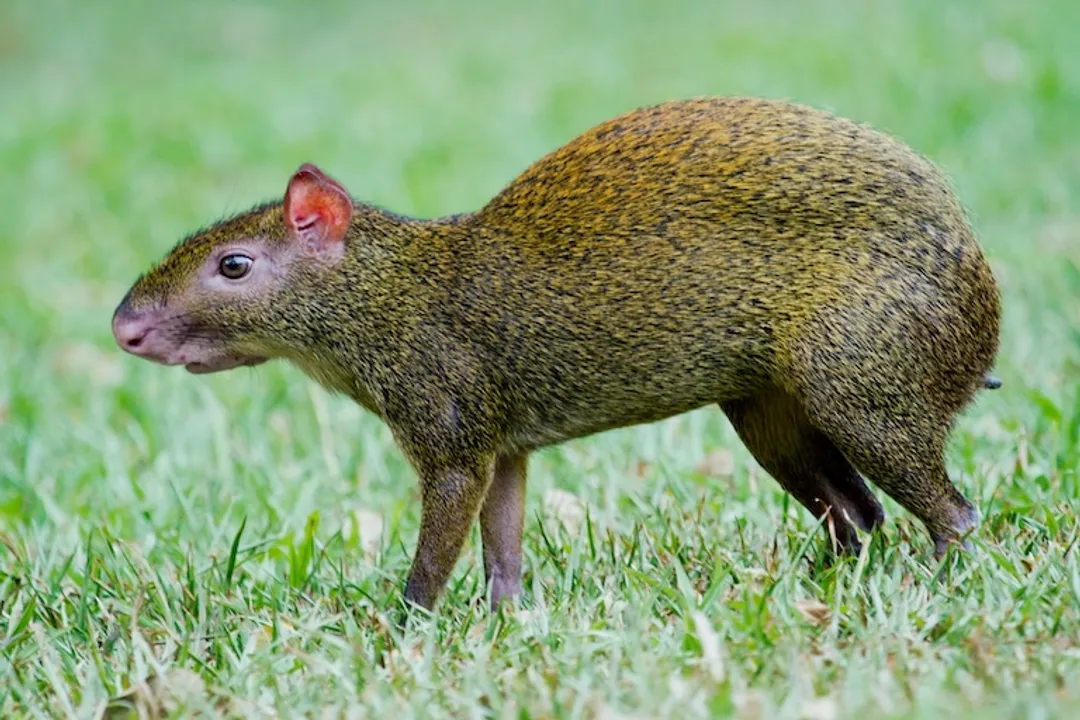
The agouti, a fascinating member of the rodent family, often presents itself as something of a woodland enigma, resembling a cross between a large guinea pig and a small deer. [4] These terrestrial mammals are native to the tropical forests of Central and South America, with various species also populating some of the Caribbean islands. [3][7][2] While they might look deceptively simple, their role in the ecosystem and their physical adaptations paint a picture of a highly specialized survivor within its environment. [2]
# Physical Traits
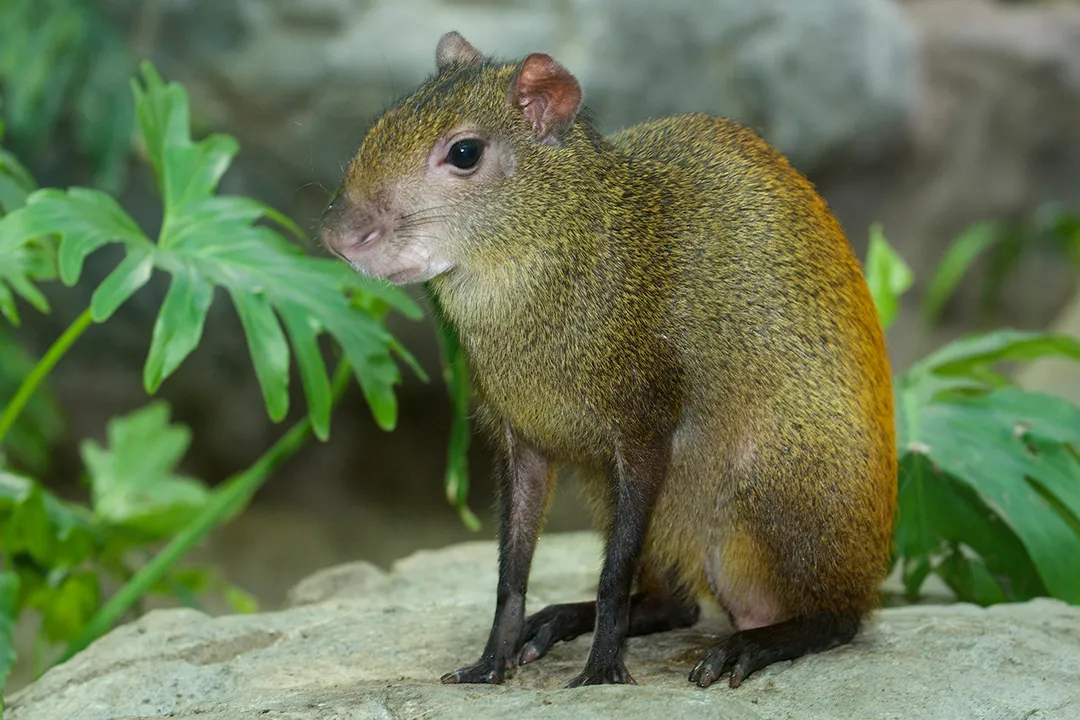
Agoutis are medium-sized rodents, generally measuring between 16 and 26 inches in total length, and their weight can vary substantially, sometimes reaching up to 15 pounds depending on the species and locale. [4] Their build is characterized by relatively long, slender legs which contribute to their speed, allowing them to escape predators efficiently. [3][7] The fur of an agouti is typically coarse and stiff to the touch. [3] Coloration is one area where diversity shines; for instance, the Red-rumped Agouti exhibits reddish-brown fur, often with paler undersides and a distinct white throat patch. [7] Other types include the Black Agouti and the Brown Agouti. [7]
One of the most telling anatomical features of the agouti is its specialized feet. Unlike many other rodents, the agouti walks on distinct digits: it possesses four toes on its front feet but only three on its hind feet. [3][4] This unique configuration supports their terrestrial, running-focused lifestyle rather than an emphasis on climbing, which sets them apart from many arboreal relatives. [3] When threatened, they are known for bursts of speed, capable of reaching high velocities when sprinting across the forest floor. [7] They also tend to keep their tails quite short. [4]
# Forest Ecology
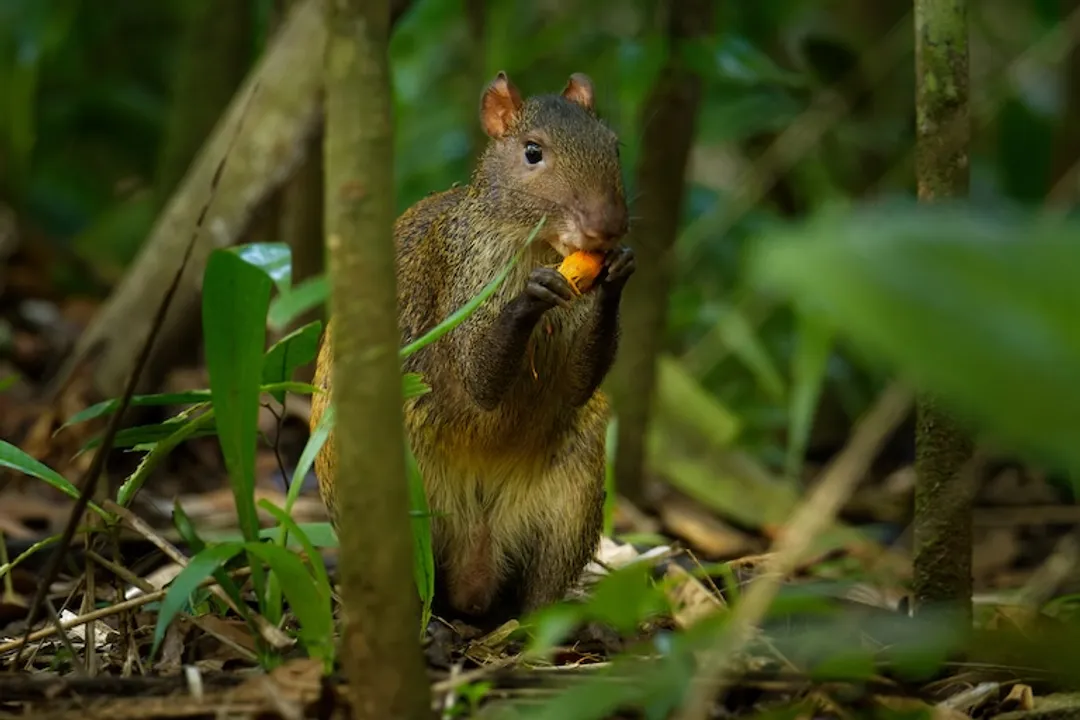
The dietary habits of the agouti place it squarely as a key player in the health and propagation of its forest home. [2] These animals are strict herbivores. [7] Their primary menu consists of fallen fruit, seeds, and nuts that they forage for on the forest floor. [3][2] They possess strong, continually growing incisor teeth, essential tools for cracking open the hard shells of certain nuts and seeds that other animals might leave untouched. [4]
Their most significant ecological contribution comes from their habit of scatter-hoarding food. An agouti will gather seeds and bury them individually in numerous shallow pits across the forest floor, intending to return later to retrieve them. [2] While they manage to recover a good number of their stashes, a significant portion inevitably gets forgotten. [2] This behavior effectively makes the agouti an involuntary planter for the forest. If a seed happens to be buried in a spot where the animal forgets it, that seed has an excellent chance of germinating, as it has been successfully hidden from immediate consumption and placed in the soil. [2] This decentralized method of seed dispersal is vital for maintaining the biodiversity of the tropical canopy, ensuring that a wider area benefits from seed distribution than if the fruit simply fell directly beneath the parent tree. It’s a natural, highly effective, and widespread planting operation happening daily across the understory. [2]
# Daily Life
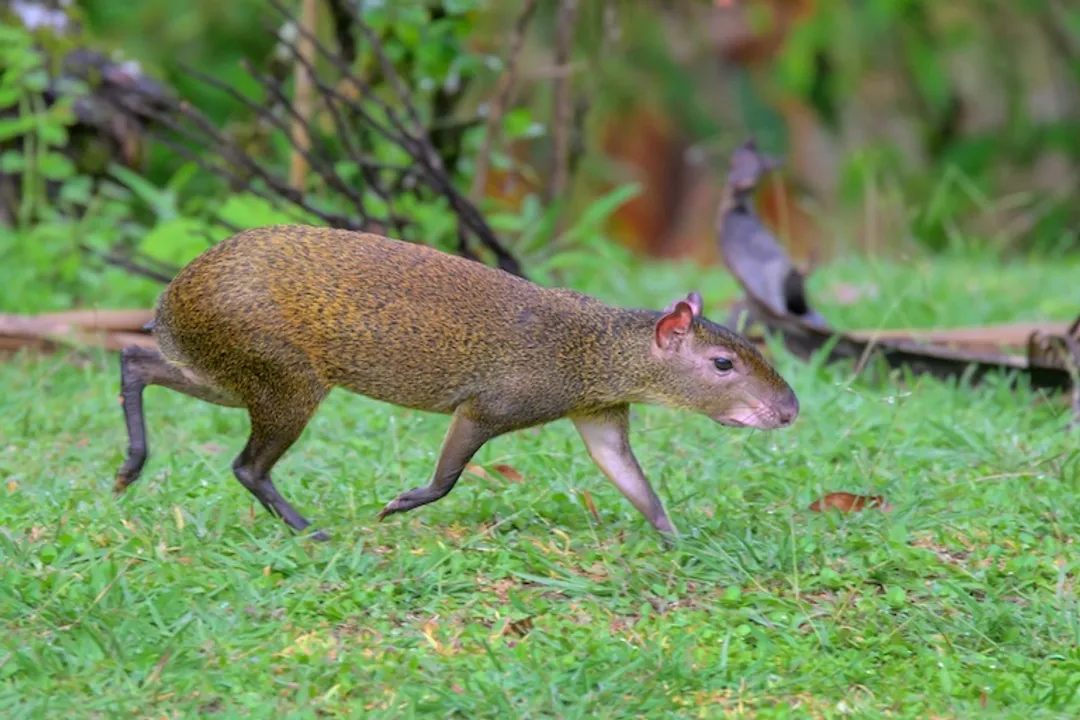
Agoutis exhibit flexible activity patterns that often adapt to their local circumstances, including predator pressure. [2] In areas with high human activity or intense predation, they might become primarily nocturnal or crepuscular, meaning they are most active at dawn and dusk. [7] However, in more remote, protected settings, they are frequently seen during the daylight hours. [2]
Their social structure is generally simple; they often live solitary lives or in monogamous pairs. [2] Though they may live alone, they are sometimes observed near other individuals when food sources are abundant. [2] Beyond foraging for their own provisions, agoutis are known to sometimes take up residence in existing shelters rather than excavating their own elaborate homes, occasionally utilizing burrows previously dug by peccaries or armadillos. [2] This pragmatism in shelter selection saves energy that can be dedicated to foraging and vigilance. [2]
# Habitat Range
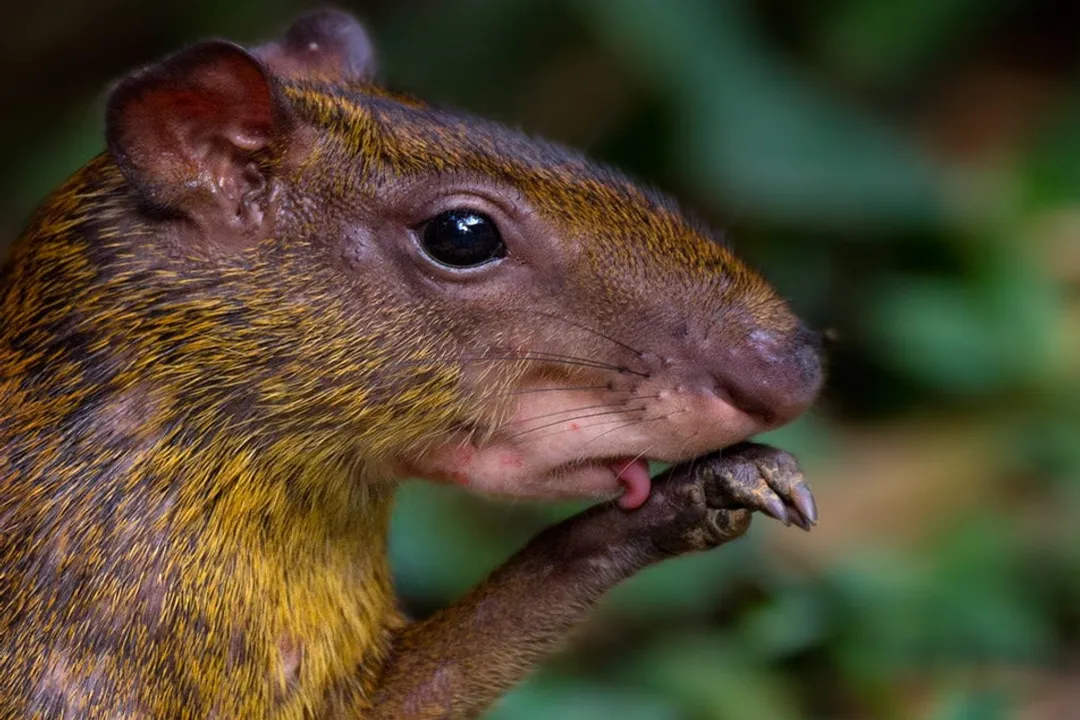
The geographic distribution of the agouti is tied closely to Neotropical environments. [7] They are native to regions spanning from Central America down into South America. [3][2] Specific species, like the Red-rumped Agouti, are found in varied habitats across this broad expanse. [7] Their preference leans toward dense, tropical forest settings, where the canopy provides a steady supply of their preferred fallen foodstuffs. [3][2] Certain islands within the Caribbean also host distinct agouti populations. [7]
Given their reliance on forest structure, it is worth noting that population density can fluctuate based on habitat quality and the availability of large, hard-shelled fruits and nuts that serve as their staple diet. [2] For instance, if the primary fruiting trees in an area experience a poor year, the local agouti population might feel that pinch later in the cycle, even if they have successfully cached reserves. [2]
# Survival Tactics
Beyond their quick sprints, agoutis possess other mechanisms that aid their survival. Their habit of burying seeds, while ecologically beneficial, is primarily a self-serving survival tactic intended to secure provisions for times when fresh food is scarce. [2]
In terms of reproduction, the process is relatively slow compared to some other small rodents. The gestation period for an agouti lasts approximately 100 days. [4] When the young are born, the litter size is usually small, often numbering only one to four pups. [4] This smaller litter size, combined with a longer developmental period, suggests a life history strategy focused on investing more heavily in fewer offspring, relying on the parents' successful caching to see the young through their vulnerable early stages. [4] The development of these strong hoarding instincts must therefore be crucial, as the survival of the litter depends on access to those buried reserves even if the mother is momentarily occupied or if the environment shifts suddenly.
#Videos
Agouti facts: tougher than nuts! | Animal Fact Files - YouTube
Related Questions
#Citations
Agouti | San Diego Zoo Animals & Plants
AGOUTI - Rainforest Expeditions
Agouti | Habitat, Diet & Adaptations - Britannica
Agouti Facts - Fact Animal
Roatan's Adorable Agouti: Fun Facts and User Experiences
Agouti facts: tougher than nuts! | Animal Fact Files - YouTube
Red-rumped agouti | Smithsonian's National Zoo and Conservation ...
Agouti Facts - Softschools.com
Agouti and Paca Facts: Interesting Rodents of South America