What are some fun facts about bullfrogs?
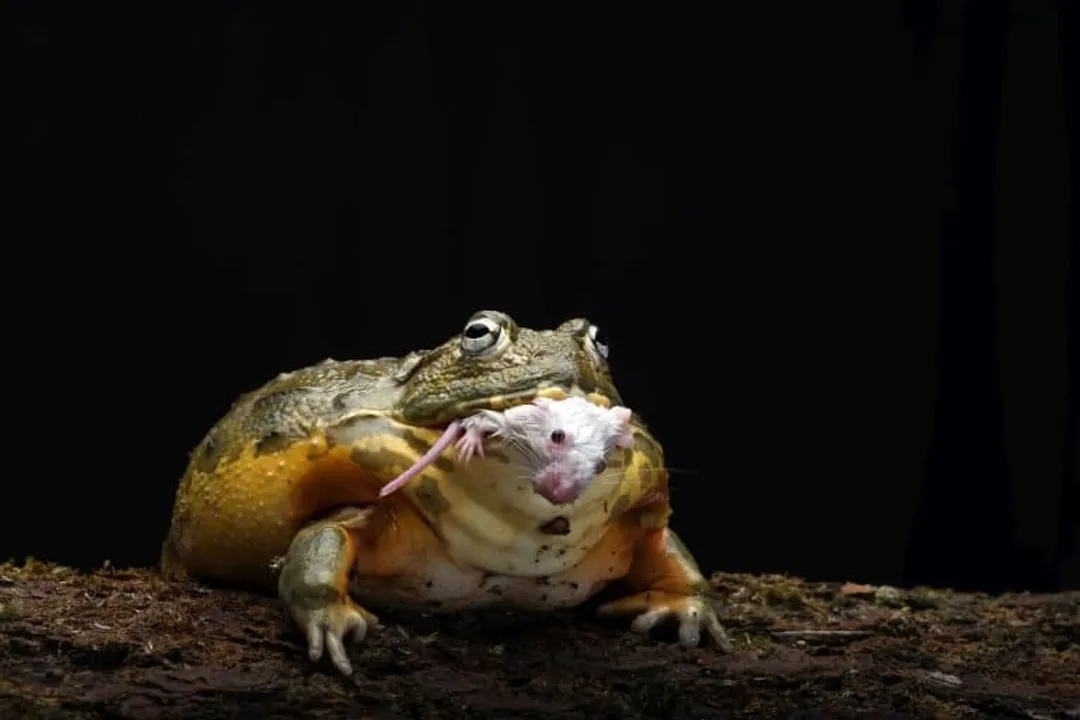
The American bullfrog, Lithobates catesbeianus, is one of the most recognizable inhabitants of North American wetlands, instantly giving its presence away with a sound that echoes across summer evenings. It holds the title of the largest true frog found across the United States and Canada. [2][5][8] When fully grown, these amphibians can achieve significant stature, sometimes measuring up to eight inches in body length. [4] Their sheer bulk can also translate to weight, occasionally reaching around one and a half pounds. [4] Their coloration is generally adaptive, ranging from shades of green to olive or brown, helping them blend into the murky edges of their watery homes. [2]
# Massive Build
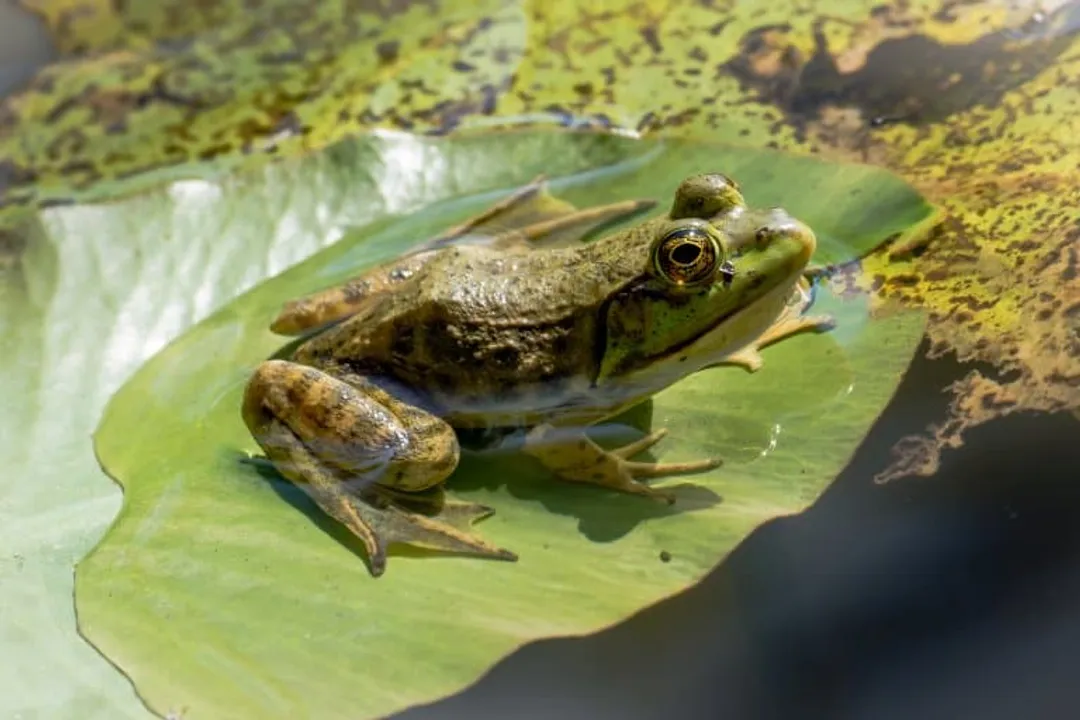
The size of the bullfrog is certainly impressive, but it's the specifics of their anatomy that offer interesting details, particularly when differentiating the sexes. If you get a close look at a mature bullfrog, one of the most striking features is the tympanum, or eardrum, located just behind the eye. [2] In male bullfrogs, this circular membrane is markedly larger than the eye itself. [2][8] Females, conversely, have a tympanum that is smaller than the eye. [2][8] This visual difference is a quick field identifier for naturalists. Considering how loud and far-reaching the male’s advertising call must be, it makes sense that the receiving organ—the eardrum—is equally oversized, perhaps maximizing acoustic reception for mate attraction or territory defense. [5] While size is a major factor, the North American bullfrog’s sheer bulk allows it to take prey that smaller frog species couldn't even attempt to subdue. [8]
# Signature Call
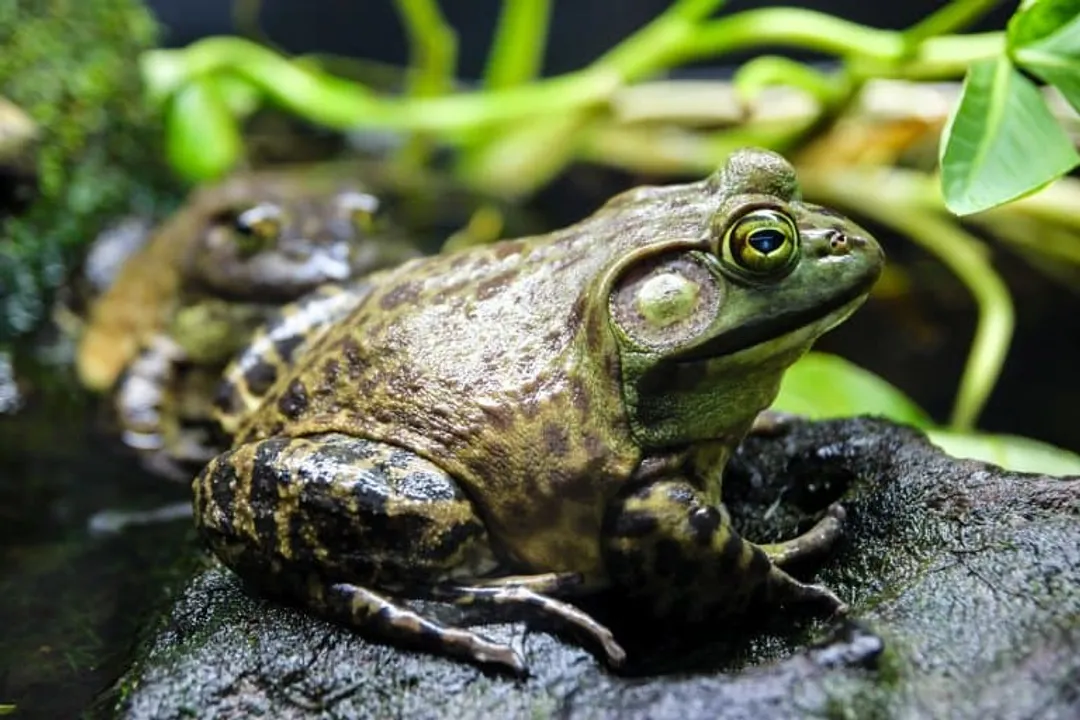
That characteristic sound that gives the bullfrog its name is, indeed, a deep, rumbling croak often described phonetically as "jug-o-rum". [2][5][8] It is the male that produces this powerful vocalization, typically using it as a territorial display to warn off rival males or as an advertisement directed toward prospective mates. [5] The female’s vocal contribution is far less dramatic, usually consisting of a softer sound or, in many documented cases, remaining silent altogether. [5] This vocal disparity is common among many frog species, but the sheer volume generated by the bullfrog makes it hard to miss. The deepness of the tone is a testament to the size of its vocal sac and lungs, allowing the sound to travel effectively over the still water of ponds and marshes where they reside. [2]
# Dietary Habits
Bullfrogs are perhaps best known for their voracious appetite and opportunistic feeding strategies. [5][8] Simply put, if something moves and fits into its mouth, a bullfrog will attempt to eat it. [5] Their diet is incredibly diverse, showcasing their position as generalist predators in their environment. [8] This menu can include insects, worms, crayfish, small rodents, small birds, snakes, turtles, and, naturally, other smaller frogs. [2][5][8][1] An interesting contrast emerges when looking at the sexes: female bullfrogs are generally observed consuming larger prey items than their male counterparts, a difference likely related to their larger body size when fully mature. [6] They do not chew; once captured, prey is swallowed whole. [1] Observing a bullfrog hunt is watching pure efficiency: a lightning-fast extension of the sticky tongue, followed by the entire meal being secured internally. Because they rely on cover and camouflage rather than active pursuit, their environment must sustain a steady supply of catchable creatures around their waiting spots. [2] The presence of a healthy bullfrog population suggests a locally balanced ecosystem where there is ample biomass supporting the entire food chain, from the smallest insect to the larger prey they consume. [5]
# Tadpole Years
The life cycle of the bullfrog includes a prolonged larval stage that sets it apart from many smaller amphibians. The transformation from a tiny tadpole to a froglet is not a quick process; bullfrog tadpoles can remain in the water for significant periods. [5][8] In some regions, this larval stage can last up to two years before the final metamorphosis occurs. [2] This extended dependency on the aquatic environment means that the quality of the water source is critical for the bullfrog’s long-term survival. If the pond or marsh dries up prematurely, or if water quality degrades due to pollutants, an entire cohort of young frogs can be lost before they even reach land. This long development time contrasts sharply with many other anurans that complete their metamorphosis within a single season. [8] Furthermore, during the colder months, the bullfrog doesn't migrate far; instead, adults and older tadpoles prepare for winter by burying themselves in the mud at the bottom of permanent water bodies to hibernate until warmer weather returns. [5][8]
# Wide Reach
Although the American bullfrog is native to the eastern and central United States and southern Canada, it has established itself far beyond its original range. [8] Due to human introduction, either intentionally for food consumption or accidentally, bullfrogs are now present in numerous locations across North America and even on other continents. [8][1] This global spread has often resulted in ecological issues. In many introduced areas, the massive size and voracious appetite of the bullfrog allow it to outcompete native amphibian species, leading to declines in local populations that are less equipped to handle such a dominant predator. [8] They thrive in environments offering permanent water, such as ponds, lakes, and marshes, making them very successful invaders where their food supply is rich. [2][5] Their adaptability, coupled with their sheer size, makes them formidable players in any local wetland community they inhabit. [8]
# Locomotion Prowess
When they are ready to move across land or between shallow water patches, bullfrogs exhibit surprising agility for their mass. They are capable of powerful leaps, sometimes clearing distances up to 20 feet in a single bound. [4] This explosive movement is essential both for catching mobile prey and for escaping their own significant list of predators, which includes various snakes, raccoons, and wading birds like herons. [8] It is an impressive display of anaerobic power, necessary to propel their substantial bodies away from danger or toward an unexpected meal. [2]
#Videos
Bullfrog (10 FACTS You NEVER KNEW) - YouTube
The American Bull Frog: 7 facts everyone should know! - YouTube
Related Questions
#Citations
Five Fun Facts About Bullfrogs - Forest Preserves of Cook County
American Bullfrog | National Geographic Kids
Bullfrog (10 FACTS You NEVER KNEW) - YouTube
North American Bullfrog Facts and Information - Seaworld.org
American Bullfrog - National Aquarium
American bullfrog life cycle and facts - Facebook
10 American Bullfrog Facts - Fact Animal
American bullfrog - Wikipedia