Welsh Terrier Facts

The Welsh Terrier, often described as a miniature Wire Fox Terrier, possesses a personality and history as distinctly rugged as its wiry coat. Hailing from Wales, this breed has long been valued for its tenacity and spirited nature, characteristics forged by necessity in the harsh British countryside. [1][2][3] Though they may look like small, charming companions now, their ancestry is tied directly to the challenging work of bolting game like foxes and badgers from their dens. [2][3][4] This heritage explains much about their confident bearing and lively disposition today. [5]
The breed's development occurred primarily during the 19th century, stemming from the local black and tan terriers found across the Welsh region. [2] These early dogs needed to be tough, agile, and possess the classic terrier drive—courage paired with an unyielding desire to complete the task at hand. [5] While they share a common ancestor with many other terrier types, the Welsh Terrier was specifically developed to suit the terrain and hunting needs of its homeland, eventually earning recognition from kennel clubs, including the American Kennel Club (AKC). [1][6]
# Physical Structure
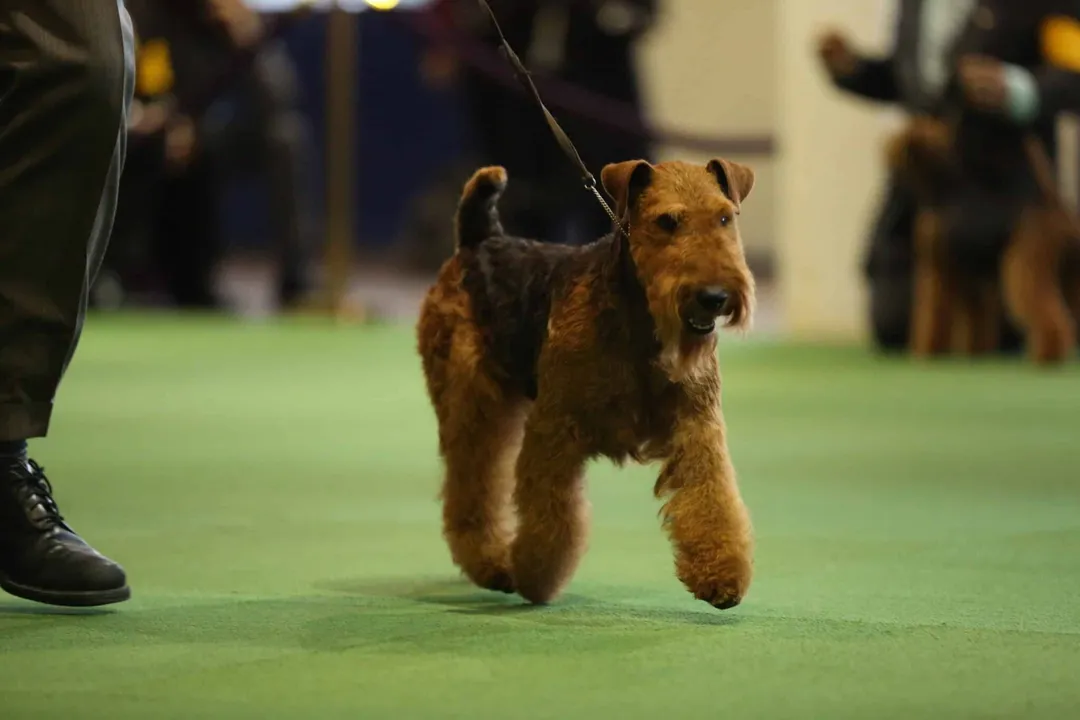
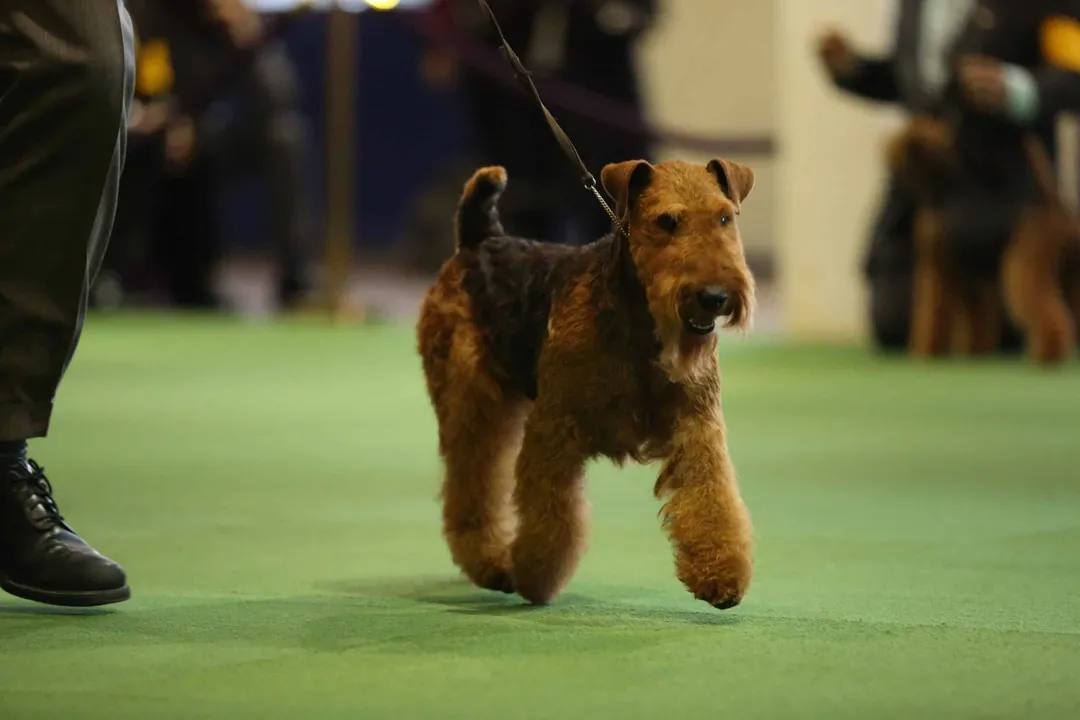
A Welsh Terrier is defined by its compact, sturdy, and square build, suggesting strength well beyond its modest stature. [1][2][3] They are built for stamina and quick movement, designed to navigate rocky undergrowth without tiring easily. [2] In terms of size, they typically stand between 14 and 15.5 inches at the shoulder. [1][3][4] Most sources place their adult weight in the range of 20 to 25 pounds. [1][3] This size places them comfortably in the small-to-medium category, making them manageable house pets while still being robust enough for outdoor adventure. [5]
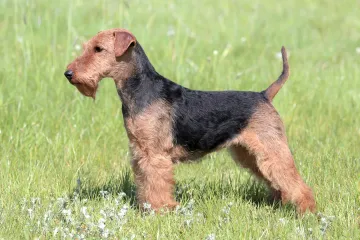
One of the breed’s most defining features is its coat. It must be dense, harsh, and very wiry to the touch, offering excellent protection against weather and brambles. [1][3] The accepted color patterns are either black and tan or grizzle and tan. [1][3] The distinct facial hair—the characteristic beard and eyebrows—gives the Welsh Terrier its intelligent and somewhat earnest expression. [4][5] Their ears are small and should fold neatly forward, close to the cheeks. [1] Traditionally, their tails were docked to a length proportionate to their bodies, standing erect, though this practice is becoming less common in many regions today. [3]
# Coat Maintenance Demands
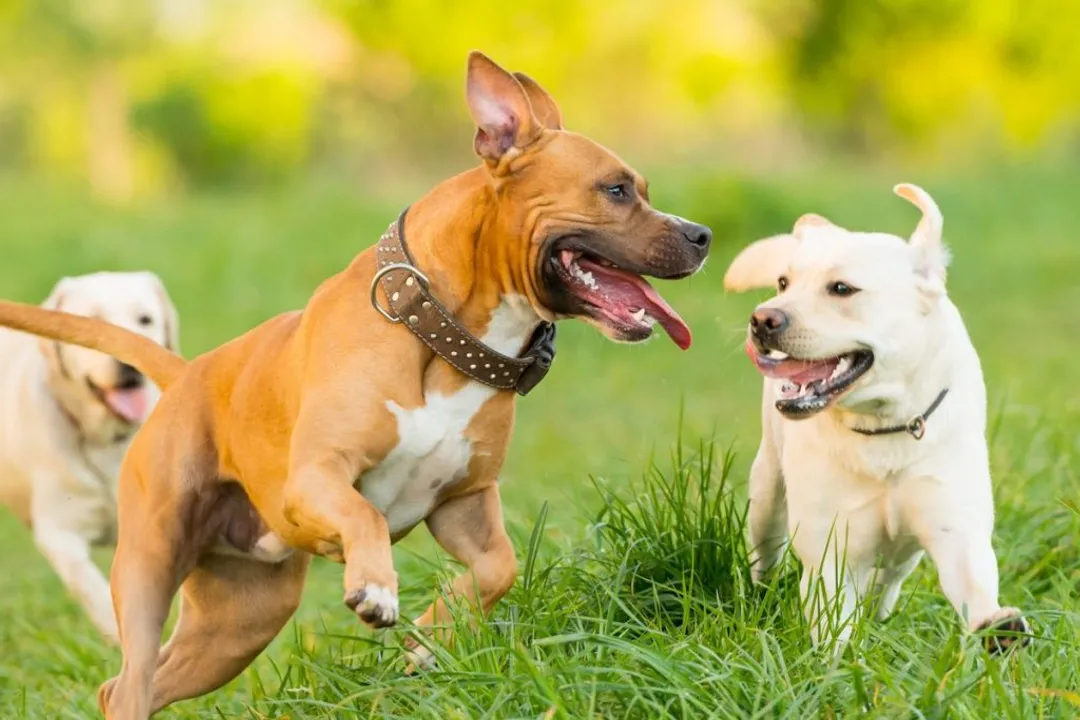
The signature harsh, wiry coat necessitates a specific maintenance routine that prospective owners must understand before committing to the breed. [1][3] While they shed very little, which can be a benefit for those sensitive to pet dander, this low-shedding quality means the dead hair remains in the coat unless manually removed. [4][5]
The preferred method for maintaining the correct texture—the dense, harsh feel—is hand-stripping or plucking. [1][3][5] This process involves carefully pulling the dead outer coat out by hand or with a specialized tool, which encourages the growth of new, hard, protective hair. If the coat is simply clipped with electric clippers, as is common with many other wire-haired breeds, the texture softens and loses its characteristic harshness, becoming duller and less weather-resistant. [5] This distinction is crucial; while clipping is easier and faster, it changes the dog’s fundamental appearance and texture, potentially violating breed standards for conformation shows. [1] For the average pet owner prioritizing ease over pure breed standard, regular professional grooming appointments become a necessity to keep the coat manageable and prevent matting, especially in the beard and leg feathering. [4] If an owner is entirely new to terrier grooming, understanding that stripping requires a different skillset than simple clipping is a key realization; it’s less about cutting hair and more about removing dead layers to allow the new, protective coat to emerge.
# Temperament Traits
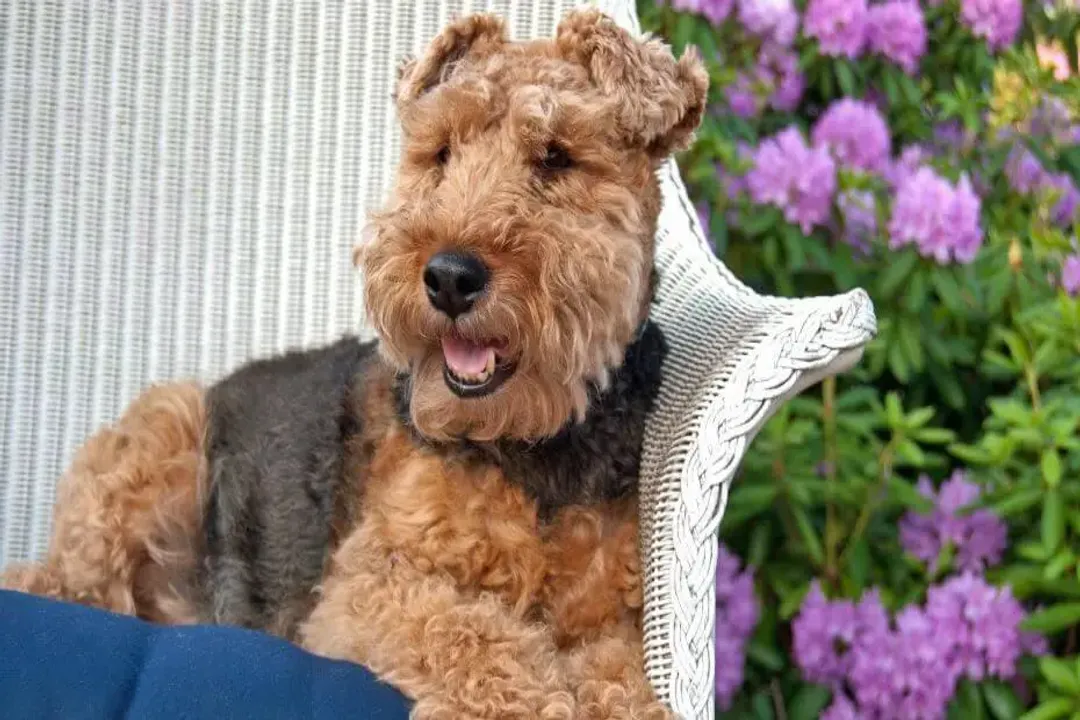
The Welsh Terrier personality balances high spirit with a desire to bond with its family. [3][5] They are frequently described as bold, self-assured, and eager to please, making them receptive students when training begins early. [1][3] They are inherently intelligent and possess an alert nature, making them good watchdogs, though they are rarely aggressive. [3] They enjoy activity and possess a spirited approach to life, often displaying a fun-loving streak. [3]
However, their background as an independent hunter means they retain a degree of terrier stubbornness. [1][5] They are not simply placid lap dogs; they possess strong opinions and can be willful if not managed correctly. [5] Consistent, positive training methods are essential from a young age. [1][5] Early and thorough socialization is paramount, particularly to help them manage their natural tendency to be scrappy or assertive toward unfamiliar dogs, especially those of the same sex. [3]
The energy level requires adequate daily outlets. While they can adapt to various living situations, including apartments, provided their exercise needs are met, they thrive with consistent activity. [3] Their historical job—working underground and thinking independently to flush out game—means their stubbornness isn't mere defiance; it’s a highly developed problem-solving ability. Therefore, training methods that engage their mind through puzzle toys, scent work, or agility, rather than purely repetitive obedience drills, tend to yield better results.
# Health and Longevity
Like most purebred dogs, Welsh Terriers can be susceptible to specific health conditions, although many are generally considered a sound and healthy breed. [3] Their expected lifespan is typically cited as being between 12 and 15 years. [1][3]
Some of the health concerns noted in veterinary literature for the breed include:
- Hip Dysplasia: A malformation of the hip joint that can lead to discomfort and arthritis. [3]
- Epilepsy: A neurological disorder causing seizures. [3]
- Eye Problems: Certain conditions affecting vision have been noted within the breed lines. [3]
Responsible breeding practices, which involve screening parent dogs for known hereditary issues, significantly reduce the risk of puppies inheriting these conditions. [3] Prospective owners should always inquire about health testing results from breeders. [3] Regular veterinary check-ups, a high-quality diet, and appropriate exercise are the cornerstones of keeping a Welsh Terrier healthy throughout its life. [1]

# Comparison with Similar Breeds
The Welsh Terrier is frequently compared to the Wire Fox Terrier, largely due to their similar coat type and general terrier appearance. [2][6] While they share rugged ancestry, they are distinct breeds. The Wire Fox Terrier tends to be slightly leggier and leaner, whereas the Welsh Terrier is characteristically more square and compact in its proportions. [6] Furthermore, the Welsh Terrier's color palette is restricted to black/grizzle and tan, while the Wire Fox Terrier often appears predominantly white with colored markings. [6] Understanding these nuances helps differentiate the breeds, though both share the essential, spirited terrier core. [5]
# Daily Life and Exercise
The Welsh Terrier is not a breed content to sit idly by the hearth all day, every day. [3] They possess moderate to high energy levels and require daily exercise to keep both their bodies and minds satisfied. [1][3] A daily walk, perhaps longer than a brief stroll, combined with time to run and play in a securely fenced area, is ideal. [3]
Due to their strong prey drive, which relates directly back to their hunting past, they must be kept securely contained when off-leash. [2][5] Their instinct to chase small, fast-moving objects—be it a squirrel or a rolling ball—is powerful, and recall training, while important, may not always override this instinct if they spot something interesting darting into the undergrowth. [5] A securely fenced yard is less a luxury and more a fundamental requirement for their safety. [3]
# Training Engagement
When training, owners must remember the Welsh Terrier's independence. [5] They respond best to an owner who can maintain firm, consistent leadership while keeping sessions engaging and positive. [1] Because they are intelligent, they pick up basic commands reasonably quickly, but their desire to follow their own agenda can surface swiftly. [5] Pairing commands with high-value rewards—perhaps bits of cheese or favorite toys rather than just standard kibble—can significantly boost their willingness to cooperate, especially in distracting outdoor environments. [3]
| Characteristic | Preference/Requirement | Impact on Owner |
|---|---|---|
| Coat Texture | Harsh, wiry (requires stripping) | Higher grooming skill/cost commitment |
| Energy Level | Moderate to High | Needs daily, dedicated exercise time |
| Social Needs | Strong socialization needed | Must be managed around strange dogs |
| Drive | High Prey Drive | Requires secure fencing |
| Intelligence | High, but independent | Needs motivational, consistent training |

# Historical Context Summary
The journey of the Welsh Terrier from a working farm dog to a recognized show breed is a testament to its appealing nature and distinct appearance. [2][6] While many terrier breeds were developed for similar rough work, the Welsh Terrier seems to have maintained a relatively consistent appearance and purpose for a longer period than some of its cousins. [2] This strong definition helped it gain recognition within the kennel clubs as the sport of dog showing grew in popularity through the late 19th and early 20th centuries. [6] Their history confirms they were bred to be hardy and dependable, qualities that still shine through in their modern domestic roles. [3]
# A Note on Temperament Adaptability
While the breed standard points to a confident, spirited dog, it is worth noting how this translates into a modern family setting. [1][3] They are generally excellent companions for active families who enjoy the outdoors and can provide mental stimulation. [3] They can form deep attachments to their immediate families. [5] However, for a first-time dog owner unfamiliar with the assertive, independent streak common to terriers, the Welsh Terrier might present unexpected challenges. [5] They are not a breed that tolerates passive ownership; they thrive under guidance that is both loving and unwavering in setting boundaries. [1] The payoff for this investment in leadership is a devoted, entertaining, and spirited companion who brings an undeniable spark to daily life. [3]
#Videos
Welsh Terrier - TOP 10 Interesting Facts - YouTube
Related Questions
#Citations
Welsh Terrier - Dog Breeds - American Kennel Club
Welsh Terrier - Wikipedia
Welsh Terrier Dog Breed Information | Purina UK
About Welsh Terriers - Miles & Emma
Welsh Terrier - The Westminster Kennel Club
What to Know About Welsh Terriers - WebMD
Welsh Terrier Dog Breed Information & Characteristics - DogTime
Welsh Terrier - TOP 10 Interesting Facts - YouTube