What are interesting facts about Rottweilers?
The Rottweiler is a breed that immediately commands respect, often described through a lens of sheer power and steadfast loyalty. To truly appreciate this imposing canine, however, one must look past the muscular frame and understand the rich history bred into its very DNA. People often associate them solely with guarding, but their story is far more nuanced, stretching back millennia to the Roman legions where their ancestors served as indispensable companions and workers. [6][7] These dogs were not initially bred for modern suburban aesthetics; they were survivalists, guardians of livestock, and tools of commerce. [1] Understanding the fascinating trajectory of the Rottweiler reveals a dog equally capable of a demanding day's work or a quiet evening by the hearth, provided their deep-seated needs are met. [3]
# Roman Roots
The lineage of the modern Rottweiler is thought to trace back to drover dogs used by the Roman armies as they marched across Europe. [6][7] These dogs were essential for guarding supplies, driving cattle for food along the arduous routes, and serving as general protectors for the legions. [1][7] As the Romans settled, particularly in what is now southern Germany, these robust dogs mixed with local herding dogs, establishing the foundational characteristics of the breed that would eventually be refined. [6]
The true development hub for the breed became the small German town of Rottweil. [6][7] It was here, in the center of cattle trading, that the dogs became known as the Rottweiler Metzgerhund, or "Butcher's Dog of Rottweil". [6][7] This name perfectly encapsulates their primary historical role: they were relied upon by local butchers to drive their herds to market and to guard the money pouch often tied around their necks for safety during the return journey. [6][7] This heritage speaks volumes about the breed's inherent trustworthiness, intelligence, and physical stamina—qualities necessary for managing large livestock and protecting valuables over long distances. [1]
Sadly, as railways began to replace cattle drives in the mid-19th century, the Rottweiler's utility waned, pushing the breed toward near extinction. [6][7] Recognizing the unique traits that were vanishing, dedicated German fanciers began efforts in the early 1900s to standardize and preserve the breed. [6] The establishment of the first breed club in 1907 marked a turning point, helping solidify the Rottweiler’s reputation as a dependable working dog, leading to its eventual acceptance in police and military capacities. [6][7] It’s interesting to note that while they were recognized by the American Kennel Club (AKC) in 1931, they had a presence in the United States long before that, often appearing in early dog shows. [6]
# Working Drive

The Rottweiler’s historical function as a cattle driver and butcher’s assistant deeply influences their modern temperament and energy requirements. [1][7] They possess an innate desire to have a job, a trait that owners must respect and manage if they want a well-adjusted companion. [1] While today’s suburban Rottweiler might not be herding cattle, that instinct remains a powerful motivator. [3] They are incredibly strong and were historically used for pulling carts, a testament to their physical prowess and endurance. [7]
This working aptitude led to their adoption by various official services. They excel as police dogs, search and rescue animals, and therapy dogs. [6] Their confidence, intelligence, and trainability make them excellent candidates for demanding roles requiring sound judgment under pressure. [1] A highly-trained Rottweiler displays remarkable focus, capable of switching between intense work and calm companionship based on command. [7]
When considering adding a Rottweiler to a household, one must realistically assess the capacity for providing meaningful engagement. A dog bred to walk miles driving oxen cannot thrive solely on two short walks around the block. [1] Their need for mental stimulation is just as great as their need for physical exercise. A simple game of fetch might suffice for some breeds, but a Rottweiler often benefits from structured activities that mimic problem-solving or duty, such as advanced obedience training, carting (if facilities are available), or complex scent work. [3]
It is important to recognize that while they are physically powerful, the drive that makes them excellent workers can manifest as excessive bossiness or stubbornness if not properly channeled through consistent leadership during their formative years. [1][3] Their history demands an owner who respects their capability, rather than just appreciating their appearance. [7]

# Dual Nature

Perhaps the most compelling aspect of the Rottweiler is the stark contrast between their exterior presentation and their internal disposition toward their family unit. Outwardly, they project confidence, reserve, and an almost imposing stillness, often exhibiting aloofness toward strangers. [1][7] This is not shyness; it is characteristic of a breed designed to assess situations carefully before acting. [1]
However, within their trusted circle, they transform into affectionate, often goofy companions. [3] Many owners describe their Rottweilers as "velcro dogs" that crave closeness and physical contact with their people. [3][5] They are known to be intensely loyal and possess a deep, quiet devotion to their families. [1] If you are looking for a dog that wants to be near you at all times, the Rottweiler certainly fits the bill, often wanting to supervise household activities from just a few feet away. [3]
This intense loyalty is the very source of their guarding instincts. They are naturally protective of their home and family, making them excellent deterrents simply by their presence. [1][7] This protective nature requires careful handling, however. Early and extensive socialization is not optional; it is foundational to raising a stable adult. [1][7] Exposing a young Rottweiler to a wide variety of people, sounds, environments, and other vaccinated, well-behaved animals helps them learn that the world outside their immediate family unit is generally safe and not a threat requiring intervention. [3] Without this, their natural caution can easily become unwarranted suspicion or aggression. [7]
When comparing the descriptions across various owner experiences, a pattern emerges: the difference between a well-socialized Rottweiler and one that wasn't is extreme—one is a calm family guardian, the other can be overly reactive. [3][5] Owners often share anecdotes about their imposing guard dog melting into a puddle of happy dog the moment their child walks in the door, demonstrating this powerful duality. [3]
# Build and Care

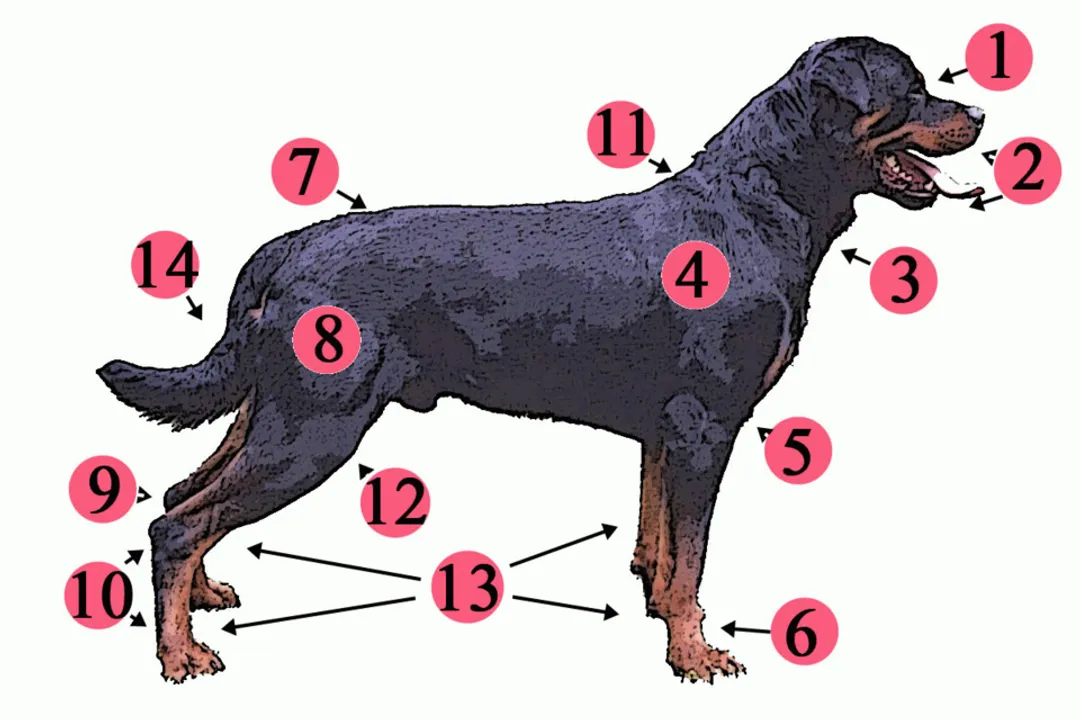
Rottweilers are solidly built, medium-to-large dogs known for their powerful, muscular appearance. [6] Males typically weigh between 95 and 135 pounds, while females generally fall between 80 and 105 pounds. [6] Their height usually ranges from 22 to 27 inches at the shoulder. [6]
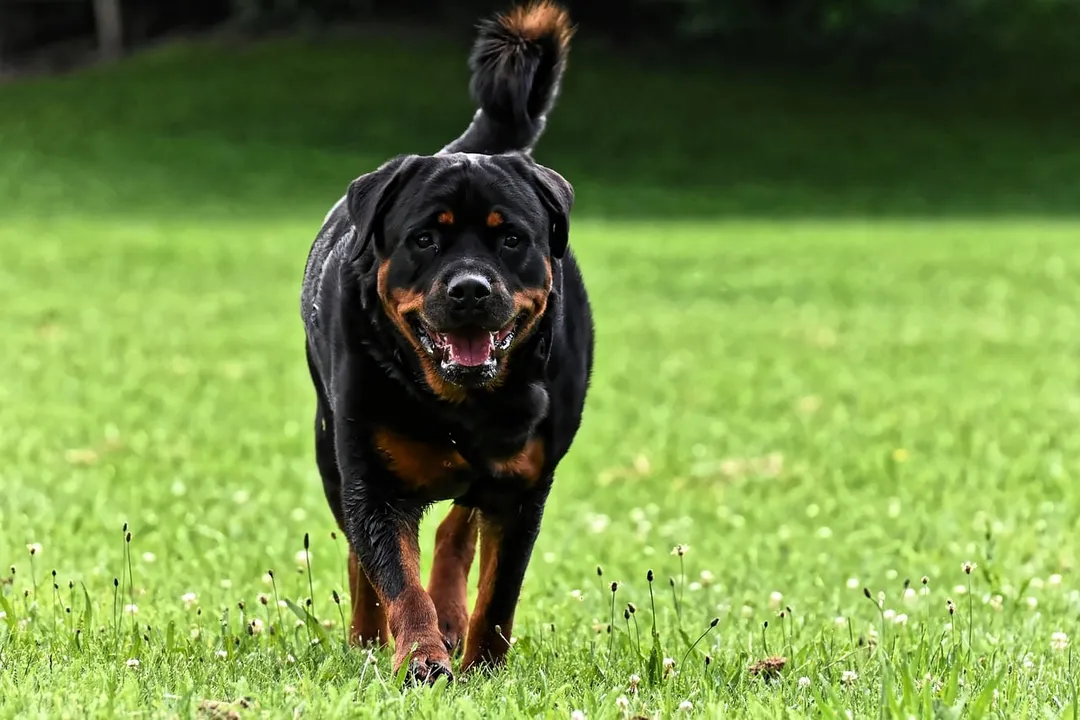
Their coat is a defining feature: a medium-length, coarse, dense double coat that lies flat against the body. [6][7] The color pattern is fixed and unmistakable: always black with clearly defined, rich mahogany or rust markings that appear over the eyes, on the cheeks, muzzle, chest, and legs. [6][7] The shedding level is moderate throughout the year, but prospective owners should be prepared for heavy seasonal shedding periods—often referred to as "blowing coat"—twice a year. [7] Regular brushing, perhaps a few times a week outside of these heavy sheds, is usually sufficient for maintenance. [7]
As with many larger breeds, owners must be mindful of certain health predispositions. Hip and elbow dysplasia are concerns that responsible breeders work diligently to screen against. [6] Owners should prioritize finding breeders who conduct appropriate health testing on the parents. [7] Other potential issues can include certain heart conditions and some cancers, though a generally healthy Rottweiler has a lifespan often cited in the range of 8 to 10 years. [6][7] This relatively shorter lifespan compared to some smaller breeds is something to prepare for emotionally when committing to the breed. [7]
Considering their history as working dogs that covered significant ground daily, maintaining a healthy weight is critical for joint longevity. [1] It is often illuminating for new owners to track their dog's actual caloric intake against their activity level. For instance, a Rottweiler engaging in moderate daily activity might only need about 1,300 to 1,700 calories per day, depending on its exact weight and metabolism, but owners new to the breed sometimes overestimate the caloric needs based on the dog's sheer size, leading to unnecessary weight gain that stresses those crucial hips and elbows. [1][7]

# Ownership Reality
Bringing a Rottweiler into one's life requires more than just an appreciation for their looks or historical background; it demands a commitment to consistent management and education. [1] Because of their protective nature and immense strength, they are not a breed best suited for novice dog owners unless the owner is prepared to seek expert guidance immediately. [3][7]
Training must start the moment the puppy comes home. This training must focus not just on what to do (sit, stay), but how to behave in various social settings. [1] A key piece of advice often shared in owner communities is to treat training as a continuous dialogue rather than a series of completed lessons. [3] The bond built through positive reinforcement and clear communication is what transforms their inherent protective energy into directed obedience. [7]
Their intelligence means they learn quickly, which can be a double-edged sword; they learn good habits fast, but they also learn undesirable behaviors, like counter-surfing or boundary testing, equally fast. [3] If leadership is inconsistent, the dog may decide they are in charge, leading to behavioral challenges stemming from a lack of clear structure, not malice. [1]
When discussing the reputation of the Rottweiler versus reality, it's worth noting a common pitfall: confusing breed type with individual training. An individual Rottweiler with poor socialization and no consistent boundaries might earn a negative reputation for the entire breed locally, even if their parentage comes from champions known for exemplary temperaments. [3] In contrast, a dedicated owner who invests heavily in puppy socialization classes, obedience training, and gradual exposure to new stimuli often finds their dog is surprisingly stable and even playful around strangers who respect boundaries. This difference highlights that while genetics provide the blueprint for their protective instincts, environment and handling determine the final structure of their behavior. [7] Ultimately, prospective owners must be ready to dedicate significant time to leadership, exercise, and lifelong mental engagement to truly enjoy the magnificent, complex character of the Rottweiler. [1][5]
#Videos
ROTTWEILER: Discover 5 Amazing Facts You Need to Know!
Related Questions
#Citations
11 Facts Rottweiler People Understand Better Than Anyone
Rottweiler Facts You May Not Know - American Kennel Club
Please give me all the facts about pet Rottweilers. - Reddit
ROTTWEILER: Discover 5 Amazing Facts You Need to Know!
10 Interesting Rottweiler Facts (Vet-Reviewed) - Dogster
Rottweiler - Wikipedia
10 Facts About the Rottweiler - Mental Floss
What to Know About Rottweilers - WebMD
Interesting Facts About the Rottweiler