West Highland Terrier Scientific Classification

The small, sturdy white dog known universally as the West Highland White Terrier occupies a very specific, well-defined place within the sprawling map of life on Earth. Understanding where this popular companion fits scientifically requires tracing its lineage from the broadest categories down to the precise subspecies that marks it as a domestic animal. [1][2] This structured classification system, established through biological consensus, tells a story of ancestry stretching back millions of years, even if the specific breed itself is relatively modern. [7]
# Animal Kingdom

At the highest level of organization, the Westie belongs to the Kingdom Animalia. [1][4][6][10] This designation places it firmly among multicellular, eukaryotic organisms that are heterotrophic, meaning they obtain nutrition by consuming other organisms rather than producing their own food through photosynthesis. [10] This immediately separates the terrier from the vast kingdoms of plants, fungi, and bacteria. [6]
# Mammalian Traits
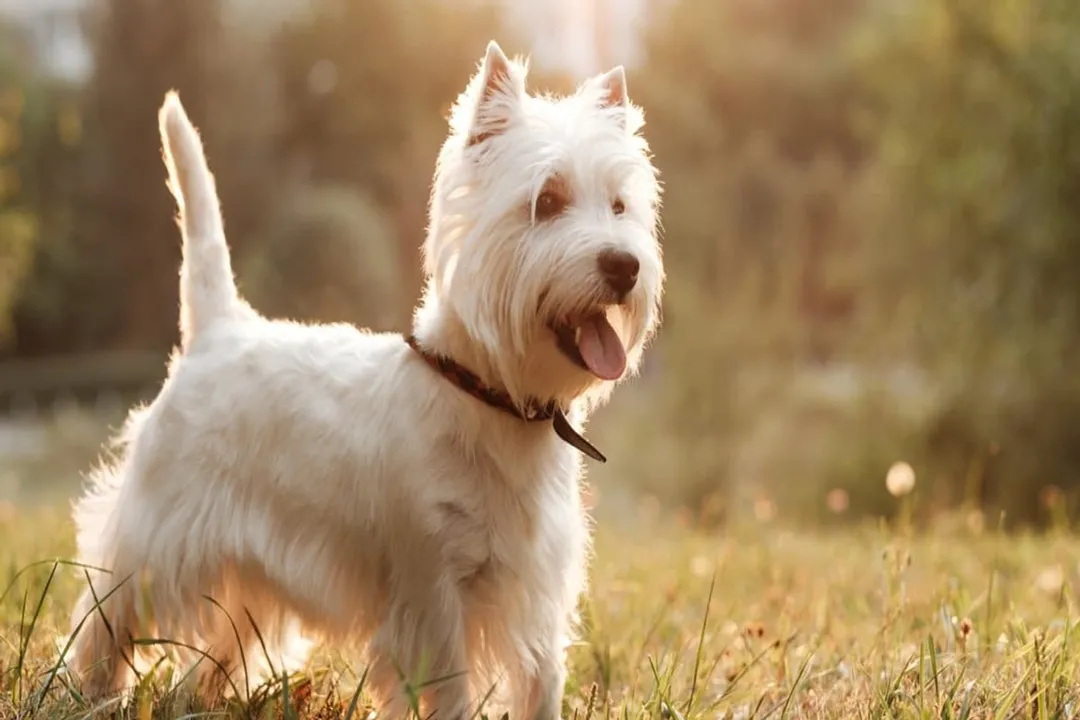
Moving down the hierarchy, the Westie falls into the Class Mammalia. [1][4][6][10] This class is characterized by key features such as possessing hair or fur, being warm-blooded (endothermic), and nursing their young with milk produced by mammary glands. [4] Within the Mammals, the terrier belongs to the Order Carnivora. [1][4][6][10] This grouping historically implies a shared ancestry among animals adapted primarily for hunting and eating flesh, a group that includes everything from bears and seals to cats and dogs. [1] It is interesting to note the classification within Carnivora, as while the Westie's ancestors were bred specifically for hunting vermin—a distinctly predatory role—modern feeding guidelines often recognize the Westie as an omnivore, capable of thriving on a diet that includes grains and vegetables alongside meat proteins. This illustrates how genetic classification describes evolutionary history, which doesn't always perfectly map onto contemporary nutritional requirements. [8]

# Canid Family
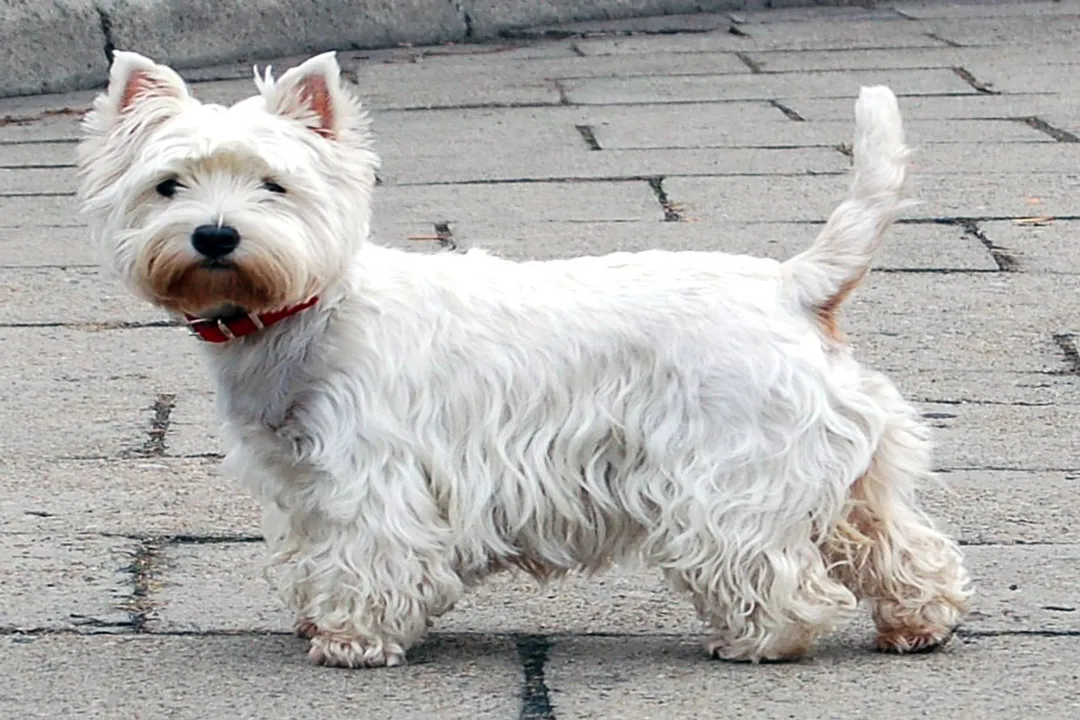
The next significant step places the West Highland White Terrier in the Family Canidae. [1][4][6][10] This is the family encompassing all dogs, wolves, foxes, and jackals. [4] Dogs share a common ancestry with these wild canids, explaining the underlying instinctual behaviors—such as pack orientation and certain vocalizations—that remain present even in a pampered house pet. [10]
# Domestic Species
Within the Canidae family, the terrier belongs to the Genus Canis. [1] The specific designation for the entire domestic dog population, which includes the Westie, is the subspecies Canis lupus familiaris. [1] This scientific name explicitly links the dog to the gray wolf, Canis lupus, acknowledging that all domestic dogs descended from ancient wolf populations through domestication. [1] While the wolf classification suggests a wild lineage, the Westie's divergence occurred long enough ago, and through selective breeding for specific traits, that it represents a distinct, domesticated variation of the species. [7]

# Breed Grouping
Scientific taxonomy stops at the subspecies level when describing the West Highland White Terrier as a distinct entity; the level below Canis lupus familiaris is the breed itself. [3][9] Although not a formal Linnaean rank, breeds like the Westie are internationally recognized groupings based on shared physical traits, temperament, and function, maintained through strict breeding standards by kennel clubs. [9] The Westie is classified within the larger Terrier Group. [3][9] This grouping is significant because it reflects the historical utility of the dog, originally bred in Scotland, particularly the West Highlands, to hunt and dispatch vermin like badgers and foxes from their dens. [2][3] The hard, harsh white coat and compact structure were deliberately selected for this purpose. [2] It's fascinating to observe how kennel clubs categorize breeds based on these functional traits—like the Terrier Group—which act as a practical, human-defined layer overlaid upon the strict biological classification of Canis lupus familiaris. [9]
# Comparison of Classification Structures
When reviewing how different authorities present this information, a consistent pattern emerges regarding the top tiers, but slight variances sometimes appear in how deeply the lineage is detailed. [1][6][10] Most sources agree on the progression: Animalia, Chordata, Mammalia, Carnivora, Canidae, and then leading to the domestic dog subspecies. [1][4] However, some organizations emphasize the specific characteristics of the Westie breed within the Terrier Group, [3][9] while others focus purely on the genetic makeup leading to the Canis lupus familiaris designation, often relying on genetic studies like those performed by Wisdom Panel to confirm ancestry relative to other canids. [7] The key takeaway is that while its scientific classification is fixed as Canis lupus familiaris, its identity as a West Highland White Terrier is defined by breed standards emphasizing its Scottish heritage and tenacity. [2][9]
| Taxonomic Rank | Classification | Defining Characteristic Example |
|---|---|---|
| Kingdom | Animalia | Multicellular, heterotrophic [10] |
| Phylum | Chordata | Possesses a backbone (vertebrate) [1] |
| Class | Mammalia | Warm-blooded, furred, nurses young [4] |
| Order | Carnivora | Ancestrally adapted for meat consumption [6] |
| Family | Canidae | Part of the dog, wolf, and fox lineage [4] |
| Subspecies | C. lupus familiaris | The domesticated dog |
| Breed | West Highland White Terrier | Recognized grouping within the Terrier Group [3] |
This hierarchical structure allows scientists to understand the Westie's evolutionary relationships to other species, confirming its position as a highly specialized, domesticated descendant of the wolf, adapted over centuries to thrive alongside humans in a specific environment, namely the rugged terrain of the Scottish Highlands. [2][3]
Related Questions
#Citations
West Highland White Terrier - Wikipedia
West Highland White Terrier - Discover Animals
West Highland White Terrier - Dog Breed, History, Diet ... - Vedantu
West Highland White Terrier - Dog Breeds - American Kennel Club
West Highland White Terrier | Veterinary Genetics Laboratory
West Highland Terrier - Dogs - A-Z Animals
West Highland White Terrier Facts - Wisdom Panel™ Dog Breeds
West Highland Terrier - Stenner Creek Animal Hospital
West Highland White Terrier | Breeds A to Z - The Kennel Club
All about West Highland White Terrier breed - Animalia