Weaver Birds Physical Characteristics
The weaver bird family, known scientifically as Ploceidae, represents one of nature’s most accomplished groups of builders, with around 118 recognized species demonstrating astounding engineering skills. [1] While the intricate nature of their hanging homes often steals the spotlight, understanding the physical characteristics of these small avian architects reveals how they manage such monumental feats of construction, often without direct human instruction.
# Size and Structure
Weaver birds are generally small birds, a physical reality that makes their architectural achievements even more remarkable. Though the sources focus on the detailed work of the Baya Weaver, [1] the general characteristic shared across the family is that they are tiny creatures compared to the structures they erect. [1] This small stature demands an extreme level of physical efficiency and precision in every movement.
The primary builder in many species is the male bird. [1] This division of labor suggests that the male possesses superior physical conditioning, dexterity, or perhaps a specialized bill morphology necessary for the intense, multi-day weaving required to construct a weatherproof dwelling capable of attracting a mate. [1] In contrast, the female’s physical contribution is often reserved for the interior design phase, where she furnishes the completed bedchamber with soft feathers. [1]
# The Weaver's Tools
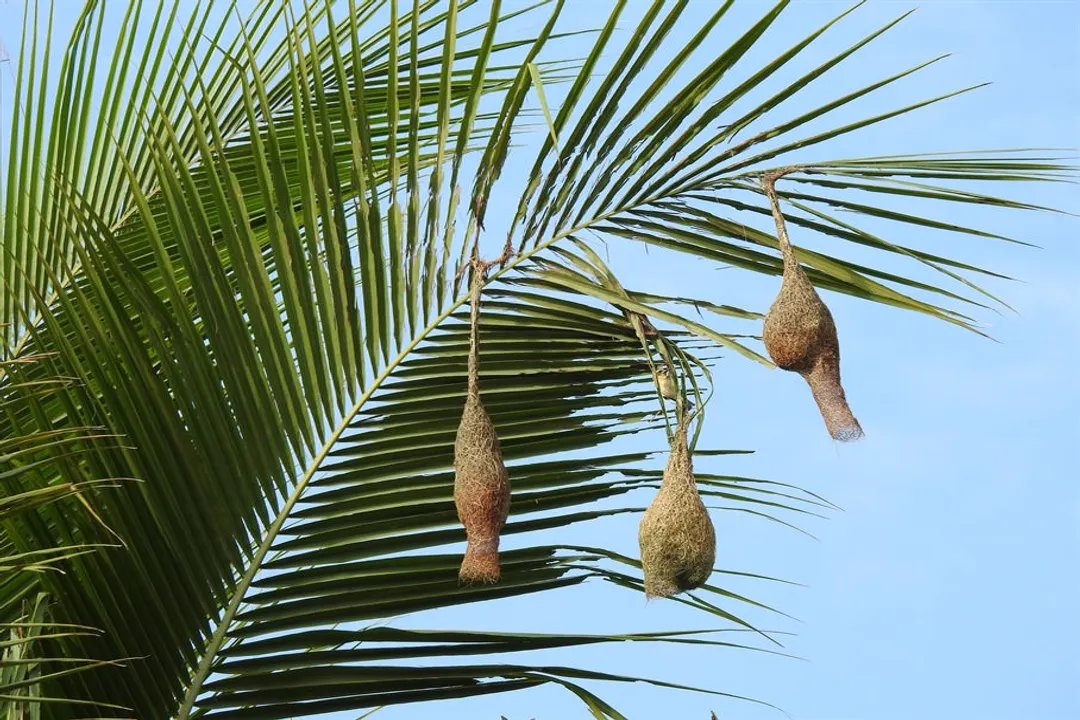
The physical apparatus crucial to the weaver bird’s reputation is undoubtedly its bill. The entire process of construction relies on the bird's ability to harvest, prepare, and manipulate plant matter into functional knots and weaves. The primary materials used are long, thin strips torn from the leaves of grasses, reeds, palms, or bamboo. [1]
Consider the sheer physical manipulation required: the bird must tear these long strips—which are themselves significant in length relative to the bird's body—without shredding them into useless fragments. [1] This requires a precise application of force through the bill, a delicate balance between tearing strength and fine motor control. The success of the structure depends on the bird’s capacity to hold, loop, tuck, and twist these fibrous "threads" to create secure knots. [1] It’s worth pausing to consider that successfully tying a functional knot with a piece of damp grass using only the bird's beak and mouth parts, then repeating that action hundreds or thousands of times, is a feat of biomechanical engineering rooted entirely in the structure and musculature of its head and neck.
For species like the Baya Weaver, a single, completed nest can be composed of an estimated 3,437 individual "threads". [1] For a bird that is itself relatively small, the physical strain and the sustained dexterity needed to place that many connection points, often while suspended upside down from the anchor point—a branch or even an electric cable—speaks volumes about the physical adaptations of their feet and leg structure for gripping and maintaining balance under stress. [1]

# Coloration and Dimorphism
While physical characteristics often relate to function, for weaver birds, they also play a clear role in courtship. While the exact coloration varies significantly across the 118 species in the Ploceidae family, [1] the dynamic between the sexes is often visible. As noted, the male shoulders the architectural burden, which frequently corresponds to a more elaborate or distinctly marked appearance, at least during the breeding season.
Though specific color descriptions for all 118 species are not contained within these accounts, the Baya Weaver illustrates a pattern common among birds where the male vies for the female’s critical assessment. [1] The male performs display behaviors, calling and fluttering wings around his freshly constructed properties. [1] This suggests a distinct sexual dimorphism, where the male’s physical appearance—often brighter or more contrasting in color than the female—is an added asset used alongside his architectural skill to secure a mate. [1] If a nest is rejected before completion, the male may demolish it and start over, indicating that both the quality of his physical construction and his physical appearance contribute to his reproductive success. [1]
# Communal Architecture and Physical Scale
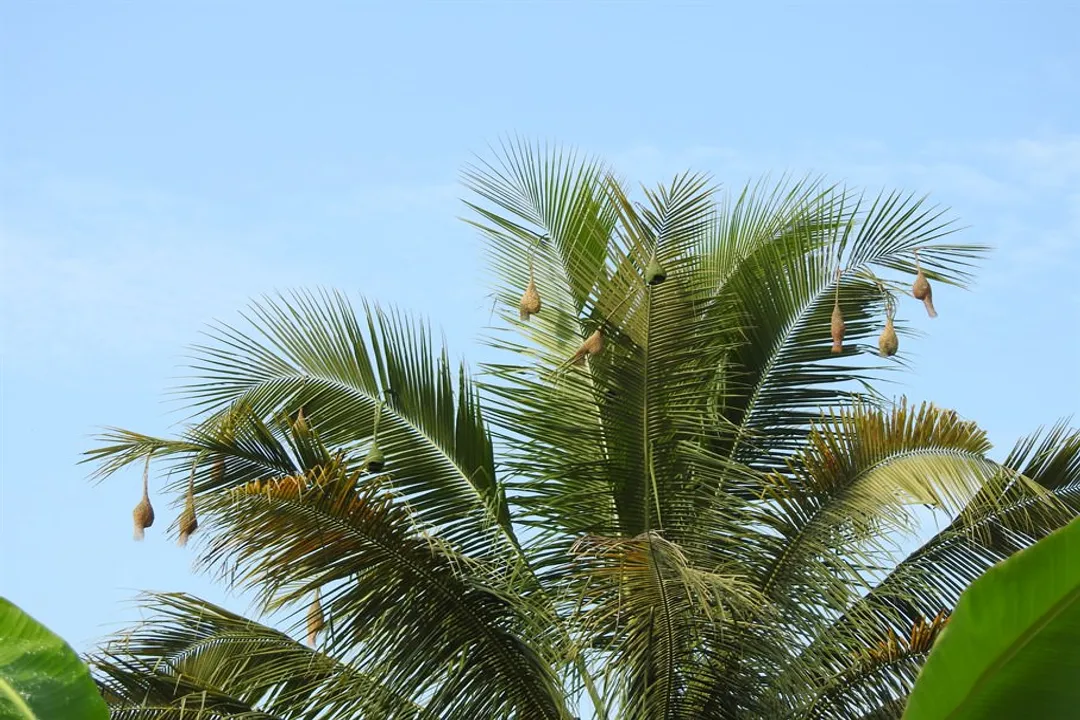
Another variation in physical manifestation relates to social structure. While the Baya Weaver builds solitary, pendant-shaped homes, often clustering dozens together in a tree, [1] other relatives, like sociable weavers, construct massive communal nests.
These communal structures represent a different scale of physical endeavor. Instead of one bird creating a single-family home, hundreds of birds cooperate to maintain a single, durable edifice that can sometimes last for generations. This implies that the physical characteristics of the sociable weavers—perhaps bill size or material preference—are adapted for cooperative attachment to existing framework materials, contributing to a structure that acts as a single, large, climate-adapted unit.
It is fascinating to observe how the physical output of these birds inspires human innovation. Engineers have examined the woven structure of the Baya Weaver nest and applied the lattice architecture principles to 3D-printed bricks, demonstrating insulation properties ten times better than traditional clay bricks. [1] This cross-species admiration highlights that the physical design, executed by a small bird using only natural fibers, embodies engineering principles that are mathematically and structurally sound—a testament to finely tuned avian anatomy guiding material placement. [1]
To summarize the physical connection to the craft, one must appreciate the bill and feet as the primary tools, the sexual coloration as a secondary display characteristic, and the overall small body size as the context that magnifies the engineering achievement. [1] The consistency with which they produce complex, strong, and perfectly oriented structures—even orienting entrance tunnels away from prevailing winds—shows that these physical traits are supported by an inherent, well-practiced mastery of weaving techniques. [1]
#Videos
Weaver Bird: Nature's Master Architect! - YouTube
Related Questions
#Citations
Weaver Birds – Nature's Top Architects | KFBG Blog
Weaver Bird: Nature's Master Architect! - YouTube
Nature's Architects: The Mind-Blowing Ways Animals Shape Their ...