What is the bronze winged jacana nest?
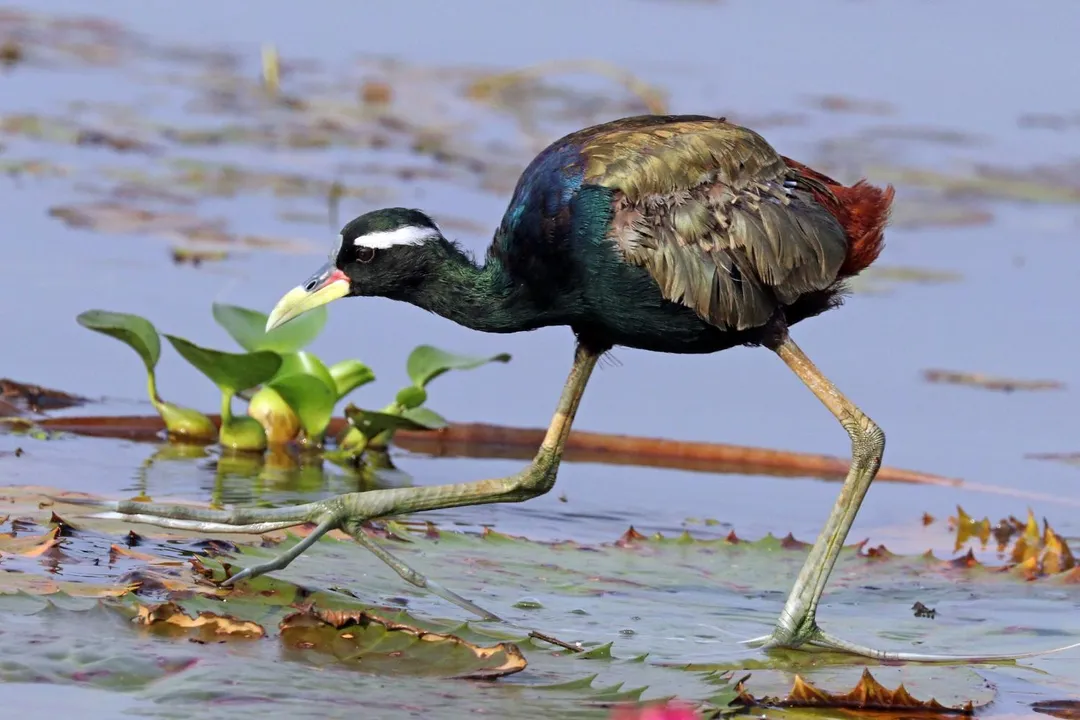
The Bronze-winged Jacana, Metopidius indicus, presents a fascinating subject for anyone interested in specialized avian architecture, particularly when focusing on its unique approach to nesting. Unlike many ground-nesting or tree-nesting birds, this species has adapted its entire reproductive strategy to life atop the water's surface, demanding a very specific type of construction built for buoyancy and security in a dynamic wetland environment. [1][4] Understanding the nest is key to understanding their entire breeding cycle, as it is the central piece of infrastructure for raising their young in environments dominated by floating foliage. [4]
# Species Overview
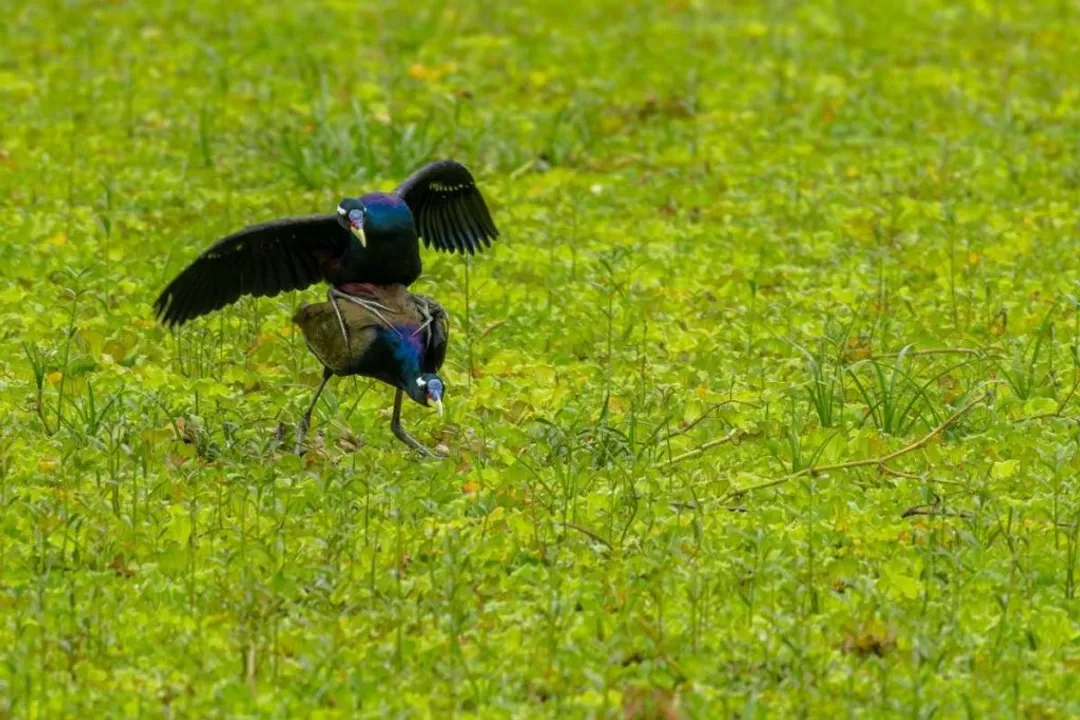
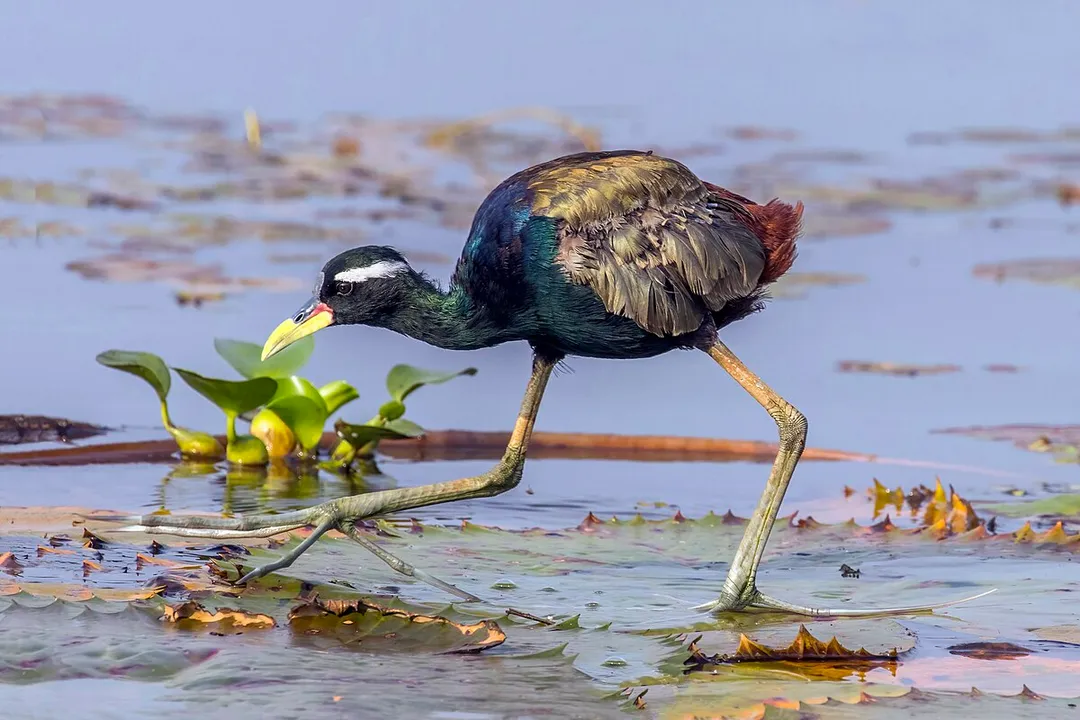
The Bronze-winged Jacana is recognized across South and Southeast Asia, spanning regions like India, Thailand, and Nepal. [4][5][6][7] It is the sole member of the genus Metopidius. [1] Adults are distinctive with their glossy black plumage contrasted by rich chestnut or bronze on the wings, which gives them their common name. [1][7] They are renowned for their exceptionally long toes and claws, a physical adaptation that allows them to walk easily across soft, floating vegetation—a trait shared with other jacanas—which is fundamental to where and how they build their homes. [1][5]
# Nest Structure

The nest structure itself is an engineering marvel of organic, buoyant material. It is not a fixed structure attached firmly to a single point but rather a floating platform designed to ride the water level changes characteristic of their marshy habitats. [1][4] The material selection is critical: the birds gather reeds, grasses, and various forms of aquatic vegetation that are inherently buoyant. [1][4] This collection of plant matter is woven and matted together to create a relatively flat, stable surface upon which the eggs can rest safely above the waterline. [4]
A subtle, yet critical, aspect of the construction is its integration with the surrounding environment. While the nest floats, it is often strategically placed among dense clumps of vegetation, such as water lilies or reeds, and may be tenuously secured to these emergent plants for added stability against currents or wind. [1][4] If you were to observe one, you might mistake the nest for just another piece of floating detritus, which serves as excellent natural camouflage against potential predators. [4]
This reliance on a floating base necessitates a different kind of structural integrity than a nest built on a solid branch. Consider the difference: a typical passerine nest relies on tension and friction against a static substrate. The jacana nest, however, relies on distributed weight across a cohesive, buoyant mass. The bird's specialized, long-toed feet distribute their weight widely across the floating mat, preventing them from sinking through or destabilizing the structure while incubating. [1] This interplay between foot morphology and nest engineering is a perfect example of form following ecological function.
# Construction Method
The building process is a collaborative, yet gender-skewed, effort. Both sexes participate in gathering the necessary raw materials—the aquatic plants—but the female often initiates the foundation. [4] The construction involves pulling the vegetation together, often weaving it loosely or layering it to create a thick raft. [1]
The construction phase is highly dependent on the availability and type of floating cover. In areas where water lilies form extensive mats, the birds may simply enhance an existing patch by adding more material to create a slightly raised platform, rather than building a wholly new structure from scratch. [4]
Here is a simplified look at the likely sequence of nest creation, based on observation of similar species and the materials described:
- Material Acquisition: Gathering numerous pieces of grass, reeds, and other water-loving plants. [1]
- Foundation Laying: Dropping and arranging the material in a chosen patch of calm water, ideally near protective cover. [4]
- Matting: Using the body and feet to press and interlock the materials into a dense raft. [1]
- Securing (Optional): Tugging at nearby emergent stems to anchor the floating base, reducing lateral drift. [4]
- Finishing: Creating a slightly concave depression in the center to hold the eggs securely.
The continuous maintenance required for such a structure is often overlooked. As the submerged parts of the nest material slowly decompose or become waterlogged, the birds must periodically add fresh, dry vegetation to maintain the necessary height and buoyancy, especially during extended brooding periods. [4]
# Eggs Clutch
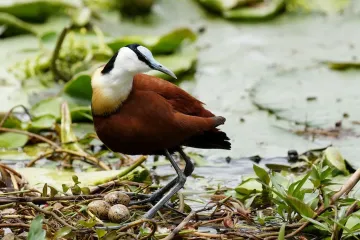
Once the platform is deemed suitable, the eggs are laid. The clutch size for the Bronze-winged Jacana is typically three to four eggs, though occasionally five may be found. [1][4] These eggs are quite striking, generally being a dull brownish-black color, often adorned with streaks or blotches of darker black. [1] This coloration provides excellent camouflage against the dark, damp interior of the nest material, further aiding concealment. [1]
The size and shape of the eggs are tailored for the shallow cup they sit in, maximizing the surface area exposed for incubation while minimizing the risk of rolling off the floating platform. Unlike aerial nests, which must be deep cups to withstand wind, the jacana nest requires a shallow depression to allow for efficient heat transfer from the brooding parent to all eggs simultaneously, balancing security with optimal incubation conditions. [4]

# Parental Duties
One of the most noteworthy aspects of the Bronze-winged Jacana's breeding habits, and one that directly impacts nest maintenance, involves the division of labor. In this species, incubation and subsequent chick-rearing fall predominantly to the male bird. [1][4][8] While the female may lay the clutch, the male takes on the responsibility of sitting on the eggs for the incubation period. [1][4]
This role reversal is fascinating from a behavioral ecology standpoint. It suggests that the female, once her reproductive investment in the eggs is complete, may be free to pursue other activities, perhaps even starting a second nest or seeking additional mates, which is a common strategy among polyandrous or polygynous wetland birds. [8] The male, meanwhile, must remain relatively sedentary on the floating nest, relying on his camouflage and the stability of his structure to avoid detection while keeping the eggs warm. [1] He also takes on the duty of transporting the young once hatched, often carrying them on his back between foraging sites. [4]
# Habitat Needs
The nature of the nest ties the Bronze-winged Jacana inextricably to specific aquatic environments. They require wetlands, marshes, and shallow, stagnant water bodies rich in floating aquatic vegetation. [1][4][7] Areas dominated by water lilies, dense reeds, and submerged plants that provide a continuous, stable surface are preferred. [4]
For those interested in birdwatching or conservation, understanding this dependency is crucial. A healthy population of Metopidius indicus is a strong indicator of a well-functioning, relatively undisturbed wetland ecosystem, especially one that avoids excessive disturbance from boats or rapid water level fluctuations. [4] A sudden draining of a marsh would obviously destroy the floating infrastructure, while excessive wave action from motorized traffic could cause even securely anchored nests to break apart or drift into unsuitable territory. The successful reproduction of this species is, therefore, a litmus test for the stability of the shallow water habitat it calls home. [7]
Related Questions
#Citations
Bronze-winged jacana - Wikipedia
Bronze-winged jacana - Facts, Diet, Habitat & Pictures on Animalia.bio
Bronze-winged Jacana bird species and its aquatic habits - Facebook
Bronze-winged jacana (Metopidius indicus) - Thai National Parks
Bronze-winged Jacana (Metopidius indicus) identification - Birda
Bronze-winged Jacana - Bird watching in Thailand - aladdin.st
Bronze Winged Jacana. Metopidius indicus (Latham) | Wealthy Waste
Bronze winged jacana | John Thomas | Angamaly - Creative Hut