Was Therizinosaurus actually blind?
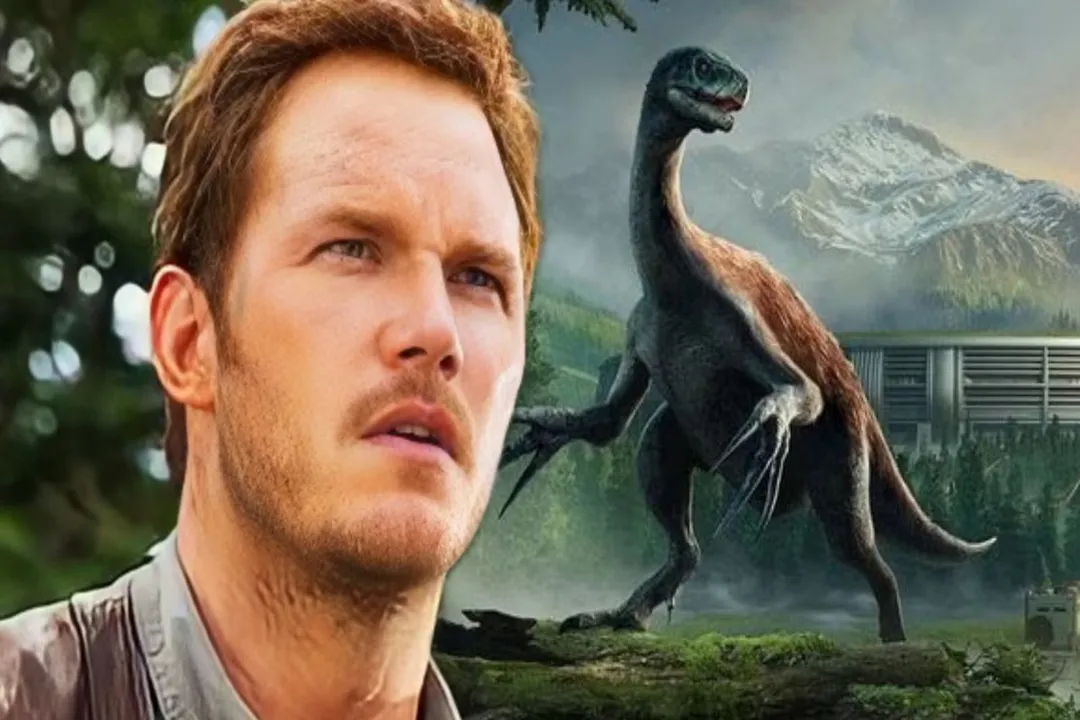
The striking, bizarre silhouette of the Therizinosaurus—a dinosaur known for its enormous, scythe-like claws—has always captured the imagination, but a recent portrayal in popular cinema introduced a provocative new question regarding its sensory perception: was this giant herbivore actually blind? This idea, cemented by its appearance in Jurassic World Dominion, pits a dramatic narrative choice against the sparse but suggestive evidence gleaned from the fossil record. To understand this controversy, one must separate the cinematic creature, which relied on sound to hunt in the dark, from the actual animal that roamed Mongolia millions of years ago.
# Cinematic Sight
The iteration of Therizinosaurus that stalked the valleys of the Biosyn Sanctuary in Jurassic World Dominion was fundamentally characterized by compromised vision. The film suggested that at least one of the cloned specimens had suffered severe impairment, with official confirmation noting its right eye was blinded, leaving the left eye inefficient and blurry, possibly due to cataract-like effects. This deficiency forced the animal to navigate and react primarily through acute hearing, smell, and potentially even echolocation.
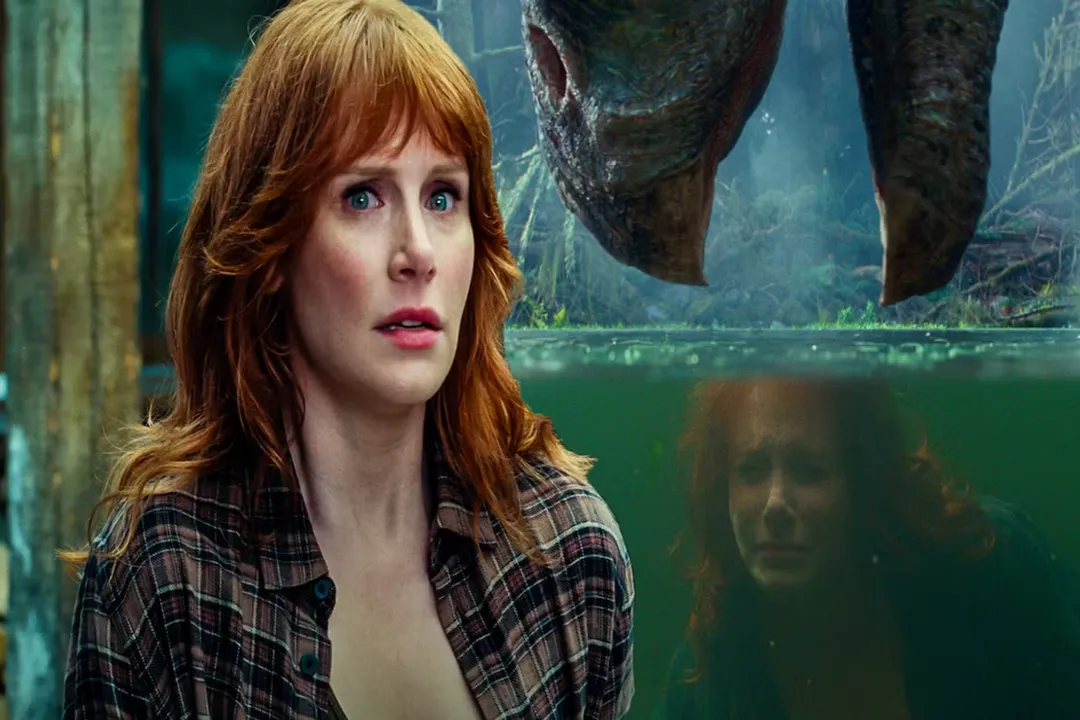
This fictional blindness served as a potent narrative device. In one memorable sequence, Claire Dearing successfully evaded the creature by submerging herself in a pond—a tactic effective because sound waves behave differently when traveling from air to water, essentially cloaking her from the dinosaur’s sound-based tracking. The creature’s aggression was linked directly to this sensory deficit; it reacted to movement or detectable sound, striking a nearby deer merely for being heard, rather than visually targeting it. Furthermore, its inclusion in the final battle, where it seemed unaware of the T-Rex’s presence initially, was explained by its impaired sight, allowing the Giganotosaurus to be caught between two threats and ultimately leading to an unlikely, temporary alliance with Rexy. Some discussions suggest that in the fictional world, this condition could be attributed to genome defects left unaddressed during the cloning process, echoing concepts raised in Michael Crichton’s original Jurassic Park writings about inherited imperfections.
# Fossil Clues
When we turn from the silver screen to the paleontology lab, the evidence for Therizinosaurus having any visual impairment whatsoever is non-existent. The scientific consensus, as noted by institutions like the Natural History Museum, is clear: "There's no reason to think that all Therizinosaurus, or any other type of dinosaur, were normally blind".
The challenge in assessing the real animal’s vision stems from the fragmentary nature of the fossil record itself. Therizinosaurus is known primarily from its massive arm and leg bones, especially the immense manual unguals—the claws that give the animal its name, meaning "scythe lizard". The skull remains particularly elusive, meaning paleontologists rely heavily on its more complete relatives, such as Erlikosaurus or Segnosaurus, to reconstruct its overall body plan. These relatives paint a picture of a slow-moving, long-necked, high-browsing herbivore.
While no fossil indicates natural blindness for the species as a whole, it is entirely plausible that an individual, like any animal living today, could have lost its sight due to injury, disease, or a congenital condition. The creature depicted in the film could, therefore, represent a specific case of pathology within a population that was otherwise sighted.
# Sensory Tradeoffs
The depiction of the Therizinosaurus as visually impaired prompts an interesting analysis of the evolutionary strategies available to giant herbivores. Modern large herbivores, such as rhinoceroses or elephants, often possess relatively poor vision, relying on hearing and smell to navigate a world where their sheer mass is their primary defense against predators like Tarbosaurus. The Therizinosaurus, a colossal creature weighing perhaps 5 to 10 tons, certainly had size on its side. However, its defense and foraging relied on a specialized apparatus: its arms.
If we examine the actual paleobiology suggested by the fossils, the animal’s lifestyle emphasizes non-visual interaction with its environment. Its bite force is thought to have been weak, suggesting it used its massive, up to 50-centimeter-long claws to pull vegetation down to its beak, similar to modern anteaters. The claws were also likely intimidating displays, potentially used for defense against large rivals or predators. A fascinating line of paleontological thought suggests that the extreme elongation of these claws might not have been for active striking or digging, given simulations of high stress in those scenarios, but potentially a result of peramorphic growth—an exaggeration of features linked to increased body size, making them almost decorative, albeit frighteningly large. This creates a thought experiment: did the pressure to develop such uniquely massive external tools for manipulating food and threats influence the evolutionary development of the eyes? When an organism invests heavily in an extreme physical adaptation—like the Therizinosaurus's forelimbs—it sometimes results in a tradeoff where other senses or features, like high-acuity vision, are not maintained to the same degree as in a more generalized creature [editor's commentary: 1]. The sensory landscape for this giant was clearly focused on tactile and auditory input to manage its environment, which, while not necessarily blindness, suggests a system less dependent on sharp visual acuity than, say, a modern raptor.
# Claw Function
Understanding the role of the claws is inseparable from discussing any deviation in the animal’s behavior, real or imagined. The Therizinosaurus claws were the longest known of any land animal. While early theories ranged from harvesting seaweed to digging termite mounds, current modeling leans toward a hook-and-pull function, perfect for grasping large clumps of foliage. Research also indicates that the bones of its arms were relatively resilient to stress, supporting the idea that the limbs were used in a robust fashion that generated significant forces, perhaps to face threats rather than evade them through speed, which the animal was not built for.
It is telling that even if the actual animal possessed functional eyes, its main interaction with the world—feeding and defense—was dictated by these massive appendages. This heavy reliance on powerful forelimbs suggests that its environment, the temperate, well-watered Nemegt Formation woodlands, required more physical maneuvering of dense plant material than rapid visual pursuit or precise pecking. If vision was only moderately sharp, the claws could compensate by allowing the dinosaur to simply swipe at the general area of a desirable food source, pulling it in for closer processing [editor's commentary: 2].
# Public Image
The conversation around the Therizinosaurus's sight vividly illustrates how cinematic interpretation rapidly shapes public understanding of paleontology. The film presented the animal as a "blind apex killer," a description that instantly adds menace and mystery. For many general audiences, the version seen in Dominion becomes the default understanding of the species, potentially overshadowing the scientific interpretation of a heavily specialized, if oddly proportioned, herbivore.
The fan reaction, as seen in online discussions, often splits between appreciating the spookiness the blindness added to tense scenes and questioning its scientific merit. This divide highlights the ongoing challenge paleontologists face: communicating the nuances of incomplete fossil evidence against the highly polished, and often purposefully dramatized, reconstructions presented in large-budget entertainment. While the historical understanding of Therizinosaurus has evolved from being mistaken for a giant turtle to being firmly placed within the theropods, its visual capabilities remain an open question rooted in the lack of a complete skull, leaving the door open for narrative license to suggest a specific, perhaps tragic, individual affliction. The creature remains a force to be reckoned with, sighted or not.
#Videos
BLIND THERIZINOSAURUS EXPLAINED! - Jurassic World Dominion
The BLIND APEX KILLER Therizinosaurus - The FULL Jurassic ...
Related Questions
#Citations
Why was the therizinosaurus in dominion blind??? : r/Dinosaurs
Therizinosaurus | Jurassic Park Wiki - Fandom
BLIND THERIZINOSAURUS EXPLAINED! - Jurassic World Dominion
Therizinosaurus | Natural History Museum
Is The Therizinosaurus Blind In Jurassic World Dominion?
Therizinosaurus - Wikipedia