Is Therizinosaurus related to Trex?
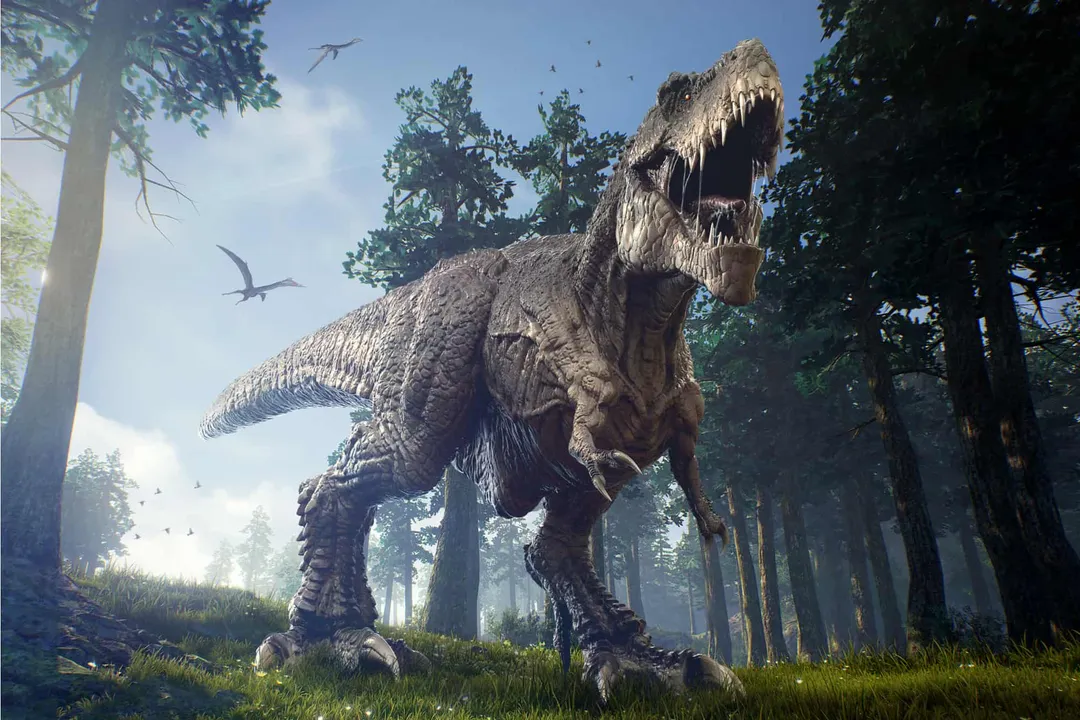
The initial confusion surrounding the relationship between Therizinosaurus and Tyrannosaurus rex often stems from their general body plan: large, bipedal dinosaurs that walked on two powerful legs. While both titans walked the Mesozoic Earth, finding Therizinosaurus in the late Cretaceous of Asia and T. rex in North America during the same period, their family trees are separated by significant evolutionary branches, making them distant cousins at best, rather than close relatives. [2] To understand this, one must look deeper than the posture and consider their respective lineages within the massive dinosaur family tree.
# Shared Ancestry

Both Therizinosaurus and T. rex belong to the order Saurischia (lizard-hipped dinosaurs), and more specifically, they are both classified within the suborder Theropoda. [2] This places them in the group that famously includes nearly all carnivorous dinosaurs, though evolution took some of them down a very different path. [2] Moving further down the classification chart, both fall under the clade Coelurosauria. [2] This places them in a large and diverse group of theropods that includes birds, dromaeosaurs (like Velociraptor), and tyrannosaurs. [2]
However, being in the same overarching group is like saying a human and a chimpanzee are related because they are both primates; the relationship exists, but the divergence point is ancient. T. rex is a member of the family Tyrannosauridae, [2] whereas Therizinosaurus belongs to Therizinosauridae. [2] These families represent distinct evolutionary trajectories that split off quite early within the coelurosaur lineage.
# Evolutionary Split
The critical distinction lies in where their respective families branched off from their common ancestor within Coelurosauria. Tyrannosaurs followed a lineage that maintained a predatory lifestyle, leading to massive skulls, powerful jaws, and famously reduced forelimbs. [5] The therizinosaurs, on the other hand, embarked on a highly specialized path. Imagine the Coelurosauria group as a vast coastal delta spreading out into the sea; Tyrannosauridae is one major channel, and Therizinosauridae is another that branched off much earlier and followed a completely different route to fill an ecological niche. This deep split explains why, despite both being large theropods, their features became so drastically different.
# Contrasting Anatomy
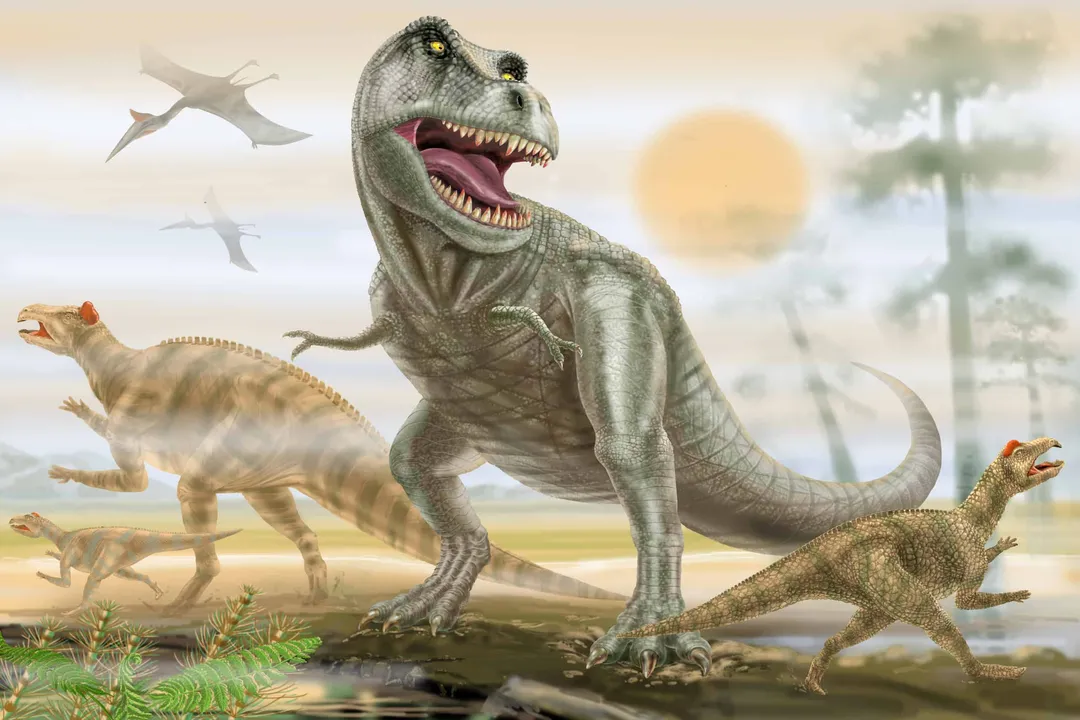
The most immediate way to separate these two dinosaurs is by examining their physical characteristics, particularly the features that define each group. [5]
# Claws and Arms
The most striking feature of Therizinosaurus is its armament: immense claws on its forelimbs. [7][2] These claws, which could reach lengths of up to one meter along the outer curve, are what gave the creature its name, meaning "scythe lizard". [7] Paleontological evidence suggests these claws were not primarily for combat against large predators but were likely tools for pulling down branches to access vegetation, given the dinosaur's presumed diet. [2][7]
In sharp contrast, Tyrannosaurus rex is renowned for having notoriously tiny, two-fingered arms. [5] These appendages were minuscule in proportion to its enormous body and skull, leading to much speculation regarding their function, though they certainly were not used for raking vegetation like the giant claws of its Asian contemporary. [5] This difference in forelimb specialization clearly marks the functional divergence of their two evolutionary lines.
# Head and Diet
The feeding apparatus further underscores their separation. T. rex possessed one of the most powerful bites in terrestrial history, equipped with robust, bone-crushing teeth designed for slicing flesh and crushing bone—a definitive apex predator. [5]
Therizinosaurus, however, had a relatively small skull for its body size, which was equipped with a beak-like mouth structure. [2] While the exact diet is debated, the consensus leans heavily towards herbivory or perhaps omnivory, a diet wholly incompatible with the hyper-carnivorous specialization of T. rex. [2][5] If you were to look at skeletal reconstructions side-by-side, the fearsome, heavily muscled head of the tyrant looks nothing like the more delicate, beak-fronted cranium of the scythe lizard. [2]
Here is a quick summary of their primary distinguishing features based on current understanding:
| Feature | Tyrannosaurus rex | Therizinosaurus cheloniformis |
|---|---|---|
| Primary Diet | Carnivore/Apex Predator [5] | Herbivore/Omnivore (inferred) [2] |
| Defining Feature | Massive skull and powerful bite [5] | Extremely long forelimb claws [7] |
| Forelimbs | Very small, two-fingered [5] | Large, equipped with massive, curved claws [7] |
| Geographic Range | North America (Late Cretaceous) [2] | Asia (Late Cretaceous) [2] |
| Family | Tyrannosauridae [2] | Therizinosauridae [2] |
# Misleading Similarities
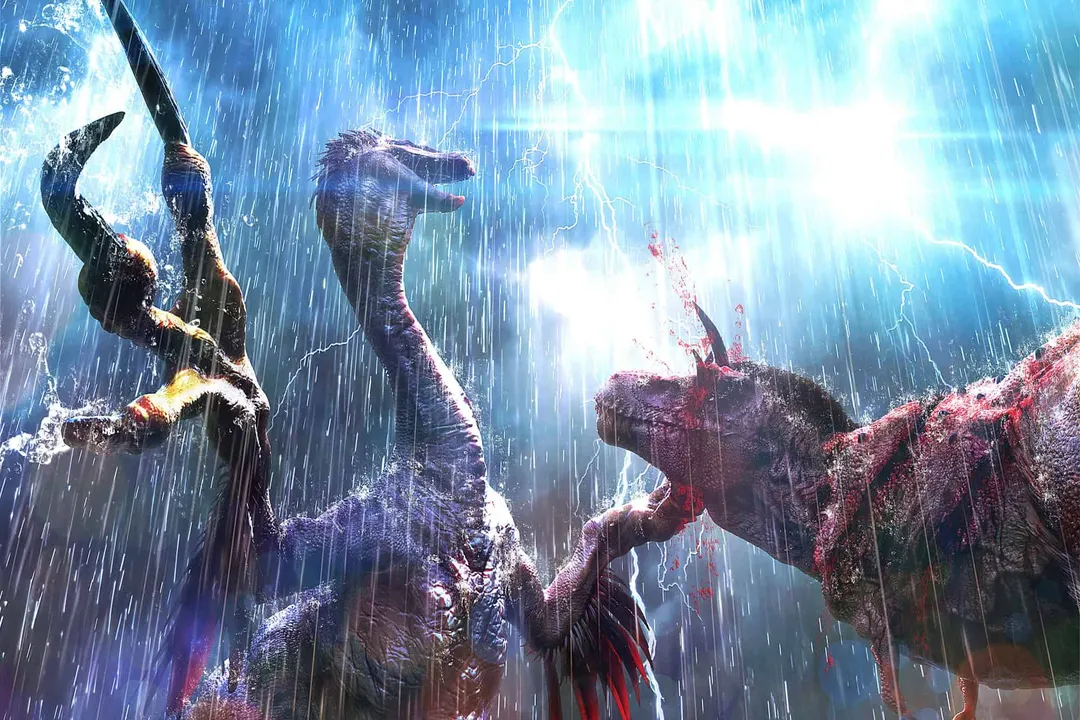
The primary reason the relationship is often questioned is the superficial resemblance in overall shape and locomotion. Both were large, bipedal dinosaurs, which represents a successful body plan adopted by several large theropod groups over millions of years. This similarity, where two unrelated species evolve similar traits because they occupy similar ecological roles (large, fast-moving ground-walkers), is a classic example of convergent evolution in a broad sense, though in this case, it's more about sharing a generalized theropod blueprint rather than converging on a specific niche like aquatic predators.
The fact that both dinosaurs lived during the Late Cretaceous period, though on different continents, also fuels comparisons, as they represent the "mega-fauna" of their respective regions toward the end of the Age of Dinosaurs. [2] T. rex was the undisputed king of its environment, while Therizinosaurus occupied a large-bodied herbivore niche, a slot often filled by sauropods elsewhere, suggesting a unique evolutionary niche filling in Asia. [5][7] To put the time frame into perspective, while both were Cretaceous dinosaurs, their last common ancestor likely lived deep in the Jurassic period, meaning they were separated by tens of millions of years of independent evolution before either reached their famous forms. [2] It's a striking demonstration of how wildly diverse the Coelurosauria group became once it began specializing away from the classic predatory model.
# Understanding the Coelurosaurian Spectrum
The Coelurosauria group is fascinating precisely because it contains such extremes as the bird-like Archaeopteryx, the swift raptors, the lumbering, giant tyrannosaurs, and the bizarre, clawed therizinosaurs. [2] If you were to plot these dinosaurs on an evolutionary map, T. rex would be on a relatively direct, predator-focused line stemming from earlier tyrannosauroids. Therizinosaurus, however, is perched on a branch that took a sharp turn toward heavily built, large-bodied, non-predatory existence. [2]
Consider the ecological pressure: a specialized predator like T. rex must evolve adaptations to secure and consume meat, favoring strength, speed, and crushing power. [5] A massive herbivore like Therizinosaurus must evolve adaptations for defense and acquiring tough plant matter, favoring size, defensive armament (the claws), and gut capacity. [7] These opposing selective pressures drove their bodies apart even though they originated from the same general stock of small, feathered, bipedal ancestors. [2] It’s easy to fixate on the two legs and two arms and assume a close link, but the specialization of the arms—tiny versus monstrously clawed—tells the real story of evolutionary separation. [5][7]
#Videos
The T-Rex's Cute Vegetarian Cousin - YouTube
Related Questions
#Citations
Richard-saurus Rex thinks that therizinosaurus was AT LEAST an ...
Therizinosaurus - Wikipedia
Therizinosaurus | Jurassic Park Wiki - Fandom
Therizinosaurus | Natural History Museum
Therizinosaurus vs. T-Rex: Who Would Win in a Fight? - A-Z Animals
The T-Rex's Cute Vegetarian Cousin - YouTube
Dino News | The National Dinosaur Museum Therizinosaurus
Was Therizinosaurus related to the tyrannosaurs?
Therizinosaurus Facts For Kids | AstroSafe Search - DIY.org