Waimanu Diet
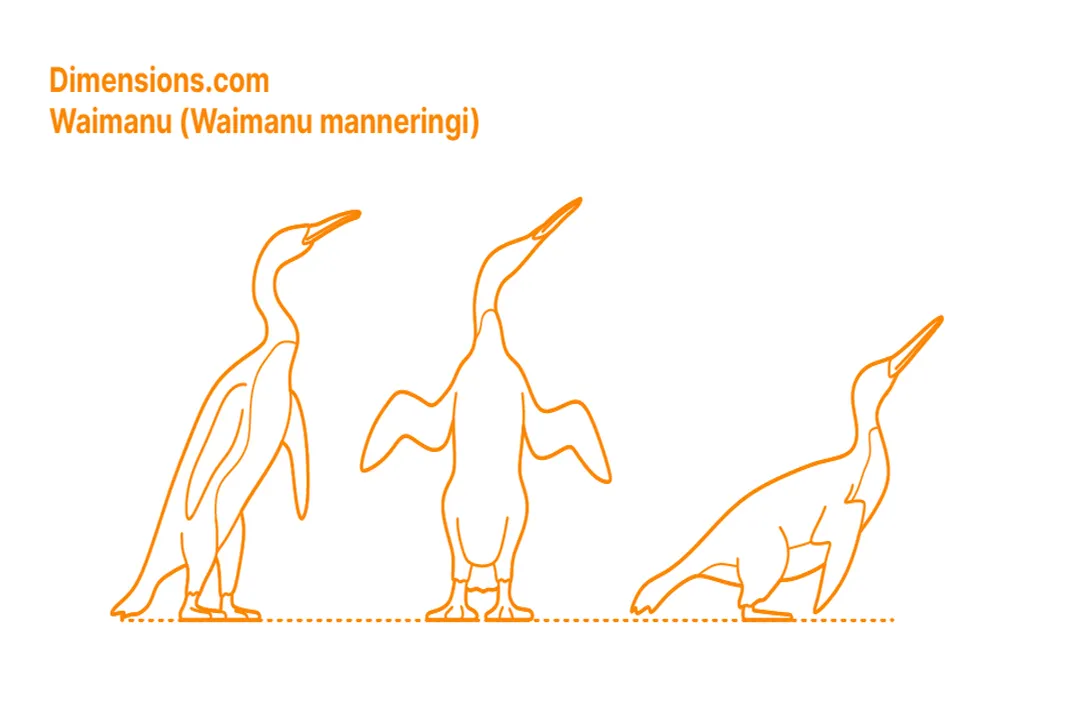
The discovery of Waimanu fossils provides a vital snapshot into avian life immediately following the mass extinction that ended the age of the dinosaurs. [2] This ancient seabird, known primarily from remains found in New Zealand's Waipara Greensand, lived during the early Paleocene epoch, roughly 62 to 60 million years ago. [2] While the specific contents of its stomach are not preserved in the fossil record, understanding what Waimanu ate relies entirely on reconstructing its ecological niche by examining its physical adaptations and comparing them to its modern relatives, the Sphenisciformes. [2][3]
# Paleocene Niche
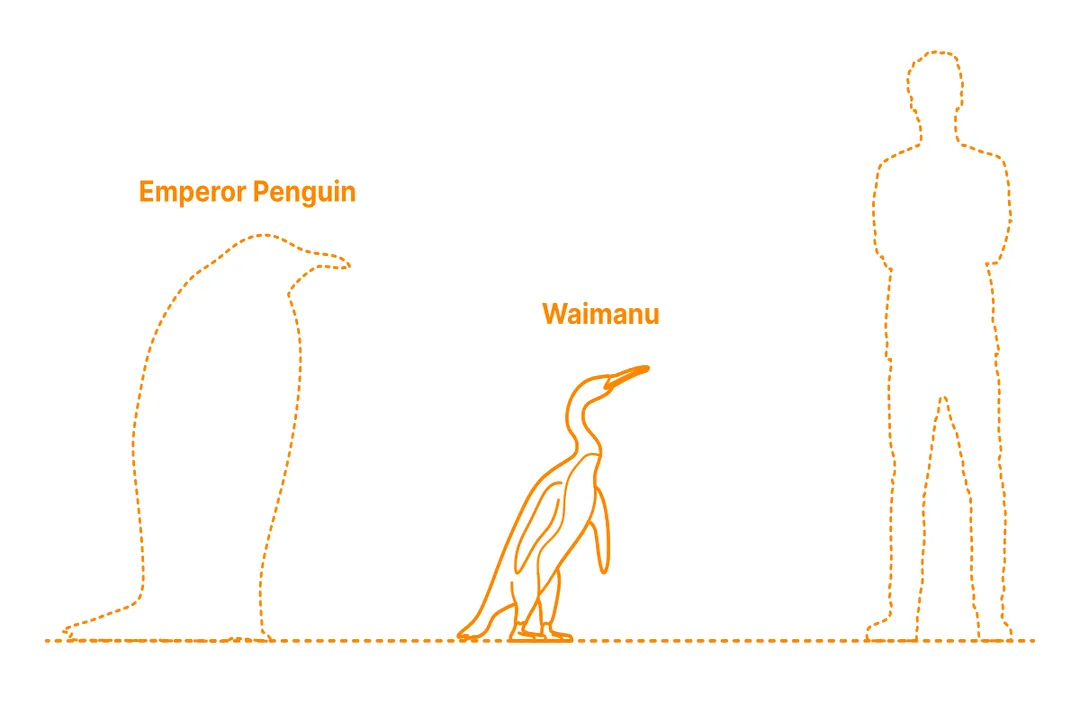
Waimanu represents one of the earliest known members of the penguin order. [2][4] Its existence only a few million years after the Cretaceous-Paleogene extinction event highlights the rapid evolutionary radiation of birds into newly vacated ecological spaces. [2][3] The environment in which Waimanu thrived, around what is now New Zealand, was warmer than the Antarctic home of many modern penguins. [3] This early bird was substantial, reaching heights of 2 to 3.2 feet and weighing between 22 and 66 pounds, making it comparable in size to a modern Emperor Penguin, though perhaps slightly smaller. [3][5]
The context of its habitat is key to understanding its feeding strategy. The Paleocene world was still recovering from catastrophe, meaning that large marine predators that characterized earlier eras were largely absent. [3] This relative lack of pressure in the seas might have offered Waimanu a feeding ground where swimming speed was important, but perhaps not as critically dependent on streamlining as later, highly specialized penguins would become. [3]
# Morphology Foraging Clues
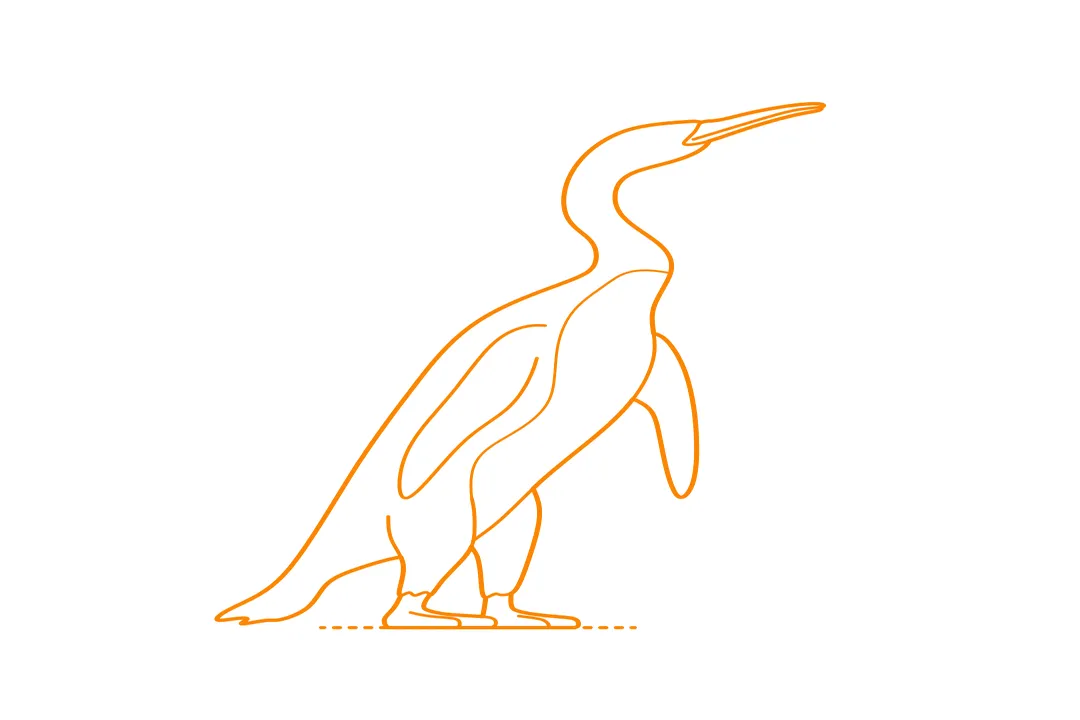
When scientists assess the diet of an extinct animal without direct evidence, they meticulously study bone structure, particularly features related to locomotion and feeding apparatus. [5] Waimanu possesses several primitive traits that distinguish it from the streamlined, hyper-efficient penguins we see today. [2]
# Wing Structure
One of the most telling aspects is the wing structure. Waimanu was flightless, with wings adapted for what scientists believe was wing-propelled diving, like its descendants. [2] However, the fossil evidence indicates that its wing bones did not yet exhibit the extreme flattening and specialized morphology seen in modern penguins built for rapid underwater pursuit. [2][4] This suggests that while Waimanu swam, it likely did so with less aquatic grace and speed than, for example, a King Penguin chasing fast-moving silverfish. [3][5] If an animal cannot move as quickly underwater, its prey base might shift towards slower-moving or less evasive organisms, or it might rely on shallower hunting dives.
# Skeletal Form
Further anatomical details paint a picture of a bird that was less specialized for life in the water than its lineage would become. Researchers note that Waimanu had shorter, stubbier feet and larger legs compared to modern penguins. [5] The overall body shape may have been closer to a flightless loon or diver. [2] Furthermore, the head morphology is described as resembling a cormorant more than a contemporary penguin. [5] Cormorants primarily swim by using their feet, though they also employ their wings, and they typically hunt for fish and invertebrates. [5] This combination—wings less specialized for pure underwater propulsion, and a head shape similar to diving birds that rely on sight and agile maneuvering—suggests a foraging style that was amphibious in its inefficiency, spending significant time navigating the water surface or shallow depths. [2][3]
When paleontologists examine fossilized limb bones that are less flattened than those of a modern diving specialist, it implies that the mechanical stresses of high-speed underwater maneuvering were not yet the dominant factor shaping that part of the skeleton. [5] This anatomical "in-between" state—not quite the awkwardness of an early flyer, but not yet the ultimate aquatic torpedo—suggests a dietary niche perhaps defined by opportunity rather than hyper-specialization in pursuit. [2]
# Dietary Inference
Given its classification within the Sphenisciformes, the general conclusion is that the Waimanu diet aligned with the carnivorous habits of modern penguins. [3] The most commonly cited staple for this prehistoric bird is fish. [3][4] Modern penguins consume a variety of marine life, including fish, krill, crustaceans, and cephalopods. [5] It is reasonable to infer that Waimanu pursued similar prey items available in the Paleocene seas off New Zealand. [3][5]
The critical difference lies in the how rather than the what. Because Waimanu lacked the high degree of aquatic specialization that modern penguins possess, scientists suggest it may have been a less efficient swimmer. [3] This relative inefficiency would have been less consequential when the ocean environment was less crowded with formidable hunters. [3]
If we consider the known diet of its modern relatives, a typical Emperor or King Penguin relies heavily on fish, while others like the Adélie or Gentoo focus more on Antarctic krill and silverfish. [5] Since Waimanu lived in a much warmer region and was less adapted for deep or high-speed pursuit than an Emperor Penguin, it might have specialized in coastal, shallower-dwelling fish or invertebrates found near the surface or in the nearshore environment where a cormorant-like head and relatively undeveloped flippers would be adequate. [5] The lack of extreme wing specialization also means it could possibly still fold its wings against its body when on land, a feature modern penguins largely cannot do, which might imply a slightly more terrestrial element to its life than the species that followed. [2][5]
# Feeding Strategy
The fossil evidence points toward Waimanu being an early adopter of the flightless, swimming lifestyle, a major evolutionary departure for birds. [2][3] The dietary strategy was likely opportunistic piscivory. Imagine an animal of that size, moving through the water with flippers that were somewhat rigid but not yet perfectly shaped for hydrodynamic efficiency. [2] This would necessitate catching prey that either did not require sustained high velocity or that could be cornered or ambushed in the shallows. [3]
If we were to create a feeding profile based on its known anatomy—long, narrow beak (suggesting less gripping power for large prey than a stocky beak) and less efficient flippers—it suggests a focus on smaller, perhaps schooling, fish or soft-bodied cephalopods that were readily available in the relatively sheltered, near-shore waters off the Paleocene coast of New Zealand. [5] It occupies a fascinating middle ground: it has committed to the marine foraging route, but the full specialization for life solely at sea had not yet fully developed in its anatomy. [2] This early commitment to fish as a primary food source, inferred from its position as the ancestor to all modern penguins, solidifies the foundation of the penguin's entire ecological structure. [3][4]
Related Questions
#Citations
Waimanu manneringi - A-Z Animals
Waimanu - Dinosaur Park - Primeval Zoo Wiki - Fandom
Waimanu - Wikipedia
Waimanu (Waimanu manneringi) Dimensions & Drawings
Waimanu, the oldest penguin known from the fossil record, lived