Vizsla Evolution

The Vizsla, often recognized today for its sleek russet coat and affectionate nature, possesses an ancestry stretching back many centuries within the Carpathian Basin, a region historically associated with Hungary. [1][2] Its evolution is deeply intertwined with the hunting practices and noble courts of Magyar landowners. [4][5] Unlike many breeds whose origins are shrouded in vague legend, the Vizsla's development has a more traceable, though still rich, history, firmly planting it as one of the world’s oldest pointers. [1][6]
# Ancient Roots
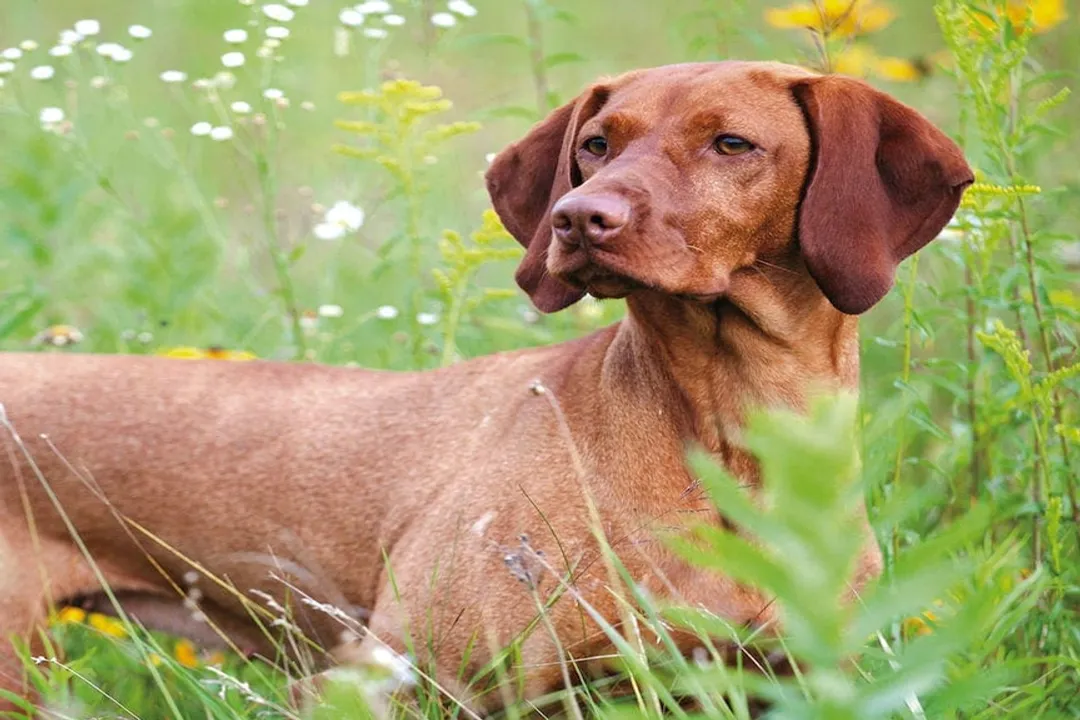
The dog we know as the Vizsla traces its lineage to the Hungarian tribes that settled the region around the 9th century. [2][6] These early dogs were companions to the Magyar people, serving essential roles in tracking game in the varied terrain of the Pannonian Basin. [4][5] The ancestral stock likely included pointers brought to the area by various conquering groups, which were then refined by local hunters. [2] These early ancestors were valued not just for their scenting abilities but also for their retrieving skills, often described as being crossbred with the Turkoman Pointer or the Yellow Hungarian Pointer, eventually leading to the modern breed standard. [1][6] Historical documents and artwork suggest the existence of a yellow-coated pointing dog in Hungary as early as the 13th century, though the documented history sharpens in the 17th century. [8][5] Early records, such as those from the Hungarian military, describe dogs with the distinct coloration and skill set that define the breed today. [6]
# Function Dictates Form
The defining characteristic of the Vizsla's evolution has always been utility in the field. [4] The breed was intentionally developed to be an all-around hunting dog capable of performing several distinct tasks in the field rather than specializing in just one. [3] This necessity for versatility meant the breed had to excel at both pointing game to hold it until the hunter arrived, and retrieving the fallen quarry, often from water. [1][4] This dual capability is what distinguishes the breed from many specialized pointers or retrievers that developed elsewhere in Europe. The dog needed a moderate build, possessing enough stamina for long days afield but remaining sensitive enough for close work with its handler. [4][8] The distinctive golden-rust or rusty-gold coat color was preferred because it offered excellent camouflage in the autumnal colors of the Hungarian fields and forests, a significant advantage during hunts. [3][9] A modern breed expert might note that this historical need for high-level performance in both pointing and retrieving is why the modern Vizsla retains such intense drive and demands significant physical and mental engagement; they are bred to work with their owner, not just alongside them. [4]
# Noble Patronage
For centuries, the Vizsla remained the exclusive property of the Hungarian aristocracy and landowners. [5][6] This close association with the elite played a major role in preserving the breed's distinct qualities, as only the finest specimens, those that best embodied the versatile hunting ideal, were kept for breeding. [1][5] These noble patrons rigorously controlled the breeding lines, ensuring that traits like soft mouths for retrieving, intelligence, and trainability were passed down. [8] By the 19th century, the breed was well-established, often referred to as the "Hungarian Pointer" or "Magyar Vizsla". [2] During this period, when organized field trials and dog shows began to gain traction, the breed’s high standards were maintained through dedicated breeders within the Hungarian nobility. [6] It is interesting to consider that this intense, nearly proprietary focus by the aristocracy likely prevented the breed from being diluted by outside crosses during a time when many other national breeds were being rapidly standardized or dramatically altered for show ring appeal. [5]
# Breed Standardization and Near Extinction
The early 20th century brought significant challenges to the Vizsla’s existence. [8] While the breed flourished under the patronage of Hungarian nobles, political upheaval and war began to take a severe toll. [6] The breed population suffered catastrophic losses during both World War I and, more devastatingly, World War II. [1][8] Because the Vizsla was so closely tied to Hungary, conflict and the subsequent Iron Curtain restricted access and made exportation difficult, pushing the breed to the brink of extinction. [5][2] Following WWII, only a handful of dogs remained in Hungary, and the breed was often crossbred with other local dogs just to keep the lineage alive. [1] The survival of the breed owes much to dedicated individuals who managed to smuggle some of the last purebred dogs out of Hungary before the borders became completely sealed. [5]

# Reintroduction Abroad
The introduction of the Vizsla to the Western world, particularly the United States and Great Britain, occurred primarily in the post-war decades. [6][3] Key figures were responsible for bringing the foundation stock to new countries, ensuring genetic diversity outside of the decimated Hungarian population. [5] In the United States, the breed began establishing a foothold in the 1950s. [3] The American Kennel Club (AKC) officially recognized the Vizsla in 1960. [2][3] This period required substantial effort from early breed enthusiasts to establish reliable breeding programs and reintroduce the breed to a broader audience unfamiliar with its history. [8][9] In the United Kingdom, the Hungarian Vizsla Club was established to promote and protect the breed standard as it was recognized by the Kennel Club. [6] Comparing the early American and European enthusiasts reveals a shared goal: preserving the hunting ability, which some feared might be lost as the dogs began to transition from purely field dogs to companions. [3][4]
# Modern Characteristics and Temperament
The modern Vizsla retains the physical characteristics honed by centuries of service: a lean, muscular frame, striking reddish-gold coat, and expressive eyes. [9] They are medium-sized dogs, with males typically weighing between 55 and 65 pounds and females between 45 and 55 pounds, with corresponding heights. [2] Temperamentally, the breed lives up to its historical role as an intensely bonded companion. [7] They are often described as "velcro dogs" due to their need for constant proximity to their families. [7] This need for closeness stems directly from their history as dogs that worked side-by-side with a single master over long distances. [1][4] Owners should understand that this is not simply a trait of dependency but a reflection of a high-functioning partnership instinct. [7]
This high energy and intelligence mean that a Vizsla requires significant daily exercise and mental stimulation to prevent destructive behaviors. [7] Their desire to please, rooted in their cooperative hunting heritage, makes them highly trainable, but they do not respond well to harsh training methods. Because of their sensitive nature, a consistent and positive approach works best, mirroring the close, cooperative relationship they would have had with a 19th-century Hungarian count. [8] It's worth noting that while they are excellent retrievers, their pointing instinct remains potent; an off-leash walk in an open field can quickly turn into a focused hunt for birds or squirrels, demanding reliable recall training from an early age. [4]

# Health and Legacy
As a breed that faced near extinction and subsequent rapid rebuilding, maintaining genetic diversity has been a long-term concern for breed clubs. [5][8] Generally, the breed is considered hardy, but like all purebred dogs, they can be susceptible to certain inherited conditions. [1] Responsible breeders focus on health testing to manage potential issues, such as hip dysplasia or certain eye conditions. [1] The breed clubs, both in Hungary and internationally, work actively to ensure the breed's standard remains focused on the function that shaped it, preventing the characteristics that make it a great hunter from being bred out in favor of purely cosmetic traits. [6]
The evolution of the Vizsla serves as a testament to careful, purpose-driven breeding in its early stages and dedicated survival efforts in the 20th century. [5] From the Magyar horsemen to the modern family companion, the Vizsla has retained its core identity: an intelligent, energetic, and deeply loyal partner whose history is etched in its distinctive copper coat and tireless drive. [1][9] For those considering this breed, appreciating this deep history of required partnership is essential; you are not simply acquiring a pet, but inheriting a centuries-long tradition of intense cooperation between dog and hunter. [4]
Related Questions
#Citations
Breed History - Vizsla Club of America
Vizsla - Wikipedia
Vizsla History: The Swift Hungarian Hunting Dog
Vizsla: Dog Breed Information, Form, Function, History, and More
Vizsla History
Brief history of the Vizsla
The Vizsla: From Royal Hunter to Modern-Day Family Dog
History of the Vizsla
Vizsla History|Excellent Hunting Dogs and Family Pets