Wirehaired Vizsla Evolution
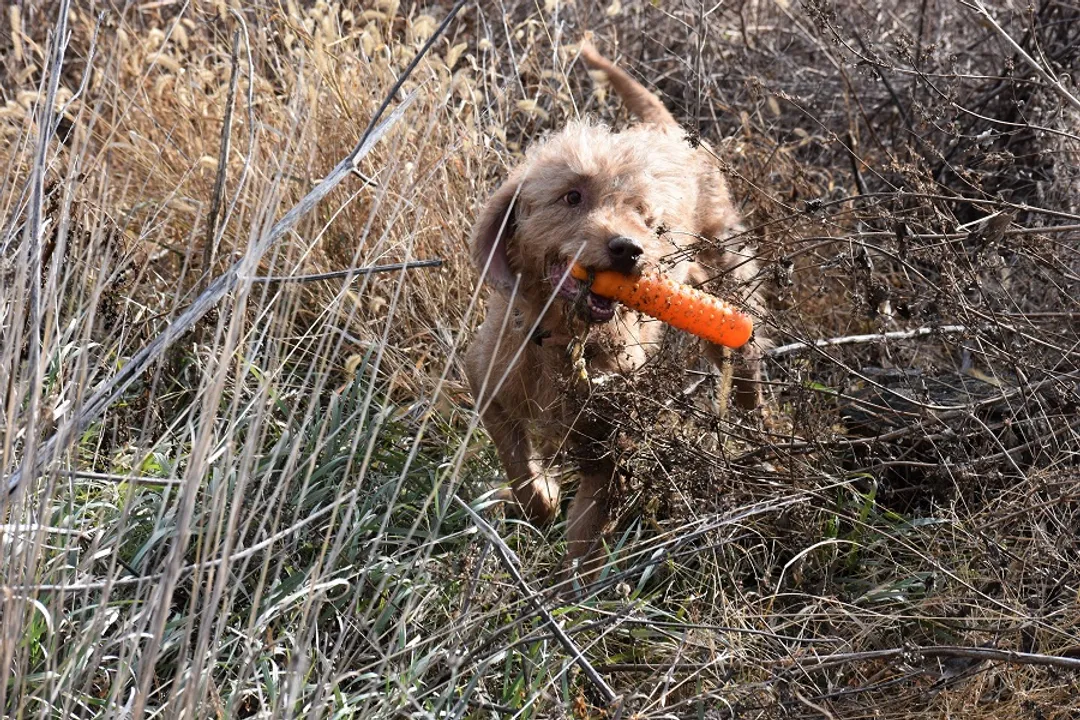
The Wirehaired Vizsla stands as a distinct achievement in canine development, a Hungarian breed forged in the 1930s by breeders seeking an even more resilient hunting partner than its sleek cousin. [2][6] While the smooth-coated Vizsla is the more familiar animal, the wirehaired variety, sometimes referred to as the Uplander in the US, was intentionally created to combine the beloved characteristics of the Vizsla—its color, pointing instinct, and biddability—with a hardier constitution. [4][6] Hunters and falconers aimed to craft a versatile gun dog that would perform admirably in the field, forest, and water, specifically one capable of enduring the severe winters common in Hungary. [1][5][9]
# Hungarian Genesis
The foundational work for the Wirehaired Vizsla began with the explicit goal of adding weather resistance and substance to the existing Vizsla template. [6] The recognized initiators of this breed development were Vasas Jozsef, who managed the Csabai vizsla kennel, and Gresznarik Laszlo, owner of the de Selle German Wirehaired Pointer kennel. [2][4][7] Their method involved crossing high-quality, working Vizsla bitches with a German Wirehaired Pointer sire that carried a completely liver coloration, specifically Astor von Potat. [2][4][7] The Vizsla foundation stock included two notable females, Zsuzsi and Csibi, both already possessing excellent pedigrees and strong working ability. [2][4] A critical detail was that Zsuzsi’s sire was known to produce offspring with longer coats, suggesting the desired texture gene was present in the original line. [2][4]
The initial results were promising. The offspring exhibited the body structure of the smooth-coated Vizsla but often displayed the head shape characteristic of the German Wirehaired Pointer. [2][4] The first dog to be formally exhibited, Dia de Selle, born from this careful pairing, showed the potential for the new breed, even if her coat was not yet as rough and dense as the ultimate goal required. [2][4][8] This early success cemented the path forward, even as the vision relied on intuition and selective breeding rather than immediately meeting a perfect standard. [4]
# Wartime Trials
The early efforts of Vasas Jozsef and Gresznarik Laszlo were complicated by the rapidly changing political landscape of Central Europe. [7] The Trianon Peace Treaty of 1920 had already redrawn maps, but the approach of the Second World War brought further devastation to the region where these breeders worked. [7] The war itself saw battle lines pass directly over the development areas, nearly eradicating both the smooth and wirehaired Vizsla lines. [7][8] It is remarkable that amidst such societal collapse and the complete destruction of official records, the dedicated enthusiasts persisted. [7][8]
During this murky period following the war, or perhaps slightly earlier, other infusions may have been introduced to bolster the lines that survived. [2][4] While the core remains the Vizsla and German Wirehaired Pointer cross, anecdotal evidence suggests that breeds like the Irish Setter, Pointer, and Pudelpointer were introduced by other Hungarian kennels who became involved in the development efforts. [2][4][7] In Slovakia, Koloman Slimák also worked on his own version of a wirehaired Vizsla, potentially using a slightly different mix that included the Irish Setter. [2][7] This difficult survival phase underscores a deep commitment to the breed's existence, a tenacity that mirrors the determination required to create the dog in the first place. [7] One modern observer has noted that this required tenacity in the founders echoes the strong-willed nature sometimes seen in current successful handlers who face discrimination in the competitive dog world. [7]
# Global Recognition
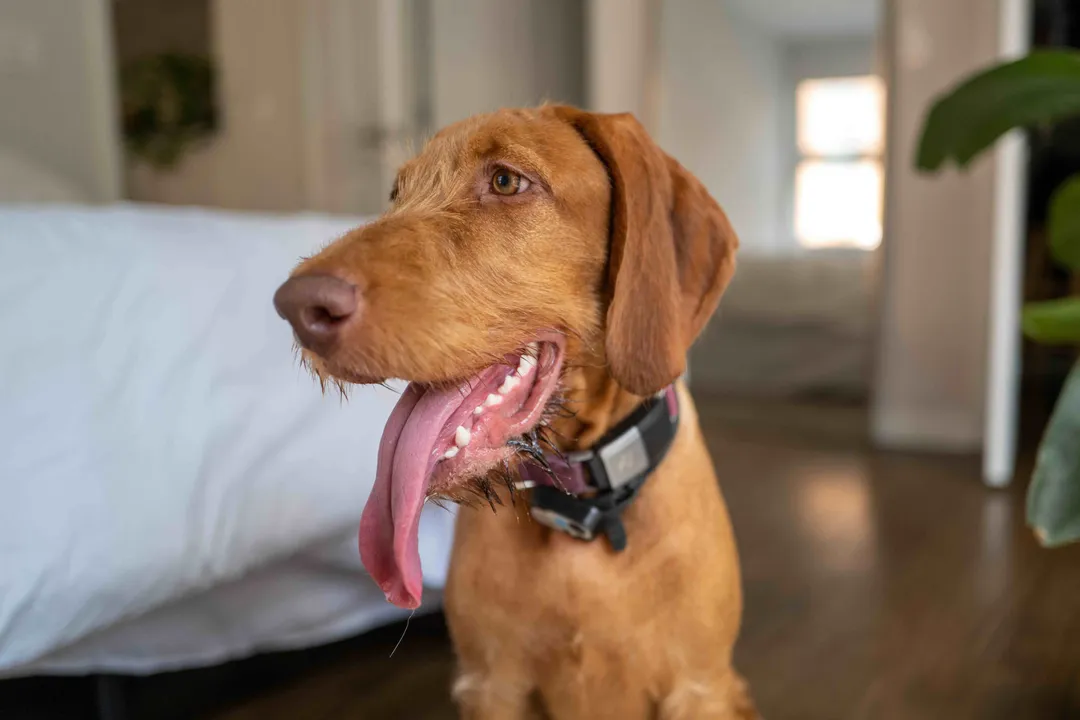
The journey toward formal acceptance for the Wirehaired Vizsla involved several international bodies over decades. [5] In Europe, the Fédération Cynologique Internationale (FCI) officially recognized the breed in 1963, [5] though some sources indicate 1966 [8] or 1963 [2] under the Hungarian standard as the Drötzörű Magyar Vizsla. [2]
The breed made its way to North America in the 1970s. [3][4][5] Acceptance by North American organizations followed a staggered process:
- 1977: Recognized by the Canadian Kennel Club (CKC). [3][4][5]
- 1986: Recognized by the North American Versatile Hunting Dog Association (NAVHDA). [3][4] NAVHDA even held its first exclusive field tests for the breed in 1976. [4]
- 2006: Recognized by the United Kennel Club (UKC). [3][4][5]
The path to full recognition in the United States under the American Kennel Club (AKC) was a multi-stage process, beginning with admission into the Foundation Stock Service (FSS) Program in 2008. [3][4][5] By January 1, 2009, the dogs became eligible for AKC Companion and Performance events. [3][4] They were then permitted to show in the Miscellaneous Class starting January 1, 2011. [3][4][5] The final step was taken on July 2, 2014, when the Wirehaired Vizsla officially joined the Sporting Group and achieved full recognition as the AKC’s 180th breed. [3][4][5]
# Breed Split
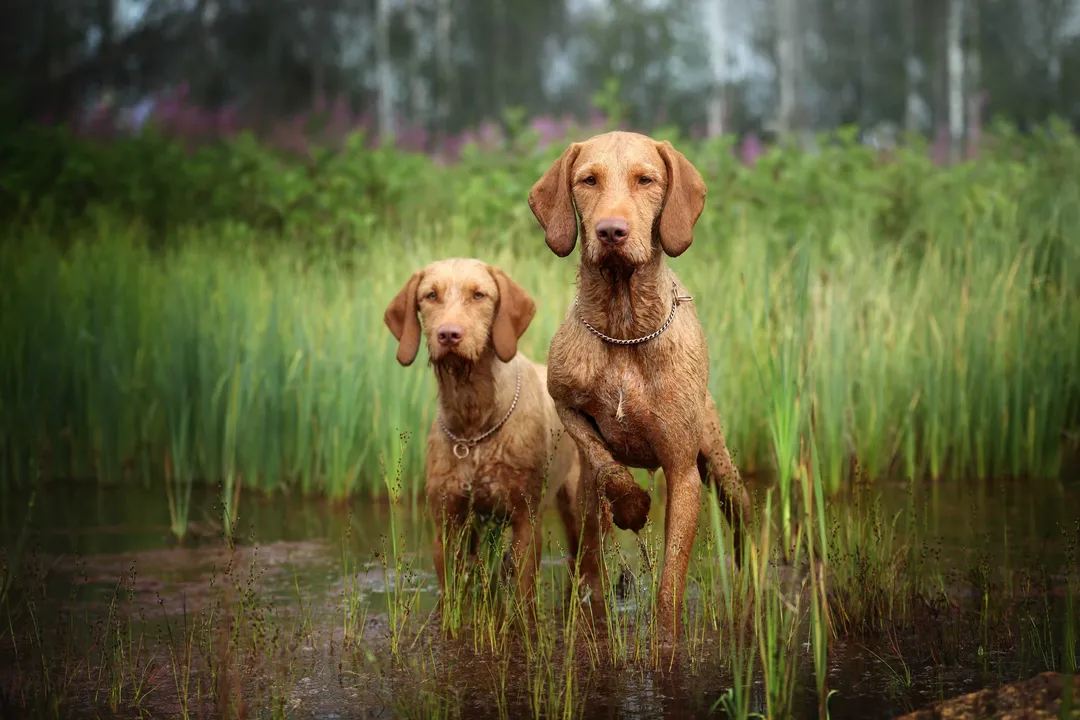
A crucial aspect of the Wirehaired Vizsla's evolution is its status as a completely separate breed from the smooth-coated Vizsla. [4][6] While they share ancestry and possess a similar drive, the introduction of the German Wirehaired Pointer bloodline established a clear division. [6] This separation is so absolute that if a Wirehaired Vizsla and a smooth-coated Vizsla are bred together, the resulting offspring cannot be registered with any major kennel club globally. [4][5] Prospective owners must ensure they are inquiring about a purebred Wirehaired Vizsla registered with an appropriate registry, such as the AKC FSS or parent club. [4][5]
# Coat Divergence
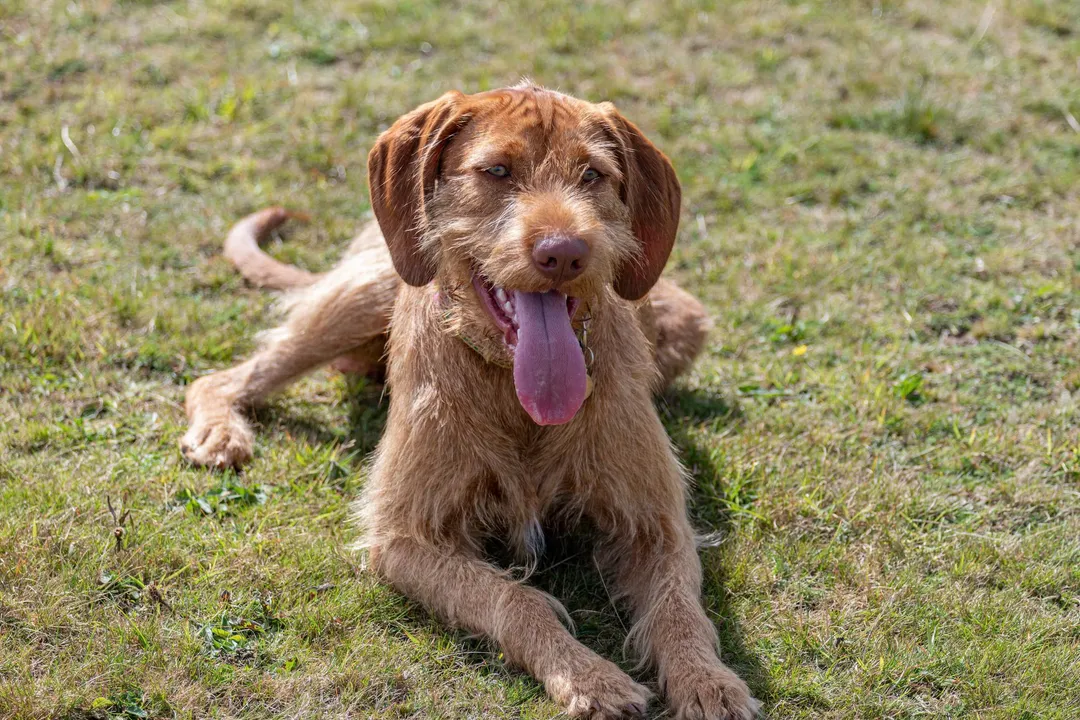
The most visually striking difference between the two Vizsla types is the coat, which directly reflects the original breeding goal. [6] The Wirehaired Vizsla possesses a dense, wiry topcoat, typically measuring between one and two inches in length, accompanied by a weather-resistant undercoat. [5][6] This texture provides functional protection against injury from brush and harsh weather conditions. [6] The defining facial features are the prominent, shaggy beard and eyebrows that enhance the dog’s lively expression. [1][3][5]
Coat variation exists within the breed, with some dogs displaying less texture, while others might possess a "wooly" coat. [1] A correct, functional coat should not mat, but its texture is best maintained through routine brushing or stripping. [4][5]
This process of stripping—removing dead outer coat by hand or with a stripping knife—is not merely cosmetic. It actively encourages the growth of coarser, denser, more protective wire hair, directly supporting the hardiness sought by the breed’s founders. [4][6] Clipping, conversely, can soften the texture, compromising the coat’s working utility. [5]
It is interesting to note that occasionally, a smooth-coated puppy can appear in a wire-bred litter, and these individuals are often valued as low-maintenance companions or hunters, though they do not conform to the Wirehaired Vizsla standard. [4][5]
# Temperament Nuance
Both the Wirehaired and Smooth-Coated Vizslas are characterized by intelligence, loyalty, energy, and affection, readily bonding with their families. [3][4][6] They are, at their root, excellent pointers and retrievers on land and in water. [4][5] However, the differences in their physical development have led to perceived—and often reported—subtle variations in temperament. [6]
Wirehaired Vizslas are often described as being slightly more laid-back or having a somewhat softer temperament than their smooth cousins. [4][6] They are also sometimes seen as being a bit more independent compared to the smooth Vizsla, which is often called an "ultra-velcro" dog that might appear more outwardly needy for companionship. [6] This difference might be attributed to the ruggedness instilled in the wirehaired lineage, suggesting a slightly greater resilience when faced with environmental challenges or separation. [6]
| Trait Area | Wirehaired Vizsla Tendency | Smooth-Coated Vizsla Tendency (For Comparison) |
|---|---|---|
| Coat | Wiry, dense, weather-resistant, requires stripping/brushing [6] | Sleek, short, close-lying, low maintenance [6] |
| Build | Often slightly heavier-boned and more robust [6] | Generally more streamlined [3] |
| Composure | Slightly more laid-back; can turn "off" indoors readily [4][6] | May be more emotionally sensitive; sometimes more outwardly demanding of affection [6] |
| Grooming Commitment | Higher; weekly brushing and periodic stripping necessary [6] | Lower; simple brushing and occasional bath suffice [6] |
If an owner prioritizes a slightly less Velcro-like companion while still requiring a dog that excels in fieldwork and outdoor rigor, the subtle personality shift in the Wirehair may appeal to them. [6] However, both varieties require extensive socialization, consistency, and positive reinforcement training due to their high intelligence and sensitivity; harsh methods should be avoided as they can easily damage their biddable nature. [1][4]
# Working Ethos
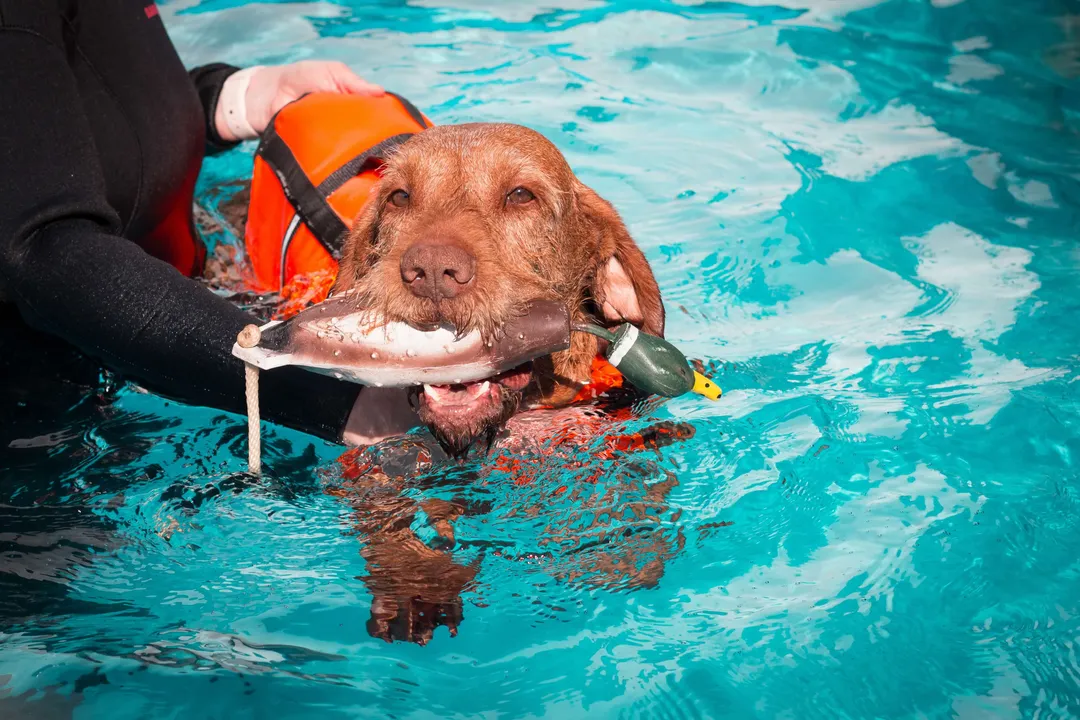
The wirehaired variety was explicitly bred to be a sturdy, versatile hunting dog. [5] This working drive remains central to their identity, even when they transition into family life. [4] They possess an excellent nose for tracking game on land and in water, and demonstrate natural pointing and retrieving instincts. [5] Owners must be prepared to meet their high energy needs with significant physical and mental activity, such as hiking, jogging, swimming, and nose work, to prevent boredom and potential destructive behavior. [1][3][6]
When considering a Wirehaired Vizsla, potential owners should assess whether their lifestyle accommodates this need for purpose. For example, a dedicated bird hunter or field trial enthusiast might find the Wirehair’s durability and coat perfectly suited for challenging terrain where a smooth coat might struggle. [6][9] The breed’s creators wanted a dog that could work methodically and persistently, a trait still admired today, with some owners noting their ability to find game long after other dogs or hunters have given up. [9] This inherent drive means that while they are wonderful family dogs, they are happiest when integrated into an active life that respects their heritage as a true dual-purpose companion. [4][5]
Related Questions
#Citations
Breed History - Wirehaired Vizsla – Wires at Firmstone Manor
Wirehaired Vizsla - Dog Breeds - American Kennel Club
Vizcaya About WV
Wirehaired Vizsla - Wikipedia
History of the Breed
What Makes the Wirehaired Vizsla Different from a Smooth‑Coated ...
Breed of the Week: Hungarian Wirehaired Vizsla - Dog Willing
Wirehaired Vizsla Dog Breed Health and Care - PetMD
Bird Dog Profile: Wirehaired Vizsla - Pheasants Forever