Viperfish Physical Characteristics
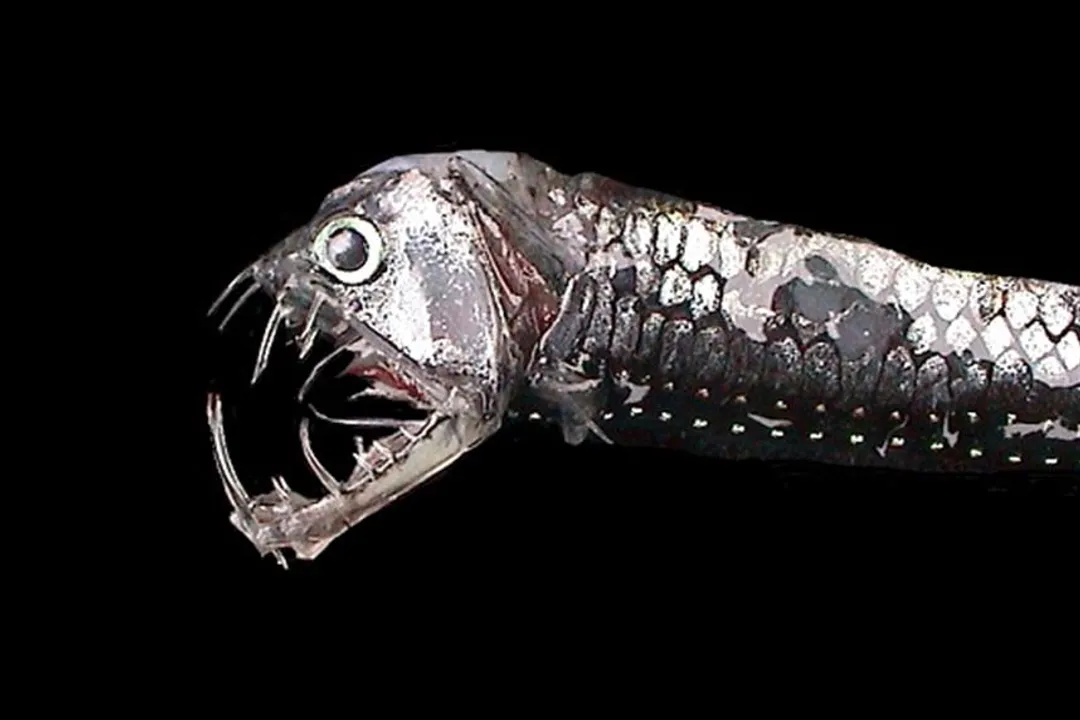
The viperfish, a creature of the ocean’s eternal twilight, presents one of the deep sea’s most startling physical forms. Belonging to the genus Chauliodus, these fishes carry a name perfectly suited to their appearance, derived from Greek words meaning "open-mouthed teeth". While there are about nine recognized extant species, such as the widely distributed Chauliodus sloani (Sloane's viperfish) and the Pacific viperfish (C. macouni), they all share a suite of adaptations built around surviving and feeding in extreme darkness.
# Body Profile
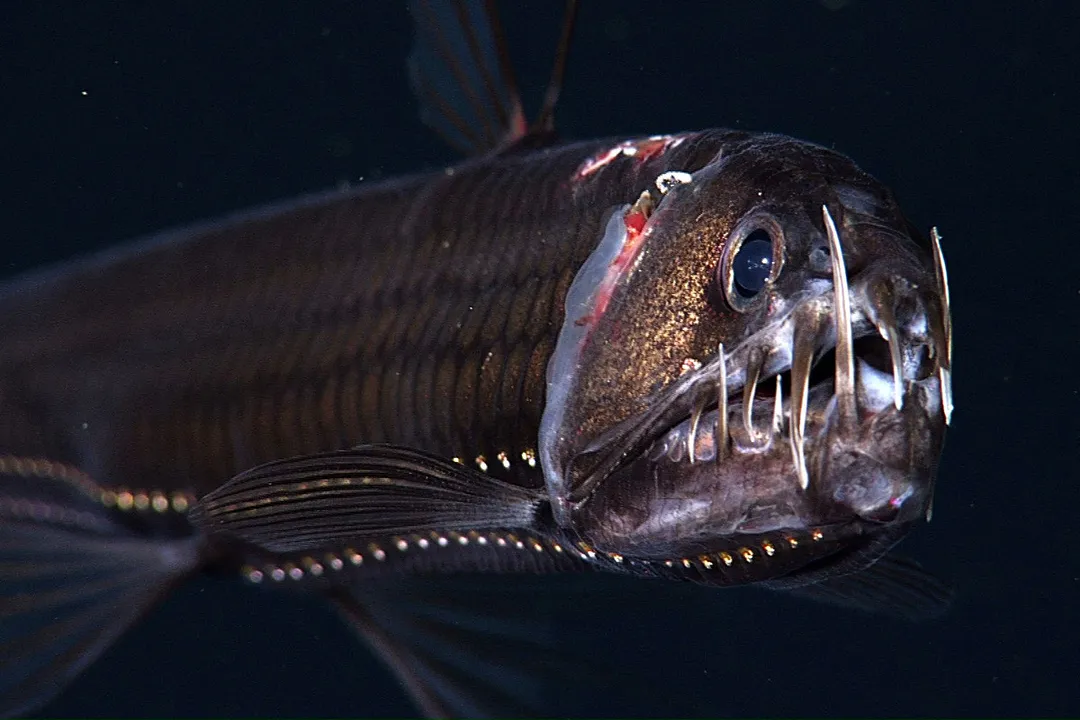
Viperfish are generally small, deep-sea inhabitants. The largest of the species, often cited as the Pacific viperfish, reaches about 30 centimeters (or roughly one foot) in length. Sloane’s viperfish (C. sloani) specimens have been recorded with standard lengths up to 26 centimeters. Their bodies are built for their midwater existence: elongated, slender, and flattened on the sides. They are described as being roughly seven times longer than they are deep, with the greatest depth occurring just behind the head, tapering gradually toward the tail.
Their coloration is adapted for the dim environment of the mesopelagic and bathypelagic zones. They typically display shades of dark blue, black, silver, or green, often possessing a metallic sheen or iridescence that allows them to subtly reflect whatever faint light might be present. A curious aspect of their integument is their covering. While sometimes described as having very thin scales, research suggests they are instead covered in a thick, transparent, slimy, opalescent substance over hexagonal pigment patterns. Furthermore, these fish are noted for not possessing a swim bladder, which would likely cause issues with the massive pressure changes they experience during their vertical migrations.
# Jaws and Fangs
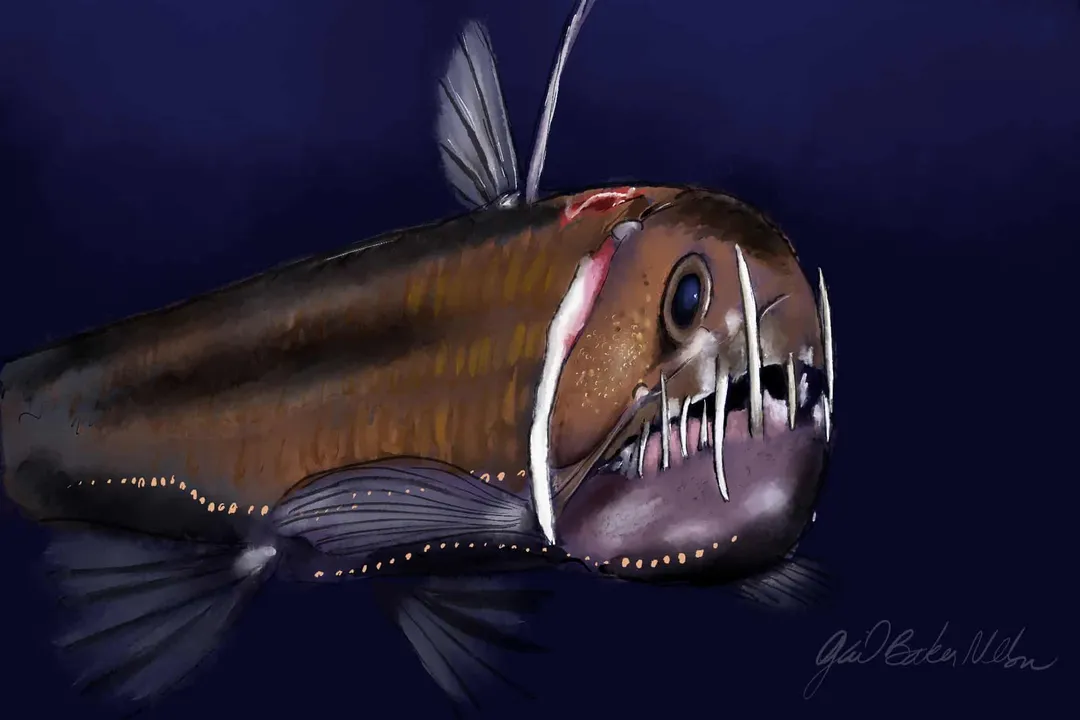
The most immediately arresting feature of the viperfish is its grotesque, yet highly functional, dentition and jaw structure. The fish possesses a massive mouth relative to its body size, often described as bulldog-like.
The jaws themselves are engineered for maximum gape. The lower jaw protrudes beyond the upper jaw, and the entire structure has a specialized "loosejaw" arrangement that allows for extreme extension and wide opening. This is further aided by a hinged connection between the skull and the backbone, allowing the fish to rotate its head upward to manipulate very large prey into its throat. Scientists have identified a specific ventral jaw muscle, designated Aω, which enhances both the closing speed and the biting force required to secure a meal.
However, the teeth are what truly define the genus. They are long, needle-like, and so disproportionately large that they cannot fit inside the mouth when the jaws are closed. Fangs on the lower jaw extend upward, sometimes past the fish's own eyes, meaning a complete mouth closure risks impaling its own brain or eyes. The upper jaw typically sports about four long fangs on each side, while the lower jaw features a series of widely spaced, pointed teeth, with the front ones being exceptionally long. This specialized, fixed armament is critical, as viperfish are known to be capable of swallowing prey that is over 60% of their own body length. Given that C. sloani reaches around 35 cm, consuming a 63% length relative—approximately a 22-centimeter meal—is an extraordinary feat of mechanical accommodation for a fish of that stature, demonstrating an evolutionary commitment to maximizing energy intake when opportunities arise.
# Light Organs
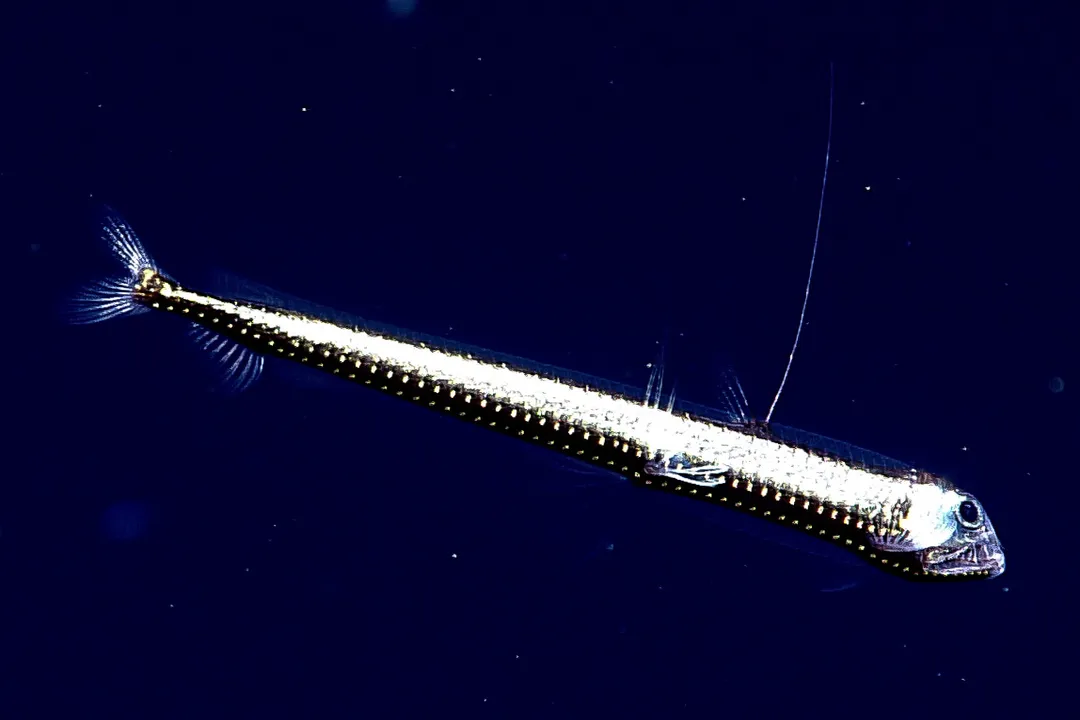
Viperfish incorporate bioluminescence extensively into their physical structure, primarily for hunting and camouflage. They possess two main types of light production:
- Ventral Photophores: Rows of light-producing cells, called photophores, line the entire ventral (belly) surface, running from the throat to the tail, with additional spots on the head. This light is typically blue-green or yellow and is theorized to be produced by symbiotic bioluminescent microbes residing in the fish’s organs. This placement allows for counter-illumination, masking the fish’s silhouette against the faint downwelling sunlight or the general bioluminescent background noise from below, making it invisible to upward-looking predators. It is fascinating to note that while this counter-illumination is textbook for the mesopelagic (twilight) zone, C. sloani often inhabits the deeper bathypelagic zone where sunlight penetration is virtually non-existent; retaining this feature suggests they are either actively hunting or living in the upper boundary of the bathypelagic where faint light still penetrates, or the light serves purely for communication against the background of other deep-sea light sources.
- Dorsal Lure: Extending from the first, highly elongated soft ray of the dorsal fin is a bioluminescent lure, or esca. This ray is hinged and connected by musculature, allowing the fish to swing the glowing tip forward directly in front of its massive mouth. This functions exactly like a fishing lure, drawing unsuspecting prey right into striking range.
# Sensory Structures
The physical adaptations for deep-sea survival extend to their visual apparatus. Viperfish are known to possess relatively large eyes. More remarkable is the structure of the retina itself. In typical vertebrates, the retina has a single layer of light receptors; however, in Chauliodus sloani, the retina is structured with several rows of rod cell "banks" stacked upon each other, with the number of banks increasing as the fish grows larger. This unique layering is an extreme adaptation, maximizing the collection of scarce photons in an environment where light is the defining feature of survival.

# Specialized Skeletal Features
To manage the violent, high-energy attacks enabled by their jaws, the viperfish has developed skeletal reinforcements. A significant structural feature, particularly noted in the Pacific viperfish, is the presence of a sturdy, robust initial vertebra located immediately behind the head. This structure functions as a dedicated shock absorber, designed to withstand the impacts generated when the fish speeds toward prey and impales it on its dagger-like teeth. This ability to absorb the physical reverberations of its own attack is essential for retaining its impressive weaponry intact during a successful strike.
Related Questions
#Citations
Viperfish - Wikipedia
Pacific viperfish - MBARI
Chauliodus sloani (Manylight viperfish) - Animal Diversity Web
Viperfish Chauliodus sloani Bloch and Schneider 1801
SCIplanet - Monsters of the Ocean: The Grotesque Pacific Viperfish
Viperfish Fish Facts - Chauliodus sp. - A-Z Animals
Creature Feature: Sloane's Viperfish
Viperfish | Deep-Sea, Anglerfish, Bioluminescence - Britannica