Should I let a skunk live in my yard?

The sight of black and white stripes moving silently across the lawn after sunset often triggers an immediate defensive reaction, but pausing before reaching for the phone to call removal services is worthwhile. While their signature musk is infamous, allowing a skunk to reside in your yard, provided conditions are right, can offer surprising ecological advantages. These creatures are far more interested in insects and rodents than in confrontation, making the decision to host them a calculated balance between potential risk and definite benefit. [2][6]
# Pest Control
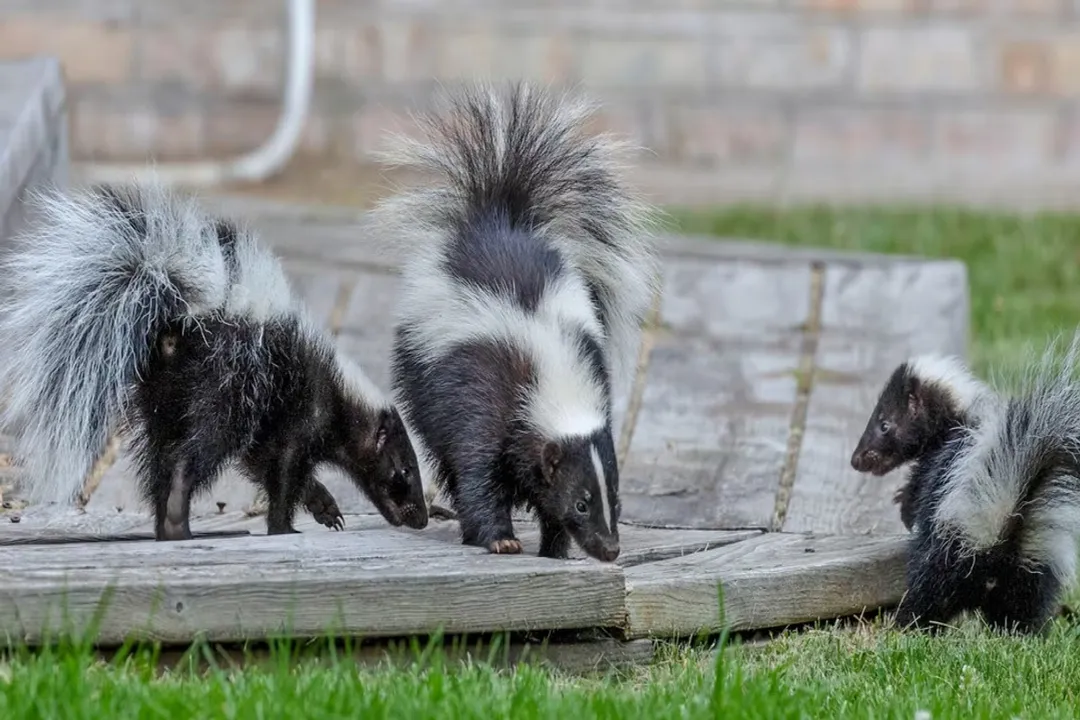
For gardeners and homeowners alike, the skunk operates as a dedicated, natural exterminator. Skunks are omnivores, but a significant portion of their diet consists of creatures that directly harm lawns, gardens, and even home structures. [2][6] They actively hunt for grubs, which destroy turf, as well as pests like grasshoppers, crickets, beetles, slugs, and caterpillars. [2][6] If your lawn is showing signs of grub damage, the presence of a skunk is often a sign that the underlying insect infestation is being managed. [2]
Beyond garden pests, skunks keep rodent populations in check. They consume mice, voles, and shrews, which can otherwise burrow into foundations, nest in walls, or chew through wiring, creating fire hazards. [3][6] Some accounts suggest they even consume cockroaches and snakes. [4] In many cases, a skunk that keeps to itself is considered a far more welcome visitor than a burgeoning population of rats or destructive lawn grubs. [3]
# Odor and Damage
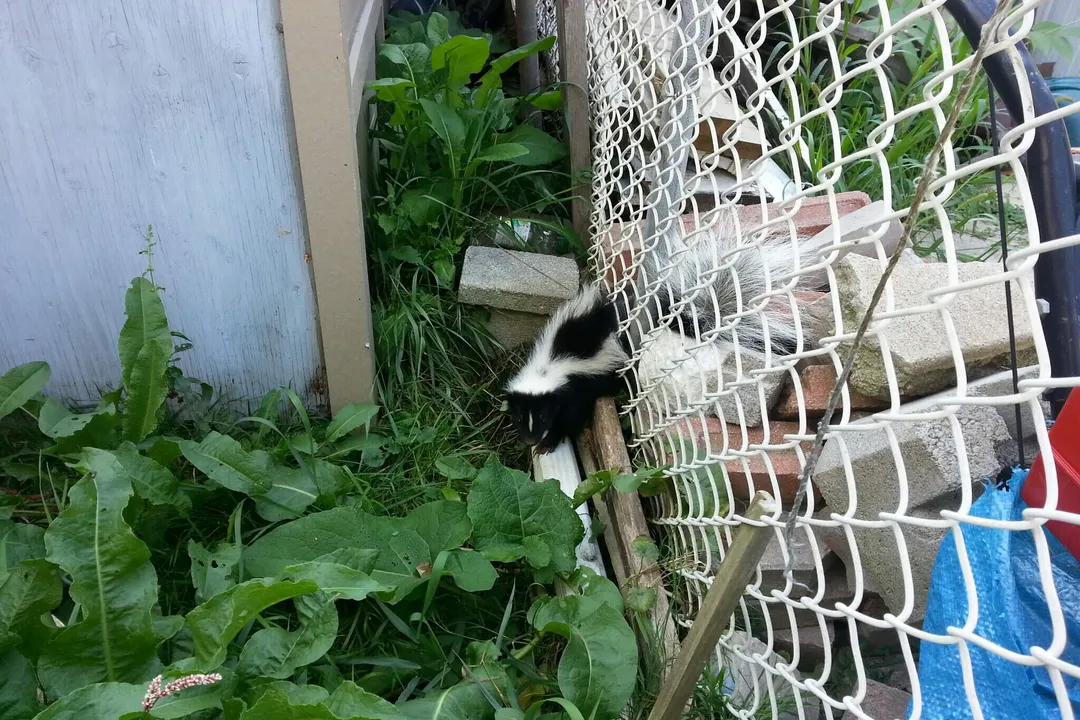
The primary reason people seek to remove skunks is, undoubtedly, the potent musk they carry in glands under their tails. [2][6] Skunks prefer to avoid spraying, only resorting to their defense mechanism when they feel directly threatened or are protecting their young. [1][6] A spray is usually a last resort; agitated skunks will often issue up to three warnings first. [2] They can fire five or six consecutive rounds, but once depleted, their scent glands require about ten to fourteen days to fully replenish, leaving them vulnerable during that time. [1]
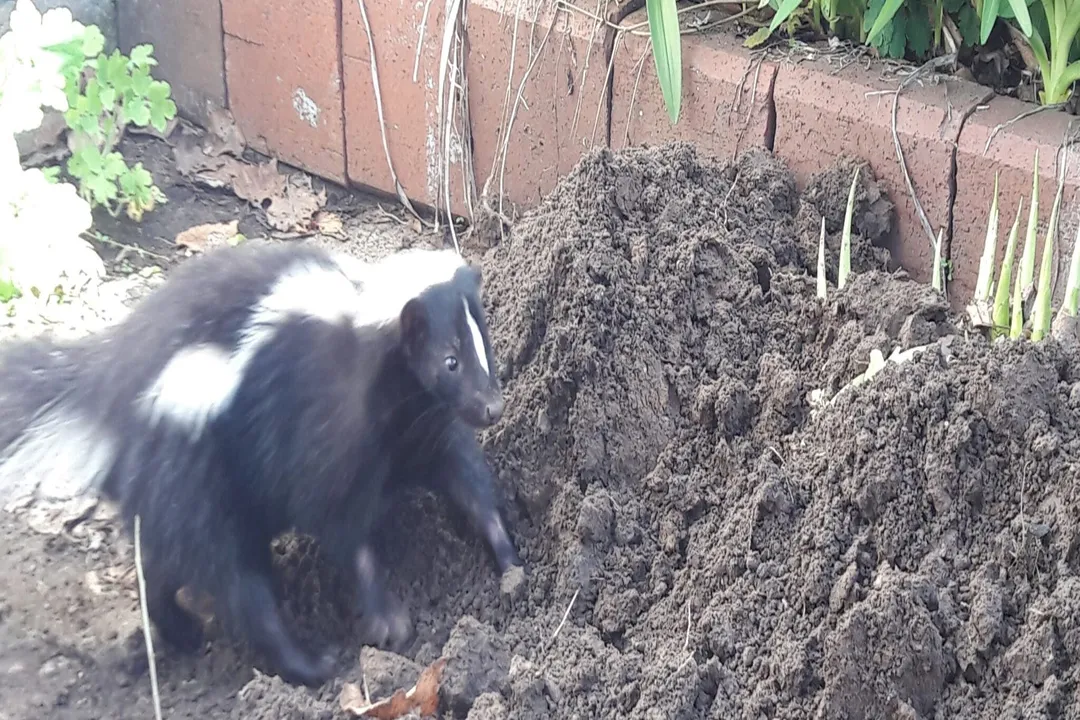
Another common source of conflict is digging. Seeking grubs and insects often results in small, shallow holes—usually about two inches in size—across the lawn or new sod. [1][6] This activity is often intensified when wet soil conditions push insects closer to the surface. [2] Furthermore, they are opportunistic feeders and may raid unsecured garbage bins or feed on ripening garden fruits and vegetables. [3][6]
Skunks also look for convenient shelter. They favor wooded areas near water, but urban and suburban development pushes them toward human structures. They commonly seek out spaces under decks, porches, sheds, or inside crawl spaces. [2] Since they are primarily nomadic but may reuse dens if the location is suitable, a persistent presence might indicate a successful shelter. [2]
# Skunk Warnings
Understanding skunk behavior is key to peaceful interaction, as they possess poor eyesight but sharp hearing and smell. [1][2] Since they are nocturnal, they are typically most active between dusk and dawn. [2] If you encounter one, the best practice is to move slowly and speak softly to minimize the perceived threat. [1][6]
Before resorting to spraying, an agitated skunk will display clear signals. These usually include stamping their front feet, turning around to present their rear, raising their tail, and hissing. [1][2] The Eastern Spotted Skunk has a more dramatic final warning, performing a handstand on its front feet before spraying overhead. [2] If you observe these signs, freezing until the animal calms down is advisable, as quick or sudden movements can startle them into spraying. [1][6]
If you see a skunk out during the day, it is not automatically a sign of illness, particularly in the spring when nursing mothers are seeking extra food. [1] However, any skunk exhibiting lethargy, staggering, difficulty walking, or uncharacteristic boldness warrants a call to local animal control, as these can be signs of diseases like rabies. [1][6]
# Coexisting Safely
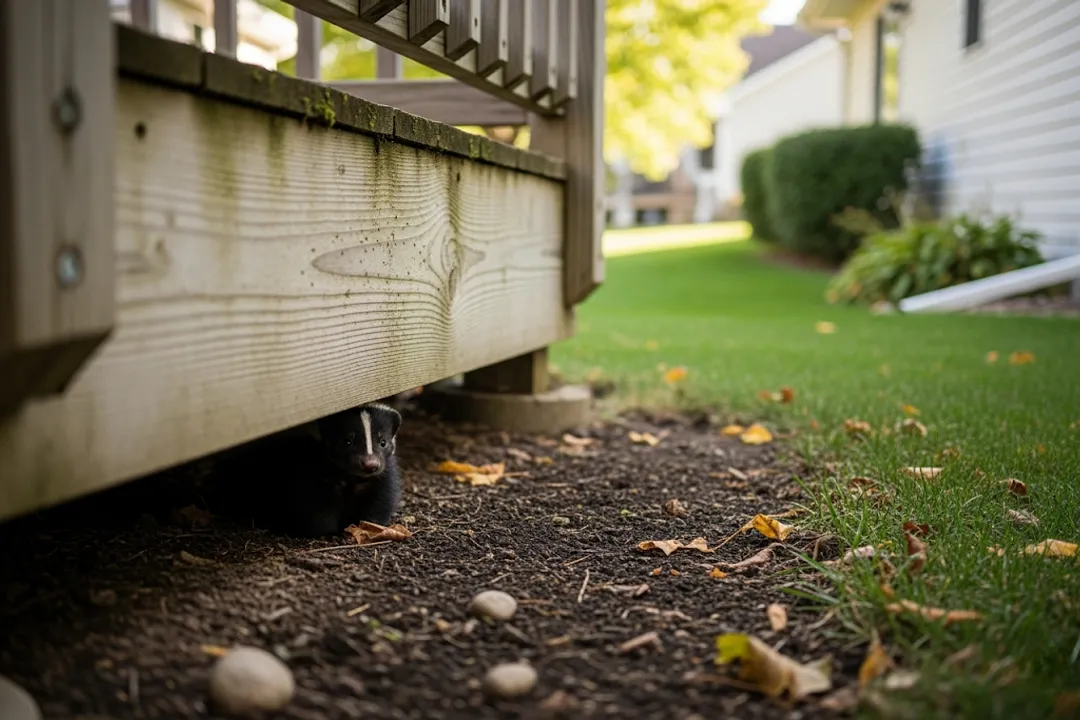
If you decide that the benefits outweigh the risks and wish for the skunk to remain a visitor rather than a resident, managing your yard is the first step. Since skunks are attracted to available food, securing trash cans, feeding pets indoors, or removing pet food dishes promptly at night will cut off their easy buffet. [6]
Keeping pets safe requires diligence. Dogs, which often provoke skunks by running directly at them, should be kept away from areas where skunks are known to forage. [1] A good practice is to make noise in the yard before letting a dog out after dark; this often startles any nearby skunks into retreating before the dog even steps outside. [1]
For short-term deterrence, simple methods can make an area unappealing. Skunks dislike strong odors, so placing rags soaked in ammonia or strong household deodorizers near a den entrance can encourage them to move. [1][6] Bright, flashing lights can also be used in dark areas to make a den less attractive. [1]
# Den Management
If a skunk has established a den under a structure, direct, permanent removal requires careful planning, especially regarding family timing. Baby skunks are typically born in May and June and remain sheltered for about eight weeks. [1][2] Evicting a mother during this period risks separating her from her young, who will perish without her. [2][6] If you suspect babies are present, patience is strongly recommended. [1]
When it is safe to proceed, you can first determine occupancy by loosely stuffing the entrance with newspaper. [1] If the paper is undisturbed for two or three nights, the den is likely empty. [2] A proactive homeowner should note that striped skunks frequently appropriate existing burrows, such as those made by groundhogs, which often have multiple entrances. [2] Therefore, before sealing the main opening, carefully check for and block any secondary escape routes to prevent the animal from simply digging out a new, potentially more damaging exit near your home's foundation. [2] Once confirmation of vacancy is made, the best long-term solution is exclusion: installing wire mesh that extends at least 8 to 12 inches underground and bends eight inches outward in an "L" shape to block future access. [1][3]
If eviction is necessary for an active den, installing a one-way door allows the skunk to leave for food but prevents re-entry, allowing you to confirm vacancy over several nights. [2][6] For skunks trapped in non-climbable spaces like window wells, a rough wooden board angled no steeper than 45 degrees can offer a ramp escape. [1][6] If the ramp is too steep, lowering a garbage can on its side baited with something strong-smelling, like peanut butter, and then slowly lifting it is a viable alternative. [1][6]
# Stink Removal
Should the worst happen and you or a pet are sprayed, immediate action is required to minimize the lingering effects. Tomato juice is a common home remedy, but chemists note that it only masks the smell, it doesn't neutralize the pungent molecules. [6] A more effective, though potentially hair-lightening, remedy involves a mixture of 1 quart of 3% hydrogen peroxide, 1/4 cup of baking soda, and 1 teaspoon of liquid dish soap. [1][6] This solution must be mixed and used immediately, as storing it in a closed container could cause it to explode. [6] It should be scrubbed onto the affected area and rinsed off quickly. [6] If peroxide isn't available, a solution of vinegar diluted with water can also be used. [6] For clothing, washing is often the best option, though some items may be a complete loss. [1]
By respecting their distance and making your yard less attractive for permanent residency while appreciating the natural pest control they offer, it is entirely possible to share your yard with these unique nocturnal neighbors. [4]
Related Questions
#Citations
Is it okay to leave a family of skunks living under my shed in my yard?
Do Skunks Help Keep Your Yard Free of Pests?
Why Skunks Aren't So Bad (If Managed the Right Way)
The Skunk: Gardener's Best Friend and Master of Pest Control
What to do about skunks | Humane World for Animals
Skunks as Neighbors | Wildlife Center of Virginia
Where Do Skunks Live & How to Get Rid of Them