Is hypsiglena chlorophaea poisonous?
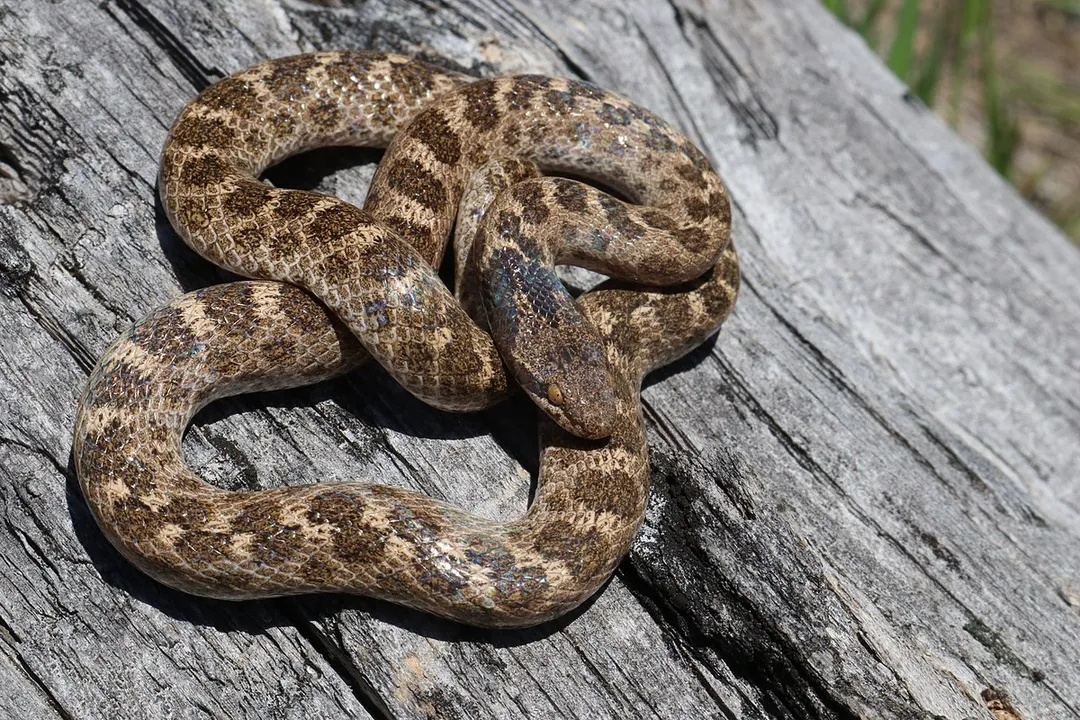
The Hypsiglena chlorophaea, commonly known as the Night Snake, often prompts discussions about its potential danger, usually framed incorrectly as whether it is poisonous. In the realm of snakes, the distinction between poisonous (harmful if ingested or touched) and venomous (injects toxins via a bite) is crucial, and for this species, it falls into the latter category, though with significant caveats regarding human risk. [2][5][9] These small, secretive reptiles possess specialized dental structures that deliver venom, yet their overall medical threat level remains very low, contributing to their frequent misunderstanding among the general public. [4][5]
# Mild Venom Detected
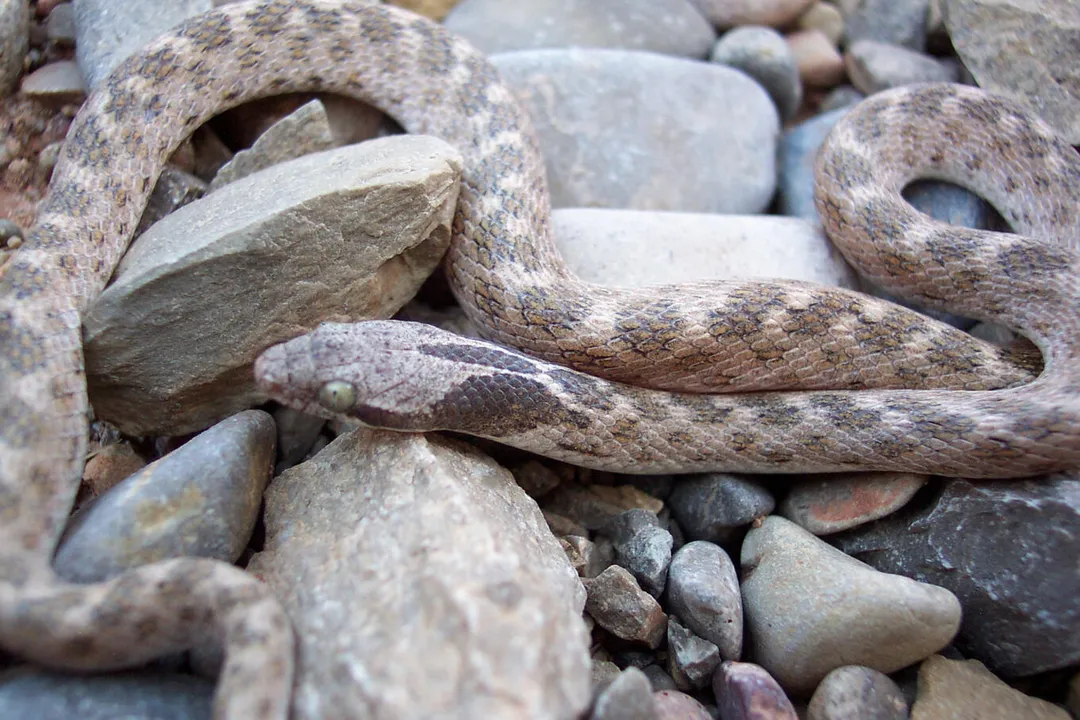
The core finding regarding the toxicity of H. chlorophaea across its various subspecies is that it is technically venomous, but its venom is exceptionally weak by reptile standards. [2][4][5] These snakes are classified as rear-fanged, meaning their fangs are located toward the back of the upper jaw, a configuration known as opistoglyphous dentition. [4][5][9] This positioning requires a specific chewing motion, rather than a quick strike, for efficient venom delivery. [9]
The venom itself is not considered medically significant to humans. [2][5][9] For most observers, the snake is effectively harmless. [4][5] This mild venom is primarily effective against their usual prey, which includes small lizards, amphibians, and invertebrates. [9] While they possess venom glands and the associated delivery system, the composition and quantity are generally insufficient to cause serious systemic reactions in people. [2][9] The lack of potent venom, combined with their small size and nocturnal habits, means these snakes are rarely encountered and pose virtually no danger to humans, despite the biological mechanism for envenomation being present. [6][9]
The scientific community recognizes several distinct populations within the Hypsiglena chlorophaea complex, sometimes treated as full species or subspecies, which occupy different parts of the southwestern United States and northern Mexico. [1][3][8] These include the Desert Night Snake (H. c. deserticola), the Chihuahuan Night Snake (H. c. chlorophaea), and potentially others like H. c. loreala. [1][3][8] Although their specific venom profiles might show minor variations due to localized evolution, the consensus across these populations points toward a mild toxicity profile. [2][5]
# Human Reaction Minor
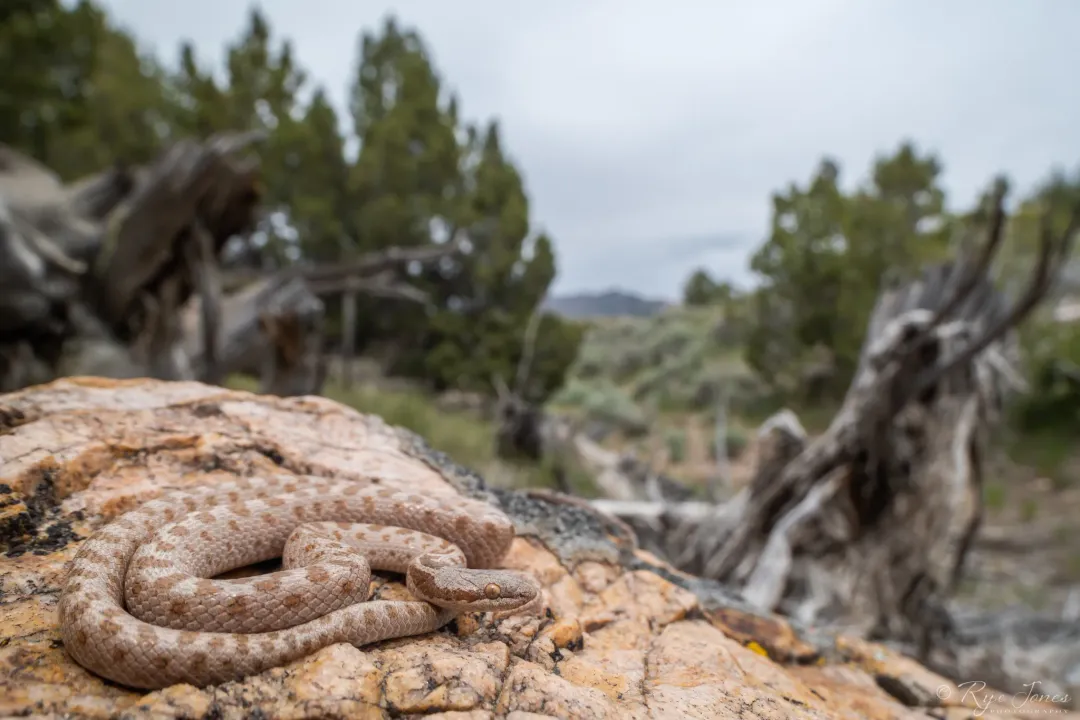
When a bite does occur—which is infrequent due to the snake's shy nature—the resulting symptoms are typically localized and brief. [2][5] The reaction is usually described as minor. [5] Symptoms might include localized pain, slight swelling, or a burning sensation at the bite site. [2][9] These reactions rarely escalate beyond superficial discomfort. [5] There are no widespread reports or documented cases suggesting that a bite from any recognized subspecies of H. chlorophaea requires medical intervention beyond basic first aid, such as cleaning the wound. [2][9]
Considering the rear-fanged anatomy, it is interesting to note that a successful envenomation often depends on the snake being held or manipulated in a way that allows its mouth to remain in contact with the skin long enough for the chewing action necessary to introduce venom effectively. [4][9] This contrasts sharply with front-fanged vipers or elapids, where a simple defensive strike can deliver a significant dose almost instantaneously. For field biologists or hobbyists who might need to handle these reptiles for research or photography, understanding this mechanical limitation adds a layer of practical safety knowledge; firm but gentle restraint minimizes the chance of the snake being able to 'chew in' its venom, even if the venom itself poses minimal systemic risk. [4] This distinction between instantaneous delivery and required manipulation is a critical takeaway for anyone working closely with rear-fanged species.
# Appearance Details
To properly assess any potential risk, accurate identification is key, though for this species, identification primarily revolves around appreciating its cryptic beauty rather than fearing its bite. Night Snakes are generally small, slender snakes. [1][6] Their total length often ranges around 1 to 2 feet, although some sources might note them reaching slightly larger sizes. [1][6]
Their coloring is highly variable, designed perfectly for blending into arid and semi-arid environments. [1][2] The base color is typically light tan, grayish, or yellowish-brown. [2][6] Over this base color run distinct dark spots or blotches running down the center of the back, which can sometimes merge into a solid dark stripe in some individuals or populations. [2][5] A very characteristic feature is the pattern on the head and neck, often displaying a dark band or series of dark markings across the neck area. [2][5]
Perhaps the most reliable visual cue, especially when dealing with similar-looking harmless snakes, is the eye structure. Night Snakes possess vertically elliptical pupils. [2][5][9] This feature is often associated with nocturnal activity, which matches their habit of being active after dark. [6][9] When comparing H. chlorophaea to other non-venomous snakes found in similar habitats, such as certain kingsnakes or gopher snakes which might have round pupils, the vertical slit of the pupil serves as an important, albeit subtle, identification marker. [2]
# Range Geography
The distribution of the Night Snake complex spans a wide area across the western United States and Mexico. [2][3][5] The specific subspecies found depends heavily on the geographic location. [1][3][8]
For instance, in areas like California, one might encounter H. c. deserticola, the Desert Night Snake. [1][4] In Arizona, the Sonoran Night Snake is frequently documented. [9] Moving east, the Chihuahuan Night Snake (H. c. chlorophaea) occupies regions including New Mexico and parts of Colorado. [3][8] Utah also hosts populations of the Desert Night Snake. [5] These snakes demonstrate adaptability, inhabiting rocky desert scrublands, chaparral, grasslands, and sometimes drier woodland areas. [1][5] Their need for rocky crevices or areas with loose soil suggests that habitat disruption in these arid regions could impact local populations. [5][6]
Understanding this wide distribution helps contextualize their mild venom status; a mild defense mechanism that works well against desert prey might be an evolutionary compromise for a species that needs to remain hidden rather than overtly aggressive across diverse ecosystems. [2]

# Nocturnal Habits
The ecological success of Hypsiglena chlorophaea is tied directly to its secretive, nocturnal lifestyle. [6][9] During the heat of the day, these small snakes retreat into cool, dark cover—under rocks, logs, leaf litter, or burrowing into loose soil. [6] This behavior naturally limits their interaction with diurnal (daytime) predators and, more relevantly, humans. [9]
Their activity ramps up after sunset when they emerge to hunt. [6] This diet primarily consists of smaller, slower-moving prey that are active at night or easily ambushed in the dark. [9] Lizards, especially smaller species, form a significant part of their meals, but they are also known to consume amphibians like toads and frogs, as well as various invertebrates such as centipedes. [9] This dietary flexibility suggests they are opportunistic feeders within their microhabitats. [9]
The fact that these snakes spend most of their time hiding and only move around when ambient temperatures drop means that casual sightings are rare. [6] For the average person living in the arid Southwest, the chances of encountering one—let alone being bitten—are statistically very low compared to the risk posed by larger, diurnal pit vipers that share the same environment. [5]
# Pupil Shape Clue
When identifying Night Snakes, especially when distinguishing them from other small, patterned, harmless snakes that might inhabit the same region, focusing on a few key traits is beneficial. [2] While the pattern of spots or blotches can be quite variable, the vertical pupil remains a strong indicator across the subspecies. [2][5][9]
It is worth noting that while vertical pupils often signal a nocturnal predator—whether harmless like the Night Snake or medically significant like a Rattlesnake—the other indicators must be considered. Night Snakes lack the characteristic heat-sensing pits and large, triangular heads associated with most venomous pit vipers in North America. [4] They possess slender heads that blend more closely with their necks. [4] When you combine the small size, the rear-fanged status (if one were to examine the mouth safely), and the vertical pupil, the identification leans heavily toward Hypsiglena. [5]
In regions where multiple subspecies overlap or where intergrades might occur, relying solely on general pattern guides can be tricky. [1][8] However, because the venom of any recognized H. chlorophaea variant is mild, the urgency of perfect, instantaneous differentiation is slightly lessened compared to distinguishing a Coral Snake from a harmless mimic. The real danger is often misidentification leading to unnecessary panic or, conversely, misidentifying a truly dangerous snake as harmless. For the Night Snake, the main threat is the perception of danger, rather than the actual toxicological hazard. [9] The reality is that their mild venom, paired with their rear-fanged anatomy, positions them as functionally harmless creatures that play an important, low-profile role in controlling small vertebrate and invertebrate populations in their dry ecosystems. [2][9]
Related Questions
#Citations
Northern Desert Nightsnake - Hypsiglena chlorophaea deserticola
Nightsnake - The Reptiles and Amphibians of Arizona
Chihuahuan Nightsnake and Desert ... - Colorado Parks and Wildlife
California night snake - Wikipedia
Northern Desert Nightsnake - The Reptiles and Amphibians of Utah
Desert Nightsnake | Burke Museum
Sonoran Night Snake - Snake Snap
Hypsiglena chlorophaea loreala - NMHS
Desert Nightsnake (Hypsiglena chlorophaea) - Desert Museum