Is Potentilla indica poisonous to dogs?

The concern about common yard plants posing a danger to our canine companions is certainly valid, and many pet owners frequently ask about the little red-berried ground cover known as Potentilla indica, or Mock Strawberry, to see if it warrants immediate removal from the lawn. The good news for dog owners is that authoritative sources indicate this plant is non-toxic to dogs. Organizations like the ASPCA do not list Potentilla indica among plants toxic to canines, and other pet-focused guides confirm that the leaves and fruits are safe, meaning a dog nibbling on them should not suffer serious health consequences.
# Distinguishing Mock Strawberry

Despite its common name, the Mock Strawberry (Potentilla indica, previously Duchesnea indica) is not the same as the sweet, edible strawberry (Fragaria species) that humans enjoy. These two plants are often confused because they both produce small, red, aggregate fruits, but key differences in their appearance can help distinguish the harmless ground cover from its tastier relative.
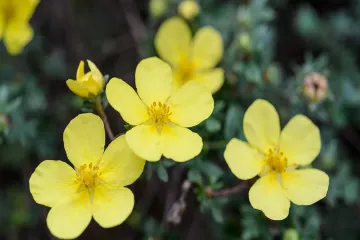
One of the clearest identifiers is the flower color. The Mock Strawberry, or False Strawberry, produces bright yellow flowers. In contrast, true wild strawberries generally have white or pinkish flowers. Another visual cue lies in how the fruit presents itself: Mock Strawberry fruits typically point upwards or stand "at attention," while the fruit of true strawberries tends to hang downwards, often hidden under the leaves. Furthermore, the surface texture differs; Mock Strawberries have a noticeably bumpy exterior covered in small red seeds, whereas actual strawberries have a smoother surface with those familiar dimples.
# Fruit Taste and Potential Digestive Effects
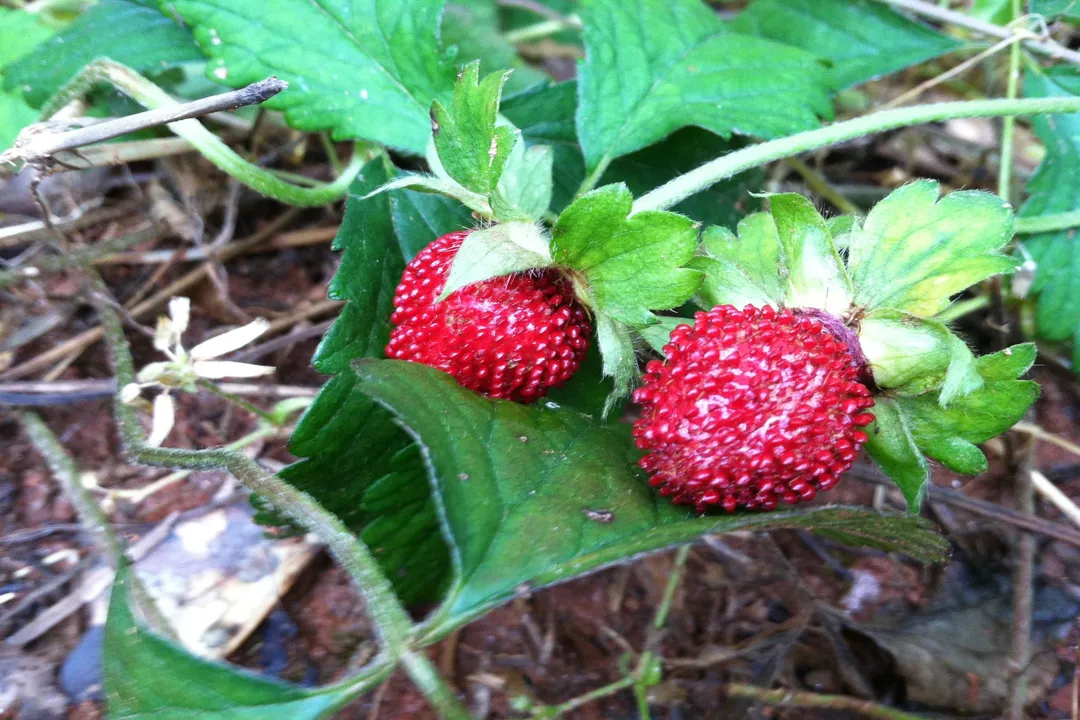
If your dog decides to sample the berries, you should know they won't be getting a sweet treat. Experienced foragers often describe the fruit of Potentilla indica as bland, dry, or tasting like nothing at all. In fact, the plant has earned nicknames like "water berry" due to this lack of flavor.
While the plant is classified as non-toxic, some community observations suggest that dogs may intentionally consume the plant when they feel unwell. There is anecdotal evidence suggesting that Duchesnea indica can act as an emetic in animals, meaning they might eat it to induce vomiting for an upset stomach. If your dog has ingested some of the plant and subsequently vomits or has loose stools, it is important to remember that while the Potentilla indica itself is generally safe, the plant material itself, if eaten in excess out of curiosity or distress, could still cause mild gastrointestinal upset, just as too much grass might. Always consult a veterinarian if your dog shows persistent or severe symptoms like lethargy or continuous vomiting, as those signs point to a different underlying issue or a different plant entirely.
Given that the Mock Strawberry is non-toxic, if you have a dog that seems to selectively graze on the leaves without any resulting negative effects, one suggestion from experts is to allow the behavior to continue, provided you rule out other possibilities with your vet.
# Garden Concerns Beyond Toxicity

While the immediate concern for dog safety might be eased, the plant presents a different challenge to the homeowner: its aggressive nature. In North America, Potentilla indica is a non-native species, and it is known to be quite invasive in many regions, particularly in warmer climates.
This plant spreads rapidly via stolons (runners) and forms a dense ground cover that can easily displace more beneficial native plants in a yard or garden bed. If you are aiming for a garden dominated by native species or if you find the plant is rapidly taking over your lawn, controlling it becomes a priority, even though it is tolerant of mowing. Gardeners looking to eradicate it may need to take aggressive measures, such as smothering the area or repeatedly pulling it out to suppress its tenacious roots, which spread widely.
For instance, when deciding whether to keep a patch of Potentilla indica or remove it, a gardener must weigh the zero poisoning risk against the ecological impact. If you enjoy a naturalistic ground cover and your dog ignores it, leaving it may be fine. However, if maintaining native plant diversity is a goal, then removing this aggressive spreader becomes necessary regardless of its lack of toxicity to pets. The decision ultimately hinges on whether you prioritize a lush, low-maintenance ground layer over ecological purity.
# Identification Certainty for Peace of Mind
If you are unsure whether the plant in your yard is the yellow-flowered Potentilla indica or the white-flowered native wild strawberry, always rely on those key differentiators—flower color and fruit orientation—before making any management decisions regarding removal or consumption. If you have any doubt about a plant's identity, especially if other potentially toxic plants are present in the area, the best course of action is always to assume the worst and remove the unknown plant immediately to protect your pet. Consulting a local plant identification resource or your veterinarian with a physical sample is the most reliable way to ensure complete certainty regarding any perceived threat in your landscape.
Related Questions
#Citations
What is this weed/plant with the red berry? Is it dangerous to dogs?
Potentilla indica (Indian Strawberry) | North Carolina ... - Plant Toolbox
SOLVED: my dog got sick when she ate some of this - Dave's Garden
Is Mock strawberry Safe for Pets? - PictureThis
Toxic and Non-Toxic Plant List — Dogs - ASPCA
Wild Strawberry (Indian Mock Strawberry) – Dog Eating Leaves
Okay for dog to eat wild strawberry? - Atlanta Journal-Constitution