How poisonous is a krait?

The question of how poisonous a krait truly is reveals a spectrum of danger, heavily dependent on which species one encounters, but unified by a common thread of extreme toxicity, particularly among the terrestrial members of the Bungarus genus. The venom produced by these snakes ranks among the most potent found in the world, yet the danger they pose is often compounded by their behavior and the nature of their bites. They are not typically aggressive, preferring to remain hidden, which unfortunately places them in direct, accidental contact with humans, especially during nighttime excursions or while handling domestic items.
# Venom Potency
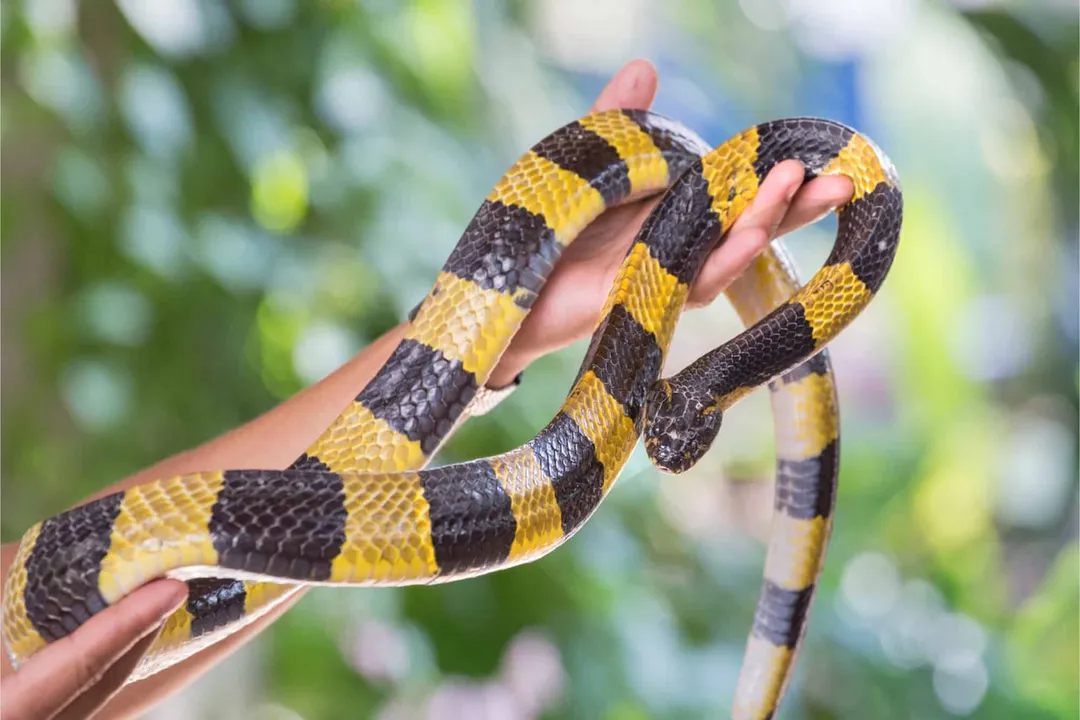
When discussing the lethality of krait venom, the Common Krait (Bungarus caeruleus) frequently tops the lists for snakes native to the Indian subcontinent. Its venom is considered exceptionally toxic, often measured as being more potent than that of many cobras. For instance, the median lethal dose () values, when measured subcutaneously in mice, place the Common Krait's venom firmly in the upper echelon of danger for terrestrial snakes globally. While toxicity can be measured in various ways (intravenous, intraperitoneal, subcutaneous), the subcutaneous measurement is often most relevant to the natural mode of envenomation, a bite. Other species, such as the Many-banded Krait (Bungarus multicinctus), also possess venom that warrants extreme caution due to its high toxicity levels.
# Neurotoxic Effects

The primary characteristic defining the danger of krait venom across most species is its profound neurotoxicity. The venom is rich in presynaptic and postsynaptic neurotoxins, which are specialized proteins designed to attack the nervous system. These toxins interfere with the transmission of nerve signals across the neuromuscular junction, effectively blocking the communication between the nerves and the muscles. This disruption leads, over time, to muscle paralysis. Specifically, the venom often contains alpha-bungarotoxin, a potent component that causes irreversible blockade of nicotinic acetylcholine receptors at the motor endplate.
In contrast to snakes whose venom is highly hemotoxic (affecting blood and tissue), krait venom’s initial presentation is characterized by a disturbing lack of immediate, severe local symptoms. Unlike the intense burning pain associated with a viper bite, a krait bite might be completely painless or cause only minimal localized discomfort. This feature is particularly insidious. A victim might sustain a significant envenomation, yet feel well enough to ignore it or delay seeking care, believing the snake was non-venomous or that the bite was trivial. By the time systemic symptoms manifest—such as drooping eyelids (ptosis), difficulty speaking or swallowing, generalized weakness, and eventually, paralysis of the breathing muscles—the toxin has already caused substantial damage, making intervention much more difficult. Respiratory failure remains the leading cause of death following a serious krait bite.
# Species Diversity
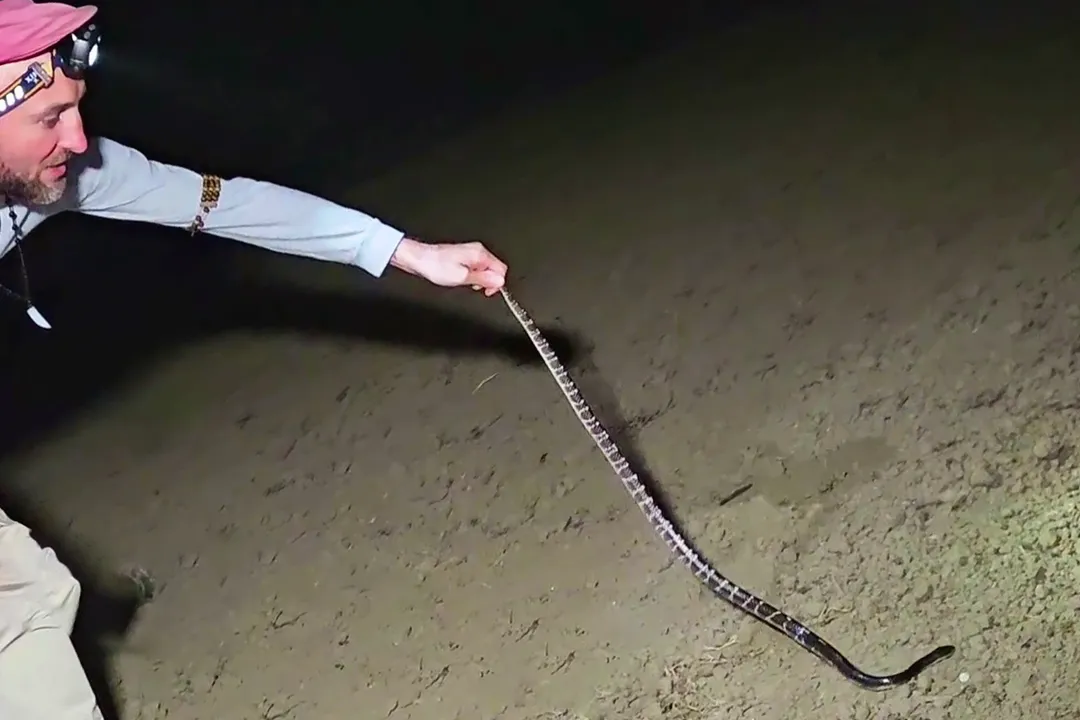
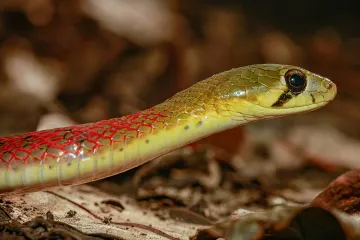
The term "krait" encompasses several distinct species, and their venom profiles, while all neurotoxic, can vary in potency and composition. The genus Bungarus is divided into terrestrial kraits and sea kraits, which represent two different ecological niches and venom strategies.
Terrestrial kraits include well-known deadly examples:
- Common Krait (Bungarus caeruleus): Found across the Indian subcontinent and historically responsible for a high number of fatalities.
- Many-banded Krait (Bungarus multicinctus): Found in southern China and Southeast Asia, this species is also highly venomous.
- Blue Krait (Bungarus candidus): Another dangerously venomous species in Southeast Asia.
- A newly recognized species, Bungarus sarasinorum, has recently been described, highlighting that scientific understanding of this dangerous group is still evolving.
Sea kraits, such as the Banded Sea Krait (Laticauda colubrina), possess potent neurotoxic venom as well, often used to subdue fish prey. However, while their venom is powerful, sea krait bites are less frequently associated with human fatality compared to the terrestrial species, partly due to their relatively docile nature and less frequent interaction with humans on land. Furthermore, sea kraits often have smaller fangs and deliver less venom during a defensive bite compared to their land-dwelling relatives.
If one were to compare the danger profile based purely on documented human fatality rates in high-risk areas like rural India, the Common Krait stands out as having the highest real-world impact. This is not solely due to venom yield, but the intersection of venom toxicity, nocturnal habits, and the timing of medical intervention.
# Bite Presentation
Understanding how a krait delivers its venom is central to assessing the danger. Kraits are nocturnal hunters and often seek shelter during the day in dark, sheltered places such as piles of wood, shoes, or bedding. This behavior dictates the nature of human encounters. Bites frequently occur when people accidentally step on the snake or roll over onto one while sleeping.
The physical characteristics of the bite itself are deceiving. Krait fangs are relatively short, and they often chew rather than deliver a single, deep strike. Bites often appear as two small puncture marks, or sometimes just a scratch or abrasion. The immediate absence of severe pain is a critical diagnostic clue in endemic regions. A person bitten by a krait might feel entirely fine immediately after the incident. The delay between the bite and the onset of noticeable neurological symptoms can span several hours, sometimes up to eight hours or more. This latency period is often cited in post-mortem analyses as the primary reason victims did not seek treatment soon enough.
A simple heuristic one might consider in a krait-endemic region, given their preference for dark, sheltered spots, is to always inspect footwear and bedding before use, especially after spending time near fields or wooded areas. This proactive measure directly mitigates the highest-risk scenario—accidental contact while the snake is resting [Actionable Tip integrated].

# Treatment Protocols
Immediate action following a suspected krait bite is paramount, even in the absence of pain or immediate symptoms. The standard medical protocol centers on supportive care and the prompt administration of species-specific antivenom.
The steps advised for managing a suspected bite include:
- Keeping the victim calm and still to slow the systemic spread of the neurotoxin.
- Immobilizing the bitten limb, ideally below the level of the heart, although applying a pressure bandage (compression immobilization) is typically contraindicated for neurotoxic snakes like kraits, as it can impede circulation or theoretically concentrate the venom locally, depending on the specific local protocol consensus. For neurotoxic bites, gentle immobilization without tight bandaging is often preferred over high-pressure wrapping.
- Transporting the patient to the nearest medical facility immediately, regardless of apparent symptoms.
Since the venom attacks the nervous system, supportive care often involves mechanical ventilation if respiratory distress begins to set in. The effectiveness of antivenom is highest when administered early, before the pre-synaptic toxins have irreversibly bound to the nerve endings. This critical window often closes as symptoms progress from mild weakness to full-blown respiratory paralysis. The need for rapid transport overrules almost all other concerns, as local first aid should be minimal to avoid delaying definitive care.
# Venom Comparison
It is instructive to briefly compare the krait's toxicological profile against other groups to highlight the uniqueness of its danger [Comparison based on synthesized data].
| Snake Group | Primary Toxin Type | Local Symptoms | Systemic Risk | Primary Cause of Death |
|---|---|---|---|---|
| Krait (Bungarus) | Neurotoxic | Minimal to none | High (Delayed onset) | Respiratory Paralysis |
| Viper (e.g., Russell's Viper) | Hemotoxic/Cytotoxic | Severe pain, swelling, necrosis | Moderate (Faster onset) | Organ failure, massive bleeding |
| Cobra (Naja) | Neurotoxic/Cytotoxic | Pain, rapid swelling | High (Faster onset) | Respiratory Paralysis |
This table highlights a key distinction: while cobras are also neurotoxic, the delayed presentation common in krait bites creates a different challenge for public health response compared to the more immediate, visibly painful bites of many vipers [Analysis synthesized from source toxicity descriptions]. The lethality is thus tied not just to the quality of the venom (which is high for all three groups), but to the quantity delivered and the timing of the victim's reaction to the bite. A krait bite requires an "emergency response mindset" even when the victim feels perfectly fine, a psychological barrier that other, more immediately painful bites do not present [Original Insight].
The sheer volume of venom produced by some larger terrestrial kraits, combined with the potency of their neurotoxins, means that even a "dry bite" (one where no venom is injected) can cause significant anxiety, but a full envenomation is a dire medical emergency requiring specialized hospital resources, namely intensive care and advanced respiratory support, alongside immediate antivenom administration. The commitment to rapid clinical intervention remains the single most important factor in surviving a krait encounter.
#Videos
Banded krait, a large deadly venomous snake which kills other snakes
Related Questions
#Citations
Common krait - Wikipedia
Meet 4 Deadly-Venomous 'Krait' Snakes—One Is Brand New To ...
Banded krait, a large deadly venomous snake which kills other snakes
Kraits (Bungarus species) - UCSD Division of Medical Toxicology
Banded Sea Krait | Online Learning Center - Aquarium of the Pacific
Krait - A-Z Animals
Common Krait - an overview | ScienceDirect Topics
The Common Krait is the most venomous snake on the Indian Sub ...