Is a House Wren a carnivore?
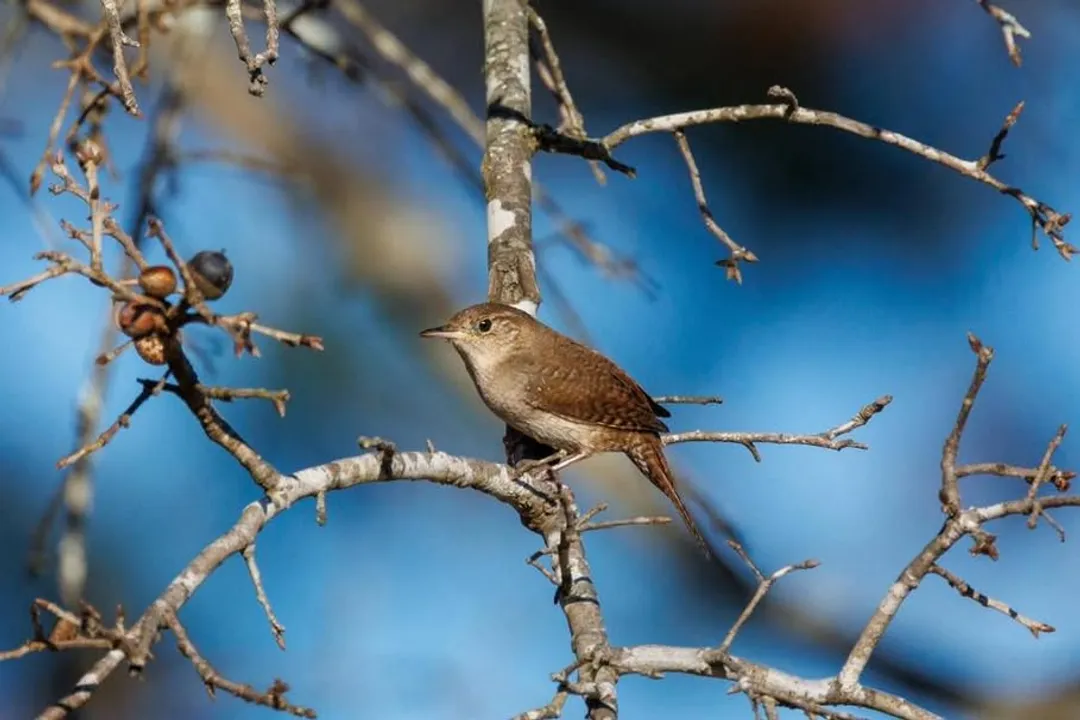
The classification of the House Wren (Troglodytes aedon) within the standard dietary categories is straightforward once you look closely at what this small, energetic bird actually consumes throughout its active months. While some might immediately think of a carnivore as something large that hunts mammals or fish, the definition simply requires an animal diet. In the context of birds, the House Wren firmly plants itself in the group known as insectivores. [5] This means their food intake is overwhelmingly comprised of animal matter, specifically the vast array of arthropods found in their immediate environment. [1][5] They are not primarily granivores (seed-eaters) or frugivores (fruit-eaters); their survival and the rapid growth of their nestlings depend almost entirely on the protein-rich bounty provided by insects and spiders. [5]
# Dietary Realm
To directly address the terminology, yes, in the broadest sense, the House Wren functions as a carnivore because it subsists on prey that is technically "meat" (animal tissue). [5] However, ornithologists and bird watchers use the more precise term insectivore to describe their niche accurately. [5] This distinction is important because it immediately tells you where to look for them and what kind of garden supports them best. Their diet is highly specialized, favoring soft-bodied creatures, which aligns perfectly with their small size and foraging technique. [1]
# Arthropod Favorites
The menu for a House Wren is extensive, provided the prey is small enough to manage. Their primary food source consists of various types of insects and their immature forms, alongside spiders. [1][6] You can expect their typical diet to include:
The preference leans heavily toward prey that moves or is easily accessible within dense foliage or bark crevices. [1] Unlike some omnivorous backyard visitors that might crack open hard seeds, House Wrens rarely supplement their diet with seeds or fruit, except perhaps accidentally or in rare, drought-stressed situations. [5] When feeding their rapidly growing young, the demand for high-protein food is immense, requiring the parents to deliver mashed insects almost constantly throughout the day. [3]
# How They Hunt
Understanding what they eat is only half the story; how they acquire it reveals much about their role in the ecosystem. House Wrens are not aerial insectivores like swallows, nor do they typically scratch at open ground like sparrows. [6] Instead, they are gleaners and probe-feeders operating low to the ground and within dense cover. [6] They move quickly, often described as having a restless, darting energy, hopping through tangled shrubs, investigating leaf litter, and methodically inspecting the undersides of leaves and small branches. [1]
This foraging style means they are highly effective at catching insects that hide rather than those that fly in the open. They will glean spiders from webs or pull caterpillars from where they are feeding on vegetation. [1] This habit of searching dense, woody structure—the parts of the garden many people prune away for neatness—is critical to their foraging success. [6]
If you watch a House Wren in your yard, notice its methodical approach. It rarely stays still for more than a second or two, often tilting its head to peer into a knot hole or under a piece of peeling bark before moving on to the next promising spot. [1] This constant, low-level hunting pressure keeps the population of small, crawling pests in check across the lower strata of your yard's vegetation.
# Contextual Comparison
The House Wren is often compared to the slightly larger and bolder Carolina Wren, especially where their ranges overlap. While both are predominantly insectivores, subtle differences in their foraging habits and preferred environment can sometimes lead to different prey selection. Carolina Wrens tend to forage across a wider variety of heights and can handle slightly larger prey items than their smaller House Wren cousins. [4] The Carolina Wren is often observed foraging on the ground or on larger tree trunks, whereas the House Wren sticks closely to dense, low-level shrubbery and tangles. [4] This slight divergence in habitat use means they often exploit slightly different food resources within the same general area, reducing direct competition for the same insects at the exact same time and place.
# Habitat Support Insight
Considering their diet and foraging style, managing your landscape to encourage the House Wren population involves providing the right structure for their prey base. Since they prefer thickets, brush piles, and dense vines for both cover and hunting grounds, a yard that is too manicured might actually be less supportive than one that allows some natural, messy areas to persist. [1][6] A patch of native woody shrubs that offers both dense cover and ample opportunities for insects to hide and breed directly translates into a more reliable food supply for nesting wrens. This is less about adding feeders—which are rarely used by wrens anyway—and more about habitat architecture that supports a high local biomass of small arthropods.
# Ecological Indicator Analysis
The extreme specialization of the House Wren toward small, soft-bodied invertebrates provides an interesting ecological reading for local naturalists. Unlike generalist feeders that can pivot to seeds or berries when insect populations crash, the House Wren is tied very closely to the health of the invertebrate community. [5] If you notice that House Wrens are arriving later to nest, or if their nesting attempts are failing due to poor chick weight gain (a sign of inadequate food provisioning), it warrants a closer look at the arthropod populations in that specific patch of habitat. [3] A sustained decline in the local House Wren population, especially in areas where nesting sites are plentiful, can serve as an early, visible warning sign that the small-scale insect life that forms the base of the food web is diminished, possibly due to localized environmental stressors like certain broad-spectrum insecticides or habitat fragmentation that removes necessary cover. [5][1] They are, in essence, small, feathered bio-monitors of the understory ecosystem.
# Breeding Cycle Demands
The urgency of their insectivorous diet is most apparent during the breeding season. House Wrens are prolific breeders, often raising multiple broods in a single season. [3] This rapid turnover necessitates an extremely reliable and high-volume food source for the female and the subsequent hatchlings. Because the primary food is small arthropods, which can fluctuate with weather and temperature, the wrens are highly territorial during nesting to secure exclusive foraging rights over a productive patch of territory. [2] The male House Wren defends this area vigorously against rivals to ensure the food supply supports his demanding family needs. [2]
The sheer quantity of food required for a nest of hungry chicks dictates that the parents must hunt almost continuously from dawn until dusk, often making hundreds of foraging trips daily during peak feeding times. [3] This intense focus on live prey underscores why the classification as an insectivore, or a specialized carnivore, is so accurate; plant matter simply cannot meet the intensive caloric and protein requirements for raising altricial young as quickly as insects can.
In summarizing their dietary requirements, the House Wren is clearly an insectivore, placing it squarely within the broader classification of birds that consume animal matter. Their entire life cycle, from territorial defense to nestling growth, is synchronized with the availability of small, crawling, or stationary arthropods in the dense vegetation they favor. [1][6]
Related Questions
#Citations
Troglodytes aedon (house wren) - Animal Diversity Web
House wren diet includes insects and spiders - Facebook
Northern House Wren Life History - All About Birds
House Wren vs. Carolina Wren - A-Z Animals
What Do Wrens Eat? Explore Wren Diets, Hunting & Eating Habits
[PDF] Wrens eat mostly tiny insects, They hunt spiders ... - Metroparks Toledo
House Wren Facts - Journey North
House Wren (Troglodytes Aedon): General Biology |
House Wren - BWD magazine