What are Birman cats known for?
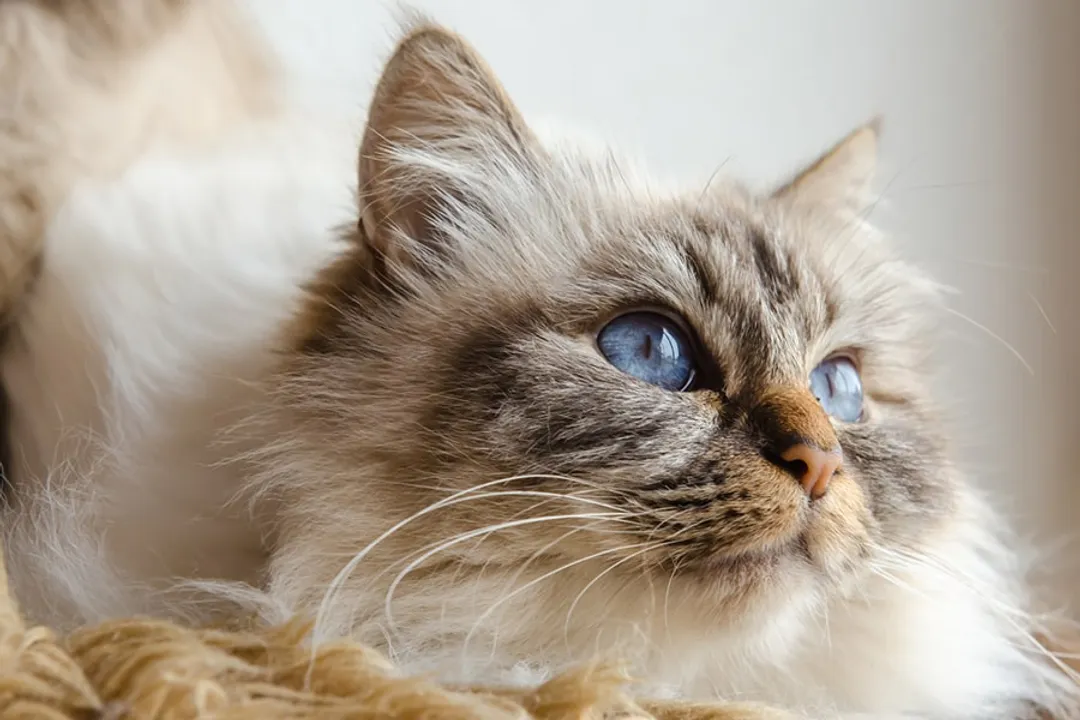
The Birman cat is instantly recognizable, often causing admirers to pause and try to place the breed they are seeing—is it a Siamese mix, or perhaps a Ragdoll? While they share the striking pointed coloration of the Siamese family, the Birman possesses a distinct elegance defined by its unique markings and a wonderfully placid nature. [1][3][8] These medium-sized, longhaired beauties carry an air of gentle dignity, making them highly sought-after companions for many types of households. [1][5] They are celebrated not just for their looks, but for a personality that often perfectly matches their serene appearance. [3][7]
# Distinctive Look
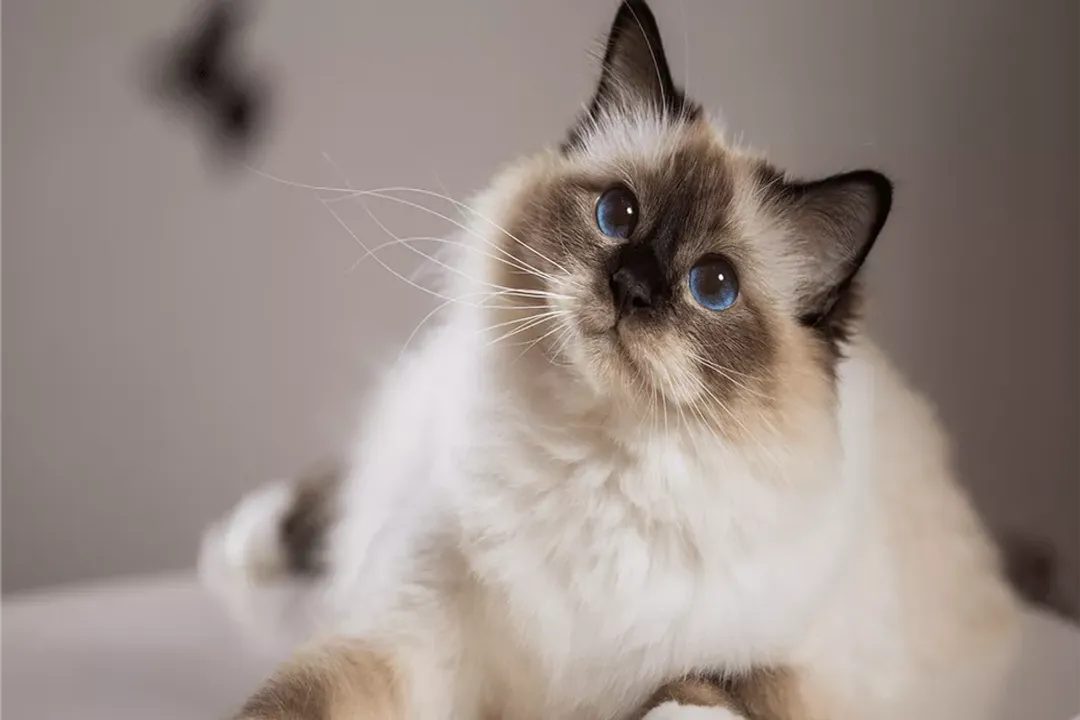
What sets the Birman apart visually starts with its coloring. Like other pointed breeds, the Birman has darker color points—the ears, mask, paws, and tail—against a lighter body coat. [1][7] However, the defining characteristic is the glove or boot marking on all four paws. [3][7] This is where the Birman truly distinguishes itself from breeds like the Siamese or Himalayan. [8]
The ideal white marking is specific: on the front paws, the white extends no further up the leg than the first joint, often described as looking like the cat dipped its feet in white paint. [1][7] On the rear legs, the white extends higher, sometimes called a "lace" pattern, running up the back of the leg to the hock, ending in a point or a 'V' shape on the back of the hind leg. [1][7] These white markings must be symmetrical, and breed standards are quite particular about their shape and extent. [3][4] The eye color is non-negotiable; every purebred Birman must have clear, expressive blue eyes. [1][4][7]
Their body structure is sturdy and muscular, often described as substantial but not overly cobby or heavy. [1][3] They are considered a medium-sized cat, usually weighing between 6 and 10 pounds, with males often being slightly larger than females. [1] The head shape is broad with a strong chin, and a distinguishing feature noted by some enthusiasts is the profile, which features a slightly convex or Roman nose. [1][7]
# Silky Coat
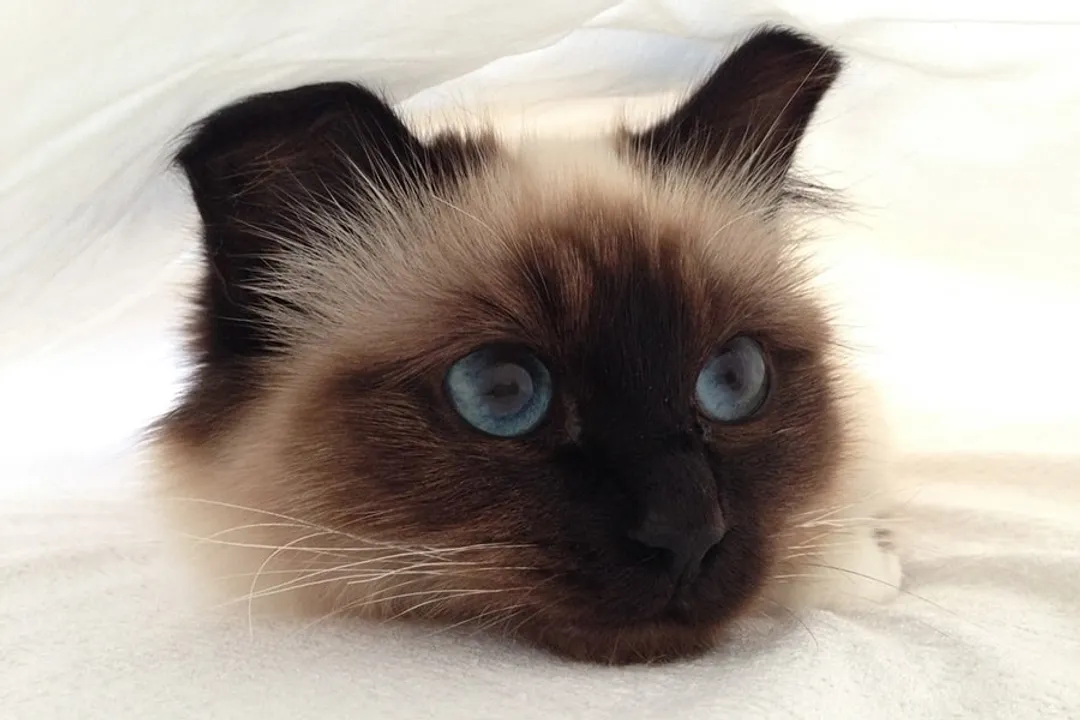
The Birman’s luxurious appearance might suggest hours of intense grooming, but one of their most praised traits is actually their coat texture and maintenance level. [1][3][5] Unlike some longhaired breeds, the Birman possesses a single coat. [1][7] This means they lack the thick, dense undercoat that often leads to severe matting in breeds like Persians. [8]
The fur is long and silky, generally described as soft to the touch. [1][3] While the length requires attention, the single layer makes their maintenance considerably easier than one might expect for such a flowy-looking feline. [5] A weekly combing session is usually sufficient to keep the coat tidy and prevent tangles, especially around the ruff, britches, and tail. [1][3]
When considering a Birman, it’s helpful to realize that this single coat structure influences how they manage temperature compared to their heavily insulated counterparts. While they still enjoy a warm lap, their coat might make them slightly more adaptable to varied indoor temperatures than a cat with heavy double insulation, though direct sunbathing and climate control remain important for all indoor pets. [5]
# Gentle Disposition
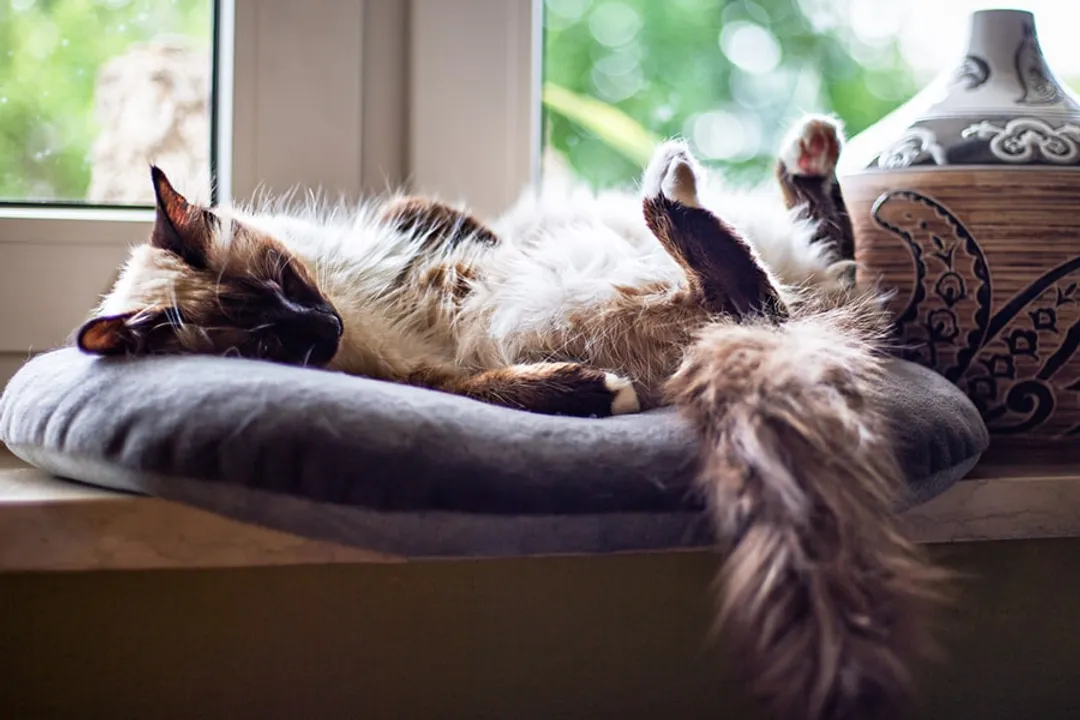
If the distinctive white gloves are the signature marking of the Birman, their sweet disposition is their signature personality trait. [3][7] They are widely known for being exceptionally gentle, placid, and easygoing companions. [1][5] They thrive on affection and companionship, often described as loving and devoted to their families. [3]
Birmans tend to be sociable cats who enjoy being involved in household activities without being demanding or overly clingy. [1][5] They are not typically known for excessive vocalization; they often communicate with quiet chirps or soft meows rather than loud cries. [5] This quiet nature, combined with their patience, makes them wonderful companions for families with children, provided the children understand how to interact gently with a cat. [1][3] They generally coexist well with other pets, including cat-friendly dogs, showing a high degree of tolerance. [5]
This breed fits well into an apartment setting because they are not generally destructive or hyperactive. [1] They are intelligent and can be quite playful, but their activity levels tend to ebb and flow, favoring cuddles and supervised playtime over relentless chasing. [6] A first-time cat owner seeking a loving, calm presence that is relatively predictable in temperament would find the Birman an excellent match, as they are less likely to exhibit the extreme moods or high-energy demands associated with some other popular breeds. [1][5]
# History Lore
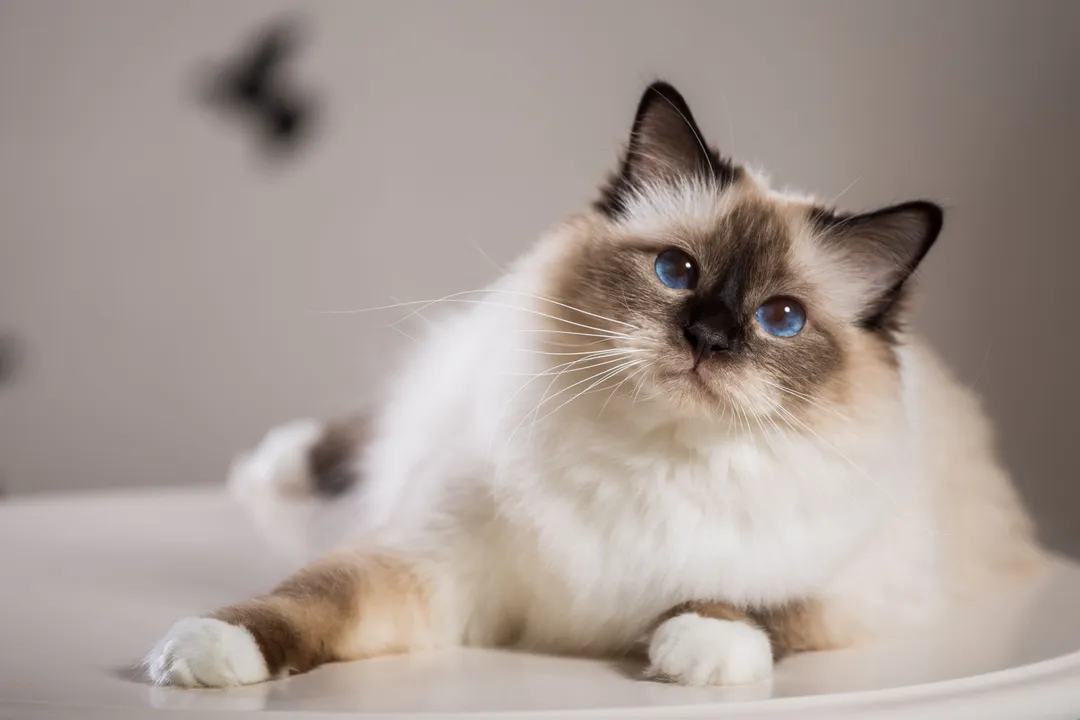
The origins of the Birman breed are shrouded in romantic legend, linking them back to ancient temples in Burma (now Myanmar). [1][7][8] According to the tale, these cats were revered guardians of a temple dedicated to a golden-skinned goddess, Tsun-Kyan-Kse. [1][7] The story goes that when the temple was attacked, a devout priest was mortally wounded while praying before the goddess's statue. [1] In response to his devotion, the goddess transformed the temple cats. Their fur changed from a dark color to a creamy gold, and their eyes turned the brilliant blue of the goddess's own eyes. [1][7] Furthermore, the cats who touched their master were blessed with pure white paws, symbolizing the sacred ground they stood on. [1]
While this legend is captivating, the modern Birman breed actually has more verifiable roots in early 20th-century Europe. [7][8] It is generally accepted that the breed originated in France, likely developed through crossbreeding between longhaired cats (perhaps Siamese or Persians) and pointed cats. [1][7] The earliest documented introduction to the Western world seems to be around 1919, and they were first exhibited in Paris in 1923. [7] Despite the interruption of World War II, dedicated breeders worked to re-establish the type, and the breed gained recognition by major international registries over time. [8] The difference between the mythical origins and the documented development is fascinating; you have a breed whose very appearance seems engineered to support an ancient, mystical narrative. [8]
# Care and Well-being
Prospective owners should be aware that while the grooming is manageable, the Birman still requires consistent care typical of any pedigreed companion animal. [10]
# Daily Needs
A quality diet formulated for their life stage is essential for maintaining their healthy weight and coat quality. [10] Because they bond closely with their people, Birmans generally prefer not to be left alone for extended periods. [5] Providing them with vertical space, like cat trees, and engaging puzzle toys will cater to their moderate play drive and curiosity. [1]
# Health Outlook
Birmans are generally considered a hardy and healthy breed. [1] Their average lifespan tends to be around 12 to 15 years, though with excellent care, many can live longer. [10]
It is important for owners to discuss general feline health concerns with their veterinarian, including regular dental care and preventative medicine. [10] While not as widely publicized as some congenital issues in other breeds, there have been mentions in veterinary circles regarding potential hereditary conditions, such as a predisposition toward developing feline amyloidosis, a condition involving abnormal protein deposits in organs, which can sometimes affect the kidneys. [1][10] This is not a guarantee of illness, but awareness allows for proactive screening by a trusted veterinarian. [1] Furthermore, like some other breeds, Birmans may have a sensitivity to certain types of anesthesia, something every owner should confirm with their surgical team should the need ever arise. [1]
One helpful consideration for new Birman owners is recognizing that their trusting nature means they are often poor candidates for an outdoor lifestyle; their gentle demeanor makes them vulnerable to traffic or altercations with other animals, reinforcing the recommendation that they remain strictly indoor cats. [5] Their contentment with indoor life stems from their preference for secure, familiar surroundings where their human companions are present. [5]
# Breed Standard Nuances
To truly appreciate what makes a Birman a Birman, one must look closely at the standards set by cat associations, which emphasize the consistency of their markings—a trait that requires dedicated breeding. [4] While colorpoint Birmans are the most recognized, the breed accepts several colors in its pointed patterns, such as seal, blue, chocolate, lilac, red, and cream points. [4][9] The white glove requirement is the key differentiator, and breeders work hard to achieve the correct balance between the pointed coloration and the pure white "mitts". [3] If a cat displays socking like a Siamese or Himalayan but has a double coat, you are likely looking at a Ragdoll or another breed, highlighting the subtle but significant differences within the longhaired pointed cat group. [8] This precision in marking standards is what breeders focus on, ensuring the legacy of the temple cat remains visually consistent across generations. [4]
Related Questions
#Citations
Birman: Cat Breed Profile, Characteristics & Care
34 Facts About Birman Cats
Meet the Birman Cat: Personality, Grooming, and Health
Birman
What To Know About a Birman
r/birmans on Reddit: I am new to cats. After some research, ...
What makes the Birman cat different from other cat breeds?
Birman
Birman Cat Breed Information
Birman Cats: A Comprehensive Guide to Their Lifespan ...