What two breeds make a Norwegian Forest Cat?
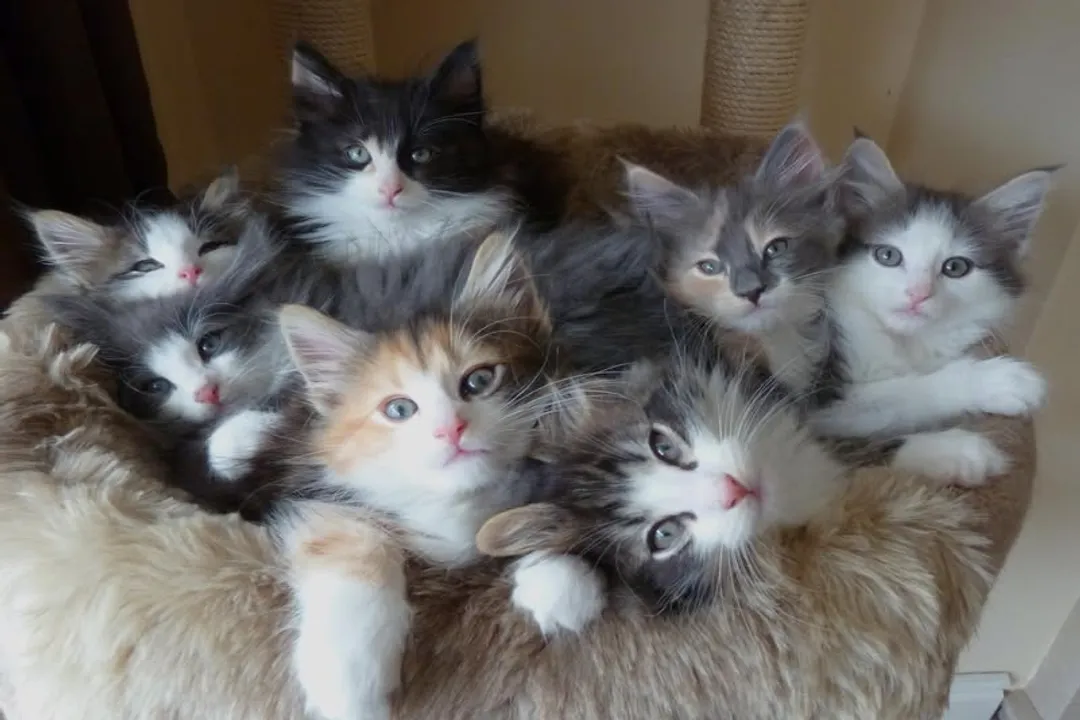
The magnificent coat and striking appearance of the Norwegian Forest Cat, often affectionately called the Skogkatt in its native Norway, frequently lead people to wonder about its precise pedigree. Unlike many popular breeds developed intentionally through careful pairing of established, distinct breeds over the last century, the story of the Norwegian Forest Cat is one of nature, not human design. The truth is that the Skogkatt did not arise from the planned crossing of two specific, modern breeds; rather, it is an ancient, natural landrace that developed in the harsh, cold climate of Scandinavia over centuries.
# Ancient Roots
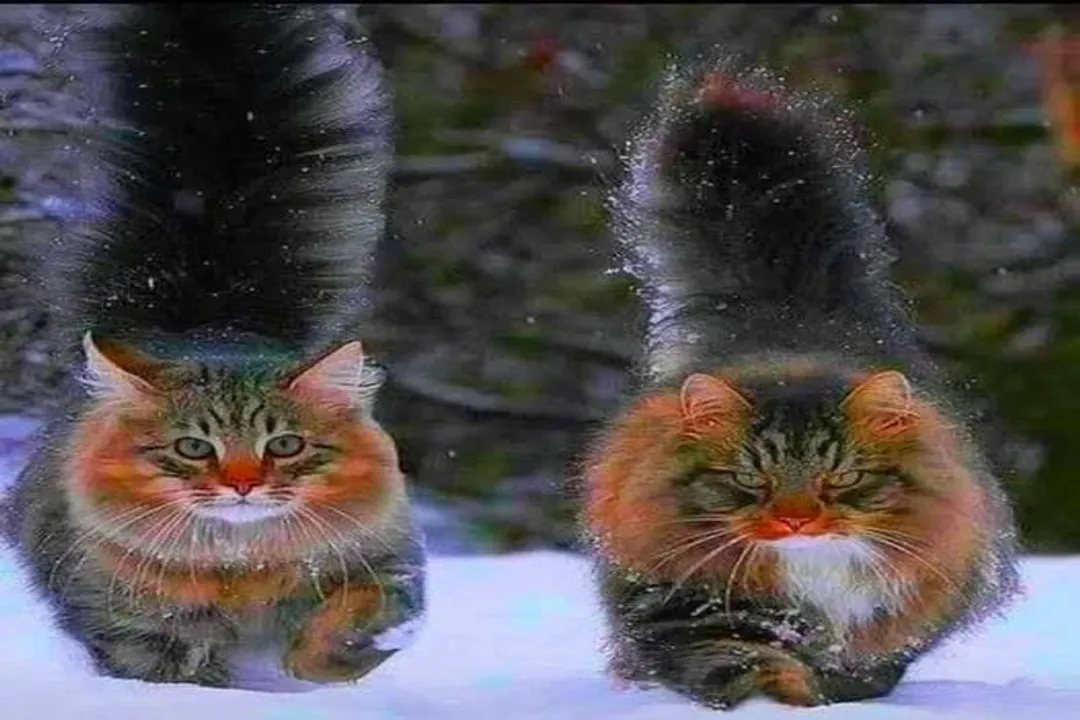
The lineage of the Norwegian Forest Cat stretches back deep into European history, long before organized cat registries began classifying breeds. These cats are considered true originals, having evolved through natural selection to thrive in the challenging Norwegian environment. This long, natural development path means their ancestry traces back to the domestic cats that accompanied early settlers or perhaps even the cats brought over by the Vikings. They are essentially the same type of cat that has roamed the forests and farms of Norway for hundreds of years, perfectly adapted to survive the frigid winters.
This deep historical grounding places the Norwegian Forest Cat among the oldest natural breeds in the world. While some might look at its impressive size and luxurious double coat and assume a recent cross between, say, a Siberian and a Maine Coon, this is a misconception about how landraces form. A landrace is a population of domesticated animals that has developed through natural selection and adaptation to a specific environment, rather than through selective breeding by humans for specific traits.
# Mythology Connection
The resilience and majestic look of the Skogkatt have earned it a place in folklore, solidifying its historical presence in Norway. These cats were mentioned in Norse mythology, suggesting that they were familiar figures to the people of that era. In the tales, they were associated with the chariot of Freyja, the Norse goddess of love, beauty, and fertility, indicating their recognized status even in ancient times. This mythological connection emphasizes that the breed is not a recent creation but a long-established fixture of Norwegian life.
# Comparing Relatives
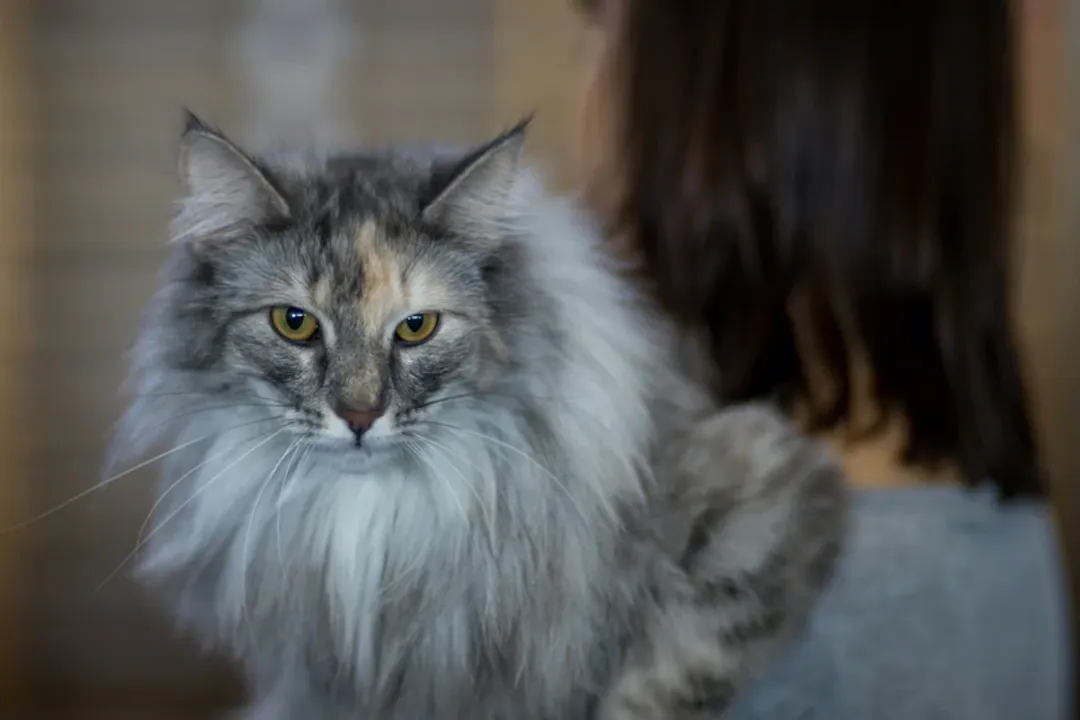
Because the Norwegian Forest Cat is a large, long-haired, natural breed, it is very often confused with other similarly developed breeds, most notably the Maine Coon. If one were looking for a modern breed that shares a similar "natural" development story and impressive stature, the comparison to the Maine Coon is unavoidable, as both are often grouped as "forest cats" alongside the Siberian.
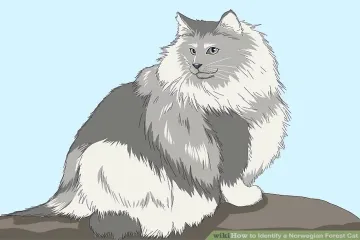
The confusion is understandable when you look at them side-by-side. Both possess large, muscular bodies, substantial bone structure, and luxurious, water-resistant double coats suitable for cold climates. However, subtle differences in their physical structure are key indicators to the experienced observer.
# Structural Differences
When comparing the Norwegian Forest Cat and the Maine Coon, the main distinguishing features often lie in the head shape and the body silhouette.
- Head Shape: The Norwegian Forest Cat generally exhibits a straight profile from the forehead to the tip of the nose, with a straight nose bridge. The face often has an equal-sided triangle shape. In contrast, the Maine Coon typically has a more pronounced break or dip where the muzzle meets the forehead, similar to a less extreme version of the domestic cat's stop.
- Body Build: While both are big cats, the Norwegian Forest Cat tends to have a longer body relative to its height, giving it a more rectangular appearance. The Maine Coon is often described as having a more "rugged" or square build.
- Ear Placement: The ears on a Wegie are set high on the head and are quite open at the base, often having tufts of hair growing out of them, similar to a lynx. Maine Coon ears are also large and tufted, but they are typically set lower on the sides of the head.
It is this close resemblance to the Maine Coon that makes newcomers search for a specific "parent breed"—they are looking for the other half of the equation, even though the Skogkatt comes from a single, naturally selected population. The fact that these two breeds developed independently on different continents (Norway and North America) but arrived at similar solutions for surviving cold weather—large size, tufted paws, and thick coats—is a fascinating example of convergent evolution in domestic animals.
# Natural Adaptation Explained
The traits that define the Norwegian Forest Cat are direct results of the intense natural pressures they faced in their native land. Every aspect of their conformation served a practical, survival-based purpose.
# The Water-Resistant Coat
The most defining feature is, of course, the dense, thick coat. This is not a single layer but a sophisticated, double coat designed for maximum insulation and weather resistance. The undercoat is thick and woolly, trapping air for warmth, while the outer coat consists of long, coarse, oily guard hairs. This outer layer acts like natural rain gear, shedding snow and rain away from the skin, which is essential for surviving wet, cold Norwegian winters. They shed this coat in warmer weather, meaning the immense fluff seen in winter is seasonal.
Considering they evolved without human intervention to select for only "pretty" coats, the functional necessity of this coat structure is paramount. This contrasts with some modern breeds where aesthetics might sometimes compromise function, such as a coat that mats easily or requires extensive, specialized grooming simply to maintain a fashionable length. The Skogkatt coat, while beautiful, is fundamentally a survival tool, which often means it is surprisingly easier to manage than one might expect for such a longhaired cat because the guard hairs resist tangling.
# Physical Prowess
Beyond the fur, their physical structure speaks to a life spent climbing trees and hunting small game. They possess a strong, muscular build and a semi-cobby body type, providing stability and power. A notable feature is their large, sturdy paws, which often have black tufts of hair growing between the toes. These toe tufts act like natural snowshoes, helping to distribute their weight and keep ice and snow from lodging between their pads when walking on frozen ground or snowdrifts.
Their semi-long tail is also heavily plumed, which they can wrap around themselves for extra warmth when curled up against the cold. Furthermore, they are known for being excellent climbers, a skill necessary for foraging and escaping predators in the rugged terrain. Their semi-retractable claws are particularly sharp and curved, assisting them in gripping tree bark.
# Temperament and Domestic Life
While their history is tied to the rugged outdoors, the temperament of the modern Norwegian Forest Cat, as seen in homes today, reflects generations of domestication alongside humans. They are often described as intelligent, playful, and adaptable. They are generally affectionate but not overly demanding lap cats, preferring to be near their owners rather than constantly on them. This independent streak likely stems from their history as semi-feral working cats that needed to fend for themselves.
They form strong bonds with their families and often enjoy interactive play that utilizes their natural climbing and hunting instincts. Owners often note their quiet voices, using soft chirps or trills more frequently than a loud meow. This quiet nature is another trait that suggests an adaptation to their environment—perhaps minimizing noise to avoid attracting larger predators or ensuring they could communicate subtly with human companions without alerting prey.
# Insight: Genetic Health Implications
Because the Norwegian Forest Cat is a landrace that developed naturally, its genetic pool might be considered more "broad" or less bottlenecked than a breed developed over a short period through intense, narrow selection for extreme features. While all purebred cats carry risks for specific inherited conditions, the NFC's long, natural development might contribute to a generally hardy constitution, though specific hereditary issues like hypertrophic cardiomyopathy (HCM) or hip dysplasia are still recognized in the breed. When acquiring one, prospective owners should prioritize breeders who test for these known issues, understanding that natural does not automatically equate to perfect health, but that the foundation stock has survived for centuries. This means the core genetic material has already proven its viability in a tough environment.
# Ownership Considerations
For those drawn to the majestic look of the Skogkatt, understanding their needs, which reflect their origin, is key to responsible ownership.
# Grooming Needs
The double coat requires regular attention, though perhaps less frequently than some other long-haired breeds. Since the outer coat is water-resistant and coarse, it tends to resist matting better than a soft, cottony undercoat would. Still, combing through to the skin, especially during the heavy seasonal shed, is necessary to prevent the thick undercoat from becoming dense and uncomfortable. An owner should aim for a thorough combing session at least once or twice a week, increasing frequency during the spring shedding period.
# Activity Demands
A truly satisfied Norwegian Forest Cat needs vertical space. Owners should view their home not just in floor space but in height, providing tall, sturdy cat trees, shelves, and secure window perches. This satisfies their natural inclination to climb and survey their territory from above, mimicking their life in the trees. If this environmental enrichment is missing, their intelligence and energy may manifest in less desirable ways, such as climbing curtains or furniture not intended for climbing.
# Original Analysis: The "Un-Bred" Advantage
One of the subtle advantages of owning a naturally developed breed like the Skogkatt, compared to a breed selectively engineered for a single, exaggerated feature (like extreme flatness of face or extreme length of coat), is the inherent balance in their traits. The traits that define the Norwegian Forest Cat—its size, coat, intelligence, and solid structure—are all interconnected survival mechanisms. This natural synergy often results in a cat that is inherently well-balanced in terms of structure and temperament, as one trait couldn't become dominant at the expense of another essential survival mechanism. For instance, a cat with a coat too thick for summer heat or a body too heavy to climb efficiently would have been naturally culled from the gene pool over time, leading to a profile that is highly functional overall.
In summary, the Norwegian Forest Cat does not have two specific modern breeds making it up; its entire story is about one breed evolving naturally over a very long time in Norway. The breeds it is most often compared to, like the Maine Coon, are its cousins—other natural long-haired breeds that solved the same environmental puzzles in different parts of the world. If you are seeking the Skogkatt, you are seeking a piece of living Norse history, perfectly engineered by the climate itself.
#Videos
Maine Coon Vs Norwegian Forest Cat - How To Identify Them
Related Questions
#Citations
Maine Coon vs Norwegian Forest cat - The Little Carnivore
Maine Coon Vs Norwegian Forest Cat - How To Identify Them
Are Maine Coon and Norwegian Forest Cat related breeds?
Norwegian Forest Cats | Breed Appearance, Personality & History
I wanted to know the characteristics of a Norwegian Forest Cat, and ...
Maine Coon vs. Norwegian Forest cat—how to choose
Fine-Tuning the Three “Forest” Cats - The Cat Fanciers' Association
Norwegian Forest Cat: Appearance, Temperament and Diet - Ziggy