How rare are bandicoots?
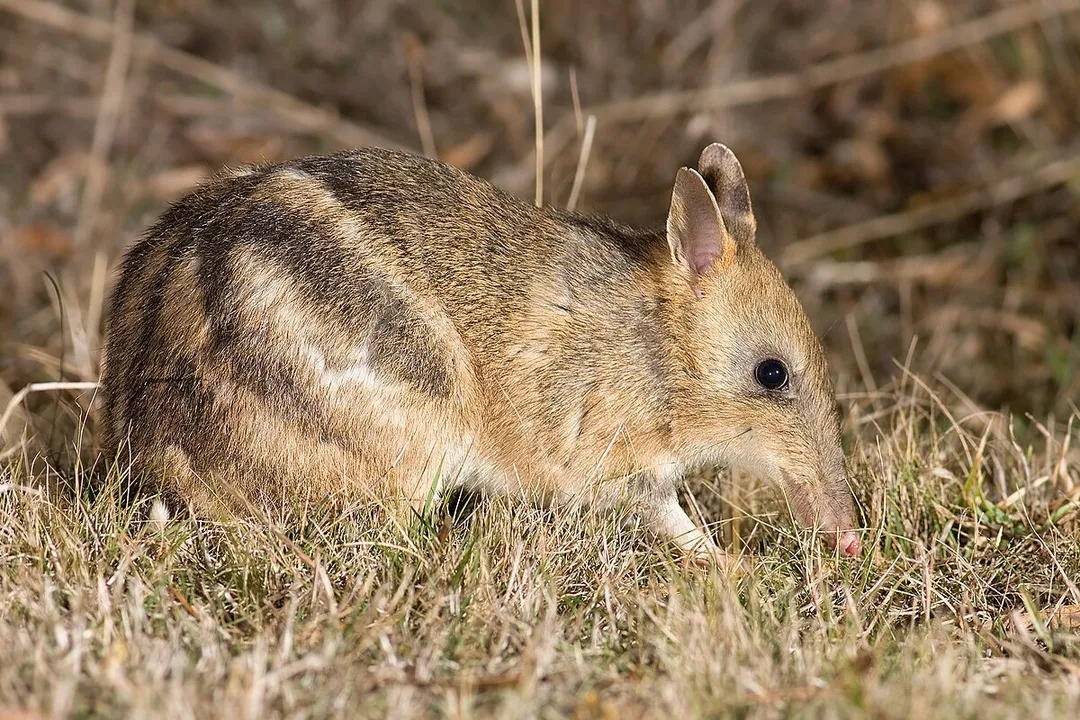
The bandicoot, that small, perpetually busy marsupial often distinguished by its pointed nose and surprising speed, occupies a precarious position in the Australian landscape. These creatures, belonging to the order Peramelemorphia, are endemic to the Australia–New Guinea region, yet their presence across their historical range is far from guaranteed. [1][3] To ask how rare they are requires looking beyond simple species counts; it demands an examination of localized survival, the success stories of intensive recovery, and the harsh reality of historical decline. Currently, the situation is mixed: of the estimated twelve species present in Australia when European settlement occurred, roughly half are now either extinct, threatened with extinction, or simply extremely rare in the wild.
# Marsupial Traits
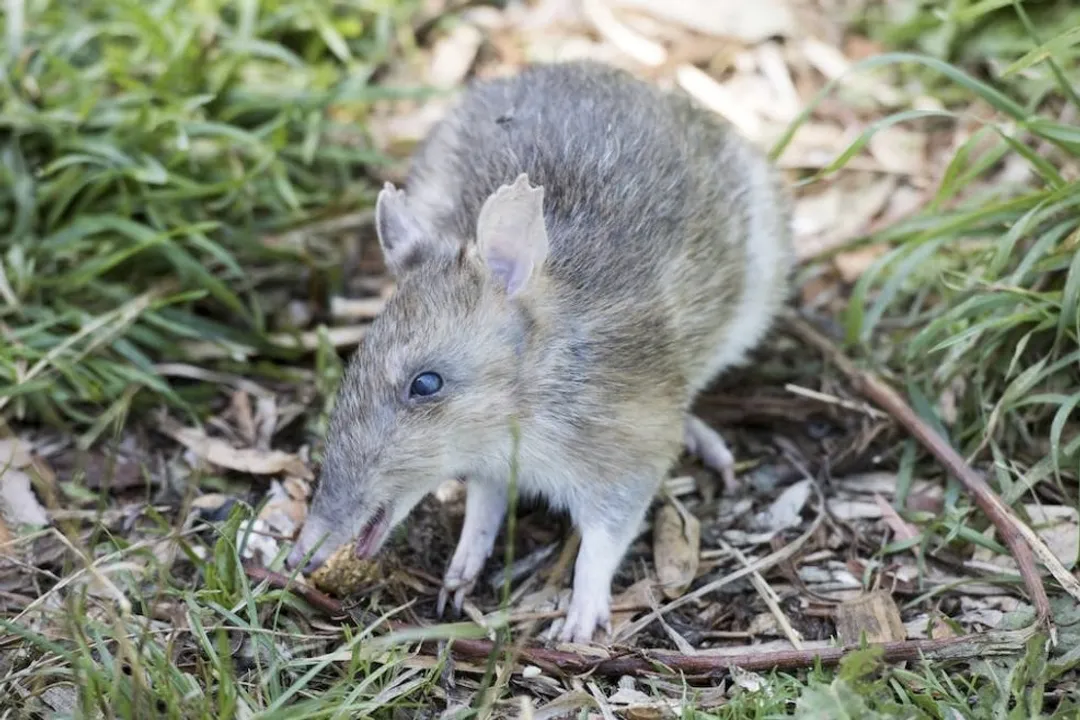
Bandicoots are easily recognized by several key physical characteristics that speak to their lifestyle. They are terrestrial and largely nocturnal omnivores, using their V-shaped faces and prominent noses to sniff out underground food sources like insect larvae, worms, and fungi. [3][4] Their strong, clawed feet are perfectly adapted for this fossorial, digging existence, which leaves behind tell-tale small, conical holes often described as "snout pokes". [4] Like other marsupials, the female bandicoot possesses a pouch, but hers is uniquely oriented to open toward the rear, a vital adaptation that prevents dirt from entering while she forages. [3][5] These animals are generally solitary, territorial, and possess low body temperatures and metabolic rates, adaptations that aid their survival in Australia’s hot and dry conditions. [3] A bandicoot's life in the wild is usually brief, often lasting between two and four years, although some sources suggest a potential lifespan of up to seven years. [4][5]
# Australia's Loss
The overall picture of bandicoot rarity is grim when viewed through the lens of historical decline. The pig-footed bandicoot, for instance, is now confirmed to be extinct, having been assigned its own family, Chaeropodidae. [3][5] For many other species, range contraction has been severe. The drivers of this rarity are consistent and severe: habitat loss due to land clearing and urbanization, and intense predation pressure from introduced predators such as foxes, domestic cats, and dogs. [4] For example, the decline of the Eastern Barred Bandicoot in Victoria and South Australia was driven primarily by these factors. [2] Furthermore, even where they persist, issues like road collisions and habitat degradation from introduced herbivores like deer and rabbits contribute to local population stress. [4][8]

# Barred Success Story
Perhaps the most striking example of bandicoot rarity—and the potential for reversal—is the story of the Eastern Barred Bandicoot (Perameles gunnii). This species was once relatively widespread across the grassy woodlands of Victoria and South Australia. [2][8] By 1988, the situation was catastrophic; the entire mainland population had plummeted to just 150 individuals clustered in one small area near Hamilton, Victoria. [1][2] This precipitous decline led to the species being declared Extinct in the Wild on mainland Australia in 2013. [2]
However, dedicated conservation efforts initiated years earlier have yielded extraordinary results. Zoos Victoria, in partnership with numerous organizations, established captive breeding and insurance programs starting in 1988/1989, breeding over 650 bandicoots since 1991. [2][8] Success involved reintroduction into fox-free conservation areas on the mainland, protected by predator-exclusion fences, and crucially, introductions onto three fox-free islands: Churchill, Phillip, and French Islands. [2][8] These islands served as vital testing grounds; Churchill Island, for instance, saw its population grow from 20 to about 120 within two years. [8] Thanks to this concentrated work, the wild mainland population has rebounded to over 1,500 individuals spread across Victoria. [1][2] This monumental effort has led to the species’ conservation status being reclassified from Extinct in the Wild to Endangered—a significant first for an Australian threatened species, allowing the captive breeding program to conclude. [1][2][7]
# Status Check NSW
While the Eastern Barred Bandicoot offers hope, other species highlight ongoing vulnerability, especially within New South Wales, where about three species reside.
The Southern Brown Bandicoot (Isoodon obesulus) remains listed as Endangered. [5] Its distribution in NSW is patchy, occurring south from the Hawkesbury River east of the Great Dividing Range, with only two core populations remaining: one near northern Sydney (Garigal and Ku-ring-gai Chase national parks) and another in the far south-east corner. This species is noted for being smaller and shyer, sticking closely to dense heath vegetation, making its long-term viability tenuous due to its fragmented nature. The scarcity is such that only a few are found each year, and there are none held in zoos in NSW.
The Long-nosed Bandicoot (Perameles nasuta) is generally more common and widespread in NSW coastal areas, even visiting suburban backyards. Paradoxically, this species has specific, isolated populations that are in severe trouble. The population at North Head in Sydney Harbour National Park has been formally listed as Endangered because it is cut off from other groups by urban development. Similarly, a population in inner western Sydney, living in urban parklands, also holds an Endangered listing.
Finally, the Northern Brown Bandicoot (Isoodon macrourus), which is common further north in coastal Queensland and NSW, has also suffered significant losses, being declared extinct in parts of Queensland and northern NSW. [4]
# The Threats
The pervasive threats facing bandicoots directly correlate with their rarity. The shift from widespread distribution to highly fragmented, small populations stems overwhelmingly from human impact since European arrival. Foxes are consistently named as the primary cause of decline for populations reintroduced to the mainland, far outweighing the threat from native predators like dingoes and owls. [2][4][8] Urban expansion fragments their required habitats, often isolating small groups and making them highly susceptible to road deaths and predation, a situation exacerbated by the lack of dense cover. Furthermore, the nature of fire management affects them; while they have evolved alongside natural fire cycles, intense wildfires or poorly planned hazard reduction burns destroy the shallow nests they rely on for daytime shelter, leaving them exposed to predators immediately afterward. [4][8]
# Ecology Role
Beyond their immediate survival statistics, the rarity of bandicoots translates into a significant, yet often unseen, loss for the Australian ecosystem. Bandicoots are opportunistic omnivores, but their digging behavior is critical. [4][8] They play an important ecological role by turning over the soil, which directly increases the rate of leaf litter decomposition, thus improving soil production and nutrient cycling within forests and woodlands. [4] Their specialized diet also makes them vital in dispersing the spores of fungi, a function that directly influences plant diversity and the overall structure of their habitats. [4]
This continuous subsurface activity warrants deeper consideration. Their constant "snout pokes" act as a natural, localized soil aeration and decomposition acceleration service that human activities struggle to replicate efficiently without heavy machinery. The consistent, small-scale disturbance they cause is integral to nutrient availability, meaning their decline causes a subtle but profound dampening effect on forest vitality that goes far beyond simply losing one more mammal species. [4]

# Saving Species
The conservation approach has varied based on the species and location, but the success of the Eastern Barred Bandicoot shows what is possible when resources are focused. The strategy relies on mitigating the main threats: predator control and habitat provision. [4] On reserves managed by groups like Bush Heritage, actions include removing competitive feral herbivores like sheep and cattle, undertaking feral predator control, and using carefully planned, low-intensity burns. [4]
For the Eastern Barred Bandicoot, the single most effective measure was creating complete predator exclusion zones. The successful shift from Extinct in the Wild status relied heavily on moving animals to fox-free islands and fenced mainland sites. [2][8] This suggests that for many highly vulnerable small marsupials, ongoing management like predator baiting might only slow the decline; total exclusion seems necessary to prove inherent species viability before wider reintroduction is attempted. [2]
For residents living near remaining bandicoot strongholds, especially in NSW, action can be taken to support survival. While trapping or killing bandicoots is illegal without a license, residents can help by securing pets at night, as dogs and cats pose a major threat. [8] Deterrents include removing their food sources (insects and grubs), using floodlights as bandicoots dislike light, or applying strong ammonia smells like chicken manure to deter digging. For those wanting a more permanent barrier, constructing bandicoot-proof fencing—using mesh gaps no larger than 20 mm, buried at least 150 mm deep, and rising 500 mm above ground—can protect vital patches of habitat in suburban areas. Community monitoring, like reporting fox sightings or dead bandicoots to park services, also provides the critical data needed to tailor management plans effectively.
#Videos
The Eastern Barred Bandicoot Conservation Status has ... - YouTube
Related Questions
#Citations
Bandicoot - Wikipedia
Bandicoots (Facts & Photos) - Bush Heritage Australia
Eastern Barred Bandicoot (mainland population) - Zoos Victoria
Bandicoots considered extinct for 30 years bounce back - Planet Ark
Bandicoot - Facts4Me
The Eastern Barred Bandicoot Conservation Status has ... - YouTube
Bandicoots | Native animals - Environment and Heritage
The eastern barred bandicoot - Phillip Island Nature Parks