How often should ackie monitors eat?
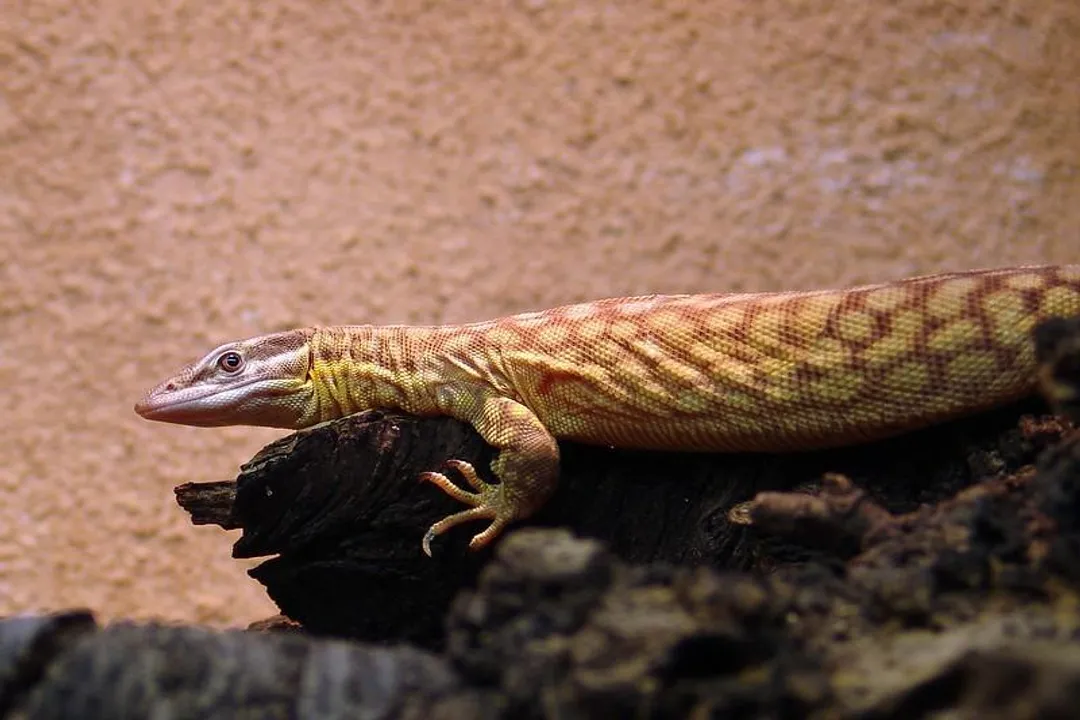
Determining the correct feeding schedule for a Spiny-Tailed Monitor, or Ackie monitor (Varanus acanthurus), is perhaps one of the most common considerations for new keepers, as their needs shift significantly as they transition from rapid growth to maintaining an adult weight. Ackies are primarily insectivores in the wild, though they will consume small lizards, and their captive diet should reflect this carnivorous foundation. The general consensus among experienced keepers is that small, frequent meals are healthier than sporadic large feedings, but the definition of "frequent" changes with age.
# Age Groups
The life stage of your Ackie monitor dictates the required frequency of feedings to support its development and eventual maintenance.
For hatchlings and juveniles, defined typically as those under six months old, the requirement is the most demanding: they should be fed on a daily basis. During this phase, the lizard is undergoing rapid growth, necessitating a constant supply of energy and nutrients to build bone, muscle, and tissue. At this stage, you should offer as much food as the young monitor is capable of consuming in a single day.
As the monitor moves into the subadult stage, generally considered after six months of age, the feeding schedule begins to transition away from daily feedings.
For established adults, those over a year old, the frequency slows down further. The primary recommendation is feeding them every other day. However, some experienced keepers advise feeding four to five days out of the week. This slight divergence suggests that while "every other day" is a safe baseline, an active, healthy adult might benefit from a slightly higher frequency, provided the total weekly intake is managed correctly.
A crucial exception to the standard adult schedule is reproductive females. Females that are actively breeding or producing eggs require the higher, daily feeding frequency, allowing them to eat as much as they want at each session to support egg development, even if the eggs are not intended for incubation.
# Meal Size
Frequency is only one half of the feeding equation; the amount offered per session is just as important for maintaining proper health and avoiding obesity. For subadults and adults following the every-other-day schedule, the goal is not to offer a set number of insects, but rather to provide an amount that they can consume entirely within a short, defined period, usually 5 to 10 minutes. Once this period elapses, any uneaten food should be removed from the enclosure.
When providing insects, the size of the prey item should generally not exceed the width of the monitor’s head. While young monitors need to eat until they are full to fuel growth, established adults need stricter portion control because, contrary to what some might assume, varanids do not necessarily have drastically higher metabolic rates than other lizards. One study indicated a daily consumption rate for wild Ackies that translates to a relatively small mass of food per feeding for a captive specimen. A common failure scenario, especially in adults, is overfeeding to the point where the lizard becomes sedentary; an adult that is constantly sluggish, hiding, and sleeping may simply be consuming too many calories relative to its activity level.
# Fine Tuning Frequency
While the age-based guidelines provide an excellent starting point, the best method for determining true long-term frequency involves observing the monitor's behavior and waste output.
If you adhere strictly to an every-other-day schedule for an adult, you are feeding approximately 3.5 times per week. If you choose the upper end of the suggested range, feeding four or five times a week, you need to ensure the meal size is appropriately smaller on those days to prevent calorie overload. For example, if feeding five days a week, the meal might be just enough to satisfy them in five minutes, whereas if feeding every other day, you might allow them slightly longer or offer a marginally larger volume, ensuring they are never totally stuffed.
The practical application here is to use your lizard as the ultimate gauge. If your adult monitor is active, alert, exploring, and producing well-formed, healthy-looking droppings, the frequency is likely correct. Conversely, if the lizard becomes noticeably lethargic, spends prolonged periods hiding, or shows signs of weight gain, even if you are feeding every other day, you should immediately drop the frequency down, perhaps to only three times a week or adjust the total quantity offered during those five-minute windows. This observational adjustment is critical because monitors are highly motivated by food, and if given the chance, they will consume an excessive amount that their metabolism cannot support.
# Dietary Variety Impact
The frequency guidelines also interact heavily with the quality and variety of the offered diet. Because a restricted diet can lead to nutritional imbalances, such as amino acid deficits, ensuring diversity is considered foundational to proper care. Ackies readily get bored if fed the same food item consecutively.
This need for variety is important when considering feeding frequency because different prey items carry different nutritional profiles, even after gut-loading and supplementation. For instance, some high-fat insects like waxworms or superworms should be avoided or used as rare treats due to the risk of obesity. If you primarily rely on a single, lower-fat staple like Dubia roaches, you might aim for the higher end of the adult frequency (4-5 times per week) to ensure caloric intake is sufficient for an active lizard, while ensuring you rotate in other staples like crickets—which are excellent for enrichment—or occasional supplements like quail eggs. If you are successfully incorporating varied, high-quality prey, you can comfortably maintain the recommended every-other-day schedule for adults, knowing the nutrients are balanced across the week.
When calculating your feeding plan, especially for younger, growing lizards, remember that they need sufficient calcium supplementation at every meal, while a multivitamin is usually only required about once a week to avoid toxic overdose. If you are feeding daily, this means the multivitamins must be withheld for six days between feedings to stay within safe limits, an administrative detail that daily feeding requires careful tracking of. This administrative complexity is another factor why transitioning to the less frequent, every-other-day schedule for adults simplifies supplement rotation slightly.
Related Questions
#Citations
how much do ackie monitors eat? : r/MonitorLizards - Reddit
What Do Ackie Monitors Eat? | ReptiFiles
Feeding Your Spiny-Tailed (Ackies) Monitor - ABDRAGONS
Ackie Monitor Care Sheet and Bioactive terrarium maintenance guide
Ackie Monitor Husbandry | Reptile Rounds | Dr. Eric Los Kamp,
ackie feeding - Aussie Pythons & Snakes Forum
Ackie Monitor Care Sheet | DubiaRoaches.com