How many times a day should I feed my American Bulldog?

The specific number of times an American Bulldog should eat each day isn't a single, universal decree; rather, it’s a schedule that evolves significantly from their energetic puppy days into their sturdy adulthood, with the type of food playing a role in the calculation. What matters most, as seasoned owners and nutrition experts confirm, is consistency and ensuring the total daily amount is correct for their specific needs, activity level, and body composition.
# Puppy Meals

The younger your American Bulldog is, the more frequently their small stomachs need refueling to support that impressive growth rate. Puppies, especially those of large breeds like the American Bulldog, require small, frequent meals to maintain consistent energy levels and aid digestion.
For the very youngest pups, generally those under four months old, one recommendation suggests feeding them four times per day. As they grow a little older, moving into the 4 to 6-month window, this frequency slightly tapers, often moving down to three meals daily. Another comprehensive guideline aligns with this, noting that puppies under six months old should have their total daily food allowance split into at least three to four meals. If you are following a commercial kibble chart, you should stick closely to the specific schedule listed on the bag, as formulations vary.
Once your American Bulldog puppy passes the six-month mark, you can begin the transition toward an adult schedule. This usually means dropping down to two or three meals per day. For large breed puppies specifically, 3 to 4 meals daily is a common starting point, gradually decreasing as they mature. This transition period is key; the goal is to ensure that as they grow older, you are providing enough nourishment for development without overfeeding, which can lead to excessive weight gain or overly rapid growth that strains developing joints.
# Adult Feeding
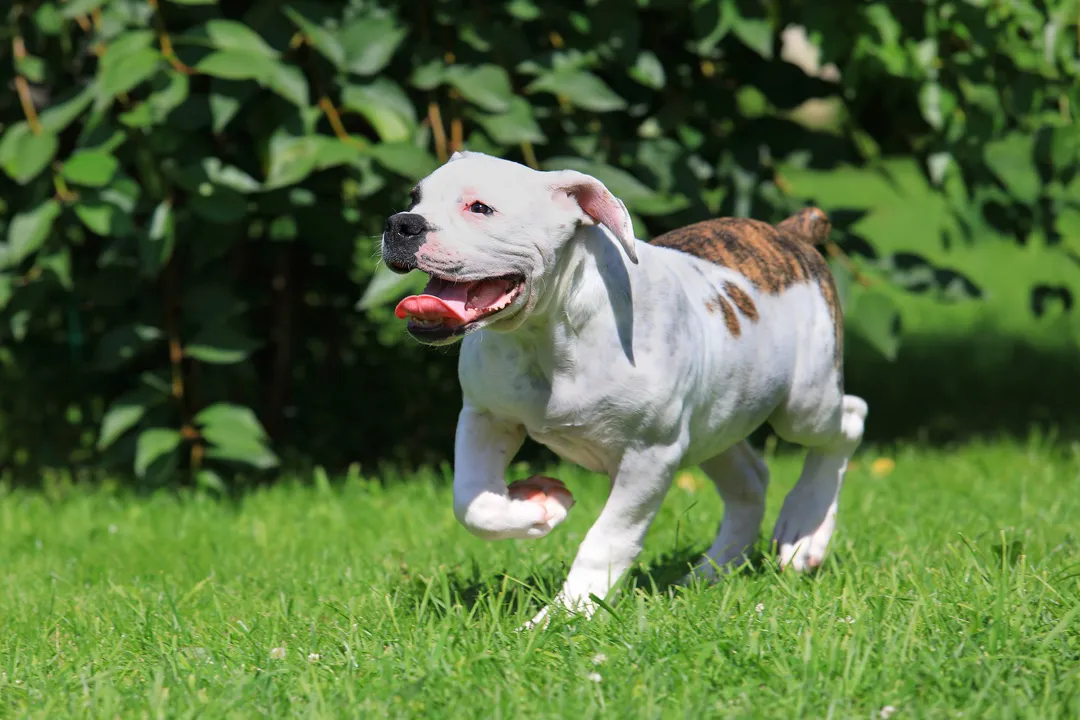
For the mature American Bulldog, the consensus lands firmly on twice per day. Once your dog has reached approximately six months of age, you should aim to transition them to an adult feeding plan that consists of two meals, one in the morning and one in the evening. This twice-daily routine helps prevent grazing behaviors and keeps the dog feeling satisfied throughout the day.
Keeping the meals separated—such as breakfast and dinner—is a common practice that helps owners manage portion control effectively. While the veterinarian’s recommendation is always the ultimate guide, twice a day is generally considered the appropriate baseline frequency for most healthy adult dogs.

# Diet Type Impact

The decision on what you feed your American Bulldog directly influences how you calculate the amount and how that amount is divided across those scheduled meals. This is particularly evident when comparing standard kibble with raw or fresh food diets.
For dogs eating commercial kibble, the manufacturer's feeding chart, which correlates the dog’s weight to a specific number of cups per day, is the primary reference. That total daily amount is then divided according to the age-based frequency discussed above.
When feeding a raw, species-appropriate diet, the calculation shifts to a percentage of the dog’s ideal body weight. For instance, an adult American Bulldog eating a complete, balanced raw diet is generally advised to consume between 2% to 3% of their ideal body weight daily. If your dog is highly active, they might need closer to that 3% mark, whereas a dog needing to shed a few pounds should stick closer to the 2% range. The raw feeding philosophy suggests that these naturally low-carbohydrate diets support better weight management, which is critical for a breed prone to obesity. Owners feeding raw patties or measured portions simply divide the total daily percentage calculation by the number of meals they feed (usually two for adults).
# Portion Control

While establishing the frequency—two meals for an adult, three for a growing pup—is essential for routine, getting the amount right overrides frequency itself in terms of importance. American Bulldogs, like many bulldogs, have a reputation for loving to eat and will readily consume more than they need if given the chance. This tendency makes careful portioning a guardian-level responsibility for the owner.
Many feeding charts, especially for commercial kibble, can overestimate the required daily intake. For example, an owner of a 60-pound female might find she thrives on significantly less than what a generic chart suggests when split across her two daily meals. To combat this, you should use the feeding guidelines on the food packaging as a starting point only, and then adjust based on your specific dog’s condition. A healthy American Bulldog should appear lean and well-muscled, not carrying excess fat. If you are ever unsure how to calculate the exact caloric need or ideal weight, consulting your veterinarian for a target number is the surest route.
A helpful way to frame this is by considering the distribution of that total daily allowance. If you have a 75-pound adult American Bulldog that needs 1,800 calories total per day, feeding them 900 calories in the morning and 900 calories in the evening ensures stable energy and metabolism throughout the day, rather than one large intake and one small one, or free-feeding. If you are feeding raw, and the calculation suggests 3% of their 75lb weight per day, that total daily weight equivalent is split evenly between the two meals.

# Monitoring Condition
The most sophisticated feeding chart in the world is useless if you aren't observing the actual animal in front of you. Nutrition is information sent to the body, and your dog’s appearance and behavior are the feedback loop that tells you if the information is correct. Because American Bulldogs are prone to putting on weight, which exacerbates joint issues like hip dysplasia, constant monitoring is non-negotiable.
A foundational principle of feeding these muscular dogs is to prioritize high-quality animal protein and limit carbohydrates, as carbs are cited as a major contributor to obesity in bulldogs. When assessing your dog, look for a lean physique where you can feel the ribs without seeing them prominently sticking out. Your veterinarian can show you how to accurately score your dog’s Body Condition Score (BCS).
If you notice your dog is gaining unwanted fat—a common failure scenario given their appetite—the first adjustment should be reducing the amount of food offered at each meal, keeping the frequency the same. If your dog is consistently hungry right before the next scheduled meal, or seems lethargic despite eating the recommended amount, you might consider increasing the total daily amount slightly or, for puppies, adding one extra small meal back into the rotation temporarily.
A practical tip for owners managing an active dog in variable environments is to link frequency adjustments to activity periods. If you have a week with heavy training or long hikes—perhaps because you live near scenic trails perfect for their activity level—you might temporarily increase the amount fed in the evening meal slightly, while keeping the morning meal the same. Conversely, during a rainy week where outdoor activity is limited to short potty breaks, you should slightly reduce the total daily allowance, perhaps taking a quarter cup off each meal, to preemptively manage weight gain associated with lower energy expenditure. This nuanced, experience-based approach, tailored around the established twice-a-day adult schedule, ensures you are feeding the dog you have today, not just the breed standard.
Ultimately, whether you opt for commercial food or a species-appropriate raw diet, the core philosophy remains: establish a consistent schedule appropriate for your dog’s age, calculate the total daily amount based on need and condition, and adjust that amount based on what you observe in your American Bulldog’s weight and energy.
Related Questions
#Citations
Guideline to Feeding an American Bulldog
What's the Best Dog Food for an American Bulldog? - ProDog Raw
How Often Should Dogs Eat and How Much Should You Feed Them?
Ultimate Bulldog Puppy Feeding Chart for Healthy Growth
Complete Care Guide for an American Bulldog: Health, Diet ...
The Six Critical Rules Of Your Bulldog's Diet
American Bulldog Dog Breed Health and Care - PetMD