How many complete Argentinosaurus have been found?
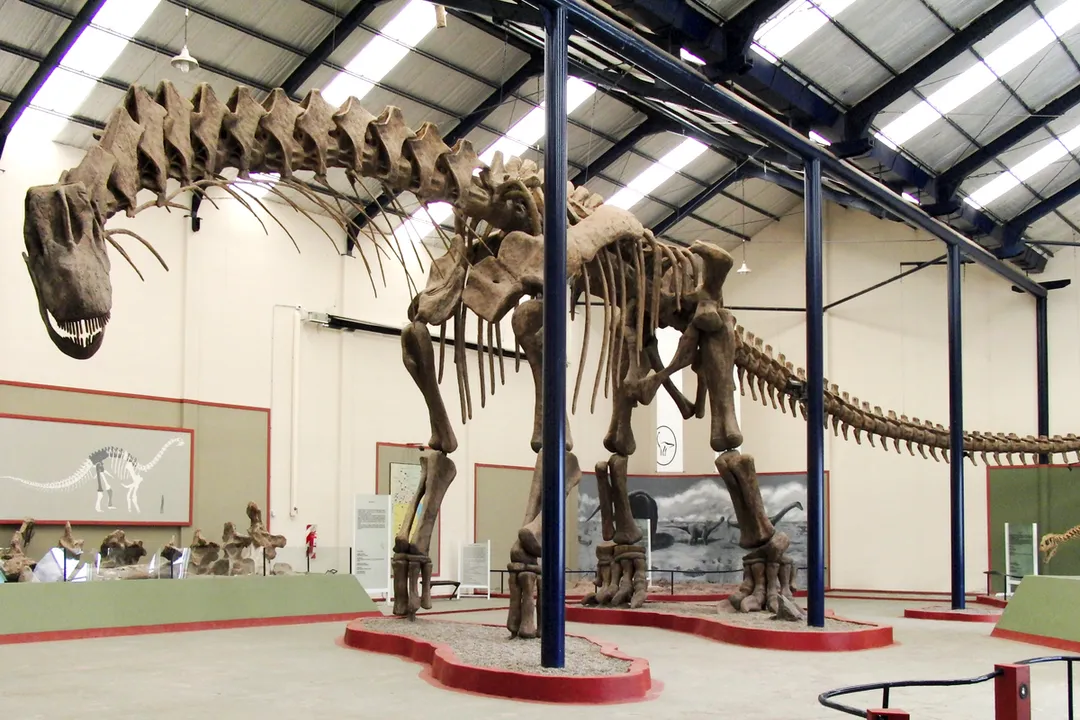
The simple, factual answer to how many complete skeletons of Argentinosaurus have ever been uncovered by paleontologists is none. This massive dinosaur, often cited among the largest land animals known to have existed, is represented in the scientific record by a collection of highly fragmentary remains. [1][5][9] This reality is crucial for understanding the ongoing scientific debate surrounding its exact size and anatomy; every estimate relies on extrapolations from a limited, scattered fossil assembly rather than a full anatomical blueprint. [6][7]
# Fossil Record
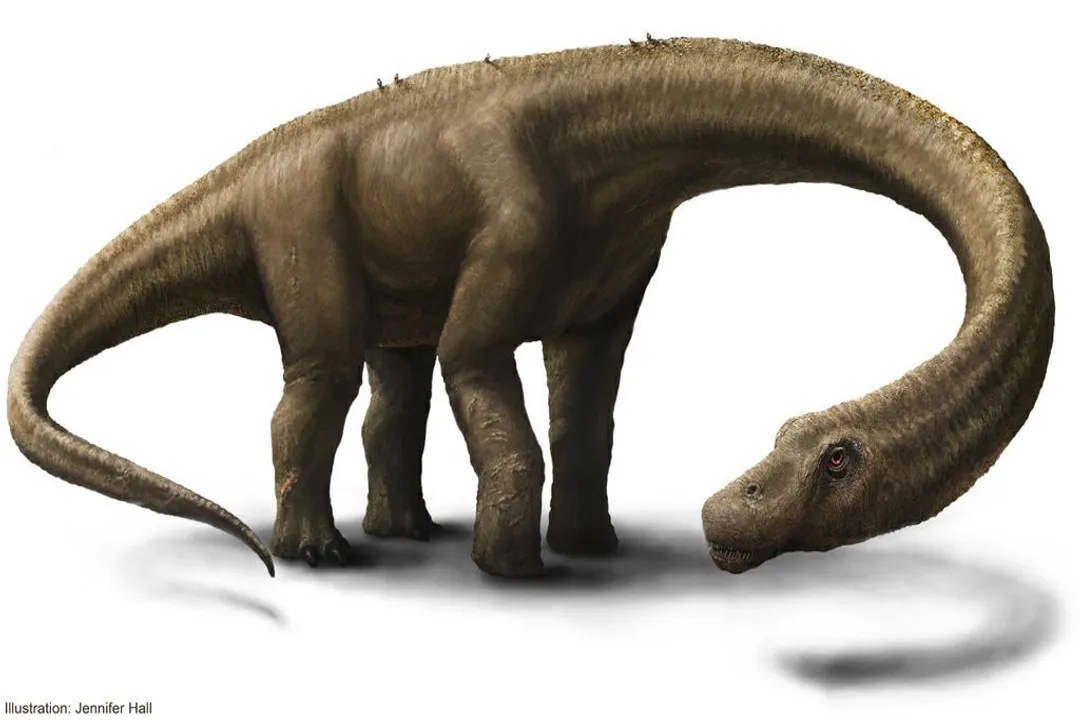
The known fossil evidence for Argentinosaurus huinculensis is surprisingly sparse considering the colossal reputation of the animal. [2] The material that constitutes the basis for this dinosaur’s description was first reported by paleontologists José Bonaparte and Guillermo Coria in 1993. [1] The holotype specimen, cataloged as MACN-PV-R 2328, along with associated bones discovered nearby, gives us a glimpse into this giant’s structure. [5]
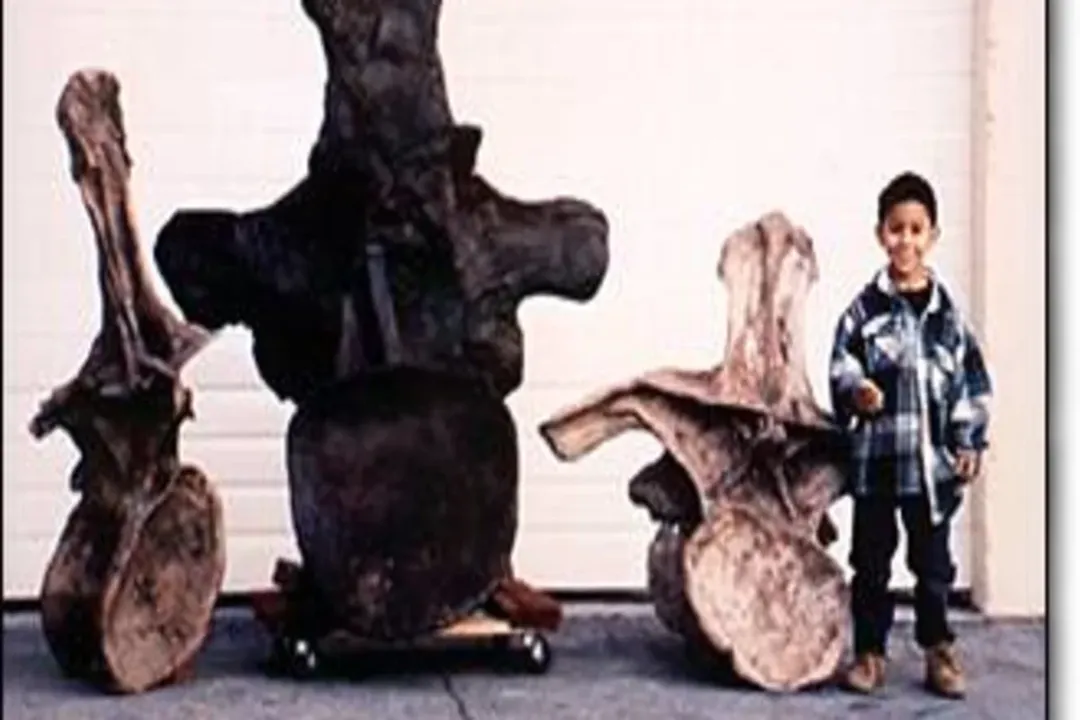
What scientists actually possess includes several vertebrae, some of which are truly enormous, along with associated ribs and potentially fragments of caudal (tail) vertebrae. [1][4][7] While there is mention of possible limb bones, the material is not enough to confidently reconstruct the entire limb structure, which is essential for weight bearing. [8][10] The bones were not articulated—meaning they were not found lying together in the position they died in—which is a common scenario for large animals whose carcasses were scattered by scavengers or weathering before fossilization could occur. [10]
# Material Quantification
While sources confirm the discovery of vertebrae, ribs, and possible limb fragments, a definitive tally beyond "partial" is difficult because the exact number of individual specimens making up the Argentinosaurus sample is often grouped together in publications. [1][5] What is certain is that no single specimen provides a continuous backbone or a fully intact set of limb girdles. [3] For context, a "complete" dinosaur skeleton usually implies that over 50% of the bones are present and identifiable, a threshold Argentinosaurus has not approached. [5]
# Discovery Context
The critical fossil assemblage was unearthed in the Neuquén Province of Argentina. [1] This region, specifically the Candeleros Formation, is renowned for yielding fossils from the Late Cretaceous period, roughly 94 to 97 million years ago. [1] The discovery site itself, being relatively remote, contributed to the fragmented nature of the find, as the remains likely underwent significant transportation or localized erosion before burial. [10]
The initial description established Argentinosaurus as a member of the Titanosauria group, which is characterized by its massive size and often robust, though sometimes lightly built, skeletons. [3] When scientists first evaluated these bones, the sheer scale of the recovered vertebrae immediately suggested an animal potentially rivaling or exceeding previously known giants like Brachiosaurus. [4]

# Size Estimates
The major challenge in discussing Argentinosaurus stems directly from the incompleteness of the fossils. Because we lack a full vertebral column, a complete femur, or an intact pelvis, paleontologists must rely on scaling methods that use the few large bones they do have—primarily the massive vertebrae—and apply ratios derived from more complete sauropods. [6]
This process introduces uncertainty. For example, if the known vertebrae represent the middle section of the back, the neck and tail proportions, which make up the bulk of a sauropod's length, must be estimated based on related, better-preserved species. This is necessary to generate estimates that place Argentinosaurus in the running for the heaviest land animal ever, sometimes cited as potentially exceeding 70 metric tons. [2][6]
One interesting implication arises when considering the biomechanics of such a massive creature known only from its midsection. Since the fossil record is missing critical sections like the hip girdle or the full length of the sacrum, any calculation regarding the actual load bearing capacity or the forces exerted on the spine during locomotion is purely theoretical. [1] In essence, we can guess the animal was enormous based on the density and scale of the bones present, but we cannot definitively prove how it managed its enormous mass standing upright without the anchoring structures that are currently missing. [3] This uncertainty contrasts sharply with studies on smaller dinosaurs where complete skeletons allow for direct measurement of muscle attachment scars and joint surfaces.
# Titanosaur Status
Argentinosaurus belongs to the Titanosauria, a diverse group of sauropods that dominated the Cretaceous period globally. [3] A general pattern emerges when studying the very largest members of this clade, and it mirrors the situation with Argentinosaurus: the most gigantic titanosaurs are frequently known from fragmentary evidence. [7]
This pattern might suggest a few things about the biology or taphonomy (the study of how organisms decay and become fossilized) of super-giant sauropods. Consider the sheer quantity of bone material required for a dinosaur weighing 50 to 100 tons to survive the fossilization process intact. The larger the animal, the greater the surface area exposed to environmental degradation after death. It is plausible that while many of these giants lived and died, the chances of all their massive bones being preserved together, undisturbed by geological forces or scavengers, decreases exponentially with size. [9]
It is often easier to find a handful of enormous vertebrae from a Argentinosaurus than to find a complete, articulated skeleton of a much smaller, but more common, ornithopod from the same environment. This leads to a curious situation where our knowledge of the biggest creatures is built upon the smallest fraction of their total anatomy. [10] While other titanosaurs, like Patagotitan mayorum, are known from more extensive remains that allow for better mass estimation and even 3D modeling, Argentinosaurus remains somewhat locked behind the curtain of its fragmented legacy. [1] Comparing the known femur fragment of Argentinosaurus to the more complete limb bones of its contemporaries helps scientists bridge the gap, but it remains an educated guess rather than a direct observation. [8]
In summary, while Argentinosaurus represents a high-water mark for terrestrial animal gigantism, its story is one of tantalizing hints. Paleontologists are working with the most vital structural pieces—the weight-bearing vertebrae—but the complete picture of this Late Cretaceous behemoth awaits the discovery of a much more substantial fossil find. [1][5]
Related Questions
#Citations
Argentinosaurus - Wikipedia
Argentinosaurus: The largest the land has ever known
Argentinosaurus, the largest member of the titanosaurs. Measuring ...
Bringing the biggest dinosaur to life - NBC News
Argentinosaurus - Dinosaur Wiki | Fandom
What's the world's largest dinosaur? - Live Science
Reconstructing Argentinosaurus huinculensis' massive skeleton
Argentinosaurus - Prehistoric Wildlife
Argentinosaurus Was Almost Half as Long as a Football Field
Argentinosaurus Facts For Kids | AstroSafe Search - DIY.org