How long do Japanese macaques live?
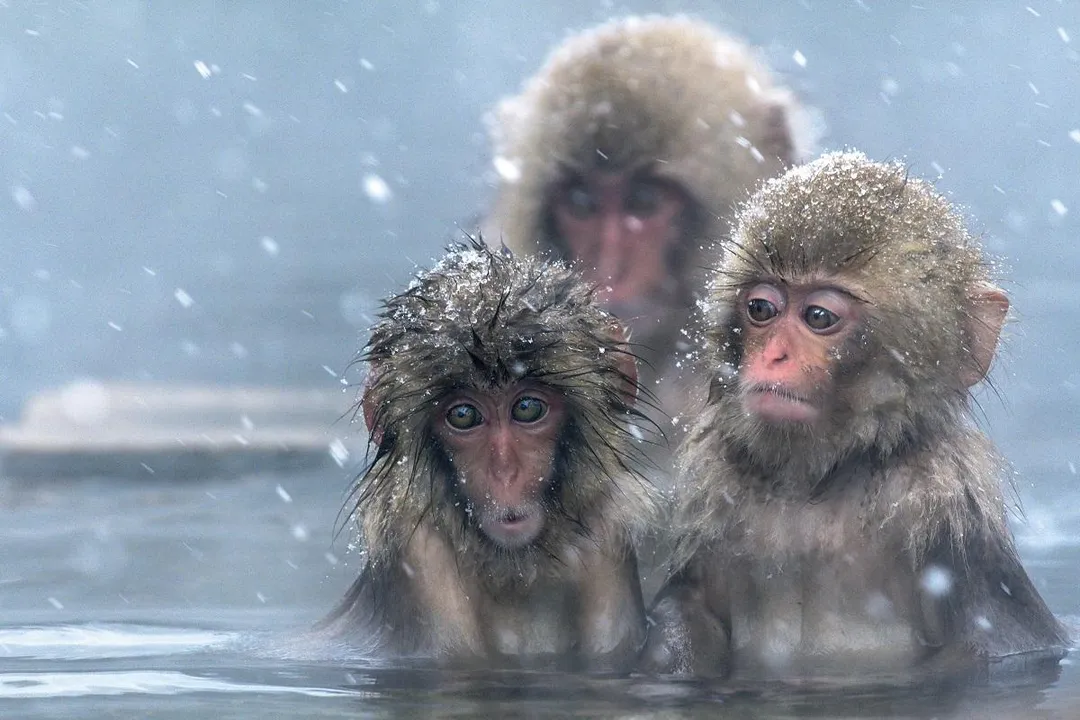
The Japanese macaque, perhaps best known to the global public as the "snow monkey," is a species that commands respect not only for its iconic image bathing in thermal springs but also for its impressive longevity, especially when considering its challenging natural habitat. Determining exactly how long an individual of this species, Macaca fuscata, persists in the wild or in managed care involves looking at several ecological factors that influence mortality rates. While precise data collection in remote, wild populations can be difficult, the available information paints a picture of a primate capable of reaching impressive ages, provided it navigates the rigorous pressures of its environment. [1][2]
# Longevity Figures
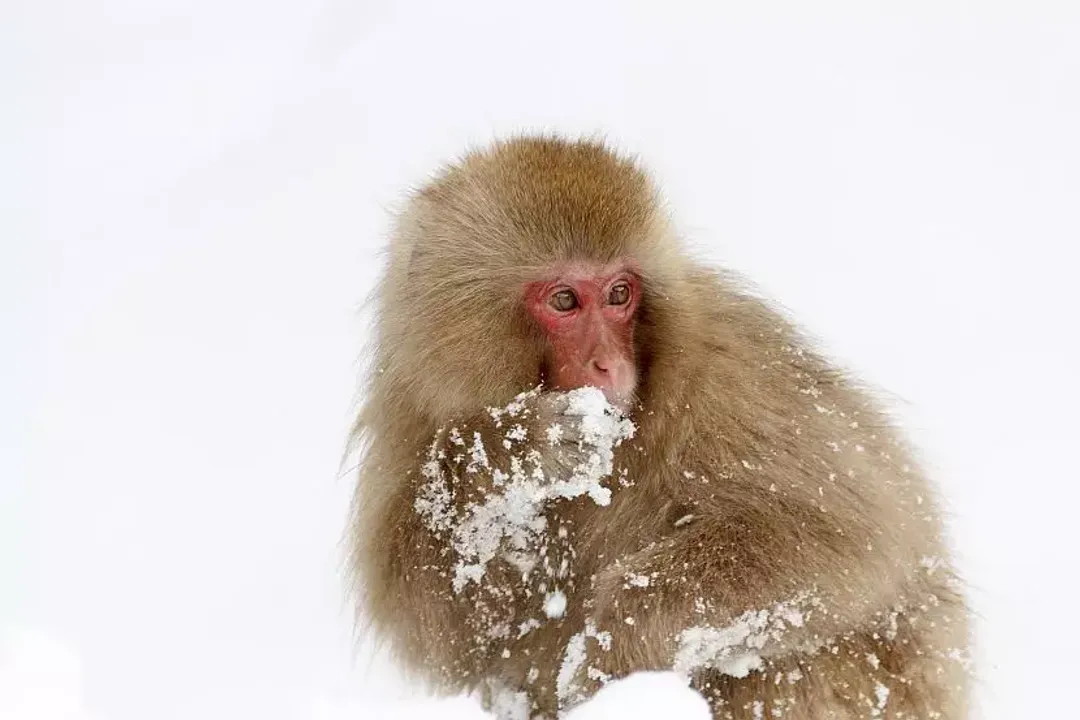
When comparing life spans, a crucial distinction must always be drawn between individuals living in their native, unpredictable environment and those residing in zoological settings where resources, safety from predators, and veterinary care are assured. [3][4] In the wild, Japanese macaques typically reach ages ranging from about 20 to 30 years. [5] Some sources narrow this slightly, suggesting that life in the wild often caps out around 25 years for both males and females, though this can vary depending on the specific troop and region. [6]
Captive environments offer a significantly different proposition for the macaque. Animals under professional care often extend their lives considerably, sometimes reaching ages in the mid-to-high thirties. [1][3] For instance, some records indicate that a captive female might live into her early to mid-thirties. [5] This difference of potentially ten or more years between the wild and captivity immediately highlights the cumulative costs—nutritional, energetic, and physical—exacted by life outside managed environments. [2] The upper limit of their lifespan, whether in the wild or captivity, is determined by a complex interplay of genetics, social rank, and environmental variability. [6]
# Environmental Stressors
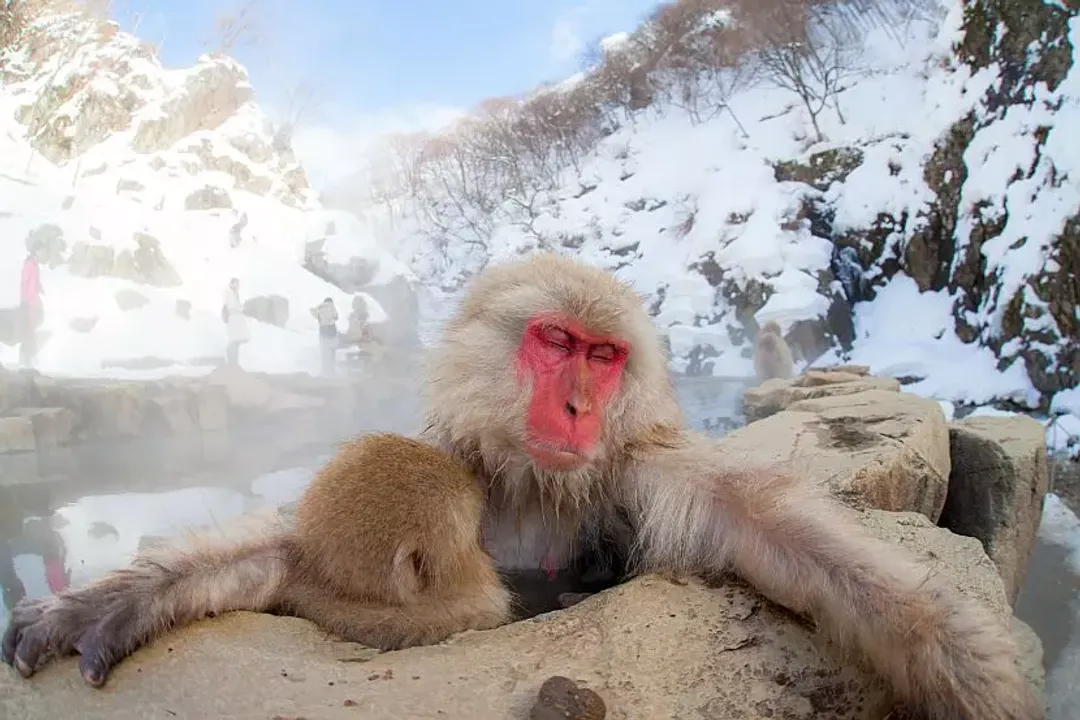
The Japanese macaque is the most northern-living non-human primate in the world, famously inhabiting areas where snow cover can persist for months. [7][4] This adaptation to cold dictates much of their physiological and behavioral investment, which directly influences their overall health trajectory and, consequently, their lifespan. Surviving frigid winters requires an enormous energy expenditure just to maintain core body temperature. [6]
The famous hot spring behavior, while visually compelling, is not merely recreation; it is a critical survival strategy. By soaking in geothermal waters, the macaques conserve the considerable calories that would otherwise be burned shivering or huddled together for warmth. [7] This energetic saving is vital, particularly when foraging for food becomes scarce due to heavy snow cover. [4] If foraging success drops dramatically during a particularly harsh winter, the macaque must dip into fat reserves, creating a deficit that can lead to long-term health compromises or, acutely, death from starvation or exposure. [2]
One interesting observation when considering longevity is the trade-off inherent in their thermoregulatory strategy. While using hot springs saves immediate energy, the time spent soaking is time not spent foraging for high-calorie food sources or engaging in social bonding activities like grooming, which also bolster immune function. [7] Therefore, the reliance on the hot springs, while essential for surviving the cold, might inadvertently shorten the time window available for acquiring the necessary nutrients to support a longer, healthier life, especially if the local food supply is already stressed by environmental changes. [4] The ability to switch effectively between these two high-priority behaviors—thermoregulation and foraging—is likely a key determinant in which individuals reach the upper bounds of the macaque age range.
# Group Dynamics
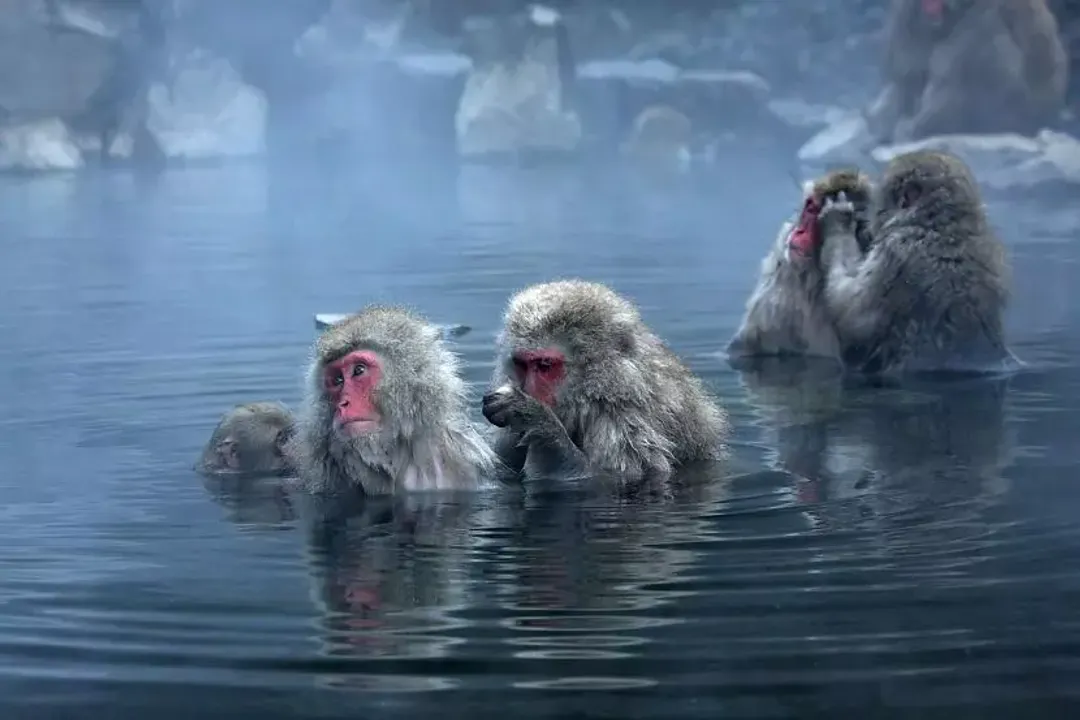
Japanese macaques live in complex, multi-male, multi-female social groups called troops, which can range in size from a handful of individuals up to several hundred. [1][6] Within these troops, a strict linear dominance hierarchy is established, particularly among males. [2] This social structure profoundly impacts the day-to-day stress levels and health outcomes for every member, which indirectly influences lifespan.
Lower-ranking individuals, especially subordinate males, experience chronic stress due to increased vigilance, more frequent aggressive encounters, and poorer access to prime resources, including food and desirable resting or bathing spots. [6][3] High, sustained levels of stress hormones, such as cortisol, are known across the animal kingdom to suppress the immune system and accelerate cellular aging processes. Consequently, a low-ranking macaque might succumb to disease or internal strain earlier than a high-ranking individual, even if both were born in the same year and faced similar weather conditions. [2]
Grooming behavior plays a preventative role in lifespan extension. Beyond removing ectoparasites, mutual grooming is a fundamental social lubricant that reduces tension and reinforces alliances. [1] The time spent grooming is an investment in future well-being, as strong social bonds provide comfort and support, perhaps buffering the effects of minor injuries or seasonal nutritional slumps. [3] Therefore, a macaque with strong social connections is often a healthier macaque, better positioned to survive the rigors that shave years off the lives of marginalized members.
# Comparative Lifespans
To better appreciate the macaque's longevity, it is useful to place its lifespan into a broader primate context. Many other species of Macaca, such as the rhesus macaque (Macaca mulatta), exhibit comparable life expectancies in the wild, often ranging between 20 and 25 years. [5] This suggests that the Macaca genus has an inherent physiological lifespan potential generally residing in the three-decade range, which is then curtailed by external factors in the wild. [2]
If we consider the potential ceiling, a captive Japanese macaque living beyond 35 years is achieving a lifespan extension of over 50% compared to the median wild counterpart, assuming a wild median survival around 22 years. This massive gain—the ability to live 1.5 times longer—is a stark quantification of the continuous, low-level stress imposed by predation risk, nutritional uncertainty, and inter-individual conflict in their natural habitats. [4][6] In the wild, even small, frequent threats accumulate; in captivity, the removal of these constant drains allows the biological machinery to simply operate for longer. [1] Furthermore, while the macaques are known for their cultural traits, such as the famous potato-washing behavior observed in some groups, these learned behaviors primarily optimize foraging efficiency rather than directly extending life beyond genetic potential, though they certainly aid in resource acquisition during tough times. [7]

# Population Context
While lifespan relates to the individual, the overall viability of the species depends on the population dynamics within the troop. Japanese macaques are listed as "Least Concern" globally by the IUCN Red List. [4][7] This relatively secure status indicates that, on the whole, the pressures of mortality—whether from old age, predation, or harsh winters—are balanced by successful recruitment into the population. [4] The presence of large, stable populations in areas like Jigokudani Monkey Park suggests that when environmental conditions are favorable (reliable access to hot springs and supplemental feeding, where applicable), individuals are indeed achieving or approaching their maximum potential lifespans. [7]
However, populations outside of these well-known, tourist-supported areas face greater inherent risks. In more remote parts of their range, juvenile mortality can be high, and adult survival can be more erratic, heavily influenced by regional variations in snowfall or local agricultural pressures that affect their food supply. [6] These regional differences demonstrate that the "average" lifespan is highly contextual. A macaque living near human settlements might face different threats (e.g., traffic collisions, conflict over crops) than one deep in the mountains, even if both are genetically the same species. [4] Understanding the lifespan is thus intrinsically linked to understanding the geography and human impact on their specific home territory. [3]
# Maturation and Later Life
The rate at which a macaque reaches reproductive maturity also plays a role in the effective length of its productive life. Females generally begin breeding around three or four years of age, while males typically mature slightly later. [5] This relatively early start means that individuals have many years of reproductive output before they begin to experience the normal declines associated with old age, which usually become apparent after their mid-twenties in the wild. [6]
For the aged macaque, social standing often changes. Older, high-ranking males may retain their status for a time, but as they weaken, they become vulnerable to challenges from younger, stronger rivals. [2] Surviving into old age often means becoming a relatively sedentary member of the troop, relying on the lower-ranking tolerance of their relatives or their established place in the social structure to secure residual food access without engaging in strenuous conflict. [1] Their accumulated social knowledge, however, remains an asset, potentially guiding younger members toward reliable food sources discovered over decades of observation, a subtle but important contribution that carries the troop through difficult seasons. [3] Ultimately, the Japanese macaque’s lifespan is a testament to biological resilience against extreme cold, modulated moment-to-moment by the politics of the troop and the vagaries of the Japanese winter.
#Videos
How Long Do Japanese Macaques Live? - The Wild Life Explorer
Related Questions
#Citations
A species account of the Japanese macaque (Macaca fuscata) | TTU
Macaca fuscata (Japanese macaque) - Animal Diversity Web
Japanese macaque - Wikipedia
Japanese macaque - Wisconsin National Primate Research Center
Japanese Macaque | Lincoln Park Zoo
Snow monkey facts - The Great Projects
Japanese macaque, Macaca fuscata
My Search for the Snow Monkeys of South Texas
How Long Do Japanese Macaques Live? - The Wild Life Explorer
Japanese macaque facts and figures - AAP English