What made terror birds so terrifying?
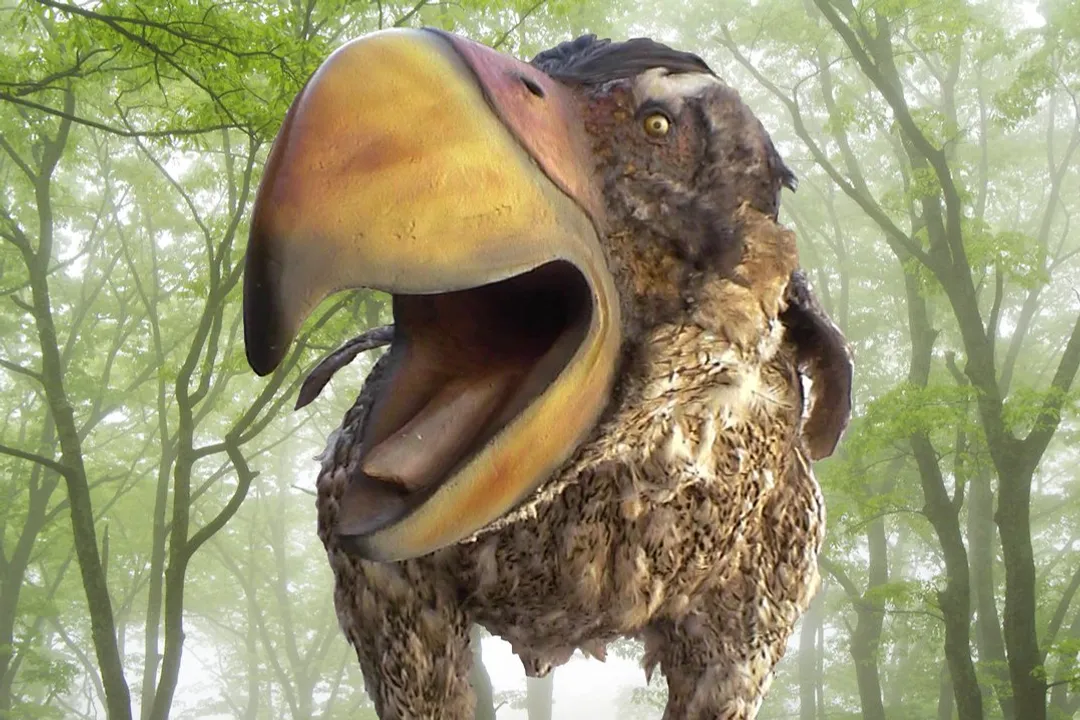
The sight of a prehistoric terror bird striding across the ancient South American plains must have been enough to curdle the blood of any mammal in the vicinity. These creatures, formally known as phorusrhacids, were not the distant, clumsy relatives of modern birds; they were the undisputed, flightless apex predators of their time, ruling a world populated by primitive mammals and smaller carnivores for millions of years. Unlike the ratites of today, which occupy herbivorous niches, the terror birds embodied the ferocity often associated with their earlier dinosaur relatives, stepping into the vacant role of top carnivore after the extinction of the non-avian dinosaurs. Their terrifying reputation stemmed from a highly specialized anatomy built entirely around hunting on the run and delivering lethal blows with their disproportionately massive heads and beaks.
# Colossal Stature
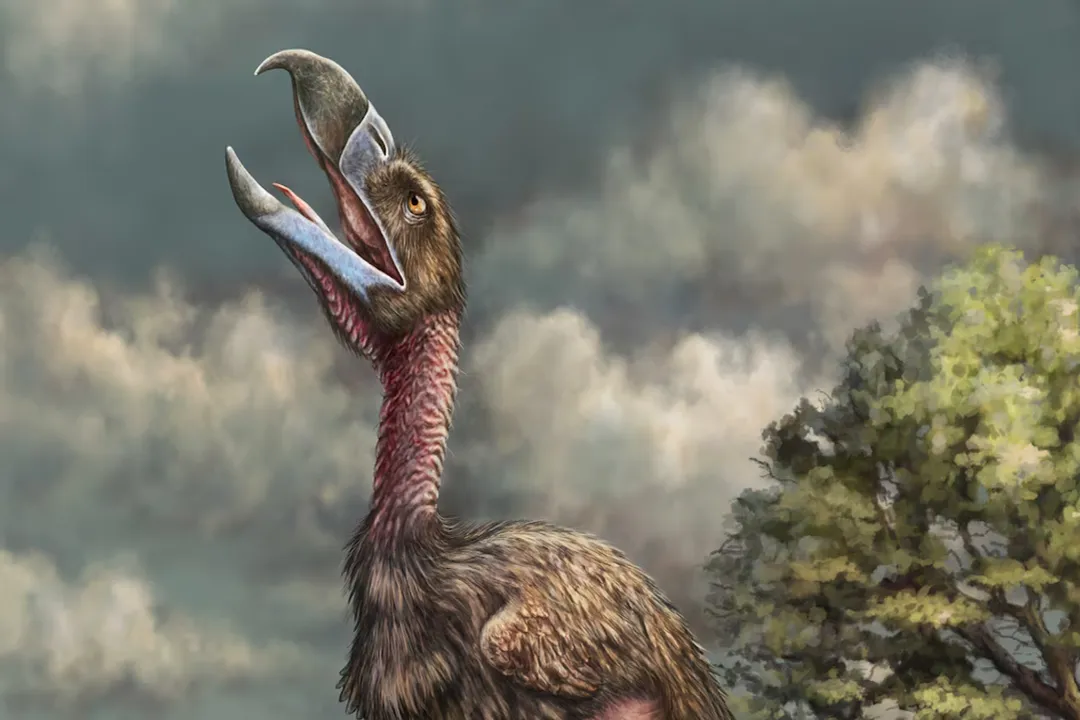
What immediately set these birds apart was sheer scale. Terror birds were not uniform; they spanned a wide spectrum of gigantism, ranging from smaller species comparable in size to their modern, walking relatives, the seriemas, up to true behemoths. The largest among them, like Kelenken guillermoi, likely stood nearly 3 meters (around 9.8 feet) tall. Estimates suggest some of the most massive individuals, such as Devincenzia, could have tipped the scales at up to 350 kilograms (770 pounds). Imagine an animal standing taller than a person, with a head proportionally enormous—one of the largest skulls ever found, belonging to Kelenken, measured 71 centimeters long, with a beak that accounted for 46 centimeters of that length. This presented a profile of immense, predatory mass moving rapidly across the landscape, an image far removed from the familiar sight of an ostrich or emu.
It is fascinating to consider the evolutionary path that led these birds, related to the small, ground-dwelling, flying seriema, down such a path of gigantism and carnivory. While the seriemas today stalk grasslands, snatching small reptiles and shaking them to death, the Phorusrhacidae took this terrestrial lifestyle to an extreme, eliminating the need for flight entirely and redirecting all that potential wing energy into leg power and cranial impact. This evolutionary commitment to terrestrial dominance meant they were perhaps the only true lineage of large, carnivorous, flightless birds to ever exist in South America during the Cenozoic era.
# The Weaponized Skull
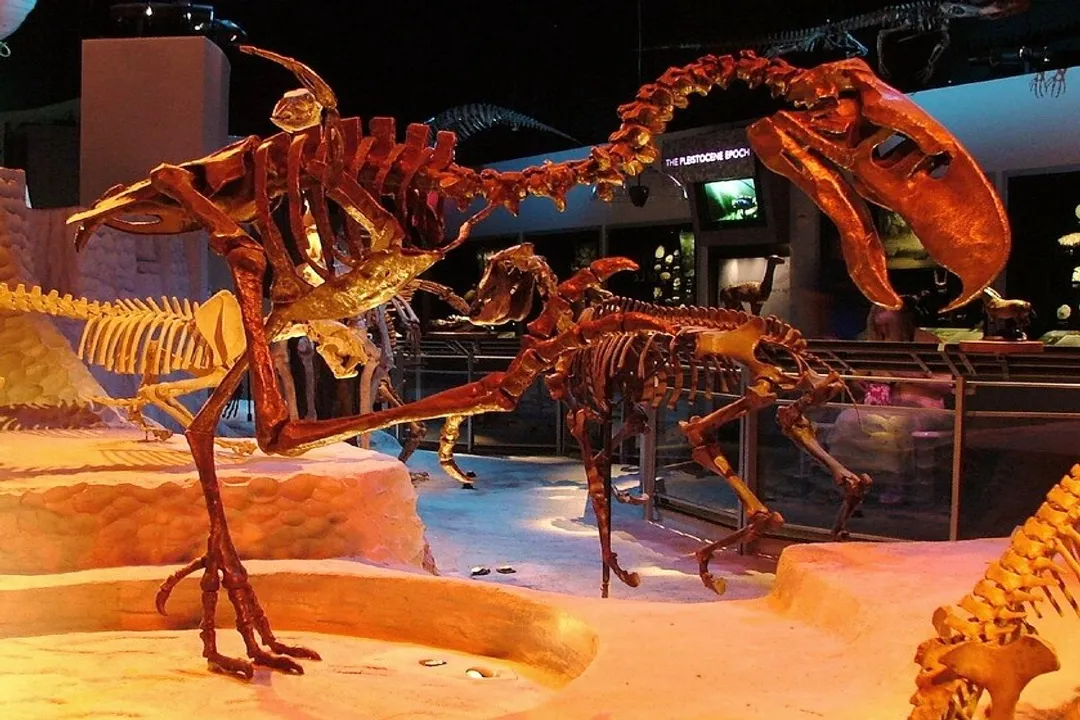
The most visually arresting feature of the terror bird was its skull, a structure that seems tailor-made for maximum impact. The beak, curved sharply like that of a giant eagle, was not just for show; the bones were tightly fused, providing resilience against force applied from front to back. While initial studies sometimes suggested relatively weak bite forces, later biomechanical analyses painted a picture of an animal capable of delivering devastating blows. The neck anatomy is key here. Examination of the cervical vertebrae reveals bifurcate neural spines and high neural spines in the lower regions, suggesting a structure capable of extreme flexibility. This meant that although the bird might appear stocky, its neck could stretch to achieve greater height for intimidation before delivering a powerful downward strike.
The force generated by the heavy head coupled with the neck muscles allowed for fatal blows delivered via pecking motions. Some scientists speculated that the method involved repeatedly driving the hooked beak into a smaller victim to secure a kill, rather than relying on a single crushing bite like large felids. Furthermore, fossil evidence from a small subspecies suggested the internal structure of the beak was hollow and reinforced by thin-walled trabeculae, optimizing it for impact without excessive weight. The very appearance of this equipment is what led to their common name; they were built like living battering rams, driven by powerful legs and wielded by a neck capable of rapid, repeated assaults. It is critical to distinguish these South American predators from the European bird Gastornis, which shared a similar intimidating profile but was determined by calcium isotope analysis of its bones to have been an herbivore, subsisting on a plant-based diet. This contrast confirms that Phorusrhacids were unique apex predators, not merely oversized browsers with a scary facade.
# Speed and Foot Strategy
Terror birds were built for the open plains, and their locomotion was central to their terrifying efficacy. Fossil evidence suggests they were very fast runners, with theories putting their top speed around 48 km/h (30 mph). This speed was achieved through an anatomy favoring rapid locomotion: short thigh bones balanced by elongated bones in the lower leg and foot, which increased the functional reach of the leg and shortened recovery time during the running cycle.
Crucially, new fossil trackways, dubbed Rionegrina pozosaladensis, dating to six million years ago, provided unprecedented insight into how they used their feet while running and attacking. These tracks confirmed a functionally didactyl foot posture: the bird rested its weight primarily on two digits, while the third, inner toe was held up and away from the ground. This gait is shared with ostriches and ancient dinosaurs like Velociraptor, serving the vital function of keeping the claws sharp and undamaged during high-speed movement.
The elevated toe was not merely vestigial; it bore a formidable weapon, the "sickle claw," which was relatively uniform across species and curved for securing objects. This functional arrangement allowed the terror bird to run quickly, then utilize that raised toe for offense. The most likely scenario involves the bird kicking at or stamping down on smaller prey to pin it, rendering it helpless before using its hooked beak to dispatch the victim. While depictions often show them as ferocious megafauna hunters, the evidence points toward a strategy heavily invested in abundant smaller prey that could be secured and dispatched with the feet, much like modern seriemas, albeit on a vastly larger and more powerful scale.
An interesting nuance emerges when comparing different genera. While some, like Andalgalornis, were fast in a straight line, they seem to have been poor at making sharp turns at speed. This suggests that for the species adapted for sheer pursuit, their hunting strategy likely favored chasing down less agile prey in open environments rather than engaging in complex, agile maneuvering required for catching small, darting targets in dense cover. The successful maintenance of this lineage across millions of years implies they filled an ecological role where straight-line speed was frequently more advantageous than serpentine agility.
# Ecological Dominance
For much of the Cenozoic, these birds reigned supreme in South America. They competed intensely with native carnivorous metatherians called sparassodonts. The presence of such dominant avian predators may have significantly shaped mammalian evolution; some evidence suggests that sparassodonts, perhaps unable to compete effectively on the open plains, retreated to forested habitats to avoid the swift, high-impact attacks of the phorusrhacids. The terror birds occupied the apex slot until the geological formation of the Isthmus of Panama connected North and South America.
The migration event, known as the Great American Interchange, allowed large placental carnivores from the north—cats, dogs, and bears—to cross over. One terror bird, Titanis, managed to migrate north to Florida, coexisting with creatures like Smilodon before its extinction about 1.8 million years ago. While initial theories blamed the incoming carnivores for the decline of the South American terror birds, later analysis of the timing suggests a more complex picture. Many of the native predator lineages, including most phorusrhacids and the sparassodonts, disappeared before the main pulse of large carnivore arrival. This points toward environmental shifts as a more probable primary driver for the extinction of the larger forms, rather than direct, one-on-one competition with mammoths or saber-toothed cats. However, smaller species, like Psilopterus, proved more adaptable, surviving in South America until the late Pleistocene, relatively close to the arrival of humans, though human hunting is generally ruled out as the main cause for the entire group’s demise.
The terror birds' success, especially in South America, illustrates a fascinating, though fleeting, instance of avian dominance over nascent mammalian diversification in a novel evolutionary theater. While dinosaurs were wiped out 66 million years ago, the descendants of that lineage reclaimed the role of continent-dominating terrestrial predator in the south, using a strategy—fast running, kicking, and powerful striking—that echoed aspects of their dinosaurian ancestors, like the dromaeosaurs, who also balanced on two functional toes. This complete occupation of the apex niche by birds for such an extended period is a powerful reminder of how flexible and opportunistic evolution can be when given a wide-open ecological playing field.
Related Questions
#Citations
What made 'terror birds' so terrifying? New fossil prints reveal killer ...
The menacing reign of the terror birds | Earth Archives
Phorusrhacidae - Wikipedia
Terror bird was frightening but harmless - Max-Planck-Gesellschaft