How do Whimbrels find food?
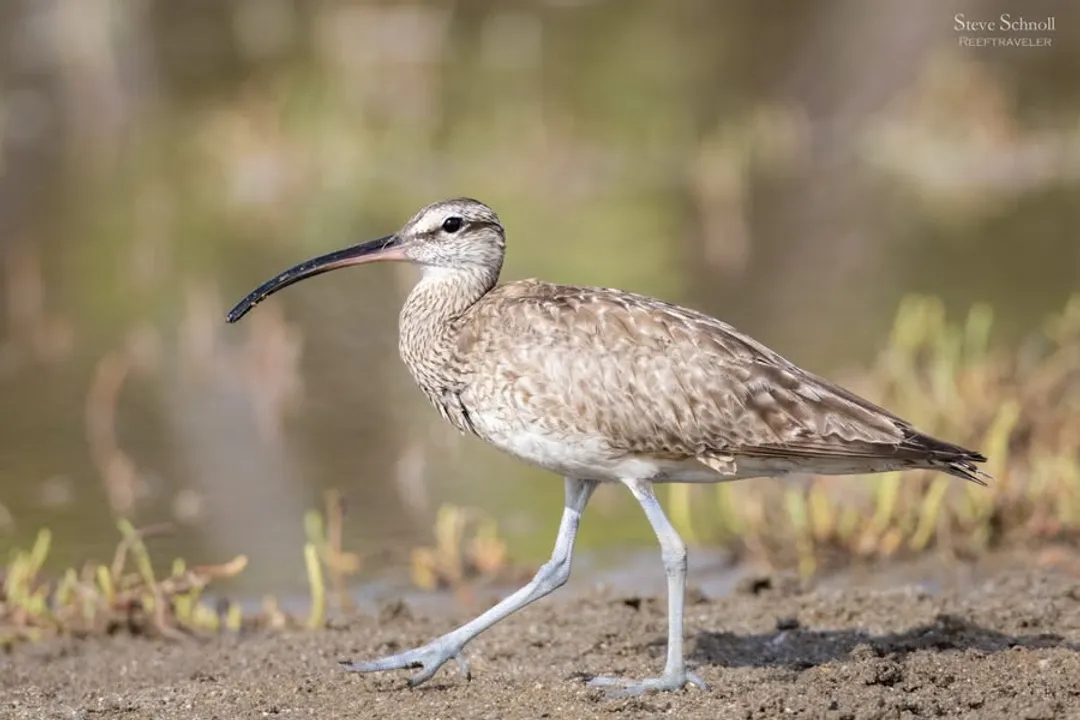
The methods a Whimbrel employs to secure its meal are exquisitely adapted to its long-distance migratory life and its specialized anatomy. This shorebird, recognizable by its long, decurved bill, relies heavily on sensory input and precise movements to extract sustenance from soft substrates across diverse environments, from tropical beaches to Arctic tundra breeding grounds. [4][7] Understanding how they find food requires looking closely at their tool—the bill—and the varied dining menus they select throughout the year. [1][6]
# Bill Mechanics
The most striking feature related to Whimbrel foraging is undeniably its bill. [1] This structure is long, slender, and noticeably curved downward, which is characteristic of many probing shorebirds. [3] The length and shape are not arbitrary; they serve as a highly specialized extension of the bird, allowing it to reach prey buried beneath the surface layer of mud or sand where visual cues are absent. [7]
When a Whimbrel is actively searching, it typically walks slowly across a mudflat or shoreline, pausing periodically. [1] It then inserts this sensitive tool deep into the substrate. [4] Unlike a bird that relies solely on sight, the Whimbrel often employs a tactile approach. The tip of the bill possesses numerous nerve endings, giving the bird a sense of touch that helps it detect the subtle presence or movement of an invertebrate burrowing in the sediment. [7] This reliance on touch means that the bird can effectively "feel" for its next meal, even if the mud or water obscures its view completely. [7]
A key element of their success lies in the precise mechanism of bill closure. Once contact is made with prey, the bird must rapidly snap its bill shut around the target before it can escape. [7] This action must be fast and accurate, especially when dealing with mobile prey like small crabs or marine worms. [1] While they certainly pick up items resting on the surface, the true mastery of the Whimbrel's foraging lies in this subterranean detection and capture process. [1] The bill acts less like a simple pair of tongs and more like an advanced, subsurface sensory probe. Considering the varied density of substrates encountered—from the sloppy muck of an estuary to firmer sand—the bird must adjust the pressure and angle of its probing, suggesting a significant degree of learned behavioral adaptation related to bill deployment. [1]
# Diverse Menus
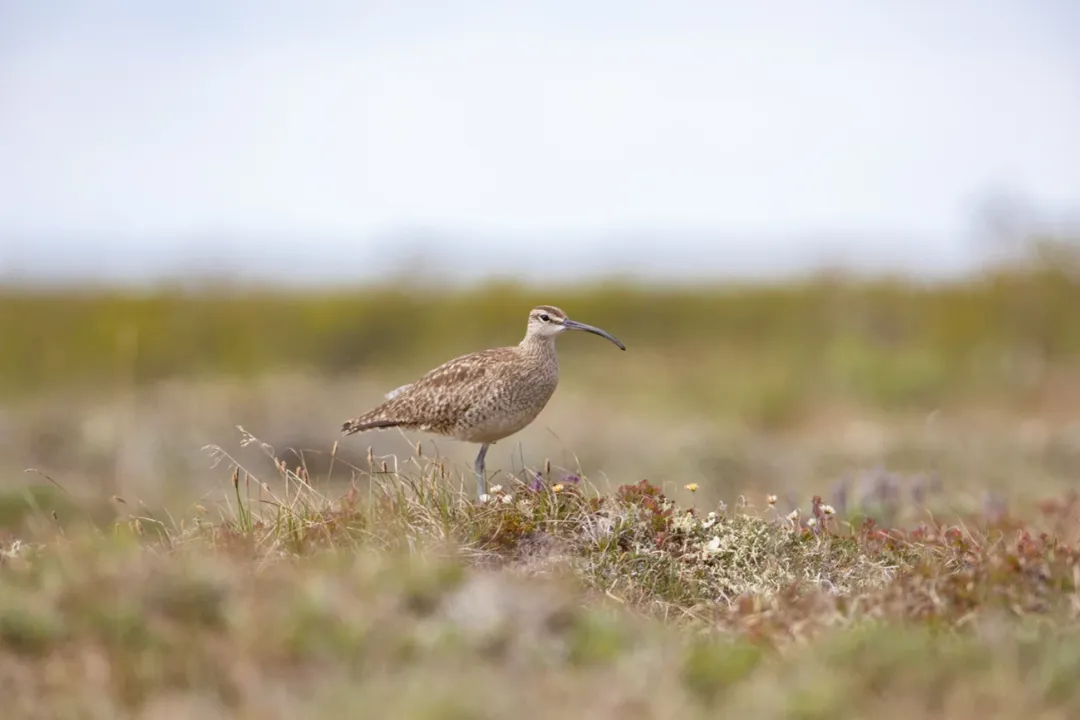
The diet of the Whimbrel shifts dramatically depending on location, season, and availability, showcasing remarkable flexibility. [2] This adaptability is essential for a species that traverses thousands of miles between breeding and wintering grounds. [8]
# Coastal Prey
In their primary coastal feeding areas, which include mudflats, sand beaches, and salt marshes, the diet centers heavily on marine invertebrates. [1][4] Common menu items include:
- Crabs: Small crabs are a significant food source, particularly in estuarine environments. [1][7]
- Worms and Mollusks: Various marine worms and small shellfish, like mussels and clams, are targeted and extracted from the mud. [1][7]
- Other Invertebrates: Small crustaceans and other burrowing animals that live within the intertidal zone form the bulk of their intake during migration and wintering. [7]
When foraging in these rich, low-tide zones, the birds are essentially capitalizing on the exposed abundance that the receding water reveals. [4] It is interesting to note that in certain tropical areas where they winter, crabs can form an extremely high percentage of their intake, sometimes making up over 70% of the diet, demanding highly efficient probing skills. [7]
# Inland Foraging
Whimbrels are not strictly tied to the ocean coast, particularly during migration. When passing through inland areas—such as agricultural fields, grasslands, or tundra—their menu adapts to terrestrial food sources. [6][9]
In these non-coastal settings, they focus on insects and plant matter:
- Insects: They consume grasshoppers, crane flies, and other large terrestrial insects. [7][6]
- Berries: During stopovers or on breeding grounds, they supplement their diet with berries, such as crowberries or blueberries. [2][6] This dietary shift provides a necessary boost of energy-rich carbohydrates for the long haul, which marine invertebrates might not provide as readily in concentrated form. [2]
The shift from extracting shelled creatures from wet sand to gleaning insects from dry grasses illustrates the plasticity required for survival across their extensive range. [6][8]
# Social Feeding Patterns

Whimbrels are often observed feeding in groups, which can range from small clusters to large flocks, especially when utilizing rich feeding grounds during migration or wintering. [7] There is a definite social component to their foraging that goes beyond mere coincidence of location.
While an individual bird is focused on its own probing technique, the presence of a flock can be advantageous for several reasons. The combined effort of many birds disturbing the substrate might occasionally flush out prey, making it easier for others nearby to snatch a meal that was momentarily exposed. [9] This collective disturbance can increase the overall hunting success rate for the group, even if each bird is technically competing for the same resource. [7]
When you are observing a coastal flat where Whimbrels are present, you will often see them move together as the tide exposes new feeding areas. They will advance across the flat as a unit, probing in unison. This synchronized movement suggests that while individual hunting skill is key, group awareness helps maintain efficiency within a prime feeding patch before the tide reclaims it. [4] If one bird finds a particularly productive patch of soft mud rich in clams or worms, the rest of the flock tends to concentrate its efforts there.
# Optimizing Stopover Success
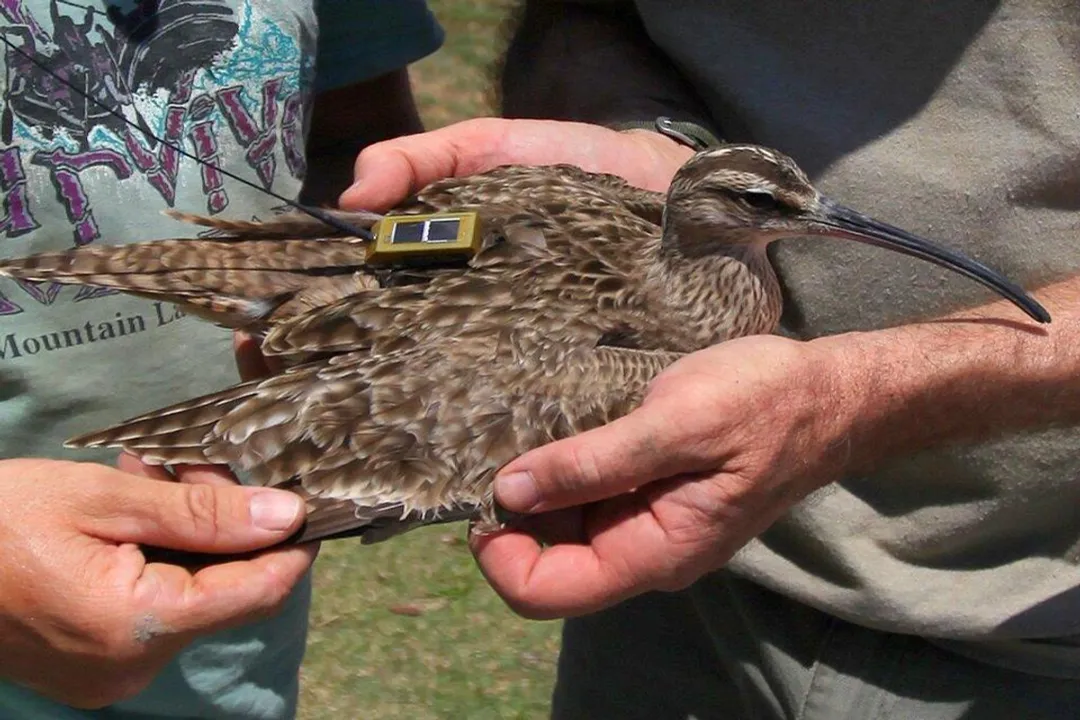
For a migrant like the Whimbrel, finding food is directly linked to its ability to successfully complete its phenomenal annual migrations, which can cover immense distances. [8] The quality of the stopover site is perhaps as important as the distance between them.
When a bird arrives at a stopover location, its primary task is refueling quickly and efficiently. [7] This means prioritizing sites where the caloric return for the energy expended in foraging is highest. If a coastal area is heavily impacted by human activity, or if pollutants have decreased the invertebrate population, the Whimbrel must quickly assess the site and move on if the foraging effort yields too little. [7] If you are monitoring these birds during migration in a local area, look closely at the ground they select; they often avoid areas with dense seaweed cover that might hide predators or areas with overly compacted sand that would require too much physical effort to probe effectively. [1]
A practical observation for birdwatchers in coastal areas is tying foraging observation to the tidal schedule. Since the majority of their high-value invertebrate food is only accessible when the water retreats, the period immediately following a strong ebbing tide is when the Whimbrels will be most intensely focused on feeding. They will often work right up until the incoming tide forces them to retreat to a safe roosting spot, sometimes requiring them to move inland or to higher ground until the next low tide cycle presents another opportunity. [4] This regular, rhythmic reliance on the tide shapes their entire daily schedule during the non-breeding season.

# Foraging in Different Substrates
The physical nature of the ground dictates the technique used. In fine, silty mud, the bill sinks in easily, allowing for deep probing to reach deeper-dwelling worms or mollusks. [7] However, this soft substrate also makes it harder to get a secure grip on prey once located. Conversely, feeding on firmer sand flats requires more physical force to penetrate the sediment. [1] In these firmer areas, the birds may rely more on surface gleaning or shallower probing, perhaps targeting organisms that stay closer to the surface or crabs that are more mobile and visible near the sand-water interface. [4] The bill's curvature might even play a role here; the downward bend seems ideally suited for pulling prey upward and out of a narrow hole, making the extraction process more efficient than a straight bill might allow in that situation. [3]
When compared to shorter-billed sandpipers, the Whimbrel has the clear advantage in depth, allowing it to access food sources unavailable to its smaller cousins. This specialization reduces direct competition for the immediate surface layer of food, enabling them to occupy a distinct niche within the shorebird community. [7] This ecological partitioning is a classic example of how morphology drives feeding strategy across a diverse avifauna. [9]
The successful Whimbrel is, therefore, an expert generalist in terms of diet but a specialist in the mechanics of subsurface hunting, perfectly balancing the need to consume high-energy marine fare on the coast with the necessity of opportunistic insect and berry consumption while traveling overland. [2][6] Their ability to rapidly switch feeding modes while maintaining hunting proficiency is central to their continued success as global travelers. [8]
Related Questions
#Citations
Whimbrel
Hudsonian Whimbrel Life History
Whimbrel - Numenius phaeopus - NatureWorks
The Whimbrel - Cape Cod National Seashore (U.S. ...
Whimbrels use long bills to find crabs and insects
(species) numenius phaeopus - Utah Field Guides
The Fascinating Whimbrel: Q&A with Liana DiNunzio
Whimbrel (Numenius phaeopus) | U.S. Fish & Wildlife Service
Whimbrels | The Ivory Bill