How can I identify an eider duck?
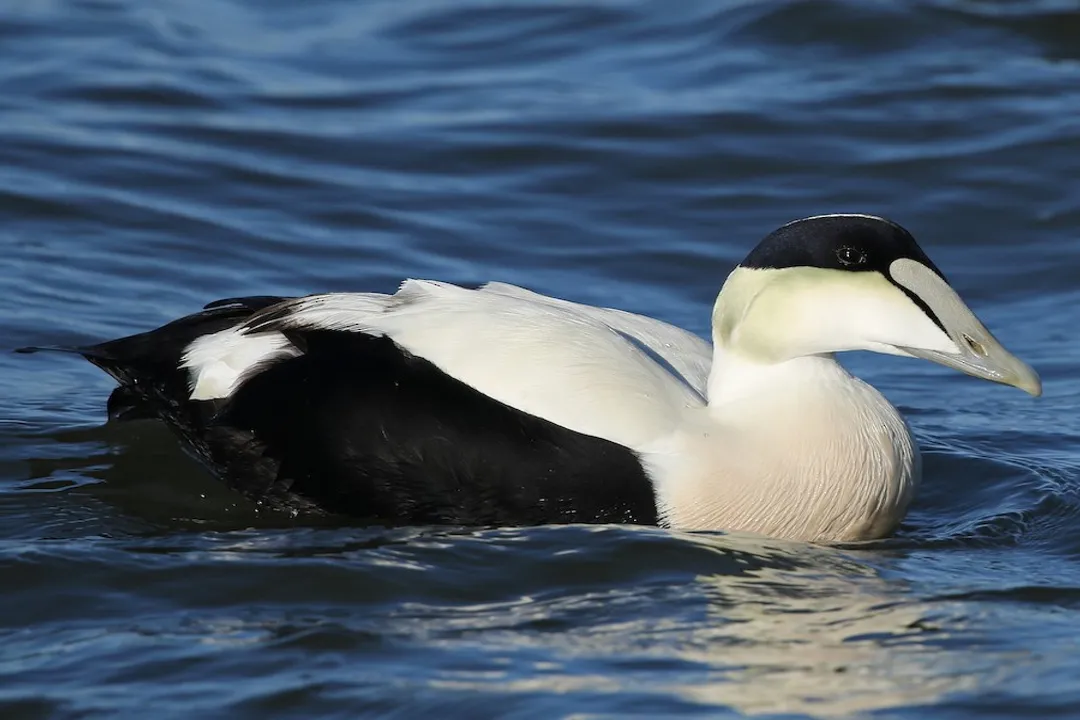
Identifying an eider duck, particularly when scanning the choppy waters of the coast, requires knowing what visual anchors to look for. These birds are not subtle; they are among the largest sea ducks you are likely to encounter in the Northern Hemisphere, immediately commanding attention due to their sheer size and bulky proportions. Distinguishing between the species, or telling a female apart from a similar-looking bird, involves looking closely at specific details of plumage, head profile, and bill structure.
# Size Profile
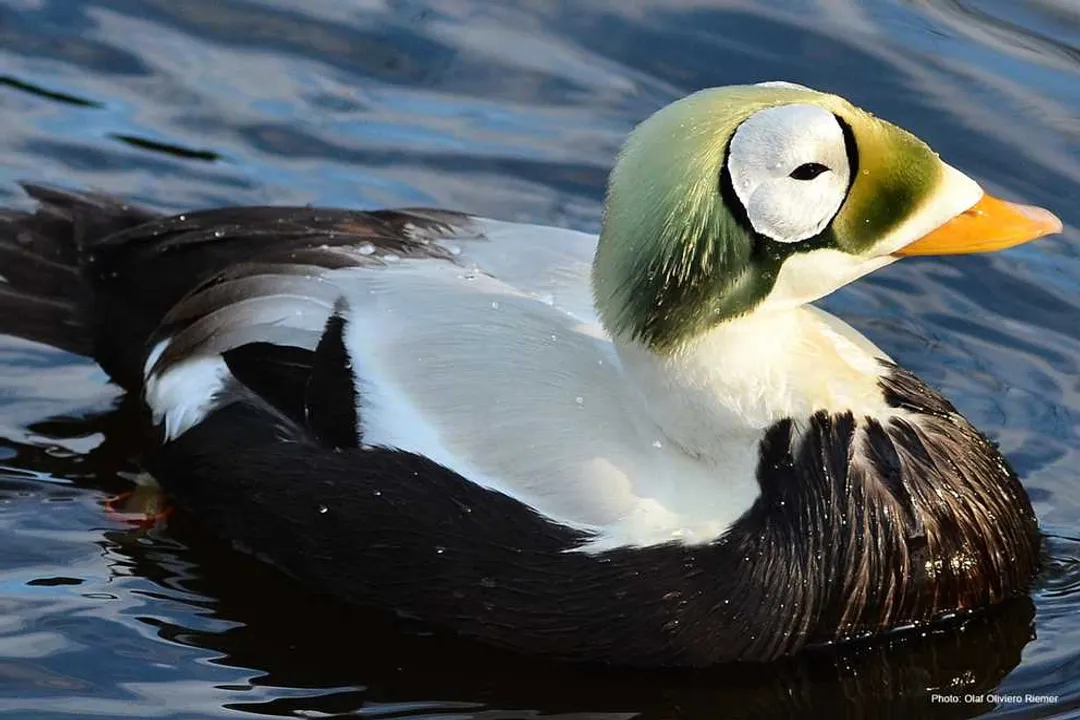
The first identifier is size. Eiders are heavy-bodied ducks built for cold, rough marine environments. They sit low in the water, giving them a very solid, powerful appearance on the waves. When you spot one, mentally compare its size to a Mallard or a similar common duck; an eider is significantly larger and more substantial. This mass and heavy structure are consistent across both sexes, regardless of the specific eider species you are observing.
# Male Plumage

For birders, the easiest identification often comes when a male is in breeding plumage, especially the Common Eider. The male Common Eider presents a striking contrast that is hard to miss: its body is largely clean white, starkly interrupted by black on the rear, flanks, and tail area.
However, the head pattern is what truly locks in the identification. Look for the distinct black cap that sits atop the head. More subtly, but critically, there is a patch of pale green plumage on the nape, or the back of the neck, which contrasts with the rest of the white body plumage.
When comparing the Common Eider male to its relative, the King Eider male, the differences become apparent primarily on the bill and head. While the Common Eider male has that characteristic green nape patch, the King Eider male features a large, distinctive orange or reddish knob at the base of its bill, and the sides of its head are often a pale blue or gray, rather than the Common Eider's pure white and green combination. If you see a male sea duck that is pure white with black rear sections, but the head shows a bright orange knob, you are looking at a King Eider, not a Common Eider.

# Female Features
Female eiders present a much more cryptic appearance, relying on subtle patterns rather than bold contrast. They are generally a rich, dark brown color, often appearing uniformly mottled or finely barred. This dark barring provides excellent camouflage against rocky shorelines or dark water.
A key feature across several female eider species, including the Common Eider, is the presence of a pale patch around the face or throat area. This can look like a light mask against the darker feathers of the head and neck.
When trying to separate a female Common Eider from an American Black Duck, for instance, body structure is the giveaway. The female Common Eider appears bulkier and heavier than the Black Duck. While both show barring, the eider's barring tends to be more uniform across the body, and that pale facial patch stands out more clearly than the darker face of the Black Duck. When observing a female eider at rest, noting the bill thickness relative to the head size is a good starting point; the Eider's bill looks almost disproportionately heavy compared to smaller dabbling ducks [Original Insight 1].
# Bill Shape
The bill structure is a definitive characteristic for all eiders and warrants close attention, particularly when plumage details are obscured by distance or weather. Eiders possess a heavy, thick bill that is quite massive relative to the size of their head. This thickness is not just at the base; the bill line flows smoothly and steeply up to the forehead, creating a distinct, wedge-shaped profile. This profile is a major differentiator from many other diving ducks.
For the male King Eider, as mentioned, the prominent orange structure above the bill is the signature feature. For the Common Eider, observe how the bill base appears relatively uniform with the forehead, giving that characteristic wedge.

# Setting and Sound
Identification is often contextual, involving both location and sound. Eiders are strongly associated with marine environments, often found near coasts, in bays, or offshore, especially during the winter months. If you are observing ducks actively feeding far offshore in rough winter seas, the sheer size and low profile in the water strongly suggest an Eider species, as many other ducks seek calmer harbors [Original Insight 2].
In terms of vocalizations, the Common Eider has a recognizable call, particularly the male. They are known for a deep, resonant croaking sound. While not all species are equally vocal, listening for this low, guttural call can confirm a sighting, especially when birds are resting in a noisy colony.
To summarize the primary comparison points, especially for the two most commonly discussed species:
| Feature | Common Eider Male | King Eider Male | Female Eider (Common/King) |
|---|---|---|---|
| Body Color | Mostly white, black rear/sides | Mostly white/gray, black rear | Dark brown, heavily mottled/barred |
| Head Detail | Black cap, pale green nape patch | Pale blue/gray sides, prominent orange knob on bill | Pale patch near face/throat |
| Profile | Wedge-shaped bill merging into forehead | Pronounced orange knob structure | Heavy build, thick bill |
Related Questions
#Citations
Common Eider Identification - All About Birds
Eider | Identification Guide - Bird Spot
Common Eider Somateria mollissima - eBird
[PDF] Common Eider (Somateria mollissima) - Sea Duck Joint Venture
Identification of Common Eider Sea Duck - Facebook
Spectacled Eider | Ducks Unlimited
Identifying King Eider and Common Eider - BirdWatching Magazine
Female common eider vs. American Black Duck? How to tell? - Reddit
Eider Identification | Berwickshire & Northumberland Marine Nature ...